
‘Disgusting’ Margins: Olivia Dean and the Fight for Fair Pay for All - including the Listeners
On November 21, 2025, Olivia Dean, the fast-rising UK singer-songwriter, turned viral outrage into industry reckoning. Her North American tour tickets went on general sale that morning. Within hours, seats originally priced around $60 were snapped up and relisted for $900 on Ticketmaster and resale platforms.
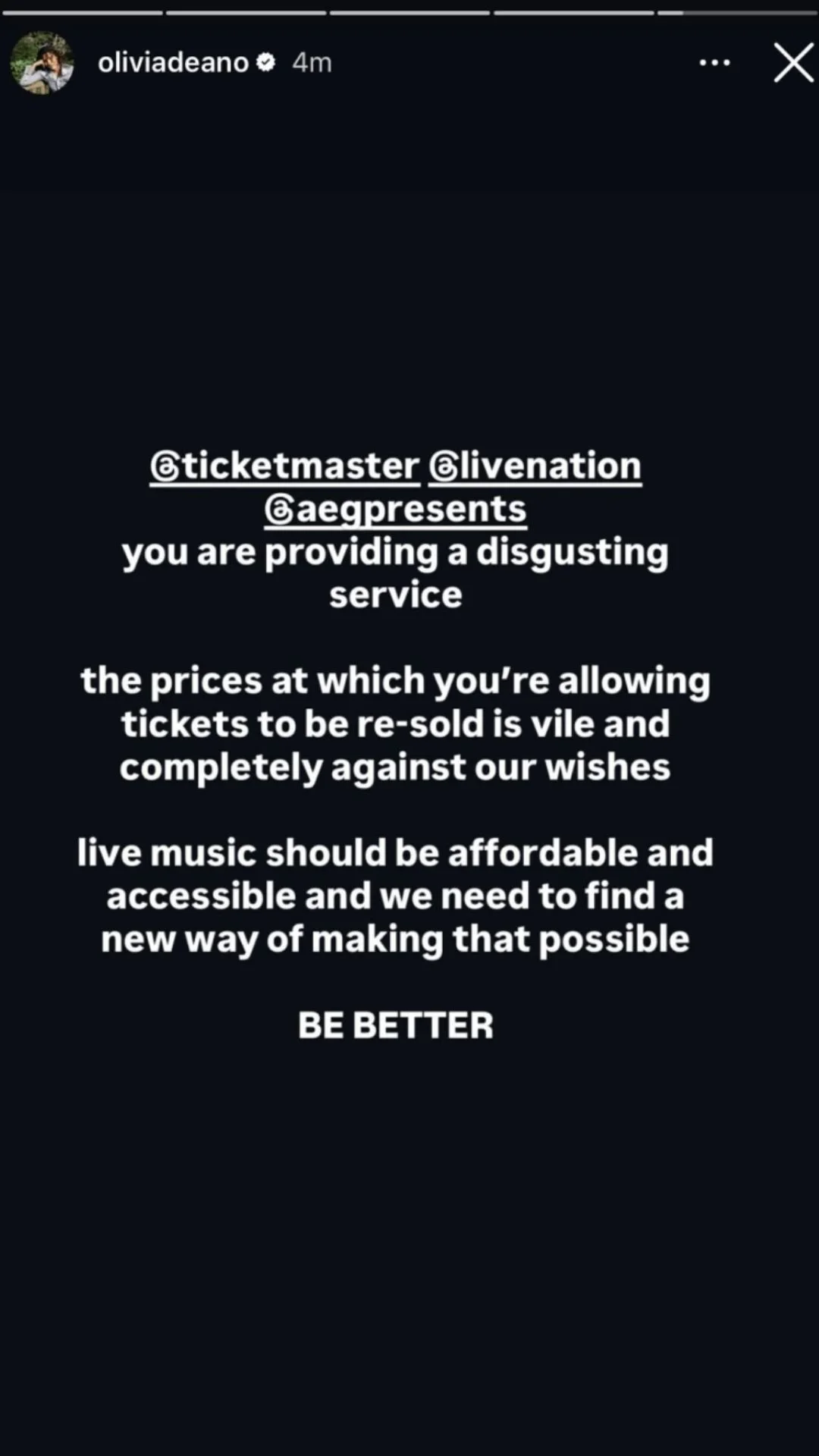
Story from Olivia Dean’s Instagram
Dean took action swiftly and decisively, posting on Instagram and directly naming Ticketmaster, Live Nation, and AEG for enabling these inflated resale prices. She called their service “disgusting” and “completely against our wishes,” pushing for live music to remain accessible. Her intervention forced Ticketmaster to cap reselling at face value, posting on X “We support artists' ability to set the terms of how their tickets are sold and resold. We're capping resale prices for Olivia Dean's tour on our site at face value and hope other resale sites will follow.” on the same platform they responded to one of the fans saying that the price was ‘a typo’.
She might not be dance music artist but her protest shines a harsh light on how deeply these extractive systems shape not just stadium tours and arena tickets, but the everyday reality of club culture. The infrastructure: brokers, bots, opaque contracts, keeps reselling lucrative even as artists object. Issues stretched far past her own ticket sales: independent venues, grassroots promoters, and emerging artists face the same leverage gap nightly, with little power against middlemen and inflated prices. The message from this November is clear: profit comes before community unless someone speaks up.
Dean’s outrage wasn’t performative; it was precise, and it worked as direct action. Still, her story reveals only one facet of a larger problem—a web of ticket vendors, intermediaries, and industry policies that warp the foundations of live music itself. And this is not just a stadium problem; it’s a nightlife problem.
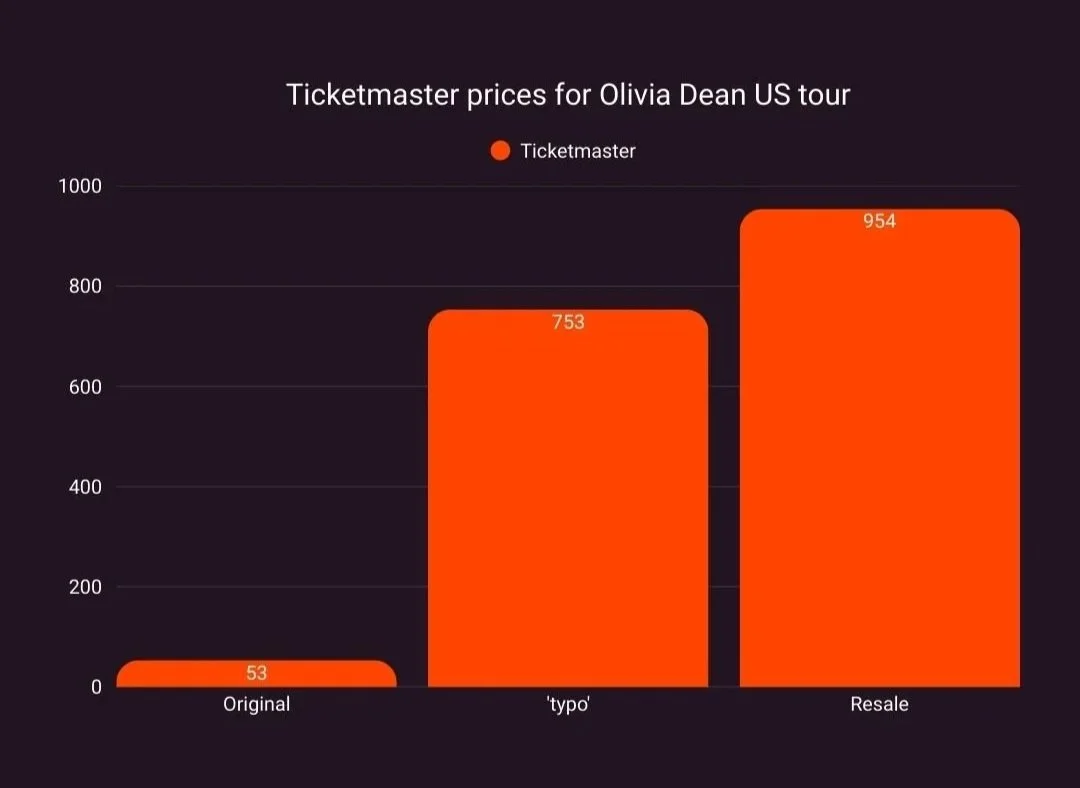
ticketmaster price chart for Olivia Dean’s US tour
The antidote lies in collective care made real through structural reform:
Progressive tax relief for small venues lets independent clubs and local scenes reinvest in themselves.
Caps on booking fees and transparent budgets ensure support acts, staff, and maintenance aren’t afterthoughts.
Public grants and cultural subsidies tied to equity bring fair pay, diverse programming, and benefits to the community.
Zoning reform protects worker-run venues, co-ops, and nonprofits instead of rewarding landlords and conglomerates.
Community crowdfunding and municipal “nightlife bonds” transform audiences into co-owners with voting power over programming and space.
Unionization across the ecosystem: bartenders, bouncers, sound engineers, artists, promoters, freelancers, gives everyone collective representation.
Universal health access for nightlife workers provides mental health support, injury prevention, and stability through public, union, and nonprofit partnerships.These aren’t luxuries - they’re the foundation of a resilient nightlife economy. Without them, club culture becomes a gated enclave for elites, propped up by extractive ticketing platforms and hollowed out by precarity.
The democratic future of nightlife is participatory, worker-led, transparent, and rooted in community power - not corporate capture. Olivia Dean’s fight is a reminder: even major artists struggle to break these systems alone. But when communities, workers, and artists rally together: through investigative editorials, public campaigns, alliances with ethical ticketing platforms, and collective action - change becomes unavoidable.
To protect the margins is to protect the culture. And the culture survives only when we refuse to accept the empty echo left behind by unchecked greed.

photo by Kyle Ryan
These same structures suffocate club culture. Independent venues, grassroots promoters, and emerging artists have little power against the very companies that enable price inflation, fraud, and resale gouging. When scalpers and bot-farms control the market, genuine fans lose out; when artists intervene, they face contracts and middlemen who defend the status quo.
If nightlife wants to survive, the community must do exactly what Olivia did: name the companies, name the practices, name the platforms enabling gouging. Silence is complicity. Transparency is power.
But calling out exploitation is only a start. Redistributing wealth and power in nightlife isn’t utopian—it’s essential for anyone who believes clubs should nurture communities instead of enriching headliners and ownership. The same pattern plays out every weekend: openers disappear behind smoke, bartenders fade in neon, tech workers get replaced instead of recognized, and those who build the night scrape by while profits drip upwards.
Photo by Hưng Phạm
