
Blog

Stop Calling Everything“RAVE”!
Why? Because the word actually stands for something important in the history of electronic music, which is heavily shaped by cultural, political, and historical gravity.
“Rave” has a very specific history, and we distort it when we use it for everything. Raves were created in the late ’80s as a counterculture outside the club industry, rooted in early acid house, breakbeat, techno, and hardcore.
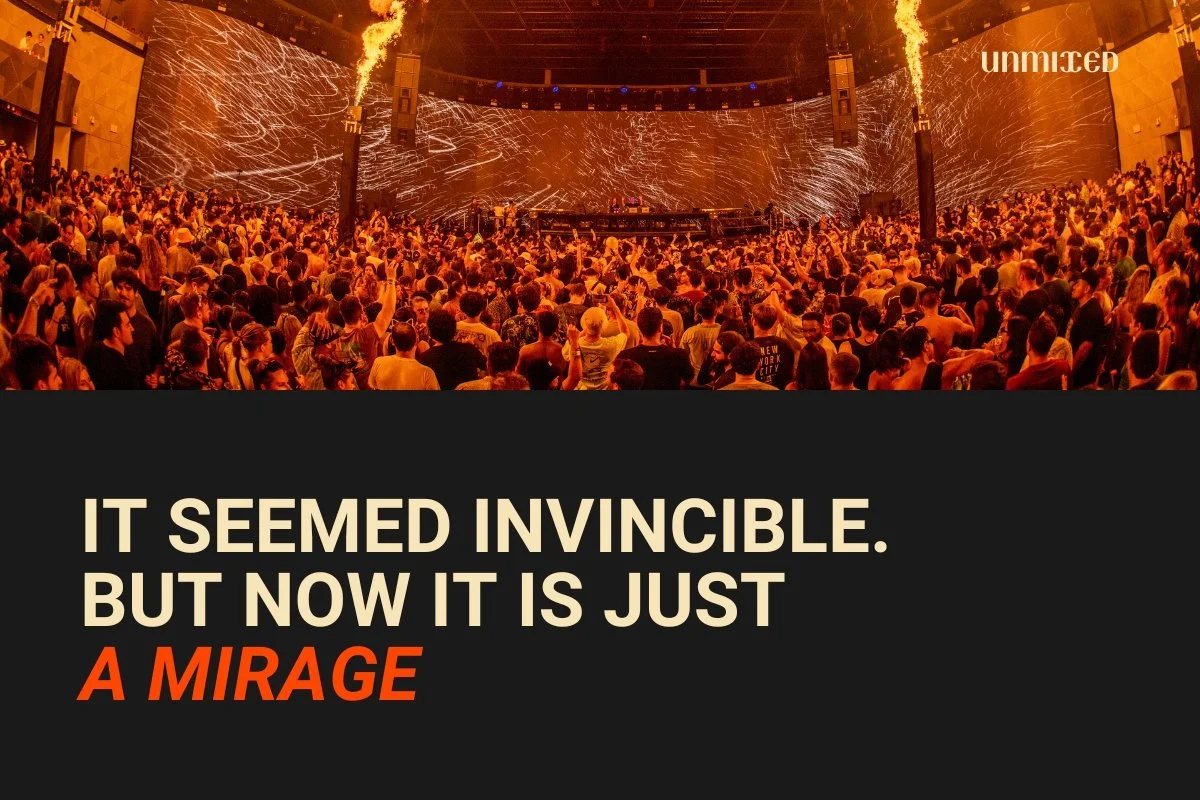
It Seemed Invincible. But Now It Is Just a Mirage
Brooklyn Mirage felt untouchable.
A decade of sound, light, and architecture that defined a generation of New York nightlife.
Now gone.
CANCEL VS. BOYCOTT: Are We Using the Wrong Words?
Is Boycott Culture the Same as Cancel Culture? Not really. Cancel culture targets individuals — shaming, silencing, erasing a person. Boycott culture withdraws support from systems that exploit. One punishes, the other protests.
Music doesn’t have a shelf life
Great songs do not expire. They outlive the cycle of months and resist the trap of quick consumption. They stand the test of time, like Love Parade—decades later, still an anthem of a massive genre called techno.

Major Shift: Beginning of a Movement
Is Dance Music Finally Done Selling Out?
For years, the industry sold us the story of freedom on the dancefloor while quietly cashing checks from private equity, fossil fuel firms, and streaming giants. The mantra was simple: keep politics out of the party. But in the past year, that illusion collapsed.
From festival boycotts to artists pulling their music from Spotify, dance music is in the middle of a reckoning. The scene is asking: what does it really mean to protect the right to party — in peace?

Sound of Resistance: Electronic Music as Political Art in an Age of Authoritarianism
Art, Politics, and the Unbreakable Bond
Art is never a neutral venture. From Goya’s haunting war etchings to modern-day techno, creation is inevitably tied to political forces and struggles. With approximately 70% of the global population now living under authoritarian regimes, as underscored by the 2022 V-Dem report, the emotional stakes for creative expression have never been higher. In such contexts, electronic music—often dismissed as escapist—emerges as a radical political medium, a conduit for agency, dissent, and collective solidarity.

When Vulnerability Becomes Currency: The Pressure to Perform Pain in Music Culture
There was a time when privacy was power. When artists could take a break, go through something life-changing, or simply live their lives without packaging it for an audience. But in 2025, every emotion is content. And vulnerability? That’s the algorithm’s favorite flavor.
Junk Fees Are Hurting Our Scene: Here’s How to Fight Back
StubHub’s been caught. Again. This time, it’s for hiding shady “junk fees” from ticket buyers — and while mainstream media frames it as a consumer issue, let’s be honest: it hits the underground the hardest.

THE MACHINE IS IN THE ROOM: AI IN MUSIC, MAY 2025
Like it or not, the machine is already in the room. It’s humming behind your DAW, whispering through plugins, and remixing your stems faster than your intern ever could. It can sound like you. Sometimes better than you. And it’s not going away.
As of May 2025, artificial intelligence has officially set up shop in nearly every corner of music—composition, mixing, mastering, marketing, playlisting. What began as curiosity has become workflow. What once felt like novelty is now industry standard.
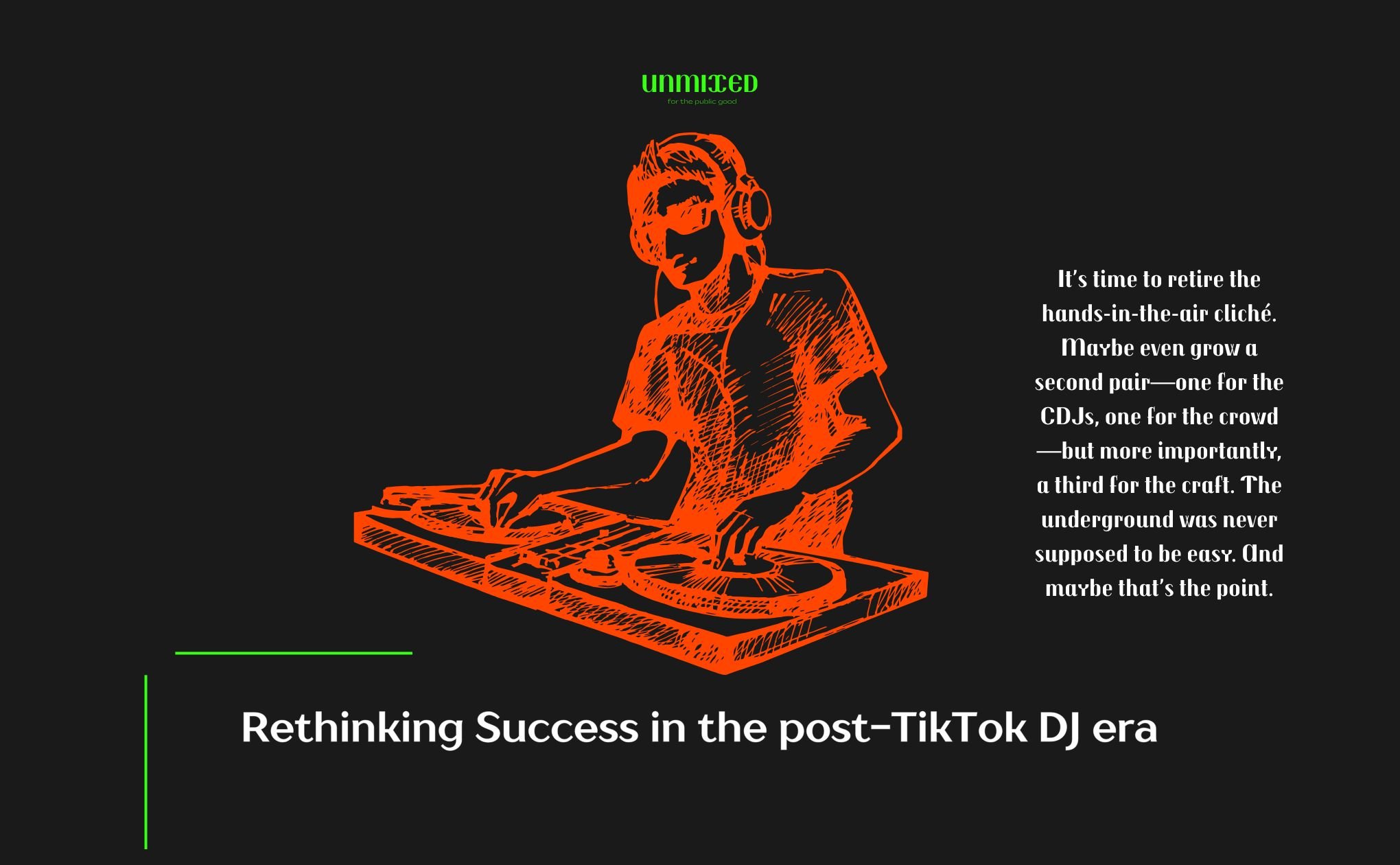
Rethinking Success in the post-TikTok DJ era
There was a time—not long ago—when success in the underground meant something very different. It meant digging deeper, not shouting louder. It meant creating something no one else dared to, not copying what already works. Success was measured in artistry, integrity, and the ability to hold a dancefloor with raw skill andpure intention—not algorithms, edits, or viral bait.
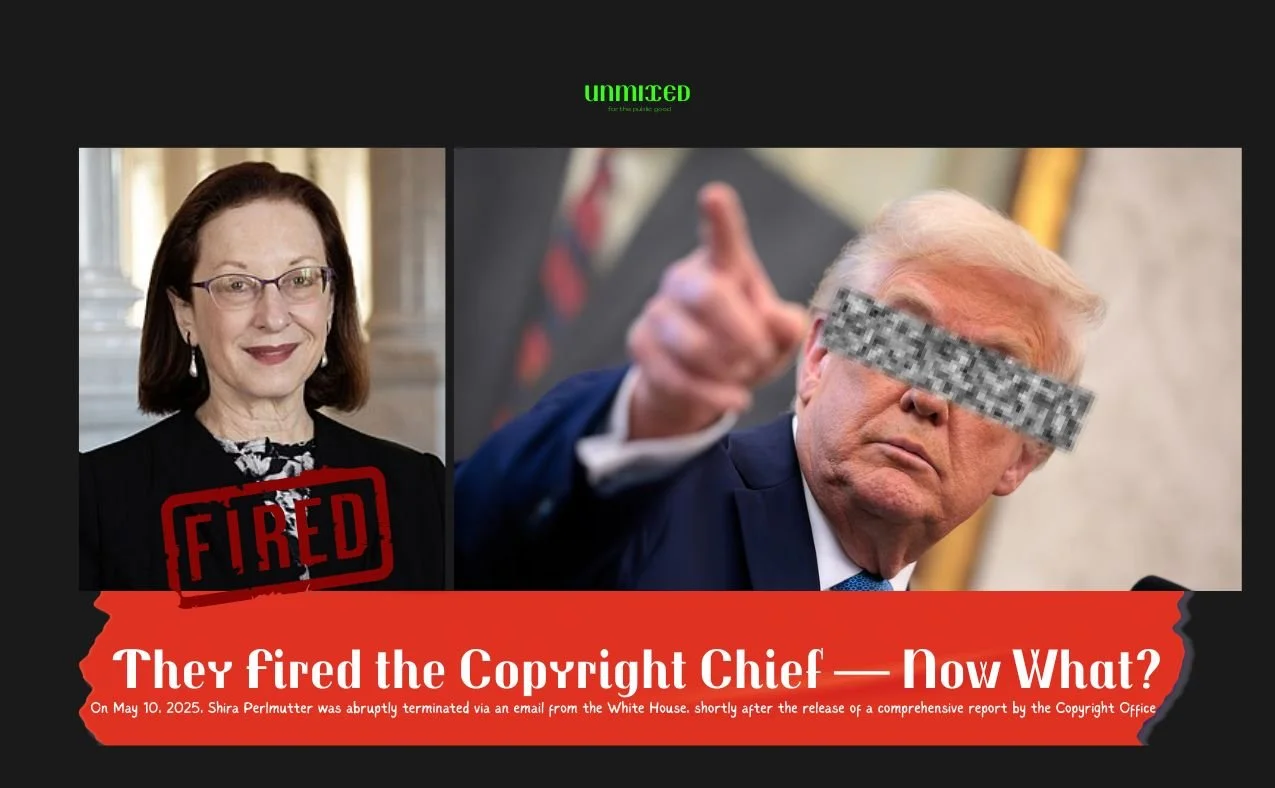
They Fired the Copyright Chief—Now What?
The recent firing of Shira Perlmutter, the now-former Director of the U.S. Copyright Office, didn’t just happen in a vacuum. It happened the same week her office dropped a report that had Big Tech trembling—because it told the truth. That using artists' work to train AI without permission is not “fair use.” And that companies like OpenAI, Meta, and others should be paying for what they’re feeding their machines.

The Scene Is Still Ours
Why underground music is alive, well, and evolving beyond the algorithm
Forget the industry noise for a second. Step into a basement party where the booth is duct-taped, the speakers are sweating, and nobody’s filming because they’re too busy feeling. That’s where the real underground lives—not in your feed, not on the trending tab, but in the spaces we build together, beat by beat.

The Mysterious DJ Who Posts Too Much: A Modern Paradox
There’s a special kind of irony in watching DJs flood social media while branding themselves as “mysterious.”

America’s Club Economy: A Tale of VIP Entrances
When the green room looks like a utility closet and the tables belongs to whoever dropped $3K on Dom Pérignon, it’s time to ask—who is the club really for?
In the ever-evolving landscape of nightlife, the term "VIP" has undergone a significant transformation. Once reserved for artists, performers, and the creative forces behind the scenes, VIP status is now predominantly a marker of financial prowess. This shift reflects a broader commodification of exclusivity—where access depends less on your role in the culture and more on how much you're willing to spend.

How the Underground Became a Billion-Dollar Playground:
The world of electronic music has always prided itself on its underground ethos—a space where raw creativity and rebellion ruled the night. Yet today, some of the very artists once synonymous with underground credibility are raking in six-figure fees per performance. What’s more, the agencies representing these DJs are charging astronomical sums that not only inflate the cost of booking a set but also siphon off budgets meant for nurturing emerging talent.

Clubbing or Clowning? How the Scene Became a Circus
I remember when clubs were real—back when we all had flip phones and there was no pressure to document every second. Nobody was out there snapping pics or trying to “feed their eye.” We went out to forget about everything, to just get lost in the night. You know how people always say “a night to remember”? The truth is, the most unforgettable nights are the ones we barely remember in details—they’re remembered by the feeling.

Breaking the Chains of Genre: Why Sticking to One Sound is Killing Your Creativity
Producers, let’s be real—getting stuck in a genre is a slow creative death. It’s comfortable, sure. You’ve carved out a sound, built an audience, maybe even found some success. But the minute you start playing it safe, you stop growing.

Why We’re Here: The Truth About Music Journalism in 2025
Let’s be honest—music journalism is in a weird place right now. What used to be a space for deep critique, cultural discourse, and actual musical analysis has been reduced to a glorified hype machine. Algorithms dictate taste, PR-driven narratives flood the scene, and way too many publications are more concerned with clicks than content.