Electronic Music in Times of Genocide and War
words By Fo Tsesmeli
Electronic music was not only born as an avant-garde sound—it was, first and foremost, born as a stance. Before it became a global phenomenon and a lifestyle product, before “techno” and “rave” got absorbed by marketing and were turned into buzzwords and hashtags, the scene was a radical movement. A safe refuge for all those society pushed to the margins: Black, queer, trans, poor, non-privileged, migrants. A new social utopia was emerging in the sweaty warehouses of Detroit, Chicago, New York, Birmingham, Manchester, and Berlin, one that would soon spread with force across the planet.

photo by Marcel Strauss https://m--s.cc/
The now-famous slogan “PLUR” (Peace, Love, Unity, Respect) was not a psychedelic fanfare passed on to the 90s rave culture from the first Summer of Love, but a manifesto of coexistence. An informal political contract born out of the need for spaces without racism, sexism, homophobia, without the suppression of any identity. Inside the dark warehouses, everyone, no matter who they were, had equal access to sound, to joy, to physicality, to communion.
Conscious communities built techno, house, jungle, trance as acts of defiance against social exclusion. In the beginning, being a DJ or throwing a party was a political, rebellious act. A call for liberation from norms, from the control of state and market, from patriarchy, policing, from the Mr. So-and-sos of your neighborhood imposing the boxes you were supposed to fit into to be accepted. From the Black pioneers of Chicago house and Detroit techno to the queer sound systems of London, dance music culture has always been built on solidarity, self-organization, and above all, resistance.
Today, that historical foundation resurfaces again, sometimes as a rekindling force, other times as a swan song of an era pulverized violently by the voracious capitalistic and mainstream mechanism. In a world consumed by violence, censorship, wars, and genocides, many artists are remembering and others are discovering that electronic music was never apolitical. Quite the opposite: it was always political, in the most immediate, unifying, physical, and liberating way.
And yet, this music born as resistance now finds itself in a deep existential crisis of ideals, context, and substance—a subject widely discussed and even studied academically. In recent years, and especially after October 2023, when Israel began its attacks on Gaza, a large part of the electronic music industry has faced an ethical dilemma: Can you keep dancing when bombs are falling and innocent people and babies are dying? And if you can, how exactly do you choose to ignore it, and what does that choice translate into?
Protest did not take long to surface, and, of course, it began at the grassroots. Artists, small collectives, queer and rave communities, visual creators, and activists were the first to shoulder the weight—and the cost—of speaking out against the massacre in Gaza and the structure sustaining it. Through posts on social media, open letters, and public statements, they confronted an industry that all too often treats political correctness as an aesthetic rather than a practice.
The big rupture came with the revelation that investment giant KKR, through its €1.3 billion acquisition of Superstruct Entertainment in June 2024, had gained control over countless festivals, platforms, and brands. KKR, whose investments in weapons manufacturers, defense systems, and surveillance technologies with a heavy presence in Israel are well-known, now controls key institutions and strategic brands in dance culture: Boiler Room, Sónar, OFFSónar, Awakenings, DGTL, Sziget, Brunch Electronik, Mysteryland, Field Day, and more. In short, KKR controls a large part of the global scene.
Sónar Festival
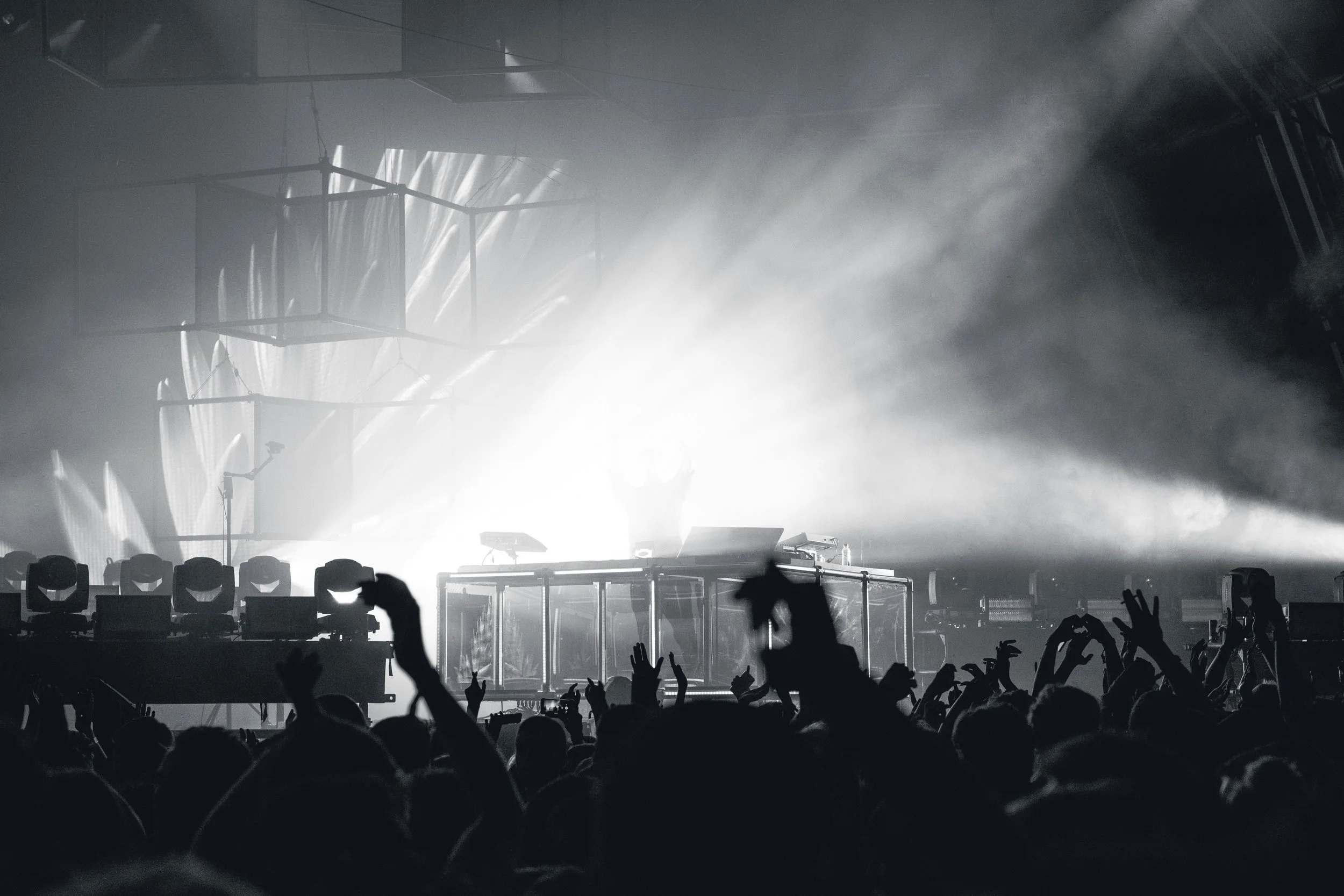
Sónar Festival photo by Gian Pietro Dragoni
Sónar suffered one of the most massive and serious blows in its history when more than 59 artists and groups (38 according to the official statement of the organizers) withdrew this year, denouncing that the festival belongs, through Superstruct, to KKR, which holds investments in Israeli real estate companies, defense industries, and contracts with the Israeli army. The list included Arca, Rone x (LA)HORDE, EYRA, Amantra, oma totem, DJ Paca, Tiyumii, Dania + Mau Morgó, DjSport, Emma dj, Forensis & Bill Kouligas, dj g2g, Heith, Matthew Herbert & Momoko, James K, among many others. At the same time, more than 80 signed an open letter demanding that Sónar distance itself from KKR and adopt a BDS (Boycott, Divestment, Sanctions) policy.
Sónar issued three unsigned statements. The first was a sugarcoated, standardized support for human rights that made no mention whatsoever of Gaza, Israel, or KKR. Later, it denounced its ownership, declaring that it “does not like KKR and does not support it,” while making it clear that it enjoys KKR’s “generous” concession of operational autonomy. The Palestinian Campaign for the Academic and Cultural Boycott of Israel (PACBI) responded: “Sónar may have improved its PR, but it has barely touched its complicity. At a time when the genocide of the people in Gaza is livestreamed, we need real solidarity, not rhetoric, and that begins with ending complicity.”
Unsurprisingly, all attention turned to the renowned Palestinian DJ Sama’ Abdulhadi, who had been booked to appear at Sónar before all this backstage drama was made public. Just days before the festival, she revealed that her team had been in contact with the organizers, who agreed to most of their demands, resulting in the removal of Coca-Cola and McDonald’s from the sponsors' list. But for Sama’, half-measures were not sufficient, and she finally withdrew from the lineup: “The main issue has not been resolved, and that is KKR’s involvement. A global investment company that holds significant stakes in companies actively supporting or maintaining financial ties with the state of Israel. This includes investments in technology, security, and infrastructure companies that directly contribute to the occupation and oppression of Palestinians. The dividing line between Zionists and anti-Zionists has never been clearer. Either you stand for freedom and justice, or you are complicit in genocide. There is no longer a middle road. As always, Free Palestine,” she stated.
The conversation exploded further in the social media comment sections, especially targeting the silence of the “bigger” names. One of the very few who broke it was Richie Hawtin, who explained publicly why he would still play at KKR-owned festivals, mentioning Sónar, Awakenings, and Monegros in particular, despite his reservations about their investments. He admitted to KKR’s ownership, recognized its wider cultural reach, including military ties, but pointed to his 30+ year career and loyalty to festivals that supported him. Still, he promised that from now on, he would choose venues and festivals based on their stance and values on global issues.
Despite the widely publicized controversy, 7,000 more people attended its 2025 edition compared to 2024. In a twist of events, Enric Palau, Ricard Robles and Sergio Caballero, the three original founders of Sónar, announced in October that they are stepping down “after 32 magnificent and intense years” and completely severed their ties with the festival. They will be succeeded by François Jozic, founder of Brunch Electronik and head of Superstruct’s Centris Group. The official statements from both sides focused on the importance and legacy that Sónar has created, “hoping that Sónar continues to project itself successfully into the future.”
Boiler Room

Boiler Room Youtube page header
Boiler Room has been one of the most influential platforms in the history of electronic music culture. In January 2025, it was acquired by Superstruct/KKR. Immediately after the announcement, several artists and collectives pulled out from appearances linked to Boiler Room. Names such as Ikonika, Beatrice M., Mia Koden, BasicDisarm, jtamul, and 8ULENTINA posted official statements condemning the new ownership, making it clear their values no longer aligned with those of the platform.
The backlash intensified when Boiler Room San Francisco was canceled with full support from the local scene. DJs, promoters, and activists quickly set up the Bay Area Solidarity Strike counter-event in Oakland, raising funds for Palestine and for artists who lost income due to withdrawals.
Realizing the depth of the outrage, Boiler Room published an official statement in March 2025, stressing that its staff had no involvement in the KKR acquisition and that its creative independence remained non-negotiable. It committed publicly to upholding the guidelines of BDS and PACBI: “We remain unequivocally pro-Palestine.”
PACBI welcomed the statement, but many in the artistic and activist communities considered it inadequate, contradictory, and superficial. Critics pointed to selective boycotts—Boiler Room had removed older Tel Aviv sets but did not apply the same stance toward other countries with equally condemnable politics, such as Russia. The top comment under their announcement summed it up sharply: “Say whatever you want, thinking you’re fooling us, but at the end of the month your paycheck still comes from KKR.”
In July, Boycott Room was created in NYC by a collective of artists, DJs and culture workers calling for an international boycott of the brand and its parent companies with their manifesto being “no to genocide, no to artwashing, boycott Boiler Room in every city.” Later in the same month, four local artists pulled out from Boiler Room São Paolo leading to its cancellation “for the safety of patrons and peaceful protestors”, followed by the mid-August cancellation in Puerto Rico after pressure to boycott and a petition signed by 149 people. In August, over 700 Australian DJs and artists signed an open letter distancing themselves from Boiler Room. In the months that followed, Boycott Room parties have been organized in various cities, fundraising money for Palestine and local initiatives.
Berghain
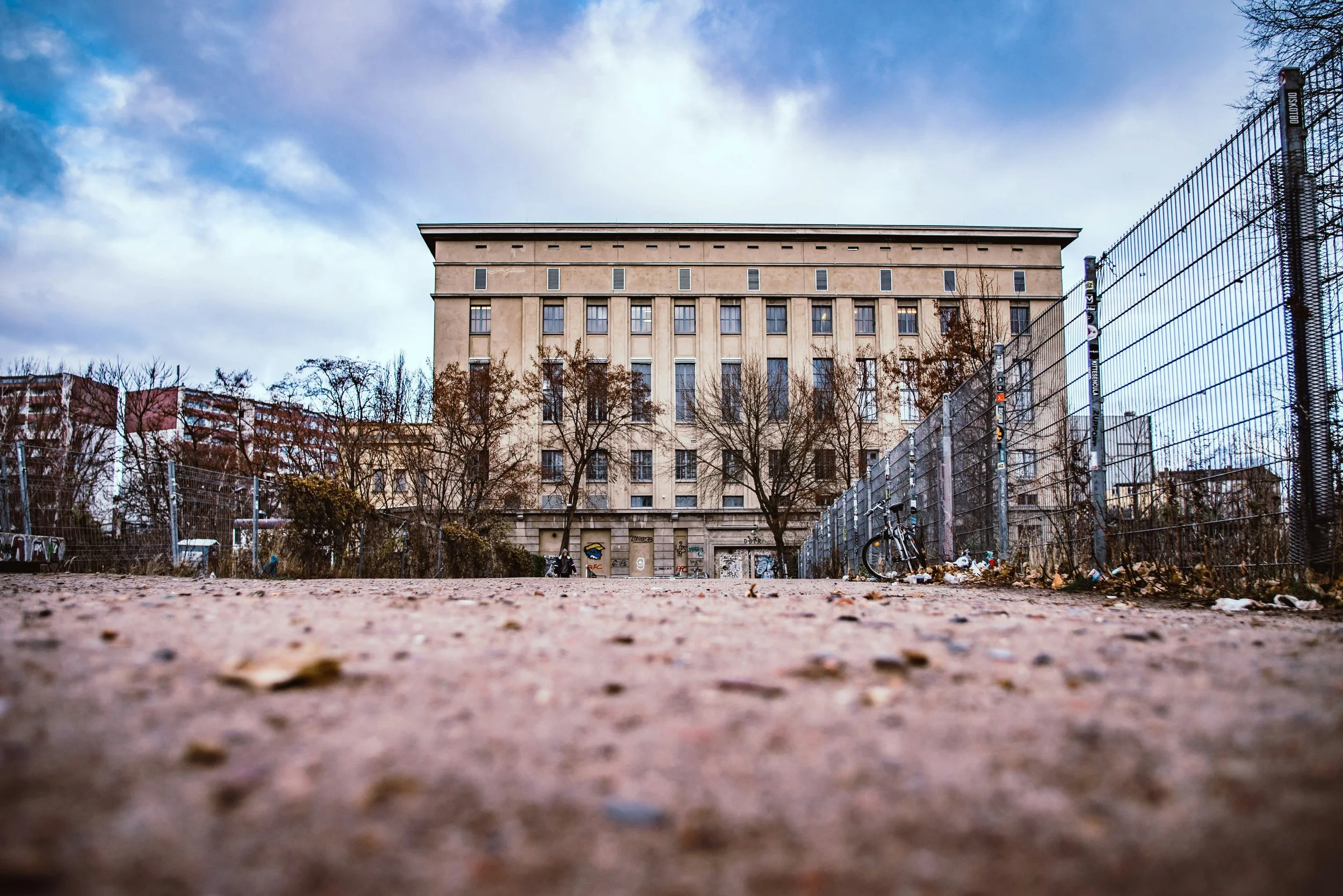
Berghain-Panorama Bar Berlin. photo by Simon Tartarotti
Berghain, long considered the ultimate symbol of underground club culture in Berlin, now faces open accusations of silencing artists who publicly support Palestine.
French-Lebanese DJ Arabian Panther revealed that his booking was canceled with the official excuse of “renovations,” after the club felt pressure due to his visible support for Palestine and his wearing a keffiyeh on stage. He described the process as “shameful and disgraceful,” disclosing that his booker asked for his final removal from the lineup under political pressure. He added: “In electronic music, you can talk about many issues—racism, sexism, Black Lives Matter, LGBTQ rights—but the Palestinian cause is not one of them. It’s the exception to Berlin’s supposed culture of freedom.”
Other artists, including CEM and Lyra Pramuk, along with many who spoke anonymously, confirmed that the club canceled sets of those expressing public solidarity with Palestine. In response, groups like Ravers for Palestine and DJs Against Apartheid called for a boycott of Berghain, while artists such as Josey Rebelle, Manuka Honey, Jyoty, and Kampire withdrew their appearances in solidarity, citing a lack of free speech and the club’s refusal to take a clear stance. Meanwhile, Berghain is criticized for hypocrisy—having shown public support for Ukraine through fundraisers, events, and partnerships with Ukrainian organizations, but never for Palestine.
HÖR Berlin
Youtube header - HÖR Berlin
HÖR Berlin was founded by Israeli DJs Ori Itshaky and Charly (known as TV.OUT), who moved from Tel Aviv to Berlin in 2019. One of the founders served in the Paratroopers Brigade, an elite unit currently involved in the Gaza genocide and in past attacks on Gaza (2009, 2014) and the occupation of Lebanon (2006).
Known mockingly as “the famous toilet,” HÖR gained traction during the pandemic as a livestream platform for both new and established underground DJs. Its tiled glass-box studio in central Berlin drew global attention for the variety of its lineups.
In October 2023, one founder shared a controversial Instagram post conflating anti-Zionism with antisemitism, reposting content from the Tel Aviv Institute, a lobby notorious for spreading misinformation. The post was later deleted with an apology.
But in November 2023, HÖR faced an even bigger storm when censorship of pro-Palestinian artists was revealed. DJs Sam Clarke and Téa both had their sets interrupted—Clarke for wearing a T-shirt with a map of Palestine, marking “Palestine,” Téa for a scarf reading “the land is ours” in Arabic. Internal emails later confirmed the accuracy of the reason, allegedly because it could be interpreted as “a call to erase Israel.”
Days later, HÖR issued a statement expressing solidarity with Palestinians, condemning Islamophobia and antisemitism, affirming freedom of expression, and stressing that they never censor flags or peaceful slogans. Yet, they admitted that certain symbols “some audiences see as controversial” would be restricted. They promised to work with “professionals to better educate themselves in shaping guidelines.”
Critics were quick to note the double standards. HÖR had previously allowed expressions of solidarity with Ukraine, like an artist wearing a T-shirt reading “ARM UKRAINE NOW” and burning a photo of Putin on set, or another unveiling a shirt reading “Russia is committing genocide in Ukraine” amid Ukrainian flags and posters.
The electronic music community reacted strongly, with DJs requesting their sets be removed and calling for a boycott. Fora and grassroots initiatives echoed the criticism, focusing on the hypocrisy and censorship, resulting in several projects cutting ties with HÖR altogether. The boycott has continued in 2025 with more artists amplifying the message through their social media.

photo by Marcel Strauss https://m--s.cc/
In times of polarization, geopolitical conflict, and humanitarian crises, it is impossible to talk about contemporary electronic music without confronting the values that gave birth to it. This is no conspiracy theory; our world is sliding into a terrifying unrest on a global scale, allowing ghosts of the past to slip through cracks widening every day. It is tragic—apparently, we have learned nothing from our history on this planet, and soon enough, every single one of us will be forced to either take a stance or be held accountable.
Faced with a global debate on the role of art in times of censorship, wars, and genocides, the question is not whether music is political or whether we can separate artists from their art. The question is whether we can continue to pretend, shutting our eyes and ears to everything happening around us.
The choices of organizers, festivals, clubs, platforms, and artists are serious, deliberate positions that must not be forgotten. And when those positions no longer align with the essence of PLUR—romantic as it may sound—the audience has every right to demand accountability and to express its reaction. It’s no lie: the “big names” often choose the complicity of silence, guided by fear of (economic) cost. Yet there are still artists, collectives, queer sound systems, young people, feminist initiatives, who keep speaking out, canceling, resisting, risking their careers, collaborations, and income.
Maybe the scene is not entirely lost. Maybe electronic music is once again becoming what it once was: a powerful political voice, imagining and creating a utopia. Maybe those massive sponsors with dubious morals and their big, blinding billboards will fade from festivals and be replaced by others who truly deserve to be there. Maybe we’ll meet again in some warehouse, the bass rattling everything to its core, and when we step outside, we’ll be able to breathe freely in a peaceful world that has room for us all.
In the end, the question is simple but unavoidable: which side of history will the scene stand on and what kind of future will it choose to build?