
iHeartMedia and Sirius XM in Merger Talks as Audio Industry Faces Transformation–and Monopoly Concerns
words by Nina K. Malik

photo by Hapabapa. San Francisco, CA, USA - Feb 9, 2020: A woman walks past the iHeartMedia office in the SoMa neighborhood.
iHeartMedia, the largest radio station owner in the United States, is in early-stage merger discussions with SiriusXM, the nation's dominant satellite radio provider, Bloomberg reports citing anonymous sources.
The talks come at a critical inflection point for the audio industry: 2025 marked the first year that daily podcast listenership exceeded traditional talk radio, according to Edison Research. This underscores the existential pressure facing legacy audio platforms as consumer behavior shifts decisively toward on-demand content.
iHeartMedia's appetite for consolidation is a documented fact; the company has completed 13 acquisitions to date, with peak activity in 2017 when it executed 7 deals in a single year. These acquisitions have primarily targeted: Radio Tech (4 acquisitions) - the highest concentration, Tech for Traditional Advertising (2 acquisitions), and AdTech (1 acquisition).
The company's most significant recently closed deal was Triton Digital in February 2021 for $230 million–a platform offering audio advertising solutions. This was followed by acquisitions of Voxnest (October 2020), Radiojar (February 2019), Jelli (November 2018), and Stuff Media (September 2018 for $55 million). Over the last five years (2020-2025), iHeartMedia has gone through a slowdown, which likely reflects financial constraints from the company's substantial debt load–itself a legacy of previous consolidation waves, and the covid lockdown, of course.
While SiriusXM has been acquiring one or two companies per year. Most recently Team Coco in 2022 for undisclosed price. The company has joined the portfolio for Cloud Cover Music in Jan 2022, 99% invisible (podcast) in April 2021, Stitcher in July 2020 - to shut it down, and Simplecast in 2022.
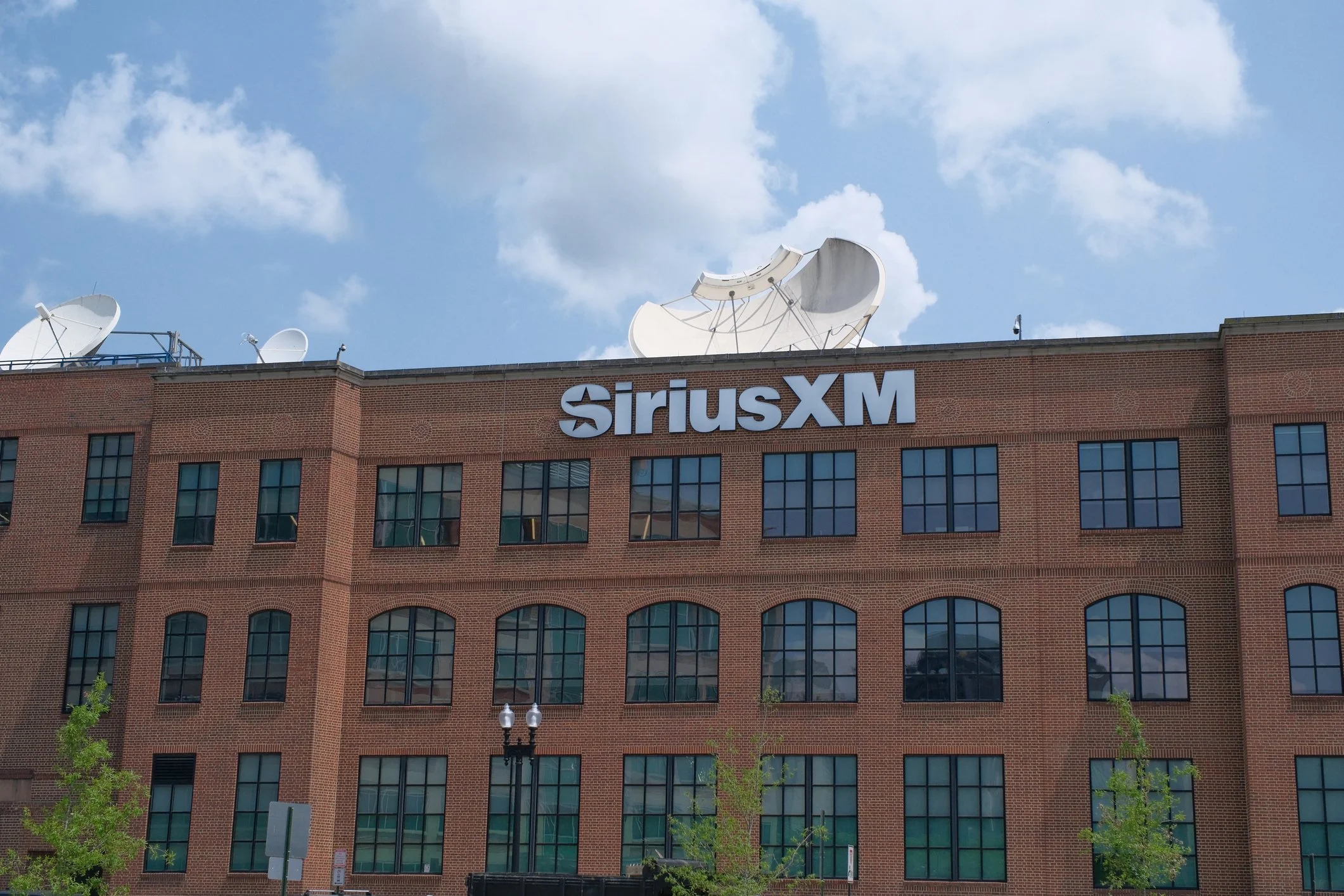
photo by Neal Mcneal.

iHeartMedia's recent financial performance, as reported internally, shows the industry's transformation: podcast revenue surged 26% last year, while its radio division contracted 4%. The company is effectively managing two businesses moving in opposite directions–one growing, one declining.
A combined iHeartMedia-Sirius XM would have estimated $12 billion in combined sales and become the dominant buyer of podcast content, radio programming, and audio entertainment. Yes, potentially overpowering Spotify, but Daniel Ek is onto a different chase; we’ll discuss it in a separate article.
The truth is simple and damn-well known: when there are fewer buyers, creators/crafters/artists have less negotiating power. This ultimately means:
Lower compensation for podcast producers and talent
Reduced creative freedom as a single entity dictates content direction
Homogenization of programming to appeal to the broadest possible audience
Barriers to entry for independent creators who can't access the dominant distribution platform
iHeartMedia's acquisition history is clearly showing a deliberate strategy to control the entire audio technology infrastructure. With Triton Digital ($230M), Voxnest, Radiojar, and Jelli already in its portfolio, iHeartMedia owns critical advertising platforms, streaming technology, and programmatic solutions. Adding Sirius XM's proprietary satellite and streaming technology would create a vertically integrated monopoly controlling both content AND the technology that delivers and monetizes it. It means full control.
Some sources are reporting on an outside, third-party to acquire and merge both companies, but this will not change anything in the following particularly worrisome aspect of the merger:
Competitors would need to license technology from a direct rival.
Independent creators would have no alternative infrastructure.
Innovation would be controlled by a single entity with an incentive to protect existing business models.
Data on listener behavior would be concentrated in one company's hands.
Companies seeking audio advertising would face a near-monopoly in certain segments. The merged entity would control:
The majority of terrestrial radio stations are in major markets.
The only significant satellite radio service.
A massive podcast network.
The advertising technology platforms that facilitate programmatic audio buying (Triton Digital, Jelli).
This concentration gives the company pricing power over advertisers, who have limited alternatives for reaching audio audiences at scale–particularly in automotive environments where both companies dominate. While listeners might see different station names, podcast titles, and channel numbers, they'd increasingly be consuming content controlled by a single corporate entity. This creates illusion of choice while actual diversity diminishes.
iHeartMedia already owns multiple stations in many cities. Adding Sirius XM's satellite / merging the two companies reach would make the combined company virtually unchallengeable in local audio markets, squeezing out independent and community radio stations that provide genuine alternatives.
Media analysts and industry insiders have expressed both interest and apprehension about the potential combination. Juan Carlos Pedreira, an AI implementation and business transformation consultant, noted the directional power dynamic: "Instead of having the largest radio broadcaster buying the satellite and streaming partner is the other way around. Sirius XM will be buying the IP and could care less about the antennas that iHeart owns." This, at its core, reveals the monopoly's true target: not physical infrastructure, but control over content libraries, talent contracts, technology platforms, and intellectual property that can be exploited across all platforms. Thomas J. Thompson, Chief Economist at Havas, emphasized that the merger reflects a fundamental change in how audio creates value. "Scale alone becomes less valuable unless it aligns with how behavior actually occurs," Thompson observed. But here's the monopoly trap: while Thompson is correct that consumer behavior has changed, a monopolistic entity doesn't need to align with behavior–it can simply leverage market dominance to force consumers and creators to accept its terms. When alternatives are nonexistent, the monopoly sets the rules and deals the cards.
This discussion unfold against a backdrop of increasing tension over music industry compensation. The recent legal action by Jo Loewenthal against Universal Music Group over royalty disputes highlights systemic challenges in how artists and rights holders are paid across evolving platforms.
A monopolistic iHeartMedia-Sirius XM entity would gain leverage in these disputes:
Negotiating power over labels and artists: As one of the few major audio distributors, the company could dictate royalty terms rather than negotiate them fairly
Opacity in payment structures: Complexity across broadcast, satellite, and streaming creates opportunities to obscure how royalties are calculated and distributed
Legal muscle: A $12 billion entity can outspend individual artists and smaller labels in legal battles over compensation
Setting industry standards: Whatever royalty framework the monopoly establishes becomes the de facto standard that others must accept
The Loewenthal case exemplifies how artists are already fighting for transparency and fair pay. A merger that concentrates power would make these battles even more difficult.
The fundamental question facing this potential merger: Does combining two businesses under pressure from digital disruption create genuine value, or simply establish monopolistic control over a declining industry?
Justin Ruiss, a Senior Vice President in the media sector, framed the competitive question directly:
The answer is in the monopoly trap: instead of competing through innovation, quality, or value, the merged company would compete through market dominance–owning so much of the audio landscape that consumers, advertisers, and creators have no choice but to engage with it.
The merged company would offer advantages–broader reach, established automotive relationships, local market presence, and dual revenue streams from advertising and subscriptions. But these "advantages" are really just manifestations of monopoly power: controlling access points, locking out competitors, and extracting rents from a captive market.
Any deal would require antitrust approval, with regulators likely to scrutinize the combination of America's largest radio broadcaster and its dominant satellite radio service.
But here's the problem: Antitrust enforcement has been notoriously weak in the context of media consolidation. Regulators often accept industry arguments that:
"The market has changed" (pointing to Spotify, YouTube, podcasts as competition)
"Scale is necessary to compete" (ignoring that scale itself creates monopoly)
"Consumer harm isn't proven" (using narrow price-based metrics while ignoring content quality, creator compensation, and innovation)
The companies will argue that Spotify, Apple Music, YouTube, and other platforms provide sufficient competition. Regulators may accept this argument, even though:
Those platforms operate differently (on-demand vs. broadcast/satellite)
Automotive integration gives iHeart-Sirius unique captive audiences
Local radio markets would still face monopolistic control
Podcast content acquisition would be dominated by one buyer

Is the monopoly solution to these problems?
Cut costs by eliminating competition, reduce creator compensation, raise prices for advertisers and subscribers, and extract maximum value from market dominance rather than innovation.
This potential merger exemplifies a broader reality: when companies can't compete through innovation or value creation, they pursue monopolistic consolidation instead.
The audio industry is experiencing an unbundling-to-rebundling cycle:
Traditional radio's monopolistic control fragmented into podcasts, streaming, and on-demand options
Competition flourished, creators gained leverage, and innovation accelerated, briefly.
Now, consolidation attempts to re-establish monopolistic control under the guise of "necessary scale".
For the broader audio industry, this merger represents a critical test–not of whether legacy media can transform through consolidation, but whether regulators and the public will allow monopolistic control to re-establish itself, once again, in the audio space.
The outcome will shape the future of audio advertising, content creator economics, podcast market dynamics, and whether the audio industry serves shareholders alone or the broader public interests.
As radio fights to remain relevant and royalty disputes reshape compensation structures, the audio industry stands at yet another crossroads. The iHeartMedia-SiriusXM talks may determine which path forward proves viable–genuine competition and innovation, or the same old story of market monopoly presented to the public as a ‘new business strategy’.
The truth is, the problem itself remains unchanged: concentration of power, reduction of choice, exploitation of creators, and extraction of value–all in service of shareholders rather than the art, artists, and audiences that make these things meaningful.
The question is whether we'll recognize the pattern this time, or allow another monopoly to form while claiming it's necessary ‘for scale’ which could be a great time to remind yourself and those around you: you are not powerless. When ‘big’ shifts are on the horizon, the single best thing to do is to stay informed and talk to your local representatives if the issue matters to you and your community.
