
NEWS

“Someone Could Have Been Killed”: Four Tet’s Agent, Teksupport Shows, and Emails Now in State Court
Four Tet at Brooklyn Storehouse, September 2026. Photo by Claire M. Hankin
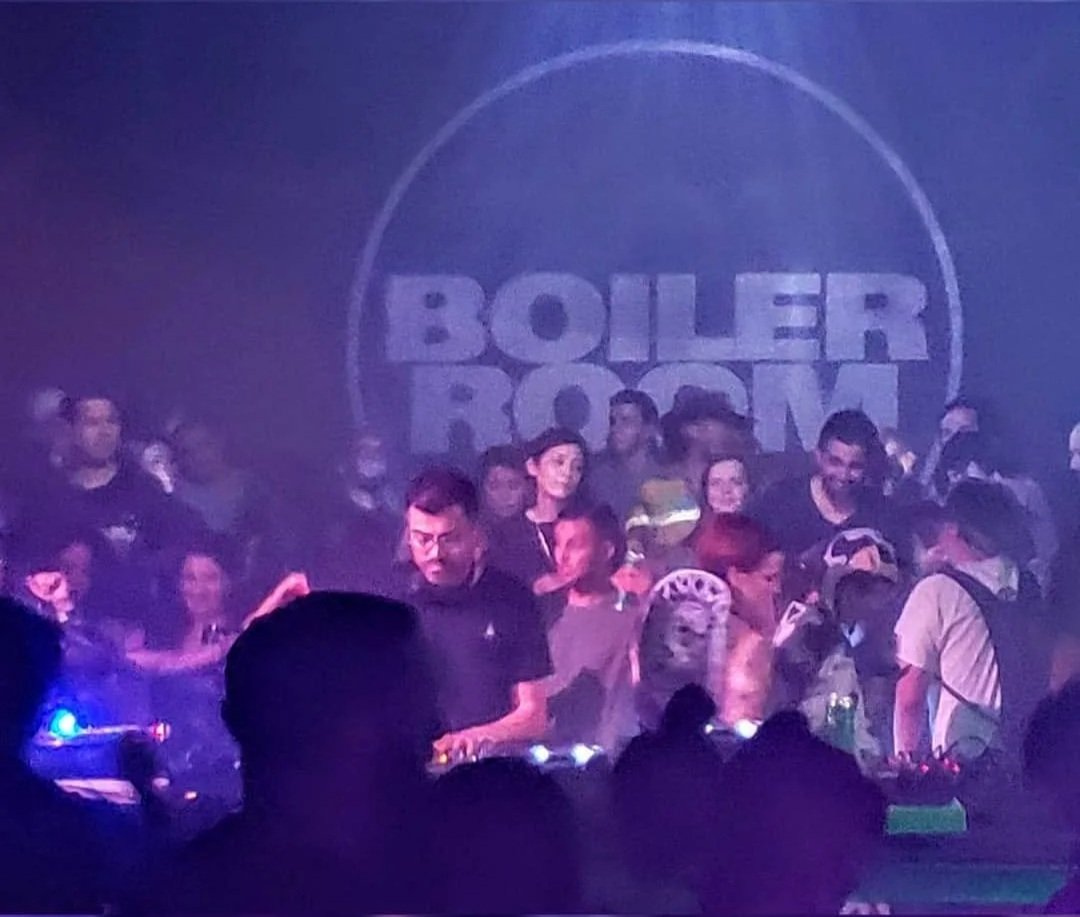
“Someone could have been killed,” wrote Evan Hancock of The·Team (previously Wasserman Music) in an email to Rob Toma, which Toma’s attorney, Ross Fox, quotes in his letter to Judge McCloskey of the New Jersey state court. Three weeks before this email surfaced, Four Tet played two nights for Teksupport at Brooklyn Storehouse.
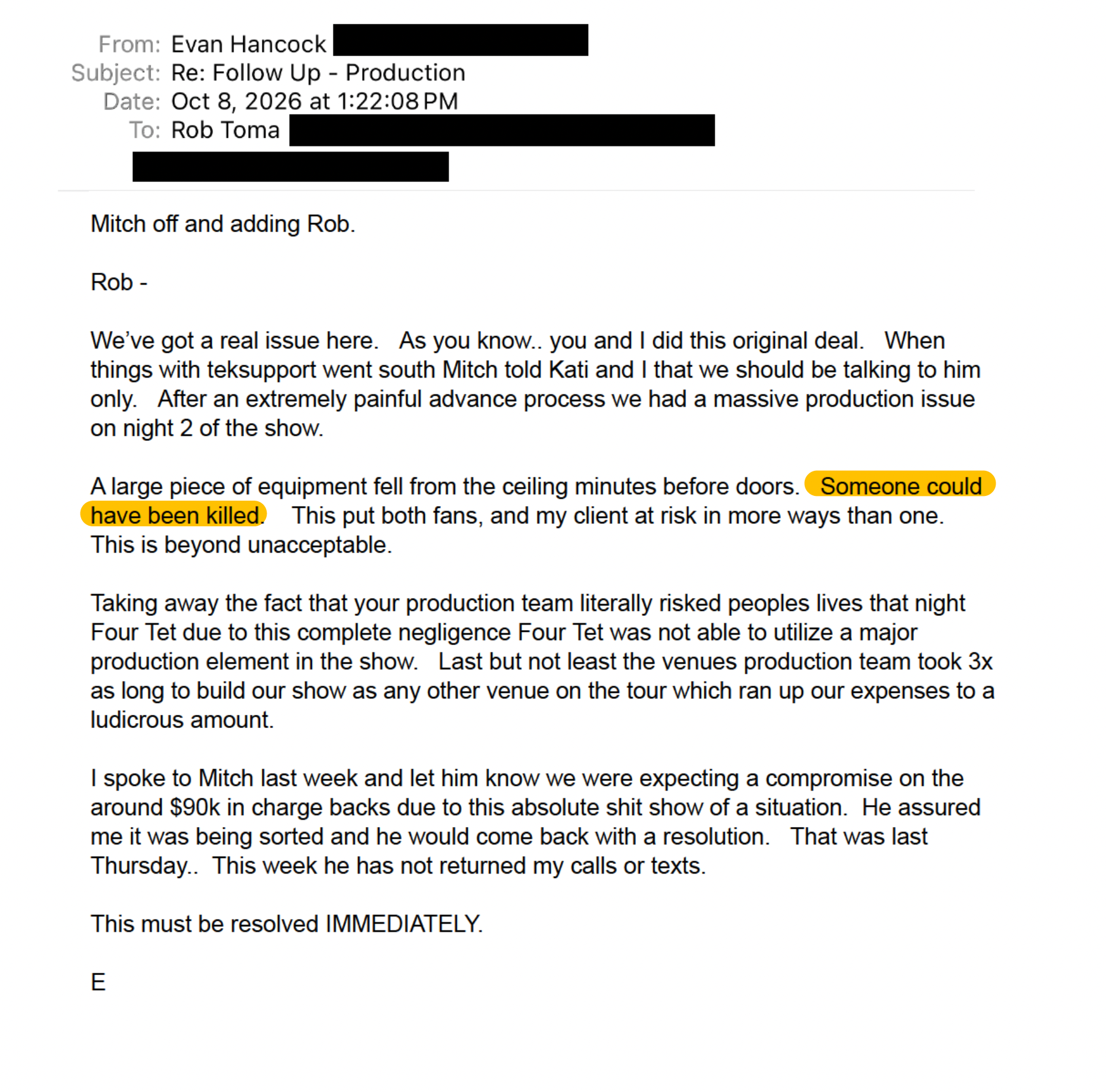
Letter of Ross Fox to Judge McCloskey, October 9, 2026, with Exhibit 1 (email of Evan Hancock, October 8, 2026), Toma v. Vitacco, MID-C-000018-26 (N.J. Superior Court, Chancery Division, Middlesex County)
Fox’s letter says a large piece of equipment fell from the ceiling minutes before doors, and that the production team, Technical Arts Group (TAG), now in bankruptcy court in New Jersey, risked people’s lives. Fox did not have to dramatize anything. He let Four Tet’s agent speak instead, and attached the email. “A large piece of equipment fell from the ceiling minutes before doors,” Hancock writes. “Someone could have been killed.” He says the production team “literally risked peoples [people’s] lives that night,” and that “due to this complete negligence Four Tet was not able to utilize a major production element in the show.”
The situation is problematic to say the least, whichever way you pick to look at it, but the main issue raised in the email is money. Hancock writes that he spoke to Camarda “last week” and “let him know we were expecting a compromise on the around $90k in charge backs.” Camarda, he says, “assured me it was being sorted and he would come back with a resolution.” That was “last Thursday.” “This week he has not returned my calls or texts.” Fox uses the email to argue, in effect, that neither TAG nor Teksupport can organize an event without Toma’s supervision.
On October 13, earlier this morning, the Vitaccos’ lawyers start their response with “Unfortunately… we are forced to respond to Mr. Fox’s litigation-by-letter’s tactics.” Apparently, this is not their preferred method of handling disputes. But set that aside. The Vitaccos’ lawyers dismiss the letter, and they go ahead and submit Exhibit A, the correspondence between Mitch Camarda, a talent buyer at TCE Presents, and Hancock, Four Tet’s booking agent. Another person in these emails is Kati Goldberg, a touring manager at the agency, then Wasserman Music New York.
TAG’s internal report tells it differently. In an email to TCE talent buyer Mitch Camarda dated September 23, J.G., whom the lawyers call TAG’s production lead, wrote that at around 9 p.m. on September 18, “while the artist was sound-checking, we were testing the two motors supporting the 10-foot truss. After bringing the truss to trim, I noticed that a section of chain had come down.” A motor cable had been positioned around the chain-bag side and fouled the chain, he wrote. He fixed it and cycled the motors several times. When the artist’s tour manager asked what happened, J.G. explained, and the tour manager chose not to use the motor movement. “The movement was only planned for one moment in the show,” J.G. wrote. “To clarify, the issue occurred during the programming and testing period—not during the artist’s performance.” Then this: “My understanding is that the artist was not informed before the set to avoid creating unnecessary concern.” Mike Vitacco was copied on the email.
Camarda had asked for the explanation the day before: "I was alerted to an incident involving a chain coming loose on the kinesis. Can you explain exactly what happened? The artist is particularly upset, and I need to provide him with an explanation." J.G. opened his answer with "Sorry for the delay," and said he was "managing several shows and closeouts and am currently onsite."
The Vitaccos’ lawyers read that report as a defense. They write that “the truss did not fall,” that “no one was injured and no member of the public was present,” and that a fault “found in the testing that exists to find it … is not a near-fatality.” They call Fox’s letter “a cheap, bothersome tactic.” Fox, as they quote him, described “a large piece of stage equipment” falling from the ceiling. The filing does not say how far the chain dropped, who was standing under the truss, or when doors opened. A thread filed with the letter lists the second night as “9PM - 2AM.” Unmixed has not independently verified either account.
Was it the first time? Teksupport's name is in two New York State courts, accused of harm. Spence, in New York County, over an October 2023 night at CircoLoco, and Santos Batista, in Kings County, over a July 2024 show, allege that elevated structures broke or fell at Navy Yard events. TCE Presents, Teksupport Worldwide and Toma are named defendants in both. The Navy Yard's development corporation and the City are named in Santos Batista only. Neither complaint names TAG or Vitacco, and neither plaintiff is described as a worker. None of it is proven. Toma's name on both complaints sits awkwardly with the picture of him as the man who kept things safe.
Underneath the Four Tet fight is the older one, over who can run TCE Presents. Read between the lines, Fox's letter makes the case that Toma has always handled problems like this, and that without him TCE is crumbling. The Vitaccos' lawyers say Toma was never cut out of the booking, and they point to Exhibit A: 44 messages from September 29, 2025 to March 11, 2026, with Toma copied on every one. Camarda wrote 24. Toma wrote two. What changed on October 8, they write, is that the agent "removed the person who had been handling his client's matter from the thread and went to Mr. Toma," three days after the October 5 order that ends Teksupport's events on November 7. "That is what an agent seeking funds for his client does when he believes the company is closing," they write. They add that TCE notified Camarda of his termination at 4:26 p.m. that day, twenty-seven hours before Fox filed. Hancock’s own email gives a different account. “You and I did this original deal,” he tells Toma, and “when things with teksupport went south Mitch told Kati and I that we should be talking to him only.”
What we learned here is worth noting for its order: the money request came first, and the email warning that lives were at risk opens “Mitch off and adding Rob.” Hancock also writes that “the venues production team took 3x as long to build our show as any other venue on the tour which ran up our expenses to a ludicrous amount.” Unmixed has not yet heard from TAG’s crew on this.
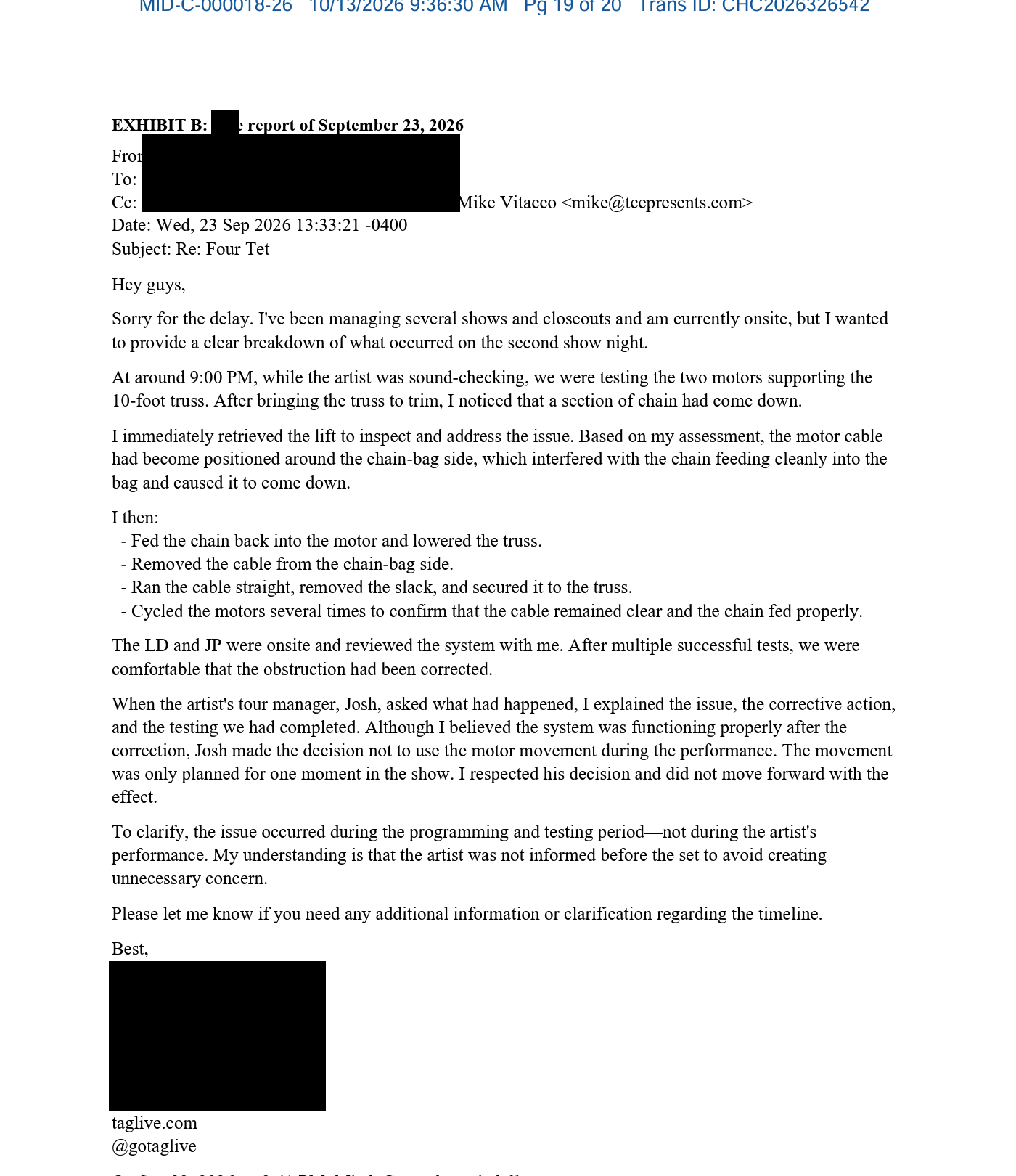
Letter of Daniel R. Guadalupe, Pashman Stein Walder Hayden, to Judge McCloskey, October 13, 2026, with Exhibits B, Toma v. Vitacco, MID-C-000018-26
Follow the money, because Hancock’s email does. The lawyers call the amount production overages and say Fox’s letter leaves it out. The documents do not tie it to the chain. A chain coming down over a stage is serious. In the same email, the agent moves from a threat to life to a bill for about $90,000.
Hancock has a record in the same exhibit. On October 27, 2025, Camarda offered “175K per show (350K) + the production spend ($108, 987) + 40K support budget (20/night).” On January 15, Hancock replied: "We want to move the $40k line item for support into Kierans [Four Tet’s] fee. So we're good to lock at $390k for the 2." Camarda asked, "Does he not want to kick some of that towards the production? Maybe half?" Hancock answered: "Not particularly :)" Kati Goldberg, the agency's touring manager, asked for deposits of 25 percent before the announcement, 50 percent a month before the show and 25 percent the Monday of show week, and on March 11 Camarda wrote that TCE was "good with that deposit schedule!" In the printed thread Camarda never writes the $390,000 figure himself, and the filing does not say whether any of it was paid.
A new name is not a new history. Hancock's agency was Wasserman Music when this booking began. According to Pollstar, it renamed itself The·Team in March, after its founder, Casey Wasserman, said he would sell it following his appearance in the Justice Department's release of the Epstein files. Several artists left the agency, according to reports. Four Tet's agent stayed.
The October 5 order freezes TCE-related entities from November 7 and starts liquidating their assets, and only open production bills from before November 6 get paid. Whoever is owed for this show is now in the same line, crew included, if they are owed. The filing does not say whether they have been paid, or how many people were on that stage when the chain came down. The order's October 9 deadline to terminate "non-essential" employees does not say who counts as essential, or whether TAG's crew are covered.
Here is how Unmixed reads it: after the October 5 court order on Teksupport's wind-down, it is no wonder more bookers will be knocking on Toma's door for repayment. There will likely be more.
The truth is, the filing from Vitacco's side does not say who was standing under that truss. Neither does J.G.'s report. Somebody knows. If you worked at the Four Tet shows, please reach out and tell us how the night actually went backstage with the production crew. Email us at editor@unmixed.org.
BREAKING: Court Orders Teksupport Shut Down, Staff Cuts by Friday
Teksupport, one of New York's biggest nightlife promoters, has been ordered to stop throwing events. On October 5, 2026 Judge Thomas D. Mcloskey of the Superior Court of New Jersey issued an eight-point ruling in Toma v. Vitacco legal battle over TCE Presents, the company behind Teksupport.
The order follows a court-appointed Special Fiscal Agent Ian Lagowitz's preliminary report. It's first point leaves no room for second guessing: "Effective November 7, 2026, there will be no more events through TCE/Toma Vitacco Entities."
Non-essential staff cut off much earlier, as the order states they “shall be terminated by October 9, 2026.”
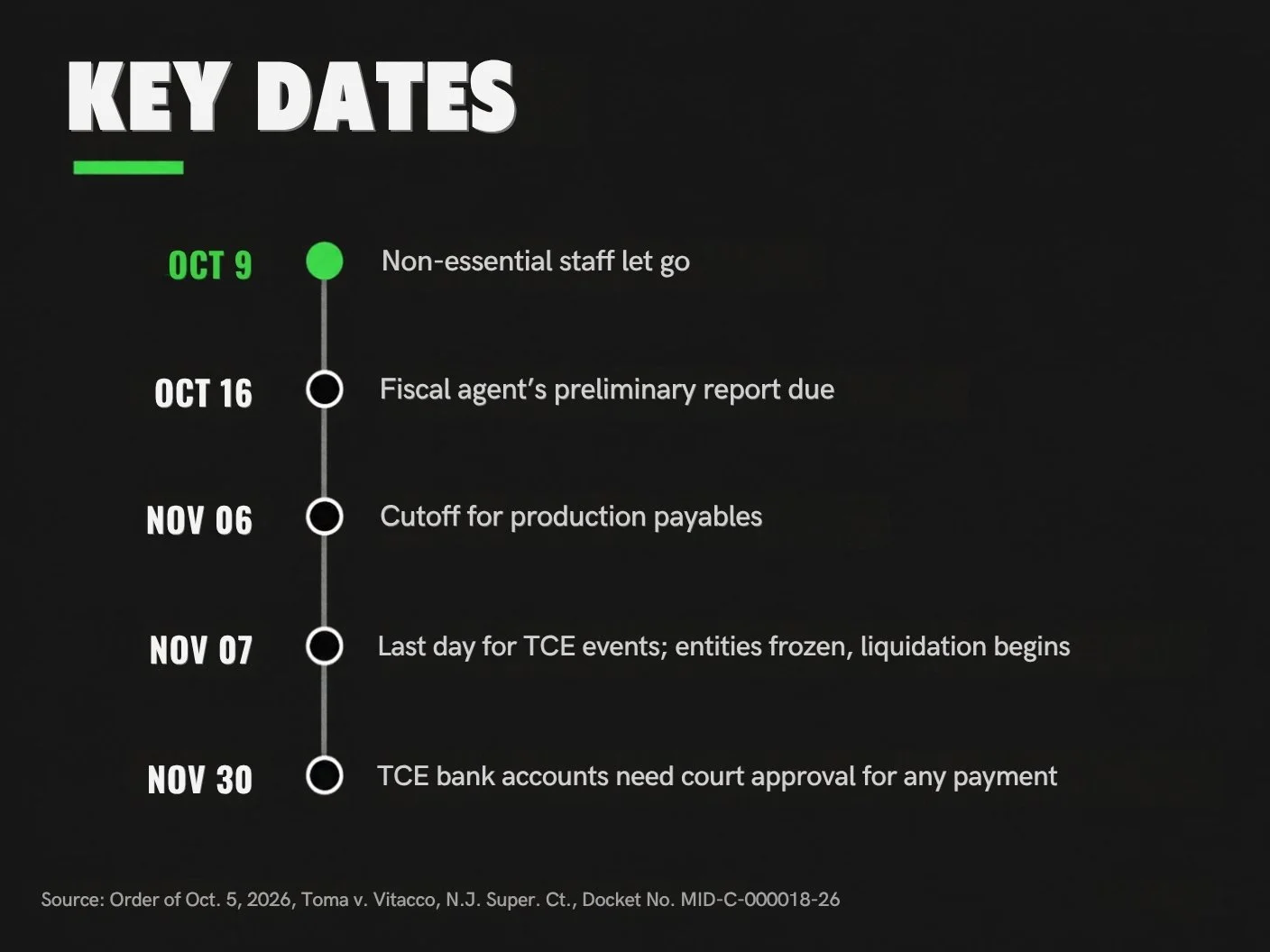
The four-page order accepts and adopts recommendations from Ian Lagowitz, who was appointed as a Special Fiscal Agent to this case mid-July. It does not say what Lagowitz has found. His preliminary report is due on October 16.
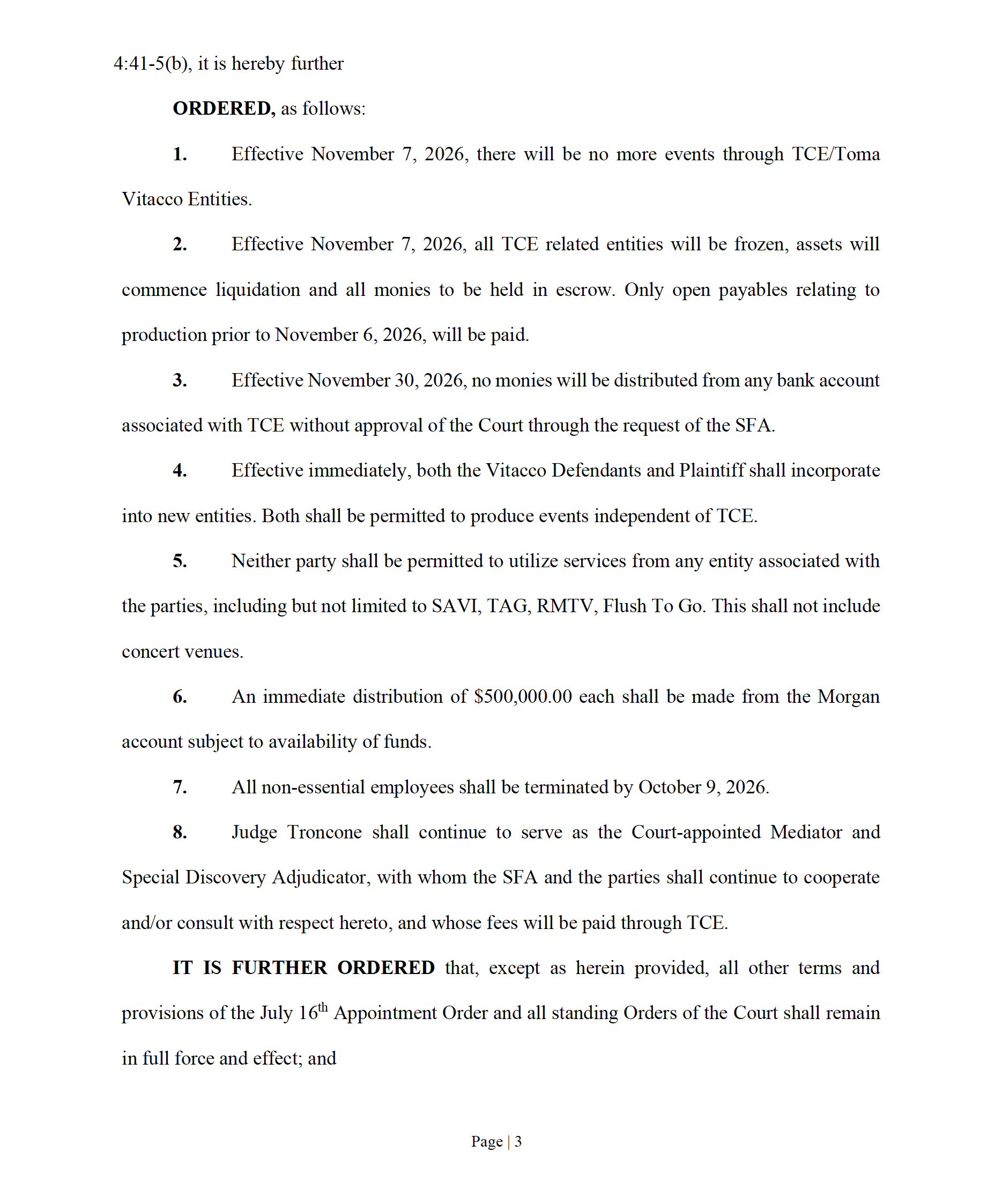
Page 3 of the October 5, 2026 order adopting the Special Fiscal Agent's interim recommendations. Toma v. Vitacco, N.J. Superior Court, Chancery Division, Middlesex County, Docket No. MID-C-000018-26.
From November 7, all assets will be frozen, and TCE will begin liquidating its assets, and their money will be held in escrow. Bills will be paid only for production of the shows before November 6. From November 30, there will be no transactions from TCE’s bank accounts without court’s approval.
The partnership is being split up. Vitaccos and Toma must each “incorporate into new entities.” and may produce events independently of TCE. Neither party may use services from any entities associated with the parties, “including but not limited to SAVI, TAG, RMTV, Flush To Go.”
The same court order also calls for “an immediate distribution of $500,000.00 each” from the “Morgan account,” subject to avalibility of funds”. It does not say who receives the money.
Retired Judge Troncore stays on court’s mediator and special discovery adjudicator, with fees, paid through TCE. The parties can still object to the orderunder the court rules, and an August 21 hearing is still waiting for a new date.
Unanswered questions remain:
Who are the non essential workers, and how many?
What about an event on November 6, when payables are only covered “prior to November 6”?
Who will own the “teksupport” name once its assets are liquidated?
How will this impact TAG’s bankruptcy ruling?
Unmixed will continue to report on the latest developments as this story unfolds.
October 16: Unmixed’s Panel Discussion at Signal NYC
MORE


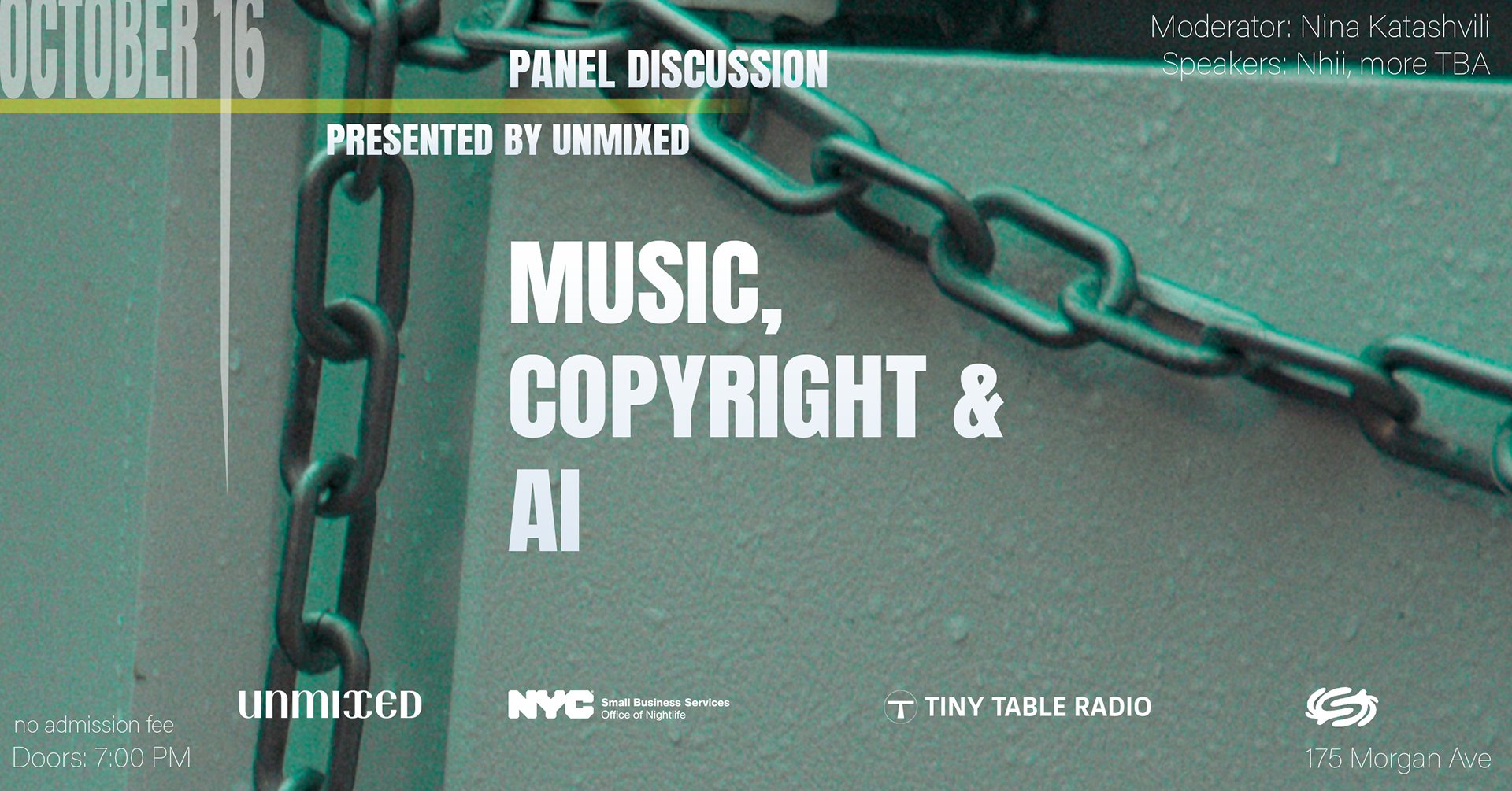
Panel Discussion: Music, Copyright & AI
Recent reporting on AI and music, including Unmixed’s conversation with Nhii, has highlighted the need to bring more light and clarity to this seemingly complicated topic.
On October 16th, the discussion will continue at Signal NYC.
Understanding copyright processes and registration for royalty collection is essential, particularly for independent musicians and rights holders. The first segment of the panel will cover these topics by reviewing current mechanisms, how they operate, and relevant registration procedures.
Following the keynote presentations, a panel will examine the evolution of royalty streams and copyright law in music, spanning from the first U.S. Copyright Act in 1790 to the present day in 2026. The discussion will also address the impact of artificial intelligence on the already complex relationships among artists, rights holders, venues, and intermediary institutions.
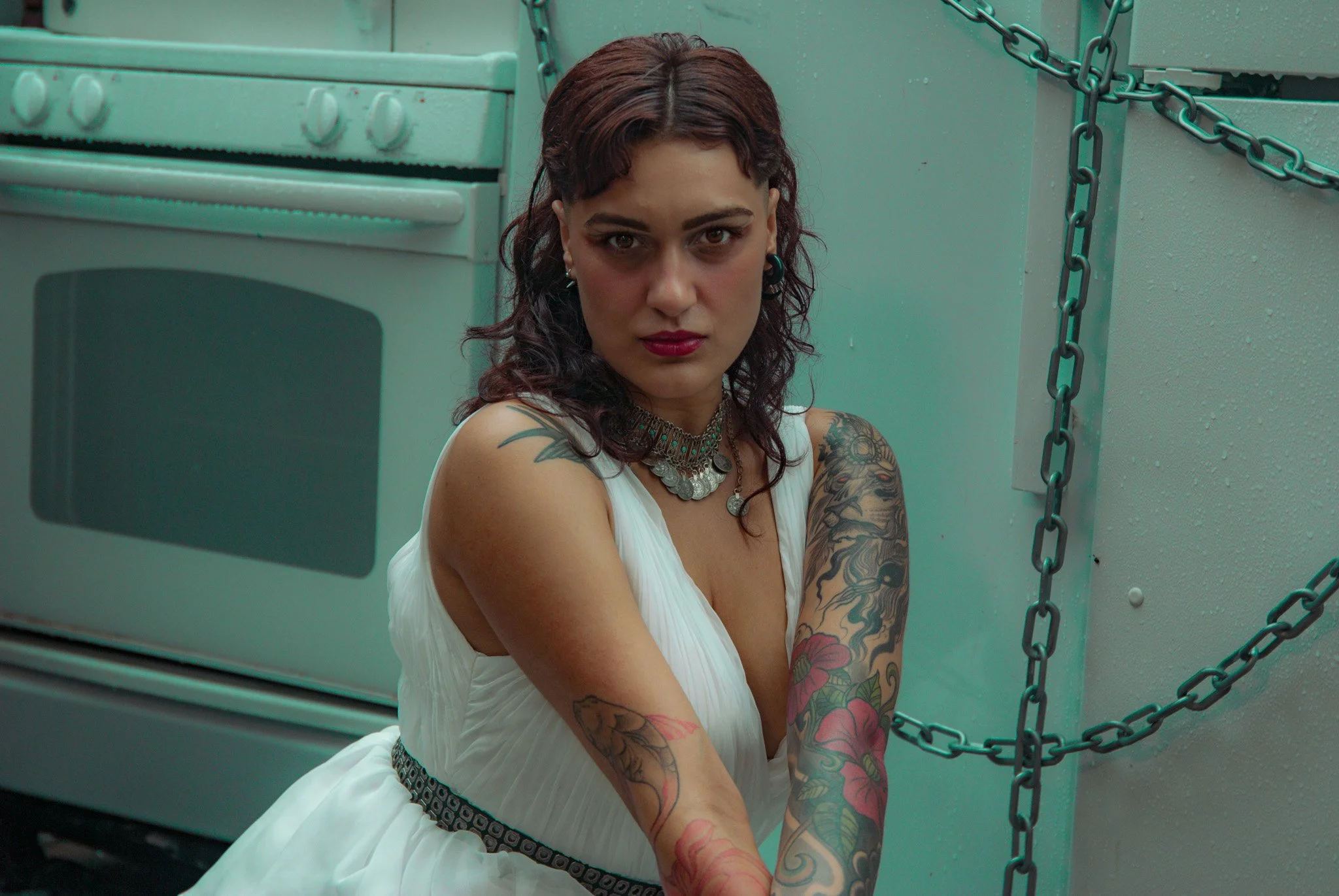
Nina Katashvili, founder and editor-in-chief of Unmixed, will moderate the panel. Drawing on her experience tracking music lawsuits, recent reporting, and expertise in U.S. copyright law. Her knowledge of recent AI licensing developments gives her a comprehensive understanding of the latest music tech advancements.
Nina Katashvili studied at the Tbilisi State Academy of Arts–the most prestigious fine arts school in Georgia. She moved to the Polk School of Communication at Long Island University’s Brooklyn campus, which houses Roc Nation, the music school co-founded by Jay-Z. By then, Nina had already earned certificates in Music Business and Copyright Law from Berklee. Therefore, Roc Nation’s affiliation enabled her to pursue coursework in Music Business and Artist Management even further.
As a member of Investigative Reporters and Editors (IRE), Nina Katashvili applies the same investigative rigor to the legal aspects of the music industry. She is widely regarded as a leading contemporary figure in this journalism.
Before founding Unmixed, Nina Katashvili co-founded a music label, Beat On Time, with her partner, Saqib, in Brooklyn, NY, in 2021. Through this label and related ventures, she has collaborated with over 50 artists, including many debuting their work, by guiding them through copyright law and offering consistent support within the independent music ecosystem.
Currently, Nina Katashvili runs Unmixed, an ad-free platform that highlights stories often excluded from public relations materials, marketing strategies, and mainstream media. Unmixed promotes open dialogue, critical thinking, and accountability among its audience.
The event is brought to you by Unmixed, in collaboration with:
NYC Office of Nightlife (ONL) - the central point of contact among the nightlife industry, community, and city agencies, working to ensure a more vibrant, viable, safe, fair, and well managed nightlife environment in New York City.
Tiny Table Radio - an independent media platform and interview series based in Williamsburg, featuring intimate conversations and DJ sets with underground electronic music artists.
Signal NYC - a music-forward cultural space built on inclusivity, curiosity, and quality, cultivating a respectful, engaged crowd and a hospitality-driven experience where people can engage with music, ideas, and each other.
SUBMIT YOUR QUESTIONS:
AI Music Lawsuits Tracker
Following our ongoing reporting on music copyright law, we’re introducing an online tracker so the independent artists can stay on top on the latest news, updates and rulings on the AI music lawsuits
Last updated October 15, 2026 · 0 cases tracked
0 of 0 cases shown
No cases match that search.
How this is kept up to date: this list is curated from court filings and reporting (Billboard, Music Business Worldwide, Reuters, Rolling Stone, Variety, and the underlying dockets). It is not an automated legal feed — treat status here as directional and confirm anything you plan to cite against the primary source linked on each case.
MORE
NEWS
ESSAYS & CRITIQUES

INTERVIEWS



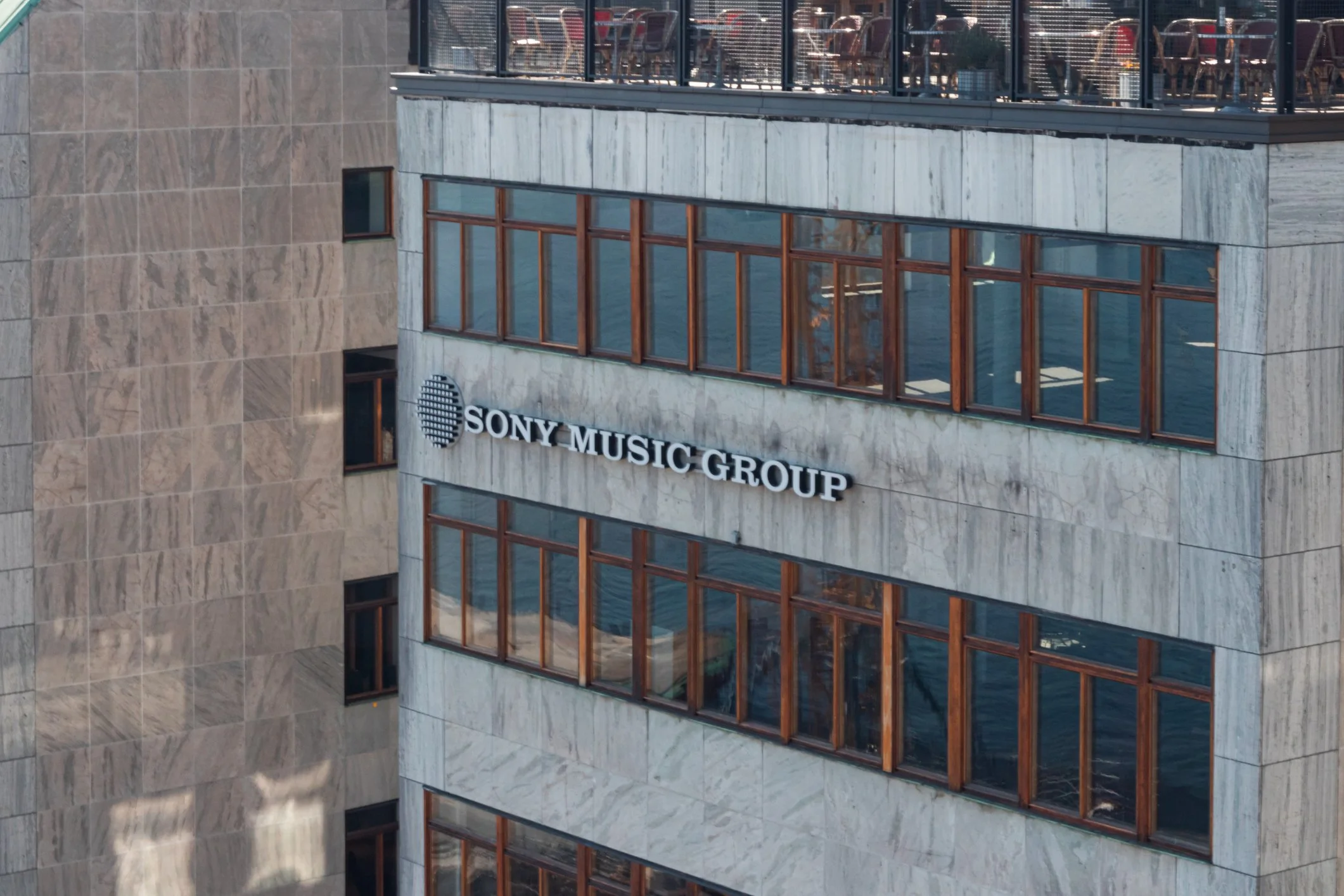
British-Australian Artist, Alexandra Hainsworth, Sues Sony Subsidiary Over Unpaid Royalties as Industry Pattern Emerges
British-Australian artist Alexandra Hainsworth has filed suit against The Orchard Enterprises NY, Inc., a Sony Music subsidiary, alleging copyright infringement and breach of contract in Auckland High Court (CIV-2025-404-001640). The case adds to a growing list of legal actions against the same defendant, suggesting systemic issues in how the company handles independent artists' catalogs.
Hainsworth claims The Orchard has withheld royalties and blocked the release of new music, including a collaboration with Brazilian producer VINNE, for over 20 months. The Orchard declined to comment when contacted by Unmixed.

This is not a first time such case arises; the patter has been well documented. In Crisci v. Sony Music Entertainment (2025 NY Slip Op 51494), artists Patrick Crisci and Elena Bushmanova sued after their album was passed through a chain of corporate hands–Century to Red Music to Orchard–and Orchard then declined to release it, with the court allowing their claim for unpaid advance installments, tour support, and production costs to proceed.
In another instance, Giron v. The Orchard Enterprises, Inc. (SDNY 1:25-cv-00055), photographer Joe Giron sued for copyright infringement in January 2025. Orchard settled and dismissed the case with prejudice within three months, demonstrating the company can move quickly when it chooses to.
Money has been predominantly the biggest obstacle for independent artists to even begin court proceedings, and the they do, they are hit with suited up lawyers and money bags that outweigh any independent musicians financial resources all while their main strain of income is being at the center of dispute.
There’s nothing new about this when it comes to major labels. Prince spent years fighting Warner Bros. for control of his masters, appearing with "slave" written on his face; Taylor Swift re-recorded her entire catalog after her masters were sold without her consent; TLC filed for bankruptcy in 1995 despite selling millions of records, citing exploitative contracts.
Sony Music Entertainment spent $380,000 on lobbying in Q1 2026 and $410,000 in Q4 2025, according to LD-2 disclosure forms. The company lobbied on copyright protection, "fair compensation and rate standards for rightsholders," AI regulation including the TRAIN Act and No Fakes Act, and efforts to modernize the Copyright Office and update the DMCA.
What those expenditures don't disclose is how the system is designed. Spotify doesn't pay royalties on streams under 1,000 plays, that money flows back to the top under a pro-rata mode that allocates revenue based on total platform streams, benefiting major artists and labels while leaving emerging musicians with negligible returns. Let me repeat this, nobody is getting paid based on how many streams they have, they are getting paid by the portion of a whole which inevitably serves the top tier and leaves out smaller musicians with zero dollars flowing their way, if the streams don’t meet the 1k threshold.
Meanwhile, artists are selling their entire catalogs, convinced by financial advisors this is the best way to earn money retroactively. Anyone who puts an artist in a position where they must sell their “house” (aka their ownership of music) and rent it back should be considered an enemy of independent artists.
Hainsworth's case remains active in Auckland High Court. Her legal team has named Orchard Enterprises NY, Inc. specifically, not Sony Music Entertainment directly, a strategy validated by the Crisci ruling, which dismissed Sony corporate on privity grounds.
There was a time, not long ago, when signing with a major label was what musicians dreamed of. That system has changed, and we need to pay closer attention to it.
Artists Accuse APRA AMCOS of Blocking Access to Records Amid Licensing Review
As APRA AMCOS seeks another five years of authorization from the Australian Competition and Consumer Commission (ACCC) to continue operating its collective licensing framework, a growing number of artists and members are raising concerns regarding governance practices, royalty transparency, and access to company records.
By Nina K. Malik
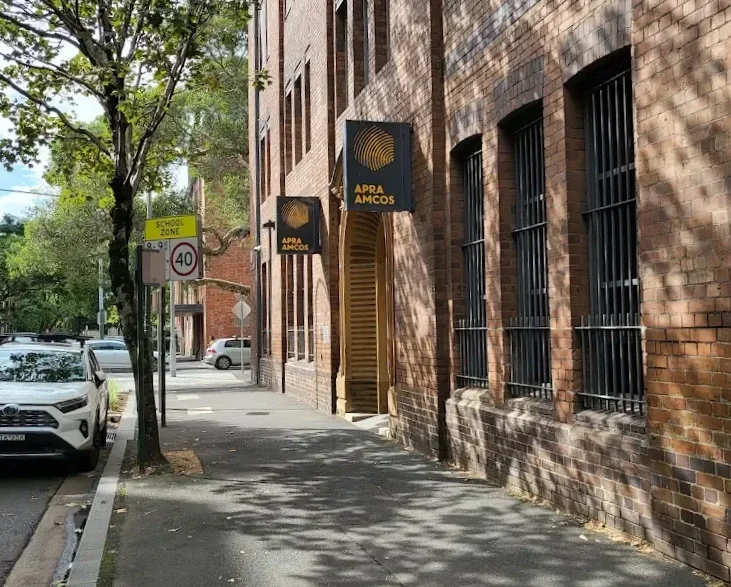
APRA AMCOS. Ultimo, Australia photo by John Karmas
AsAPRA AMCOSseeks another five years of authorization from the Australian Competition and Consumer Commission (ACCC) to continue operating its collective licensing framework, a growing number of artists and members are raising concerns regarding governance practices, royalty transparency, and access to company records.
Australian musicians and APRA AMCOS members Hein Cooper and Billy Otto allege they were denied access to general meeting minutes during a recent visit to APRA AMCOS offices. According to statements provided by the artists, staff informed them that the records were “not on premises” when they attempted to inspect them during designated access hours.
The artists argue the incident may conflict with provisions of Australia’s Corporations Act 2001 and APRA AMCOS’s own Constitution regarding member inspection rights.
APRA AMCOS maintains reciprocal agreements with numerous international collecting societies, includingASCAP in the United States, allowing affiliated organizations to administer and distribute royalties across jurisdictions.
Jo Loewenthal, a member of APRA, has filed an official complaint and made several claims regarding royalty reporting systems, member data access, and artists' ability to independently verify international royalty payments. His allegations include duplicate transaction records, unexplained negative royalty entries, and limitations in the underlying usage data provided to artists by collecting societies.
Separate concerns regarding APRA AMCOS's licensing framework have also been raised by Heart Music Group (HMG), an independent licensing company that recently submitted an interested-party filing to the ACCC as part of the reauthorization process. In its submission, HMG argued that APRA AMCOS's current opt-out and license-back framework creates structural barriers preventing commercially viable direct licensing within the background music market. HMG further argued that writers seeking venue-specific direct licensing opportunities are effectively required to opt out across broader categories of public performance income, creating what the company described as commercially impractical. In the same filling HMG has outlined “Real and Ongoing Harm” stating “participation becomes dependent on ownership structure rather than merit;” in their filing, HMG requested that the ACCC require venue-specific opt-out functionality and enforceable processing timeframes as conditions of any renewed authorization granted to APRA AMCOS.
The ongoing dispute has also expanded into criticism of the ACCC’s handling of APRA AMCOS’s current reauthorization process. According to correspondence reviewed by Unmixed, formal objections have since been submitted to the ACCC, and members of parliament and senators were copied into requests for additional oversight.
“The regulator overseeing this decision is making it harder for artists to submit evidence at the exact moment the decision is being made,” Loewenthal wrote in a public statement.
has focused on APRA AMCOS’s FY2025 financial filings lodged with the Australian Securities and Investments Commission (ASIC). The filings report approximately $214 million in royalties collected but not yet distributed, while current liabilities exceeded current assets by roughly $55 million. Administrative, finance, and legal costs also increased by 24.7% over the previous year.
“The $214 million in royalties payable is not APRA’s money,” Loewenthal wrote in correspondence with Unmixed. “It is member money held in trust, a liability owed to members, not an asset belonging to APRA.”
Loewenthal has further raised concerns about governance structures within APRA AMCOS, noting that executives from major publishing companies, including Universal Music Publishing and Sony Music Publishing Australia, serve on the organization’s board, while independent artists simultaneously pursue royalty and contractual disputes with those same companies.
In a statement provided to Unmixed, APRA AMCOS rejected suggestions that company records are inaccessible or improperly maintained, stating that inspection procedures operate in accordance with the organization’s Constitution. The organization also defended its royalty distribution framework and financial position, stating that sufficient non-current assets exist to meet obligations disclosed in its FY2025 filings.
APRA AMCOS maintains that its licensing framework remains necessary for the efficient collection and distribution of royalties across the Australian music industry.
The ACCC review remains ongoing.
For some artists involved, however, the dispute has evolved beyond royalty accounting itself, becoming a broader debate over transparency, oversight, and the relationship between collecting societies and the creators whose royalties they administer.




U.S. Copyright Office Fee Hike Faces Industry Response
U.S. Copyright Office proposed the registration fees’≈43%
increase. In return, they received 164 comments from some of the nation's most influential creative and news organizations; the response suggests widespread concern about the accessibility of copyright protection.
The U.S. Copyright Office is proposing fee increases that have united creators across the board in opposition from musicians, writers, painters, and related organizations.
by Nina K. Malik
U.S. Copyright Office proposed the registration fees’
≈43%
In return, they received 164 comments from some of the nation's most influential creative and news organizations; the response suggests widespread concern about the accessibility of copyright protection. The Office connects the measure to inflation-linked cost recovery. However, industry leaders argue the move is predicated on flawed financial analysis and threatens to raise significant barriers for the very creators the system is designed to protect.
Music registrations have been steadily decreasing, as reflected in U.S. Copyright Office Annual Reports. In 2023, there were 147,477 music-related registrations; by 2024, that number had dropped to 146,827, and in 2025, it fell further to 137,476–a 6.4% decrease in just one year. This decline is part of a broader trend: overall registrations across all creative works fell from 441,526 in 2023 to 415,780 in 2025. these numbers reflect wider challenges with accessibility and affordability throughout the creative sector.
The American Association of Independent Music, the Recording Academy, and the Songwriters Guild of America detailed in joint filings how streaming economics–with per-stream payouts of fractions of a cent–have created what they describe as "dire" economic conditions for independent artists. The Authors Guild presented survey data showing that over 63% of its members have used the lower-cost Single Application, and that the proposed fees would likely prevent 30% of respondents from registering their works in the future, with another 31% uncertain if they could afford it.
With AI tools on the rise and creators being squeezed out of the Office, it will likely be much harder for creators to file class-action lawsuits against AI developers over copyright infringement because, without registration, creators cannot seek statutory damages or attorneys' fees–the economic tools that make enforcement viable for individual artists.
The proposed fee increases arrive amid an unprecedented transformation of music intellectual property into a global financial asset class. According to new WIPO research, at least $20.4 billion has poured into music rights acquisitions since 2019, with financial giants including BlackRock, Blackstone, and Apollo Global Management building in-house funds to acquire catalogs from artists like Britney Spears ($200 million), Justin Bieber, Bruce Springsteen, and Pink Floyd.
WIPO analysis shows media coverage of
"music rights securitization"
exploded from 56 articles in 2014 to 450 by 2024–outpacing all other music industry news categories. U.S. Copyright Office data reveals that music rights transfers increased 65% by 2020, while the use of music rights as collateral in financial transactions nearly doubled since 2010. Investors increasingly target established catalogs.
Why the boom? The streaming economy has made future revenues predictable and transparent. WIPO research analyzing platforms like K-pop-focused Musicow shows music IP assets remain largely insulated from stock market fluctuations (market beta of approximately 0.07), offering institutional investors portfolio diversification with stable, above-market returns–particularly appealing to pension funds seeking alternatives to traditional bonds.
While Wall Street values established music catalogs at hundreds of millions and institutional investors pour billions into acquiring rights, individual creators struggle to afford $65-$95 registration fees to protect new works. This fee structure threatens to concentrate IP ownership among those who can already afford protection, leaving emerging artists vulnerable in face of AI-generated content and digital infringement.
Several major industry groups, including the Association of American Publishers (AAP), the Recording Industry Association of America (RIAA), and the News/Media Alliance (NMA), have strongly criticized the methodology the Copyright Office used to justify its proposed fee increases. They argue that the Office's cost study artificially inflates expenses by including overhead from departments not directly tied to registration services, such as policy and international affairs–a major departure from how costs were calculated in the 2020 fee study.
According to the NMA, this change has caused overhead costs to soar, now totaling $5.41 in overhead for every $1 spent on actual registration work, compared to just $1.14 a few years ago. The RIAA asserts that these questionable calculations directly affect the proposed fees. The AAP further notes that the study fails to account for the substantial value of deposit copies that copyright applicants provide to the Library of Congress, which the Library values at nearly $58 million per year.
Critics also stress that the Office did not analyze how fee hikes might discourage creators from registering their works, despite several years of declining registrations–a trend that, if worsened, could ultimately negate any intended revenue gains and erode the public copyright record.
Compounding the frustration is the Office's long-delayed and costly IT modernization project. Industry groups question why applicants using what they describe as a deficient, outdated system are being asked to further fund the development of the new Enterprise Copyright System (ECS) through registration fees.
The Association of American Publishers stated:
"The Office's services have fallen short as issues persist for rightsholders using these services. Progress on the Office's IT modernization effort has not been adequately reported and remains murky, which compounds the difficulties in justifying the proposed fee hikes."
Not all comments were in opposition. The United States Internet Preservation Society (USIPS) supported the proposal, arguing that the Office's cost recovery is "unsustainably low" and that American taxpayers should not subsidize the system for its users. USIPS also supports eliminating the Single Application, contending it attracted a high number of unqualified submissions and that higher fees would encourage more carefully prepared applications, thereby improving the quality of the public copyright record.
The impassioned response to the proposed copyright fee schedule for 2026 has crystallized a fundamental debate: Is copyright registration a self-funded government service that should achieve full cost recovery, or is it the foundational infrastructure of the creative economy, requiring accessible pricing to fulfill its constitutional mandate to "promote the progress of science and useful arts"?
The Office itself has previously acknowledged this tension. In its 2020 fee study, the Office stated it "must set fees such that each new fee recovers a reasonable percentage of the cost of processing the claim, but does not result in a more permanent disincentive to register works and a long-term decrease in fee receipts."
The current proposal's statement that "while the proposed increase in fees may reduce service volume, at least temporarily, the decrease should be offset by a more consistent long-term level of cost recovery" represents a notable shift in philosophy that critics argue prioritizes revenue over participation.
As the Office weighs the
164 comments,
its decision will have real-world consequences for American creators' and journalists' ability to protect their work in an increasingly complex digital landscape, particularly as unauthorized AI scraping operates with few guardrails and threatens to undermine intellectual property laws and regulations.
The convergence of declining registrations, collapsing commercial windows for new music, and a $20+ billion institutional investment boom in established catalogs reveals a system increasingly inaccessible to the creators it was designed to serve. Fee increases threaten to accelerate this divide, concentrating IP protection among legacy rights holders while leaving emerging artists vulnerable in the digital age.
The Copyright Office has issued a separate notice of inquiry (NOI) to gather public input on possible alternative fee structures for registration services that could be adopted once the new Enterprise Copyright System (ECS) Registration component is in place. The Office will use this information to analyze the feasibility and desirability of alternative fee structures, including their potential economic impact.
Written comments must be received no later than 11:59 p.m. Eastern time on June 24, 2026.
This inquiry is separate from the Office's pending rulemaking proceeding that proposes adjustments to the current fee schedule. Information about the proceeding is available on the Copyright Office Fee Study rulemaking webpage.
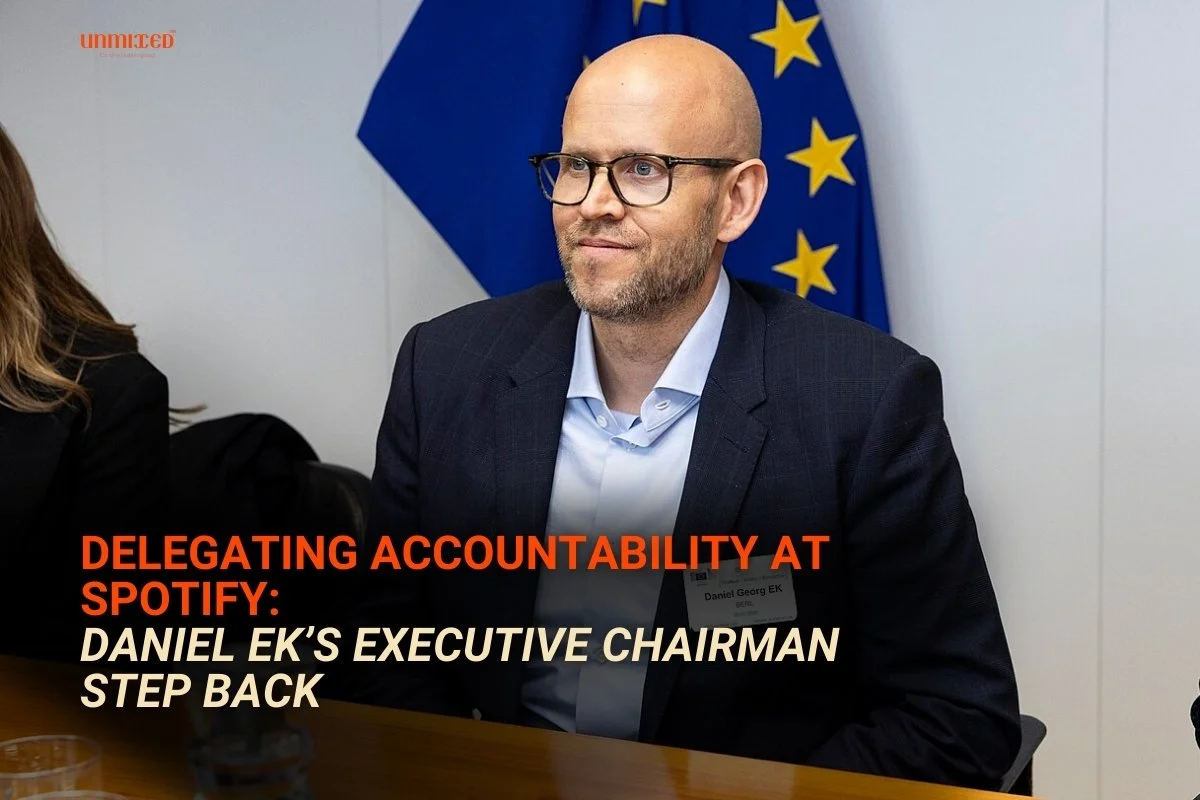
Delegating Accountability at Spotify: Daniel Ek’s Executive Chairman Step Back
Spotify founder Daniel Ek’s move to executive chairman looks like a step back–but what happens to accountability, artist payouts, and platform power when founders ‘delegate’?
Daniel Ek trades the CEO title for 'going quieter' and operating under the radar, not for less control.
words by Maya Lee
There is a familiar maneuver in the contemporary governance playbook: the leadership step-back that does not constitute an actual leave.
After stakeholder pressure consolidates–whether from investors, advocacy groups, or an intensified governance cycle–the announcement arrives in language calibrated to suggest consequence without delivering structural divestment. The founder will “transition.” The CEO will “refocus on long-term strategy.” Day-to-day operations will be “entrusted to a strengthened leadership team.” Headlines complete the inference.
In coverage of Daniel Ek and Spotify, this sequence frequently stabilized into a resignation-adjacent narrative: stepping down, relinquishing control, making way. Trade press and cultural outlets alike reproduced the framing until the distinction between operational management and ultimate authority collapsed into institutional shorthand.
Authority, however, did not exit the building.
Photo: © European Union, 2025 – Audiovisual Service of the European Commission. “Visit of Daniel Ek, co‑founder and CEO of Spotify, to the European Commission, 25 February 2025”
Ek’s movement toward an executive-chair posture reallocated involvement away from daily execution and toward long-horizon strategic direction, while senior executives assumed operational cadence. The optics register as retreat; the governance reality registers as consolidation–continuity of vision, insulation from execution-linked scrutiny, and preservation of founder-level agenda-setting power without day-to-day attribution.
It is distance without disappearance.
The Executive Chairman designation performs dual institutional functions. Outwardly, it signals responsiveness: leadership structure updated in alignment with stakeholder expectations, organizational maturation beyond founder-centric management. Inwardly, it preserves decision rights over capital allocation, strategic partnerships, acquisition appetite, platform policy, and the tempo at which the firm determines its future configuration.
This configuration is not anomalous to Spotify; it reflects a broader contemporary template.
Operational authority migrates downward to co-presidents or joint CEOs–roles structurally positioned to absorb scrutiny associated with execution risk–while the founder’s remit shifts upward into domains less legible to quarterly accountability but more decisive over long-term institutional trajectory. Media ecosystems optimized for personnel turnover frequently translate this into a clean break. Organizational continuity persists under a redistributed configuration of visibility.
That distinction becomes legible at points of formal stakeholder interface. During Spotify’s Q4 2025 earnings webcast, Founder and Executive Chairman Daniel Ek appeared alongside the company’s co-Chief Executive Officers and Chief Financial Officer to address investor inquiries regarding capital allocation, long-term strategy, and forward priorities. The CEO title migrated; the accountability channel did not.
Stakeholders implicated in this governance architecture include:
Public market investors
Institutional asset managers
Label partners
Rights-holders
Independent distributors
Artists whose royalty flows are governed by platform policy
For musicians, this leadership configuration directly conditions how their work is surfaced, monetized, and paid.
Spotify’s strategic determinations structure discovery mechanics (algorithmic weighting, editorial surfaces), monetization pathways (ad-supported versus subscription revenue mix), payout frameworks (per-stream accounting versus alternative allocation systems), and contractual arrangements with labels and aggregators that flow downstream into artist income. When founder-level agenda-setting authority remains intact–irrespective of daily managerial reassignment–the platform’s economic architecture remains anchored to the same strategic center.
Execution may be distributed. Policy direction is not.
In reputational terms, the step-back reduces the individual visibly attached to execution while maintaining the individual institutionally positioned to determine strategy. Operational work proceeds. Strategic authorship persists. Public language updates its verbs from runs to oversees.
Control remains constant; attribution is what changes.
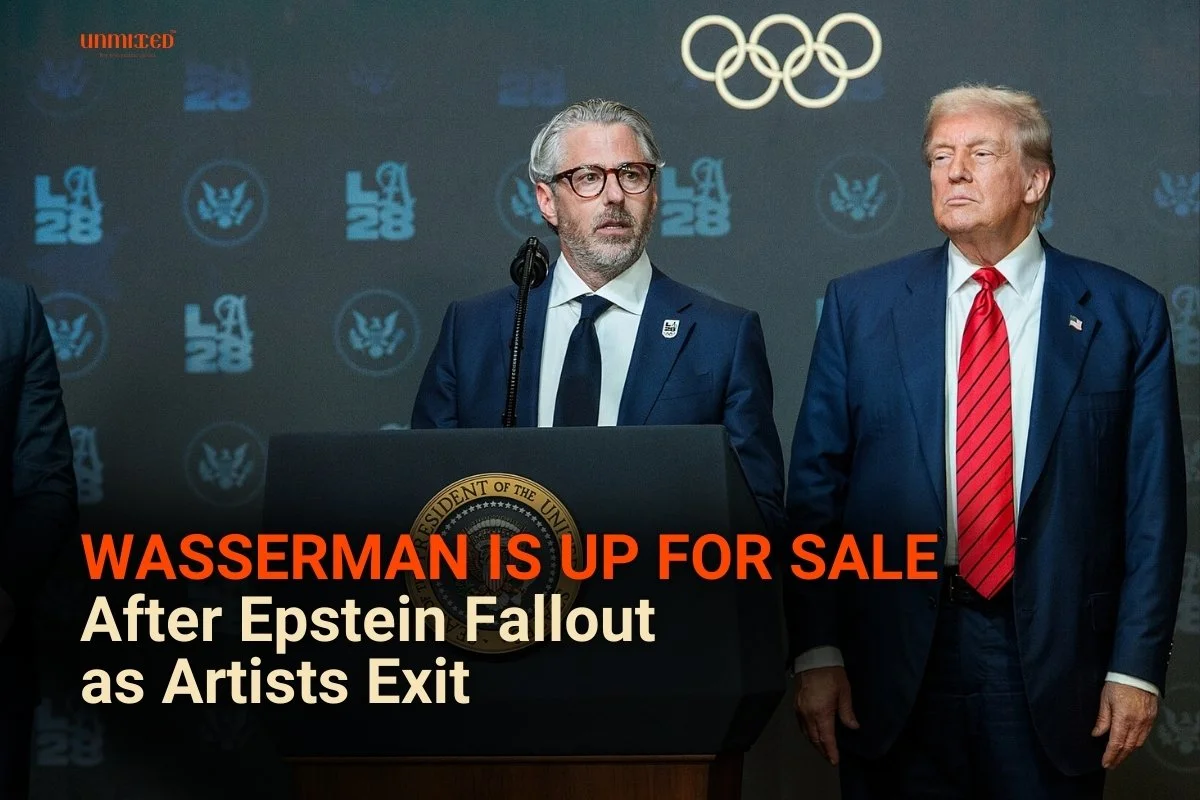
Wasserman Is Up for Sale After Epstein Fallout as Artists Exit
Wasserman is exploring a sale after Epstein-related documents resurfaced communications between CEO Casey Wasserman and Ghislaine Maxwell—prompting client departures and placing one of live music’s most important touring intermediaries into a formal auction process. As artists publicly distance themselves to manage reputational risk, the fallout is exposing how leadership scandal can cascade through the touring infrastructure that underpins the global live economy.
The crisis at a major talent agency has triggered a sale process - and exposed how reputational risk at the top can cascade through the touring infrastructure that sustains the live-music economy.
words by Nina K.Malik
Wasserman was, until very recently, one of the stable fixtures of the contemporary live business: large enough to appear on nearly every festival routing grid, discreet enough to stay out of gossip columns, and established enough to feel permanent. That sense of permanence cracked once Department of Justice–released Epstein files resurfaced flirtatious emails between Casey Wasserman and Ghislaine Maxwell, alongside renewed attention to his 2002 flight on Epstein’s plane, prompting public criticism and client pressure, according to Reuters reporting.
President Donald Trump delivers remarks before signing an executive order creating a task force for the 2028 Los Angeles Olympics, Tuesday, August 5, 2025, in the South Court Auditorium of the Eisenhower Executive Office Building at the White House. (Official White House Photo by Joyce N. Boghosian)
The erosion has been visible on the roster side as well as in the boardroom. Clients including Chappell Roan have publicly cut ties, explicitly citing discomfort with continued representation by an agency whose leadership appears in Epstein-related documents, while others have exited more quietly in an effort to preserve touring plans and festival holds.
In trade coverage this appears as a drip-feed of exits; internally it has functioned more like a controlled disassembly, with artists, managers, and agents seeking continuity under time pressure while the agency’s name shifts from stabilising intermediary to reputational risk.
For years, agencies like Wasserman have handled the practical mechanics of the live-music economy: matching touring plans to promoter budgets, negotiating fees and radius clauses, mediating sponsor demands, and distributing performance risk across a roster so that individual underperformance does not compromise aggregate viability. None of this is glamorous, but it produces a crucial intangible asset–confidence that the intermediary is stable and capable of managing risk for both sides of the market.
That confidence only functions if leadership does not itself become the principal source of systemic uncertainty.
Public threats to exit have also begun to function as signalling devices in their own right. On February 12, John Summit posted that he would not remain with Wasserman if Casey Wasserman did not step down, framing continued representation as incompatible with his own professional standards. Whether such statements translate into immediate contractual movement or operate primarily as reputational distancing, they illustrate the extent to which agency affiliation has become a public-facing ethical posture rather than a backstage administrative choice. In scenes where commercial visibility and underground credibility still coexist uneasily, the episode has exposed a fault line between artists able to leverage exit threats for brand positioning and those whose touring dependencies make even symbolic rupture materially costly.
The Epstein material punctured that assumption. Some clients have framed their departures in explicitly ethical terms–discomfort with continued association given leadership’s documented contact with Epstein and Maxwell–while others are less focused on personal morality than on concentration risk. A single executive’s communications are now sufficient to place an entire cross-genre touring infrastructure into play, forcing hundreds of participants who did not participate in those decisions to navigate a crisis window they did not choose.
There is now a formal auction. Wasserman and majority owner Providence Equity Partners have retained Moelis and held conversations with more than a dozen potential bidders, as reported by Sports Business Journal. The combined platform–sports, music, brand consulting, and Brillstein–is being marketed at a valuation reportedly north of $1 billion, though any realised transaction price is likely to incorporate a reputational discount relative to that sell-side positioning.
Reported scenarios range from a private-equity take-private–following the Excel Sports Management acquisition–to consolidation by rival agencies, Providence increasing its own stake and rebranding, or an external consortium assuming control.
If the story ends there, Wasserman becomes another consolidation case study: a reputationally damaged asset re-wrapped or partitioned, with rivals and funds acquiring divisions and the macro-structure of representation largely unchanged.
Parallel pressure has emerged in his public role as chair of the LA28 Olympic organising committee, where Los Angeles Mayor Karen Bass has called for Casey Wasserman to step down following the same Maxwell correspondence disclosures, warning that the controversy could distract from preparation for the 2028 Games despite the organising board’s decision to retain him, according to CNN reporting.
At a certain point, the issue is no longer confined to legal exposure or transactional risk but extends to the moral legitimacy of the enterprise itself. Questions about judgement, humanity, and leadership ethics begin to bear directly on whether a multi-billion-dollar intermediary should continue to exist in its current form, or at least under its current governance. That kind of scrutiny does not simply affect clients or counterparties; it reshapes internal trust and external confidence in ways that are difficult to quantify but materially consequential. It can distort decision-making, alter negotiating posture, and introduce a persistent background instability that affects how staff, artists, and partners interpret even routine interactions.
It is not an excuse for opportunism or reputational arbitrage to note that the documentary record cited in recent reporting includes numerous repetitions of substantially similar email text; however, the volume of references — reportedly numbering in the dozens — has nonetheless been sufficient to trigger institutional review across both private representation and public-facing roles. In governance terms, the distinction between unique communications and repeated correspondence is less salient than the aggregate signal they send about leadership risk and organisational oversight.
The less measurable question is whether anyone uses the disruption to construct materially different governance architectures.
The default breakaway-boutique pathway is well established: senior agents depart with clusters of their artists, secure outside capital, and recreate a smaller firm that still converts volatile careers into forecastable commission streams. Ownership changes; incentive structures do not. The agency continues to manage uncertainty upward, smoothing career volatility into EBITDA-compatible revenue that can be underwritten, leveraged, and ultimately exited.
A substantive departure would instead reconfigure the relationship between representatives and represented. Client-co-owned agencies — with capped commissions and sunset clauses embedded in charter, transparent prohibitions on dual representation, and systematic internal sharing of rate and term data — would still operate commercially, but would import union-like properties into the commercial layer: a shared information base, enforceable minimums, and some degree of coordinated bargaining power.
Touring labour remains too fragmented and multinational for a straightforward union model; co-ownership structures also run into hard constraints around capitalisation without control dilution and cross-jurisdictional liability. However, the institutional outline is legible.
At present, however, much of the immediate response has focused on liability management. One New York agency head, asked about the fallout, remarked: “I’m thinking of using only pen and paper now.”
That instinct is not operationally neutral. It reframes the lesson of the episode from “avoid abusive or compromising conduct” to “avoid durable records of conduct.” The problem becomes discoverability rather than behaviour; the proposed solution is opacity rather than accountability.
Aggregation of risk remains necessary in a volatile live environment. Tours fall apart, festivals underperform, demand shifts unexpectedly; bundling many acts and many deals makes those shocks survivable at scale. Historically, however, that aggregation has stabilised agencies and major buyers more than artists as a class. A co-governed intermediary could, in principle, redeploy the same aggregation logic to elevate minimums and harden contractual floors for its membership rather than smoothing cash flows for investors.
That risk is not hypothetical. In October 2025, Wasserman Music filed a $1,125,500 unsecured claim in the Avant Gardner bankruptcy case in the District of Delaware, seeking payment for cancelled shows performed by its clients at Brooklyn Mirage across late-2025 and early-2026. The filing lists more than thirty scheduled performances—from Green Velvet and Gryffin to AC Slater, Sub Focus, and Zedd—whose fees were rendered unrecoverable following the venue operator’s insolvency. In effect, the same intermediary now being marketed as a billion-dollar platform was, months earlier, attempting to recover seven-figure touring income lost to the collapse of a major U.S. dance-music venue.
The Wasserman process will likely proceed along the path of capital: Moelis will run a disciplined auction, Providence will optimise its exit, and some combination of funds and strategic buyers will reconfigure the platform.
For most artists, the rational short-term move will be to secure continuity — dates honoured, crews paid, routing intact — even if that entails re-entry into a structurally similar environment under new branding.
There is nonetheless a narrow opening, especially for agents departing with clusters of their artists. Coordinated movement — treating a roster not as discrete projects but as a bargaining bloc — creates the possibility of affiliating only with entities that grant defined governance rights and transparent internal standards.
Any alternatives formed in the next year are likely to be modest in volumetric terms, but their significance would lie in altering how at least some participants choose to structure their dependency on intermediaries whose first instinct, when exposed to scrutiny, is to reach for a pen rather than reform the underlying practice.