
EDITORIALS
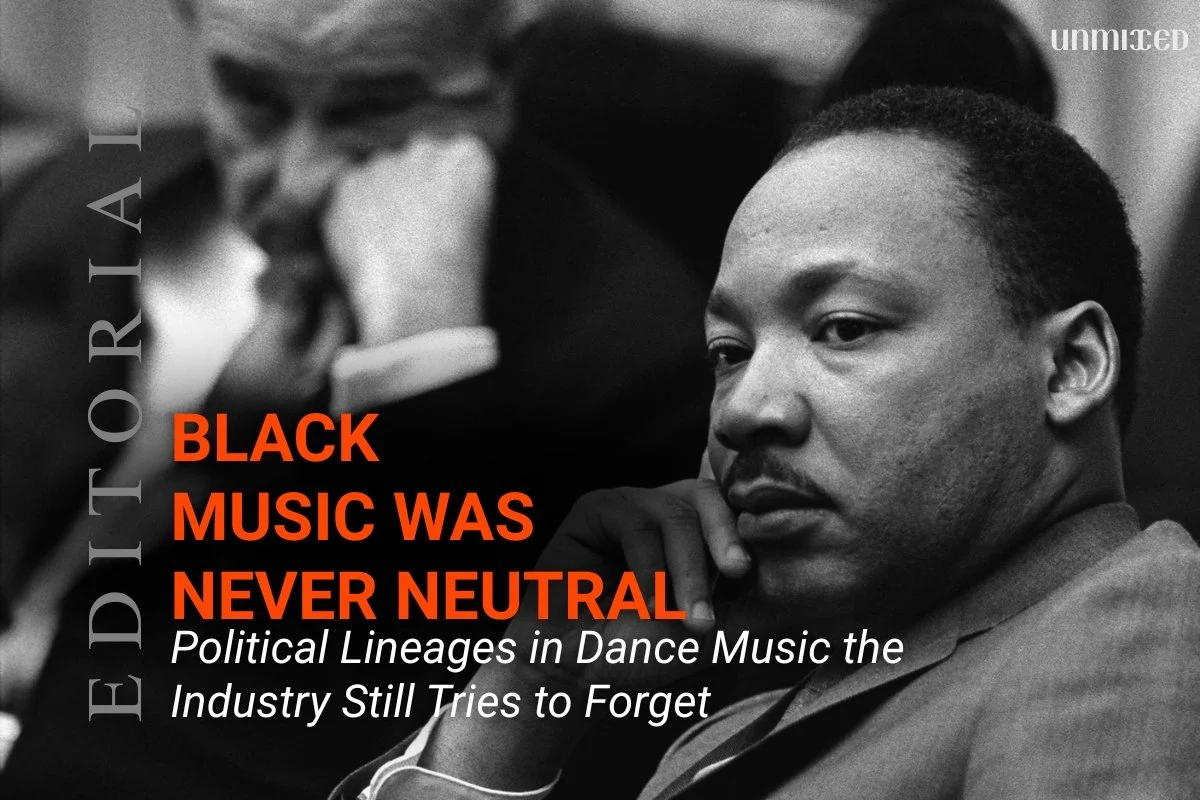
Black Music Was Never Neutral
Every January, Martin Luther King Jr.’s words reappear — quoted, sampled, softened. They drift through timelines and playlists as proof of progress, detached from the economic and racial violence he spent his final years naming directly. In public memory, King is remembered for hope more than confrontation, for dreams more than systems.
In music culture, this flattening is especially visible. Radical Black thought becomes atmosphere. Protest becomes mood. History becomes heritage branding.
Dance music is not immune. In fact, it may be one of the most aggressively sanitized spaces of all. Often framed as escape — sound as release, the club as refuge — its political origins are routinely stripped away. But dance music did not begin as an escape from politics. It emerged from them.
In cities marked by segregation, disinvestment, and racialized neglect, electronic music functioned as infrastructure: a way to build futures where none were offered, to hold space where safety did not exist, to imagine worlds beyond racial capitalism.