
Underground, Inc.: Notes on Tiers and the Industry Delusion

Underground dance music was never meant to glorify DJs. But over the past decade, techno and its adjacent scenes have rebuilt themselves around fame. What started as a refusal of the mainstream moved backwards, then sideways, then inverted and folded into SFX Entertainment's billion‐dollar acquisition spree. By 2012, dance music had become so normalized as a growth market that its language of "underground" and "credibility" was just another asset class in everyday discourse.
Imagine spending years surrounded by people constantly telling you how brilliant you are, how life‐changing your music is, how important you are. That kind of stuff can get into any normal person’s psyche. But success isn't necessarily the result of being the best artist or the best person. Some of the industry's biggest names stay on top precisely because they become emotionally detached from the people around them. Constant travel, nonstop validation, continuous attention eventually become the norm.
Diplo, although never really a good example of anything, is quite well fitting here, because he, unlikely many others, doesn't seem to have the anxiety this detachment usually produces. He's openly mocked the very festival economy he headlines, once dismissing dance music scene as an interchangeable "Dutch DJs with the same haircut," and has been just as blunt that labels chase trends they don't understand. That same unhinged smirk resurfaced last month, when SZA publicly accused him of holding equity in the AI platform Suno and training it on the work of Black writers and producers, after discovering 238 of her songs had been used in its training data. Diplo denied the equity stake, then weeks later announced himself as an investor in a different AI startup - folding into the exact wave he'd just been accused of profiting from, and doubling down rather than retreating from the contradiction. What looks like one man's hypocrisy is really just a clean view of how the system rewards that kind of double exposure: mocking the scene while cashing its checks.

And just like Diplo, DJs tend to become messangers of this mythology - entrapped, ironically, in a loop. To understand how we got here, we have to go back down the timeline. Once punk was absorbed by major labels and DIY culture commodified, dance music was next in line to inherit the role of "authentic alternative." The response was, unsurprising, once again, the underground. Because it was meant to resist commodification, preserve experimentation, and protect artistic freedom. But the underground itself was eventually commodified. "Underground" became a buzzword agencies charge for in thousands of dollars.
Booking agencies like MN2S, Wasserman Music, De La Font Agency, and Celebrity Direct Inc. now request six‐figure fees for DJs once synonymous with underground credibility, with Amelie Lens alone needs $150,000 to $300,000 a set when playing in the U.S. From the venues we've seen spreadsheets for, the same numbers are doing the same work. Agency spend on artists at a single venue ranges from $25,000 to $3,802,500 - Wasserman, WME, CAA, UTA, all fighting over the same rooms, not over sound. Shows get letter grades like report cards: Tier A projected at $1,220,000+, Tier C and D closer to $270,000-$450,000. One booking missed forecast by -36%. Another beat it by 35%. Nobody in that spreadsheet is thinking about the music. They're thinking about the delta.
That's the current business model of many large capacity venues. The same tier system deciding "A" from "C" is the same system deciding "visionary" from "filler act.”
First, it replaces critical judgment with a forecasting model. When a venue or promoter grades a booking "Tier A" versus "Tier C," that grade isn't really describing the artist's cultural weight - it's describing the venue's confidence in recouping its spend. But because the grade gets attached to the person, it also becomes a proxy for talent. An artist, who is listed a "an A‐tier act" is a very similar to a way a bond becomes investment‐grade: the label sticks to them across not only venues, but also festivals and agencies, regardless of what actually happens on stage.
Second, it creates a self‐fulfilling loop. Once an artist is tiered up, they get better slots, bigger guarantees, and more promotional push - which drives the turnout numbers that "justify" the tier in retrospect. The forecast now must become a self-evidence for its own accuracy. An artist tiered down, meanwhile, gets a worse slot and a smaller marketing budget, guaranteeing a softer draw that confirms the downgrade. The system can't easily be wrong about anyone, because it controls the conditions of the test.
Third, it launders financial risk‐management as aesthetic and largely a branding judgment. The variance data - one booking missing forecast by double digits, another beating it - shows promoters are in fact, doing portfolio management: hedging a few "safe" A‐tier bookings against riskier, cheaper ones, the way a fund manager balances blue chips against speculative plays. But the language used publicly ("headliner," "rising star," "underground legend") is washing that risk calculus down as cultural discernment, obscuring that an artist's position often reflects an agency's routing strategy or a venue's cash‐flow needs more than it has anything to do about their music.
Finally, it compresses the middle and kills the discovery. Since tiering is asking for predictability, it pushes money toward acts who already have a legible track record and starves exactly the unpredictable, boundary‐pushing, truly pioneering and experimental artists, which dance music depends on for its next movement - the acts who don't yet have the data trail to earn an "A," even if they'd earn one on merit within a year or two.
Not every career confirms the loop. Skrillex is the usual counterexample people reach for, since he was cast as a villain early and supposedly earned his way back through stranger, more collaborative work. Even Skrillex, usually cited as proof the system can be redeemed, mostly shows the opposite: the tier sticks no matter what.
In my not-so-humble opinion, Diplo still isn't a musician, and much less is he an artist. Skrillex, whatever else he is, still is. But even his case doesn't touch the tier itself - the grade stays fixed to his name regardless of which version of him shows up.
In short: the tier system doesn't measure perceived value so much as produce it, converting a spreadsheet's confidence interval into what the public experiences as an artist's cultural stature. Fame is easier to digest when delusion is your norm, and fighting for artistry becomes irrelevant because its the spreadsheets that get to decide who’s the ‘biggest star’ of the night.
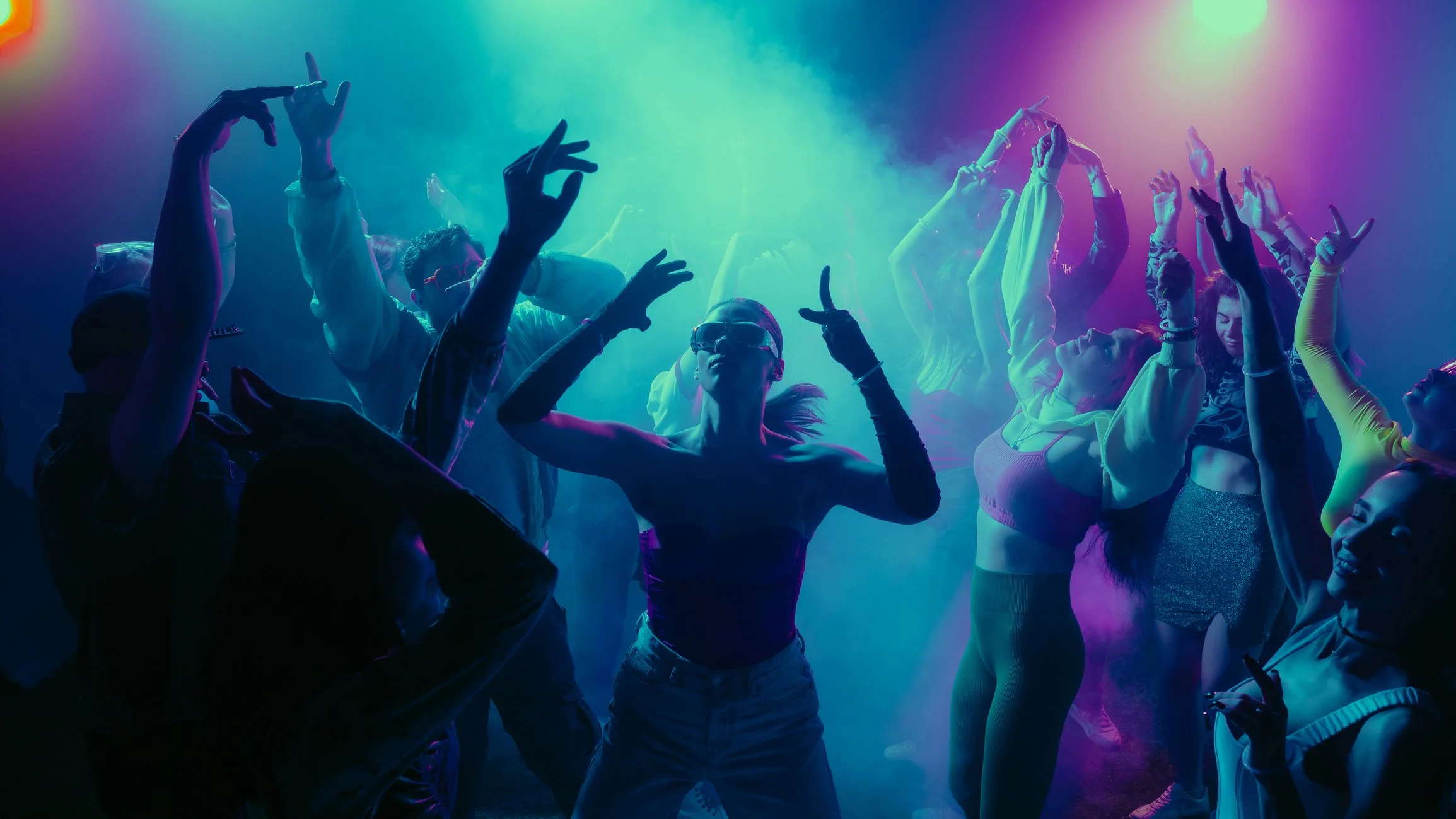
Photos by Volodimer Melnik
