Building Tension and Navigating Darkness, Behind the Decks and Beyond: An Interview with KXAH
By Natasha Cornelissen
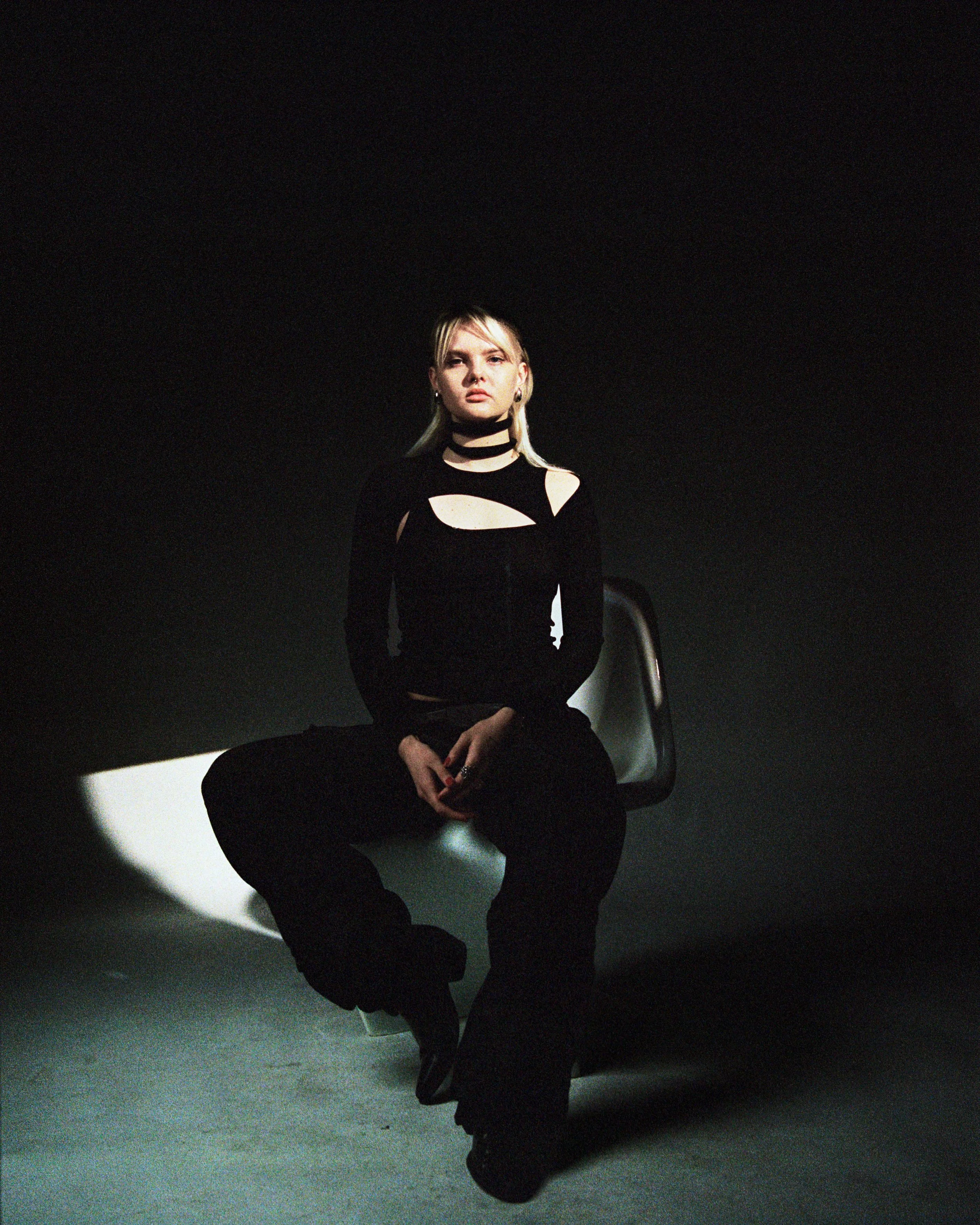
Oscillating through techno, electro, acid and EBM, KXAH’s undefinable sound transports listeners through a deep-dive into her inner mind. With a hypnotic cacophony of dynamic percussion, superimposed textures and a driving baseline, Kristina understands that mixing electronic music isn’t just about transitions. Rather, the 25-year-old DJ, producer and event organizer seeks to build a narrative, one which titillates between mounting tension and cathartic release.
Beginning through organic collaboration with Boston’s prominent Infra Collective, Kristina later co-founded Aversion, a music label and party platform hosting “counter-culture expositions” from Boston to New York City. Sharing the booth with the likes of Hector Oaks, Phase Fatal, Lucy and Schacke, the young performer has undeniably left her mark on the scene. However, it’s not the partying and recognition that motivate her – instead, she holds a deep reverence and commitment to the culture and craft.
Now, after spending her formative years working, learning and growing in the United States, the Russian-born DJ is back in Europe and ready to begin a new chapter of life. Her latest release, “The State Of The Mind,” marks a new alignment with Donker, an Amsterdam-based collective and label that seeks to amplify the darker, more enigmatic tones of music and art. This track is one of fifteen included on [DNKRVA004], a compilation of works from female artists that’s donating all proceeds to PinkRibbon NL, supporting breast cancer research and awareness in the Netherlands.
Just days after her move, I asked Kristina about how electronic music has redefined her life, both professionally and personally, along with her love for post-punk music, playing with hardware and nerding out on sound systems.
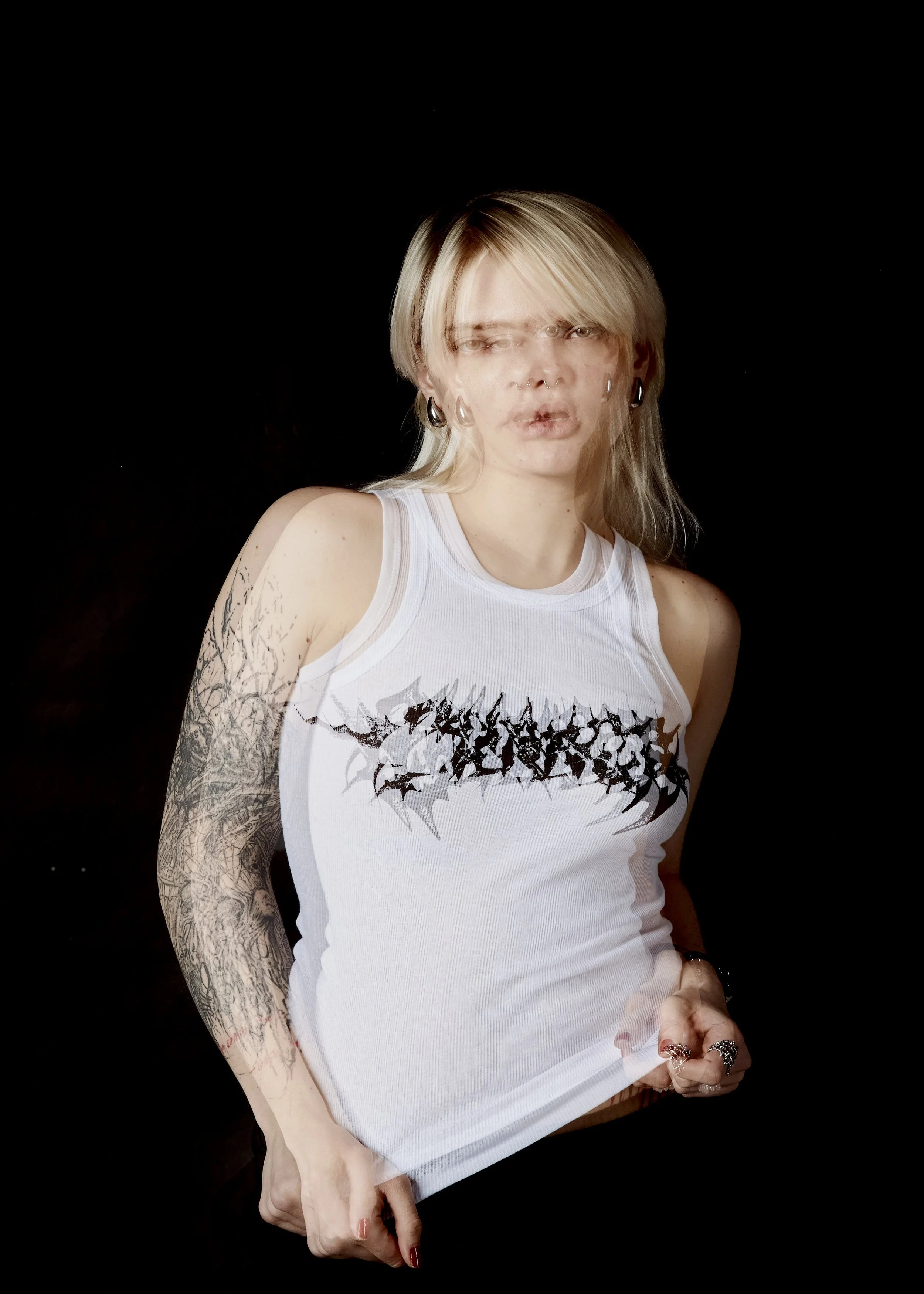
When and how did you originally gain an interest in techno music?
Electronic music was always in my life. My mother would play bass CDs in the car, and I still remember the first mixes I listened to. Then in May of 2019, I moved to the United States for university, and the RA of my dorm was an aspiring DJ. He took me to a house where in the basement was a full-on club, and that's when I was introduced to a collective called Infra Boston. Very soon after that summer I started working with them.
Right place, right time. I was lucky to find people who explained to me important aspects of techno music and the scene: Detroit, underground resistance, drum machines, Movement Festival and Tresor Club. Eventually we started throwing parties, and I got to work with sound systems and be like a liaison, experiencing conversations with prominent artists and hearing what’s important to them. I’m so grateful for that.
It sounds like it sucked you in, not that you sought it out.
Exactly – it felt right. For a long time, I was pushing the wrong doors out of desperation just trying to make life work, and the moment that I let go, all these doors started opening.
Your sound fluctuates between different genres and tempos, but the uniting quality is a hypnotic atmosphere and driving pulse. How did you arrive at this sound, and why does it captivate you?
Of course, I liked darker music like Depeche Mode, metal and post-neo punk bands, or like The Black Angels where you have this psychedelic baseline. But that transformed later to this feeling that I was chasing, this melancholy that surrounds me a lot. Throughout time I was introduced to different producers; some of my biggest influences are Italian producers like Donato Dozzy, Lucy and Voices From The Lake. Then there’s Phase Fatal with the EBM and Delirium’s hypnotic sounds.
Once I knew enough to glue things together, I was good at it – what I wasn't good at was building tension. Since the beginning, I was mixing a lot of genres and it often didn't work, but it was hard to pinpoint where I was going wrong. I didn't have enough experience to navigate the audience through a narrative. It was only this past summer when I started to feel like my library was mature and vast enough to actually execute the ideas that I’ve been building throughout these years.
Why I love mixing so much is putting together all these layers and creating breakdowns. The cathartic experiences that always inspired me are like an Oxygeno set, where he’s edging you but not really letting you go. With the music I play, there's almost no drops. It's a continuous bassline modulation and so much percussion, a storm that builds and releases.
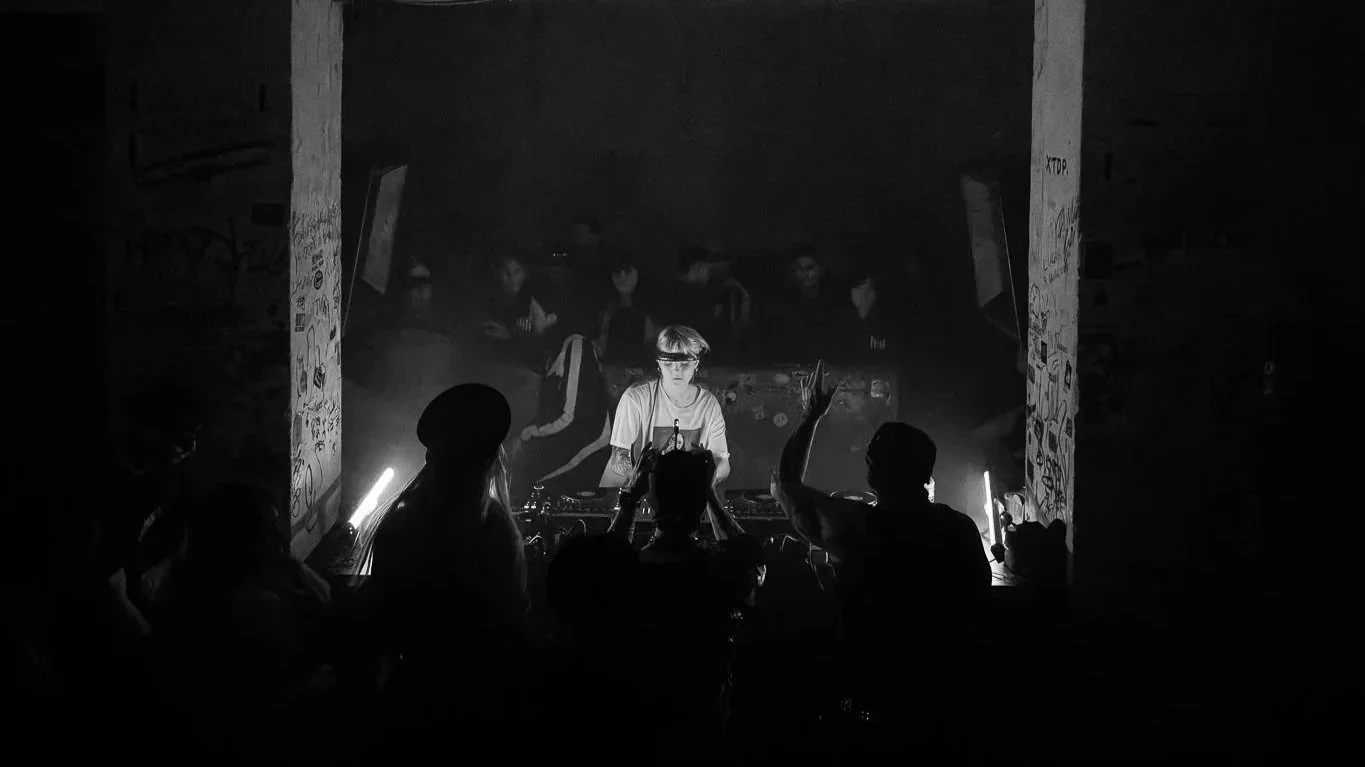
in frame KXAH, photo by Nolightsnyc.
“...wind flows through a pipe, and with that sound I imagine a chord”
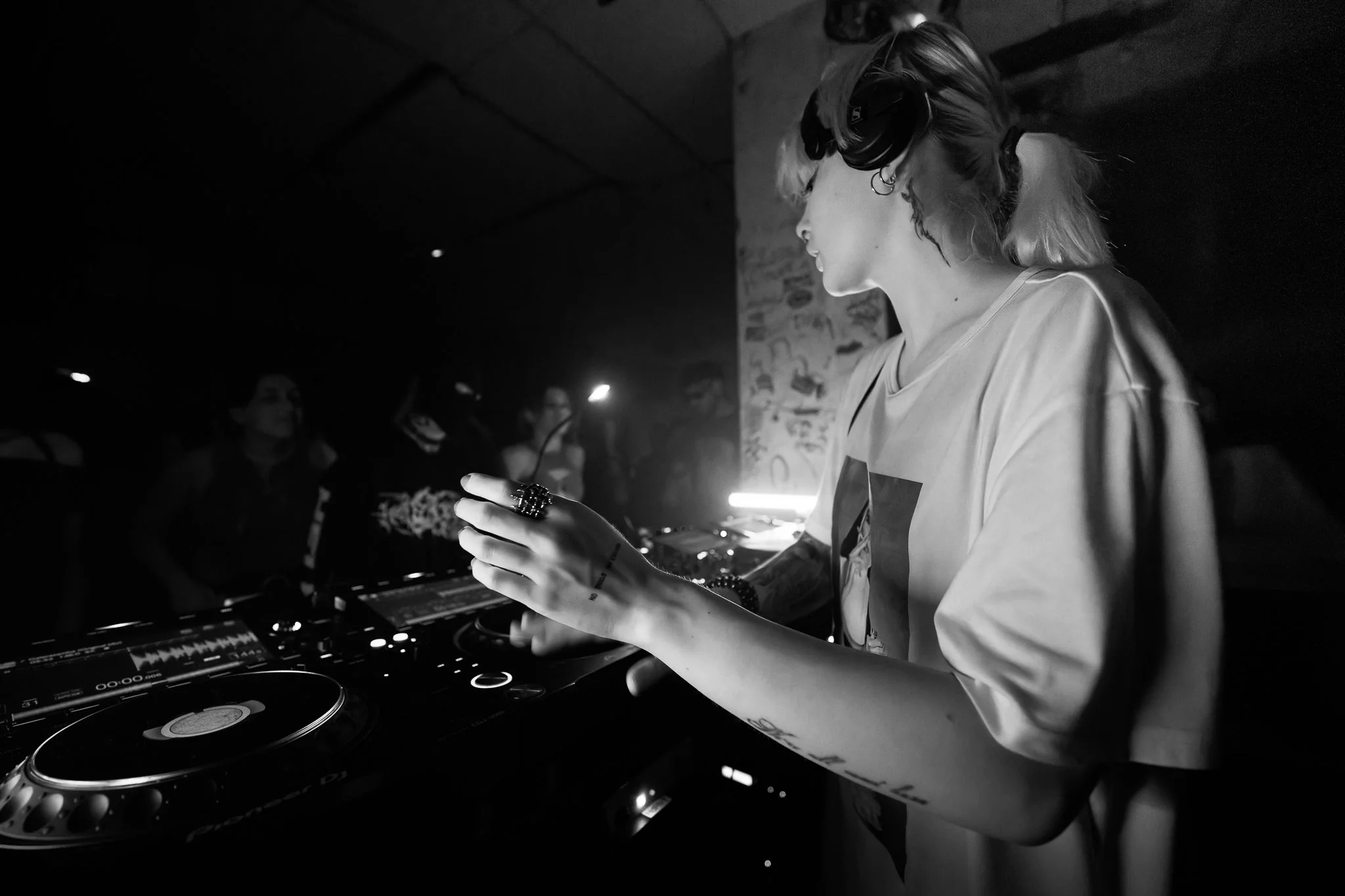
in frame KXAH, photo by Nolightsnyc.
You also do production, and the tracks on your SoundCloud are quite different: some ambient, dark techno, acid and even experimental drone. How is producing a playground for your creative experimentation?
It's so technical for me. I’m a computer science major; working with hardware comes naturally and is something that I crave. Once I was introduced to different drum machines, that just clicked. I started with FL Studio four years ago and then moved to Ableton, and now I work with VCV Rack, so it’s an ongoing journey of understanding my workflow.
It's not like writing a song where a particular phrase is stuck in your head, and you write it down and something comes out of it. With electronic music, it's more like… for example, I walk down the street and maybe wind flows through a pipe, and with that sound I imagine a chord and then a kick.
I have a track called “Ceasefire.” Biden had this stupid press conference where people were screaming at him, “Ceasefire now! Ceasefire now!” And what he did, put his head down, defeated – that was such a strong moment for me, I have goosebumps thinking about it now. I got that sample, “Ceasefire now,” reversed it and I'm like, this vocal needs a strong baseline, it needs to feel like shit is fucking happening.
“America taught me how to set up and break down”
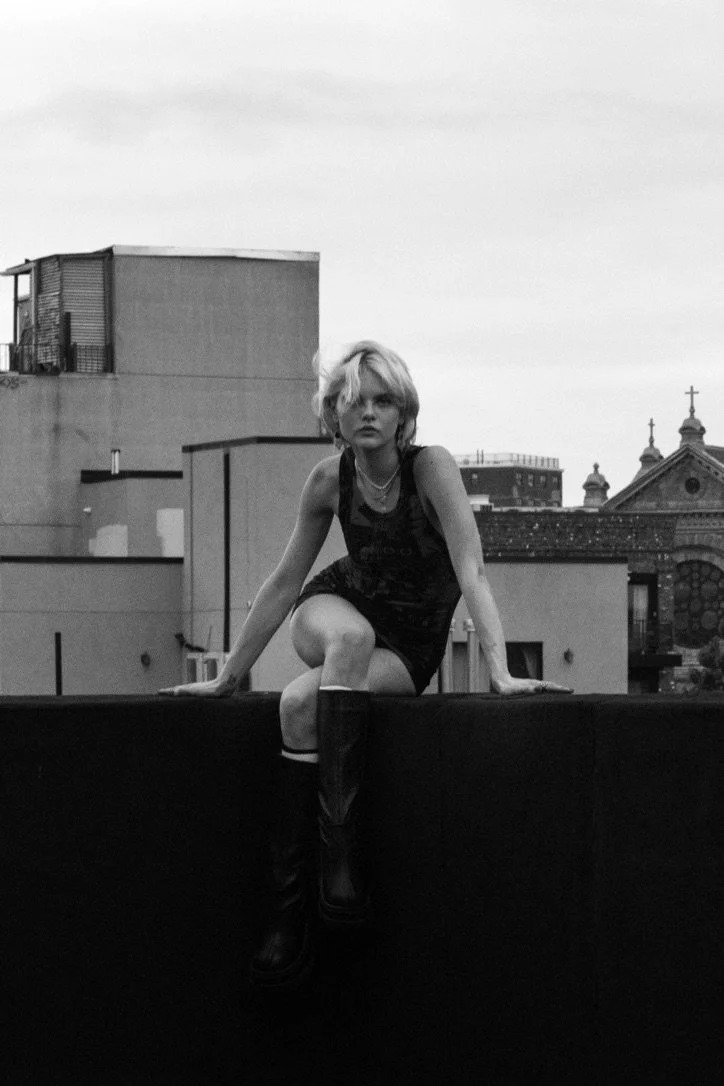
in frame KXAH,
In Boston, you helped organize “Fight Club,” a women-centered party series held in a boxing gym. How was putting on this event meaningful for you?
I was walking by a gym that had super high ceilings and a cage right in the middle, and I liked the idea of speakers in there. I went inside and was like, I see a vision, and they said, great, we’re losing money. Bring us money, do your vision. At that time, I was surrounded by the most interesting women who were so good at what they did. There were girls vending clothes, another doing tattoos. I invited women from New York to play who were running labels – they were such powerhouses.
I’ve always been an alienated person; I never had one good girlfriend, and it was never like I was part of a community. In that way, Boston was so beautiful – it provided me with a community that I was able to explore in. Female energy is like a deity, and it was inspiring to me to have a place where they came together and it all was symbiotic.
After 7 years in the United States, you’ve just moved back to Europe. How has your time living and working in different cities shaped you?
It's hard to say what would have been if I wasn't in those places. Going from Boston’s quaint, controlled environment to playing in Detroit, finding community in Minneapolis and then to New York with its industry atmosphere. One universal thing in the US: it’s a DIY scene. There’s no government support or funding that happens, so infrastructures are in low condition. That makes the people that want to listen to this music and experience good sound systems work five times more.
America taught me how to set up and break down, how to drive a fucking truck full of equipment to a venue, how to find a venue in five hours. That do-it-yourself way of doing things comes from passion. People here barely break even; they pay out of pocket, work two or three jobs to put on one event at the end of the month, and it's such a labor of love. I think this attitude will take me far in the way that I approach the industry in Europe.
“I don't see the reason to pay such a crazy amount of money to be able to afford housing, transportation and potentially chicken twice a week, to see people get shot in Minneapolis.”
You’ve mentioned that moving was a decision you made to prioritize peace and stability in your personal life. Can you speak to the instability of life in the US?
When I first came to New York, I was running around like crazy because I was coming from Boston, I felt so alive. There's danger and danger was exciting. I feel like I craved chaos more at that time of my life, but at some point it made me want to hide in my four walls more and more. Going out and listening to artists, who before I wanted to be the first one in line for, became a chore.
Things changed a lot. That first winter was tough, and as a performer, you get really defeated if you're not on a particular level. I can count on two hands the people I could nerd out with about the things that interest me in this music: the technical, the cultural, the infrastructure. There's only so many on the dance floors and in the green rooms that are curious to have those conversations.
I started to fear the administration. The fear mongering that Trump is doing works, especially if you’re in an unstable situation. I stopped flying. Like I took a bus to Minneapolis last summer, 48 hours, bro. When Renee Good got shot, I was like, I'm done. You're killing your own people. I moved out of Russia, we're not doing that again. I don't see the reason to pay such a crazy amount of money to be able to afford housing, transportation and potentially chicken twice a week, to see people get shot in Minneapolis. Like, no.
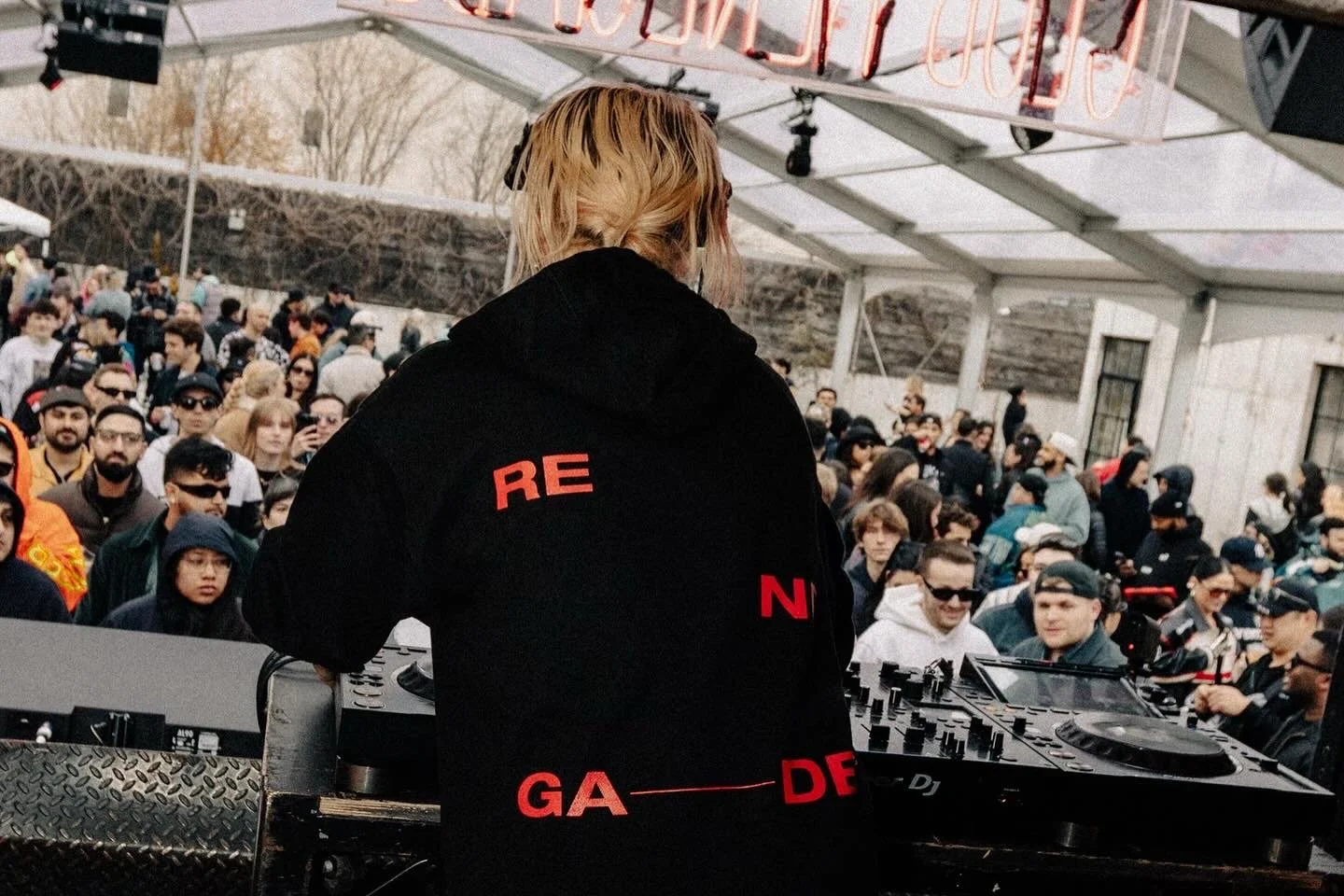
in frame KXAH,
Post-move, how are you feeling about being back in Europe?
Since I decided to move out, I couldn’t wait. I feel a certain relief, but there’s still a couple things I need to do in order to fully breathe out. Pay my taxes, renew my documents, pay respects to my parents. Otherwise, things are already pretty settled for me in Tbilisi, and I have gigs lined up, so I feel almost there. By the end of this month I’ll be like, we did it. We're good. We completed a seven-year journey of life. Learned a lot. I can say goodbye to that part. Now what's next?
“Georgian people fight for their rights, and I admire their deep moral and ethical principles!”
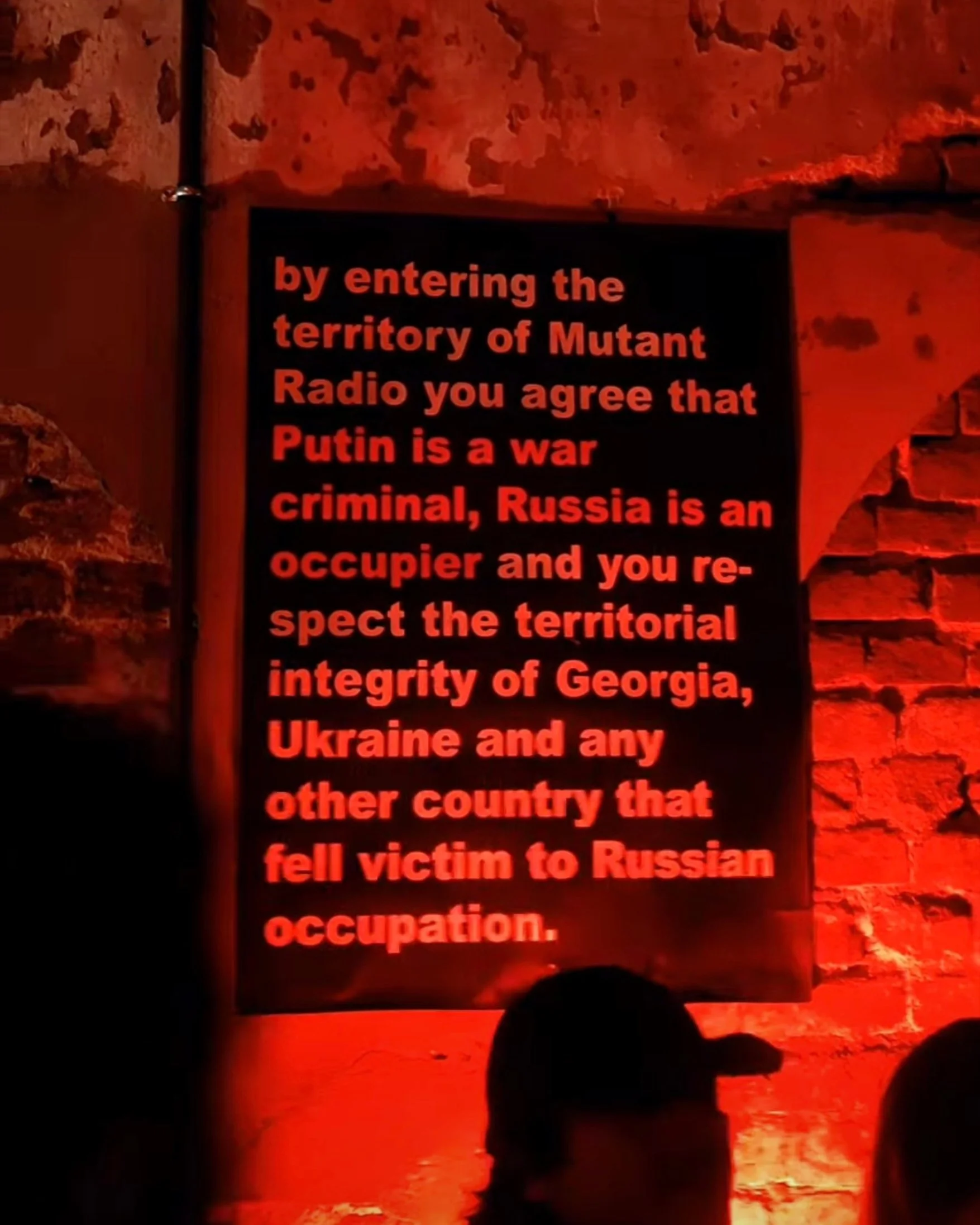
Mutant Radio, Tbilisi Georgia. 2025 photo by Kristina Iashvili
An important and widespread aspect of Georgia’s electronic music scene is opposition towards Russia’s violent occupation and Putin's leadership. As a Russian-born DJ, how do you engage with this stance?
I was born in Russia, but I left when I was a child and haven’t lived there since. My background is mixed: I have Ukrainian roots from my mother’s side and was raised around Georgian culture from my fathers side, and on both sides of my family, people have experienced suffering and loss as a result of Russian violence. Because of this, my position is clear: I strongly oppose the actions of the Russian state and recognize its role as an occupying force in both Georgia and Ukraine. I try to contribute in the ways I can, like by speaking out online, fundraising and selling merch made by Ukrainian designers. I also strive to be mindful of the platforms I support as an artist.
When it comes to Georgian nightlife, I think it’s essential to approach it with respect and awareness. These spaces exist within a broader social and political reality, and I understand why there’s an expectation that those who enter them are conscious of that context. For me, being part of that scene means listening, respecting the culture, and standing in solidarity with the values that people there are defending. I think it’s so beautiful, courageous and powerful the way Georgian people fight for their rights, and I admire their deep moral and ethical principles!
As this chapter of life concludes, it not only marks the end of life in the US but also the end of your early adulthood. What’s a significant way that you've changed?
I came as a pretty anxious, very anti-social person. Even though it’s still a permanent goal, I’m able to calm that aspect of myself. It’s easier for me to understand where others are coming from and the importance of socializing in the right ways. More than anything, I no longer fear rejection; not being afraid to get a no and ask for what I want flows into feeling comfortable in social situations.
Looking forward, what excites you about the start of a new era?
I’ve been playing for audiences in the US for as long as I’ve been doing this. I’m so curious to see different demographics of people; Georgia, for example, has a lot of older people on the dancefloor with crazy stamina – they’re nonstop. I’m also curious about how my sound will be received in these new spaces. I’m playing my first gig here on May 15, and you know, Georgians are tough people. It’s gonna be an interesting audience to please.
Finally, I feel like I'm out of a cage and have legal freedom to go where I want. I’m excited about building my studio and buying physical gear that I can invest in. I know there’s longevity, and I’m really looking forward to that.