
Jazz Ensembles, Shoegaze, and Techno in a Gradient Conversation with Jamaica Suk
San Francisco born, Berlin based DJ Jamaica Suk talks about her experience in Techno, musicianship and what live ideal live shows would look like 5 years from now.
by Nina K.Malik
Jamaica Suk’s journey into techno sidestepped the standard route of USB sticks and DJ booths. Instead, she came here from through jazz ensembles, metal bands, and shoegaze projects and musicianship. Each was a world that taught her discipline and patience before she became a Dj. That past life shows up in her approach to techno, which she treats not as a living structure to be constructed, reshaped, and challenged in the moment.
Growing up in the Bay Area underground, where dancefloors were often sanctuaries for queer, trans, and nonbinary communities, meant inheriting values that shaped local music culture. Community, ethics, independence, and reverence for pioneers were more important than branding and empty looks. Those formative spaces still guide Suk as she moves through clubs, negotiates with promoters, and faces the ever-expanding corporate shadows of dance music culture.
Her current work is an explosion of sound in an acute abyss of jazz and shoegazes filled techno feels. Suk’s style is worth noting, but more importantly, the way she talks about music as her inspirations in this madness of an industry. Let’s hear it from her:
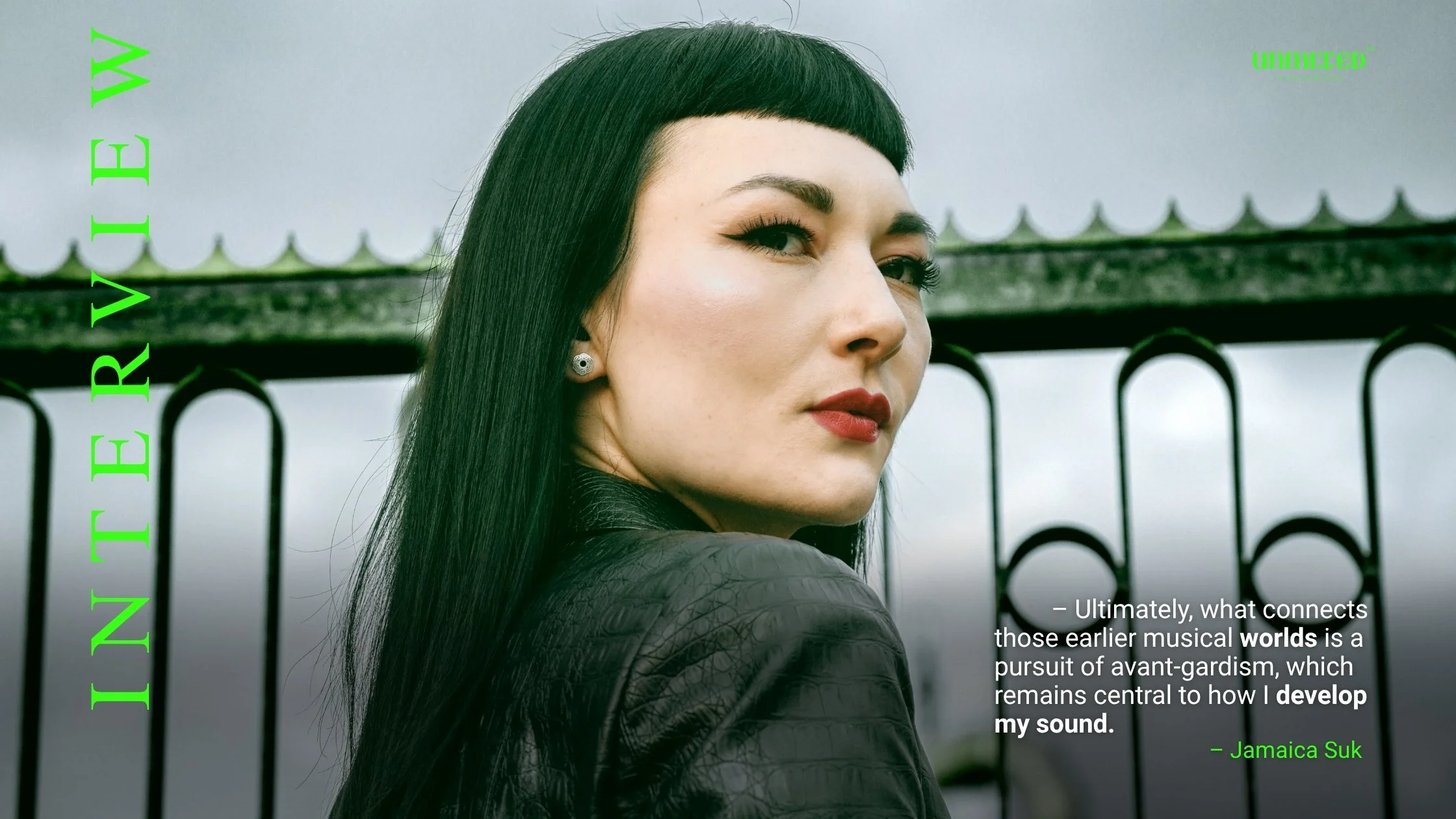
in frame: Jamaica Suk
Thank you for sharing your time and thoughts with us!
Hi Nina, how are you? Thanks for having me and thanks for the interview.
Good, so glad to have you’re here! Lets start from your movement through jazz ensembles, metal bands, and shoegaze projects before
arriving at techno, how do those earlier musical worlds still translate into your sets now?
Good question! I’d say they’re still very much part of me, and I try to apply the skills and mindset I gained as a bassist to my approach.
Ultimately, what connects those earlier musical worlds is a pursuit of avant-gardism, which remains central to how I develop my sound. This interest grew from studying jazz history and reading Jack Kerouac’s On The Road. I was drawn to the 1950’s Beatnik Generation—especially their rebellious, creative, raw spirit, love of underground culture, and emphasis on vagabondage. It shaped the way I think about art, music, and exploring beyond convention.
Elements of avant-gardism find their way into my DJ sets, but fundamentally, each set is tailored to the event, the venue, the timeslot, and the energy of the room.
ahh yes, you gotta love that rebelious spirit! You’ve mentioned growing up in the Bay Area underground, what values from that ecosystem still shape
how you approach clubs, promoters, and the music industry today?
Growing up in the Bay Area underground shaped me by its vibrant, inclusive dancefloors: spaces where queer, trans, and nonbinary communities could express themselves freely and uninhibited, a place where everyone was equal. The importance of community, ethics, creative independence, and recognizing those legendary ones that paved the way before us was the way. This continues to shape my approach in the music industry today as an artist and with the label, Gradient.
Your tracks tend to hover between abrasion and hypnosis rather than sheer force–how deliberately do you work with contrast when producing?
I do think about contrast, but I try not to limit myself. I’m inspired by the art of contrast as well as minimalist composers Steve Reich, Terry Riley, and Brian Eno to techno legends Jeff Mills, Luke Slater, Planetary Assault Systems, Speedy J, Electric Indigo, Monolake, Surgeon and various genres : jazz, metal, rock, shoegaze and grindcore.
That’s really well said. Has playing for Berlin dancefloors changed how you think about music arrangement, or
mix decisions?

Jamaica Suk
Yes. Playing but first and foremost, dipping into various dancefloors and experiencing extended sets especially at Berghain.
When you prepare a live hardware set, how much of the performance is fixed beforehand and how much is left open to risk?
I like to think of a live hardware set as a DJ set with a clear introduction, middle, ending with room for improvisation in each section. In the past I performed with too much gear. These days I’ve worked on a simpler approach.
Interesting! What would you say initially compelled you to start Gradient, and how has curating other artists shifted your perspective on your own work?
My dream was to design a platform for my artistic vision and release music from those I deeply align with as well as having an outlet for my own productions. Curating other artists has been exciting, and I’m grateful for the trust they’ve placed in me. It’s uplifting, and shows me new perspectives.
What distinguishes a demo that feels aligned with the label from one that doesn’t?
Musically it should sound fitting to the label but still have the artist’s own sonic imprint.
Which non-musical influences have recently fed into your life and thinking?
Books, Film and Photography.
If resources were no constraint, what would an ideal live show or label project look like five years from now?
With the label, that would include numerous releases, including splattered Gradient vinyl, 7 inches and LP’s. For live shows, I’d like to collaborate visual artists, creating large-scale A/V shows, touring them globally with performers to craft fully immersive, multi-sensory experiences.
Tha't’s a wonderful idea! What advice would you offer artists who are trying to build a sustainable presence as well as seeing growth in their careers?
Stay connected to your local techno community. Dedicate time every day to practice, produce or research. Patience is key.
Before we let you go, what’s next for you?
Releasing music on labels I admire. It's an honor to receive that trust. Beyond my own work, I look forward to releasing emerging and legendary artists.
