
Transposing Burlesque into Djing. Interview with Canelle Doublekick
words by Zoé Del Rez
A single viral clip can propel an artist faster than a decade of digging. The dance music scene has mutated. In a hyper-saturated landscape, online presence and the ability to produce "buzz content" have tenaciously taken over the music. However, amidst the ego-driven madness and the industry's heavy self-importance, it's good news that some artists still manage to hack these codes without losing their soul while doing so.
Canelle Doublekick - a key figure in the French hard dance and trance scene, pours as much creativity into her digital persona as she does into her sets. With a background in burlesque performance, Canelle was born to be on stage, and she does it with an approach that radiates sincerity, which in return is setting her apart from all the “wannabes”.
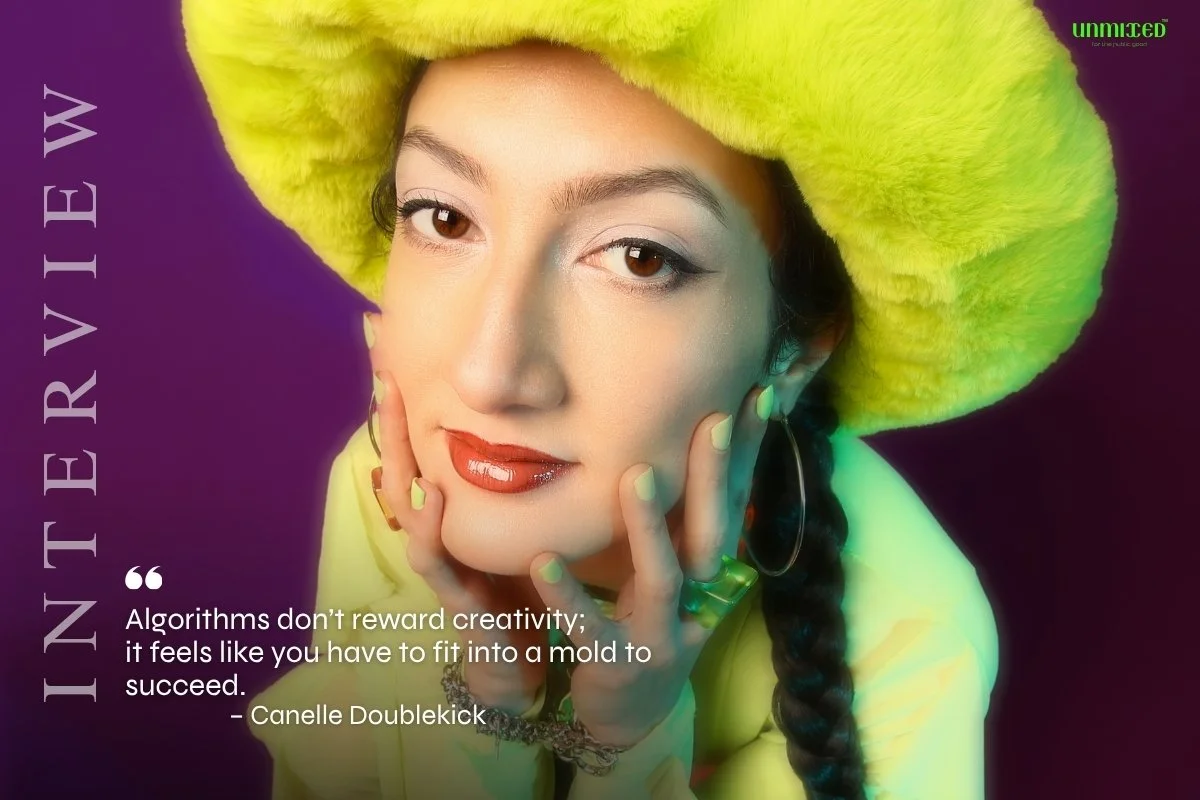
In frame: Canelle Doublekick. Photo by Chloé de Nombel.
A DJ and a producer since 2020, Canelle has built a bold and colorful world of her own, where any sound with a touch of madness can find its way into her sets. Her approach is unapologetic, festive, and dripping with pop culture–a far cry from techno’s sometimes elitist and self-serious side. As you get to know her better, you find out her palette is as wide as her costume closet, effortlessly blending hard house and trance with eurodance, latin club, or ghettotech.
We sat down with Canelle to deconstruct the role of the DJ entertainer, delving into the performative pressure of the industry and the quest for balance between artistic integrity and digital presence.
Let’s dive in!
You started off in burlesque, the art of transformation. How did that experience influence your relationship to the stage and the way you represent yourself today?
I started burlesque at 18. Unlike other disciplines, this world felt much more accessible to me. You can dive into it freely, simply by shaping a character. It’s a total art form where you control everything–from costumes to music–to tell a story. I wanted to transpose this into DJing by creating an alter ego. A bit like drag queens: it creates a barrier, a facet of yourself that you choose to show. The pop icons of the 2000s also nourished this vision, where styling, sound, and visuals form one cohesive whole.
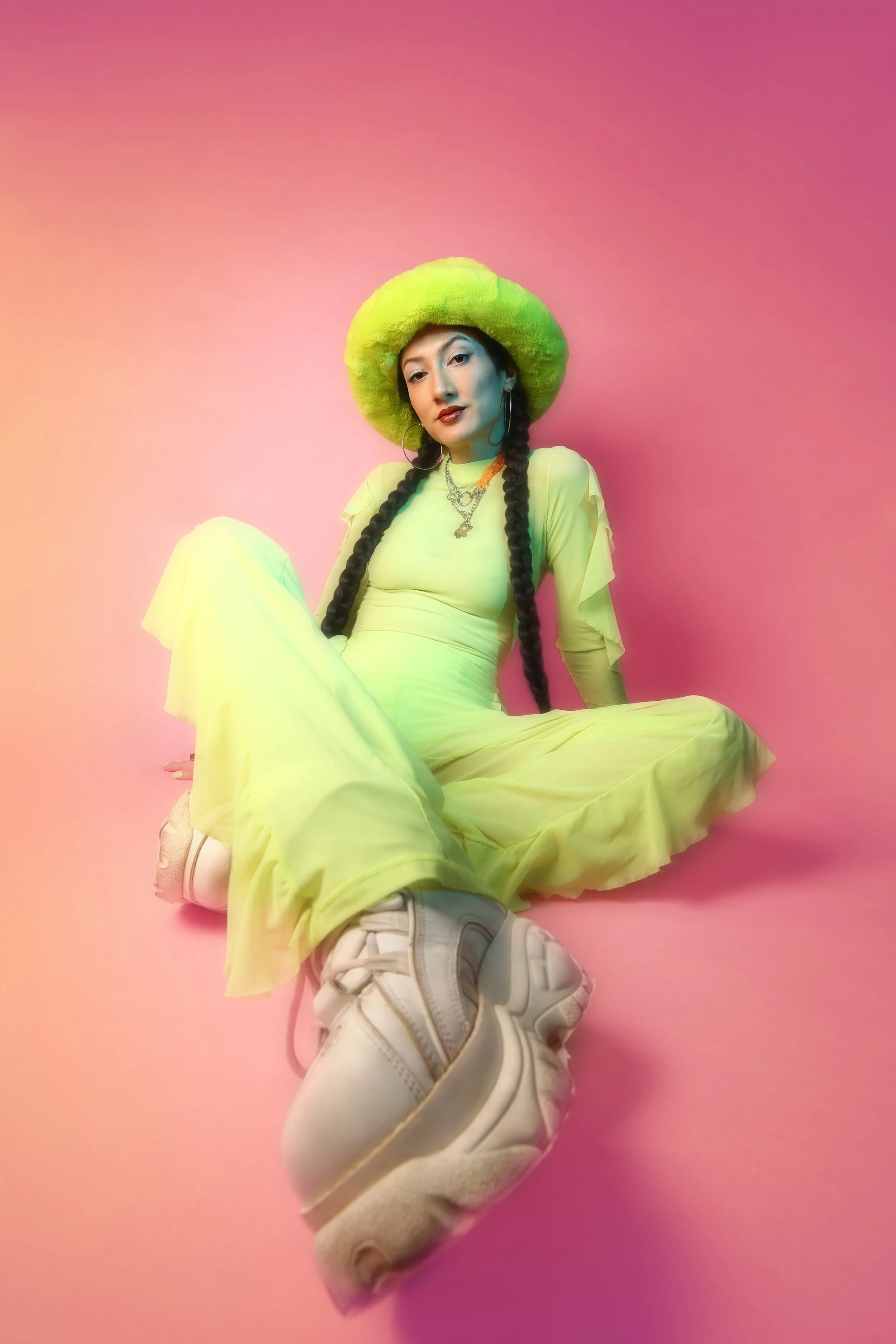
In frame: Canelle Doublekick. Photo by Chloé de Nombel.
How did you transition from performance to DJing? What is the link between the two?
I have always been drawn to music, but for a long time I perceived it as an inaccessible world. When I was offered my first DJ sets, I was terrified; I didn’t feel legitimate. The scene is very gatekept, and my DJ friends at the time didn’t necessarily encourage me. But I wanted to evolve beyond pure performance and, since I’ve always loved digging, stepping behind the decks became a logical next step. I started doing live streams on Twitch and producing to build my musical identity.
I used to organize parties at Le Petit Palace. We always aimed for a strong thematic direction, like recreating a strip club atmosphere while donating proceeds to women’s rights charities. To me, a party is a holistic experience: a blend of political stakes and philanthropic entertainment. Working in the nightlife scene–even behind the counter at the Crazy Horse boutique–deeply shaped my vision of stagecraft and how to build a show.
How would you define your current artistic identity? What influences blend together in your universe?
I like to say I’m the 6th Spice Girl. My world is a mix of 'Girl Power,' 1950s musicals, and 'glam' aesthetics–think glitter, feathers, and rhinestones. But I also blend this with the imagery of speed, racing, and tuning, which matches the 145 to 170 BPM range I play. Musically, I’m hyper-eclectic: from Hard House to Trance and Techno. My Vietnamese and Tunisian roots also play a part, as I’m currently working on tracks with oriental sounds. Building this specific universe is actually what got me noticed by the 2Much collective.
How do you view the growing emphasis on image and visual performance in today’s DJing scene? How does this self-staging differ from your experience in burlesque?
Today, everything is hyper-calibrated for social media. With the constant presence of videographers, everything has to be filmed facing the camera to simulate “the best vibe in the world.” I’m increasingly struggling with this trend, because I feel we’re losing sincerity. As a DJ, you already have to manage your transitions and your crowd; having to stare into a camera to prove that it’s a party creates artificial pressure. You know that a certain drop has to be perfect for the video, and you end up overacting.
I see DJing as a form of genuine exchange with the crowd, whereas performance is pure acting. It’s difficult to find the balance between the concentration required and the expectation of constantly being in show mode. To be honest, I find this accumulation of “recap” videos where everything is always at its peak quite tiring.
Since your personality has become your added value professionally, how do you keep a part of your private garden?
I don’t always put the Canelle Doublekick character forward. I also like to show the human side from time to time, unlike artists like Horsegiirl who never step out of character. Even if I reveal part of my daily life and who I really am, I stay in control by choosing what I reveal and when. What I do during my days belongs only to me.
The transactional nature of likes and comments lacks sincerity, and I simply don’t want to play that game.
How would you describe your relationship with social media today? How do you handle the pressure of having to be constantly present in an environment that has become highly saturated?
It’s a classic love-hate relationship. I’ve always enjoyed creating content, but consistency is a challenge: if I disappear for a month, the algorithm punishes me. It’s frustrating to spend time on polished content only for it to barely be seen. Now, I post for myself, as a showcase for bookers or the curious. I view social media as a mini TV station: I’m in charge of the programming, and it's a medium accessible to anyone.
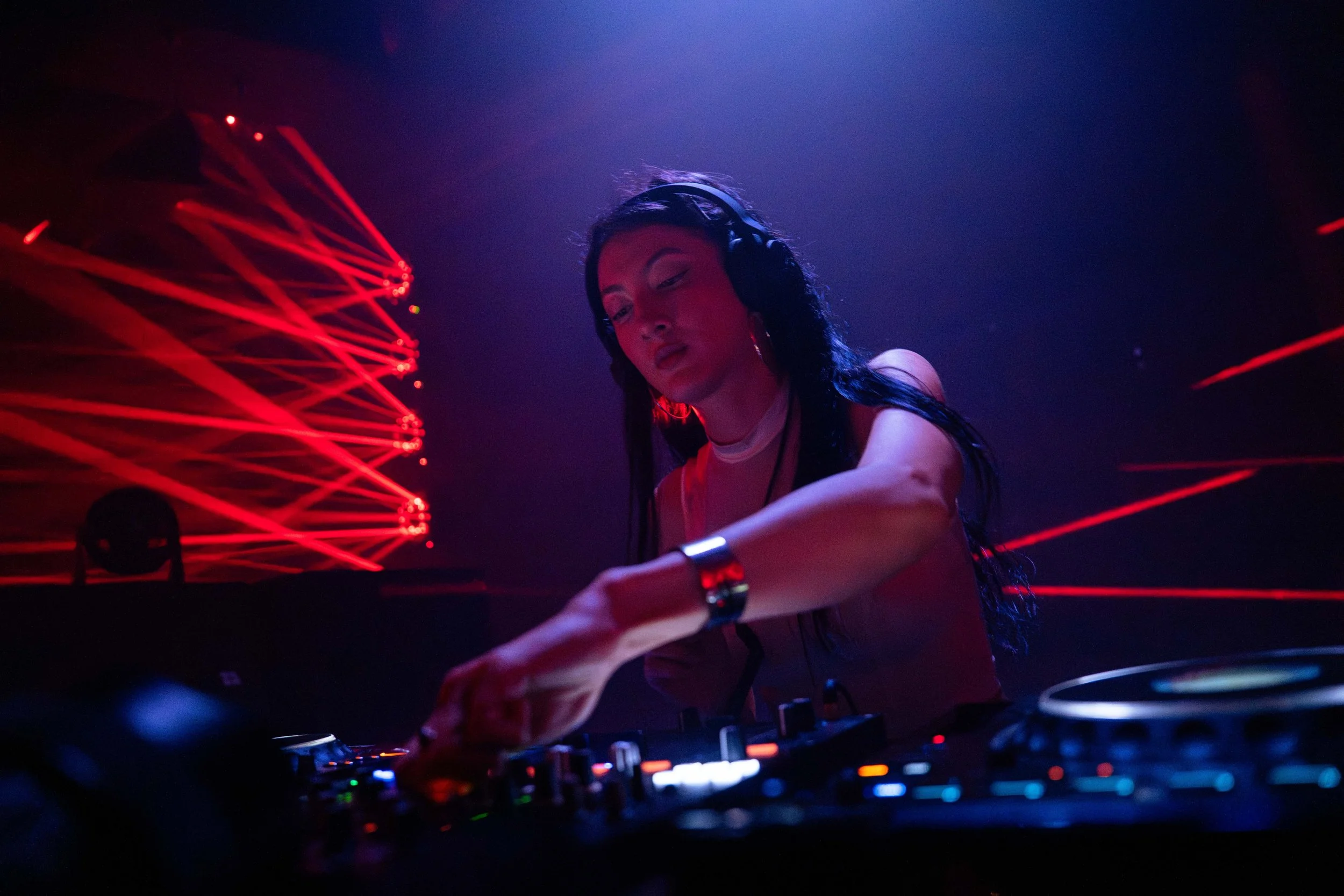
in frame: Canelle Doublekick. Photo By Mia Mao.
The problem is that hyper-calibrated content–the stuff everyone else is doing–often performs best. Algorithms don’t reward creativity; it feels like you have to fit into a mold to succeed. It’s also very easy to compare yourself to others. I try to limit what I see to preserve my mental health. The transactional nature of likes and comments lacks sincerity, and I simply don’t want to play that game.
What is your intention behind your posts: to have fun, or to create a different kind of connection?
Coming from a performance background has always been a strength. I might appropriate certain TikTok trends, but I always twist them in my own way–to me, it’s just an extension of the stage. I strive to create high-quality content, but it’s incredibly time-consuming. Recently, I launched my 'Female Frequency' series to highlight women who have shaped the history of electronic music. It’s a way to use that visibility for something meaningful.
Today, the DJ is the center of attention and often idealized. What misconceptions do social media give about the “DJ lifestyle,” in your opinion?
People think it’s festive all the time. For us, the gig is about “creating the party” more than attending it ourselves. We idealize big DJs in private jets, but the reality is that we’re constantly tired. It’s a cool job – we’re not going to complain – but it requires a lot of sacrifices and focus to make a living from it.
How do you see the evolution of the DJ profession regarding “starification” and the relationship to image?
A DJ’s career is now as much about image as it is for an actor or a singer. Audiences crave that personal connection. Honestly, I don’t see how you can survive in this industry today without playing the social media game, even if that’s hard for some to swallow. We’re navigating a profit-driven market, but I truly believe you can play by those rules while remaining authentic.
I find the electronic music scene very harsh.
There have recently been quite a few criticisms of DJs who went viral with one video and became superstars overnight. Do you think these criticisms are legitimate?
I find the electronic music scene very harsh. Often, these DJs are also very passionate people who have worked to be there. Judging them for how they managed to become known rather than for their skills or talent is often somewhat reductive.
What strikes me is that it’s often women who are first targeted by this kind of legitimacy trial, while many men use the same levers. You don’t end up there by chance. When I look at the Top 100 DJ Mag, it’s full of mainstream artists I don’t even know, but who have been established for years. Once again, everything depends on the scene you evolve in and the codes you agree to follow.
Beyond the immediacy of social media, what mark would you like to leave on club culture in 10 years?
When I arrived, the techno felt very closed. I feel that, in my own way, I’ve contributed to opening it up to more diverse subgenres, showing that the scene can be fun, inclusive, and far less elitist. That’s the spirit behind 'Female Frequency': we’ve noticed that women often disappear from lineups after a certain age. It’s crucial to bring visibility back to those who have shaped our history.
In the future, I’d like to continue evolving, perhaps by handling artistic direction for new projects. My Sagittarius side means I’ll always need to juggle different experiences–but my main goal will remain the same: keeping the scene open and vibrant.
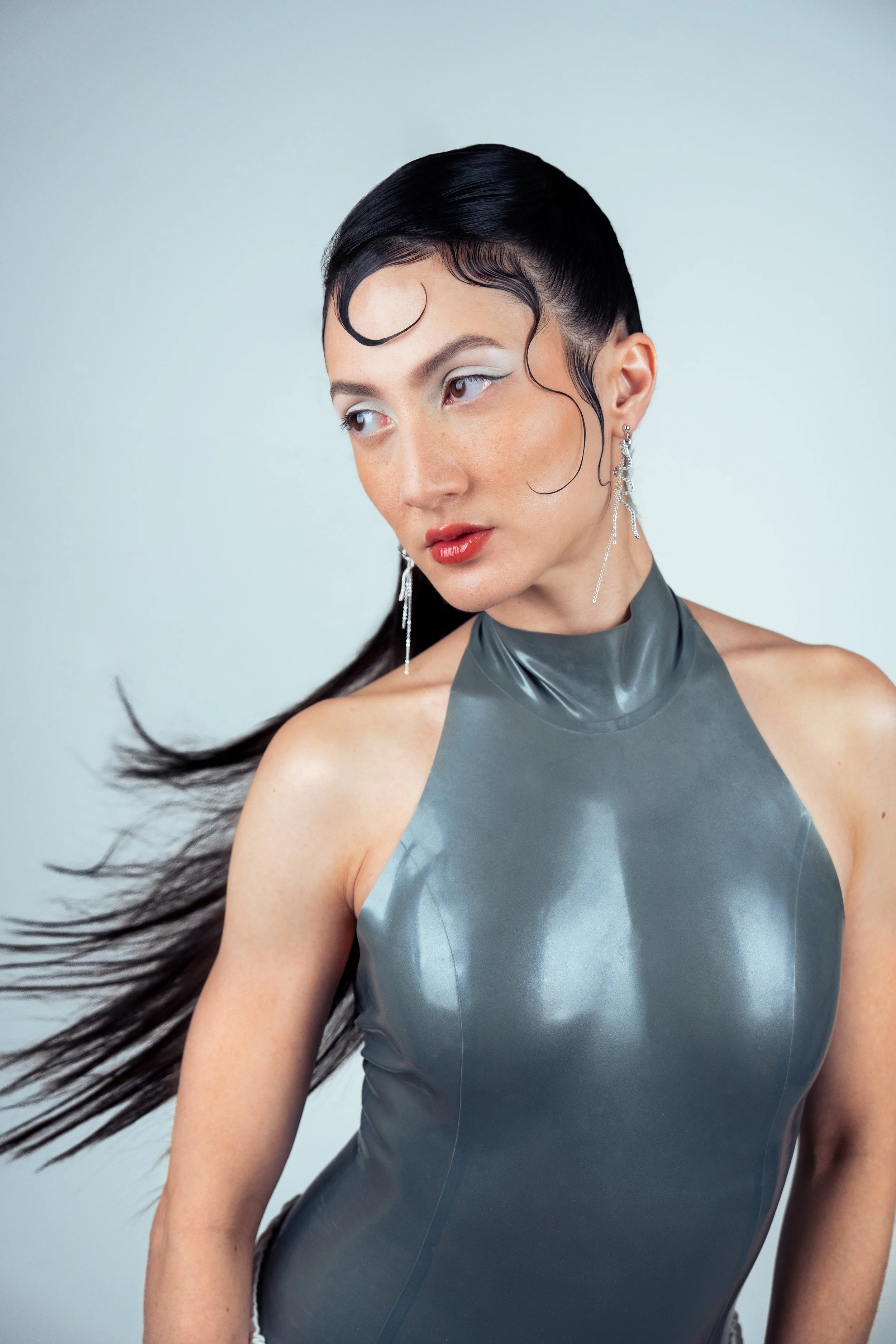
in frame: Canelle Doublekick. Photo by Valou.
