
Brooklyn Storehouse: Behind The Legal Battles and Betrayals
by Nina K.Malik
While the nonstop news stream inside the entertainment and finance media outlets has focused on the Brooklyn Mirage bankruptcy, another Chapter 11 case involving Brooklyn Storehouse has been unfolding in the same federal court.
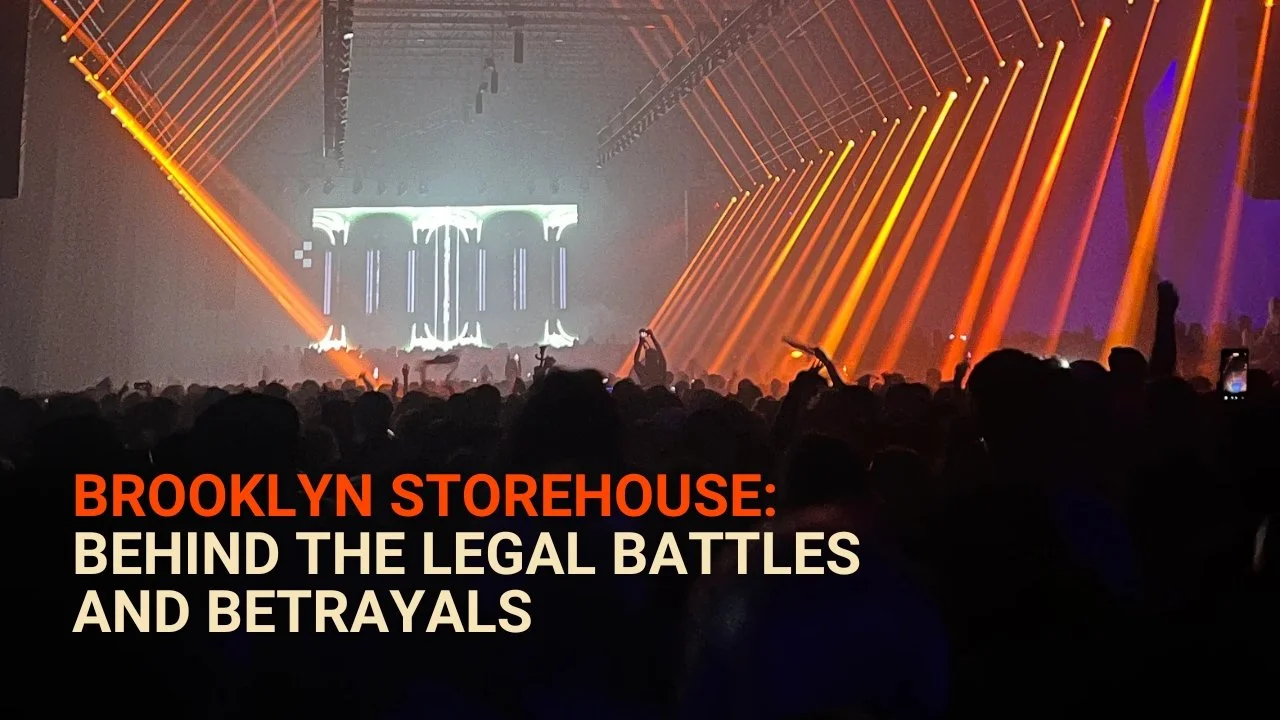
photo by Natalie Paul. Brooklyn Storehouse 2025
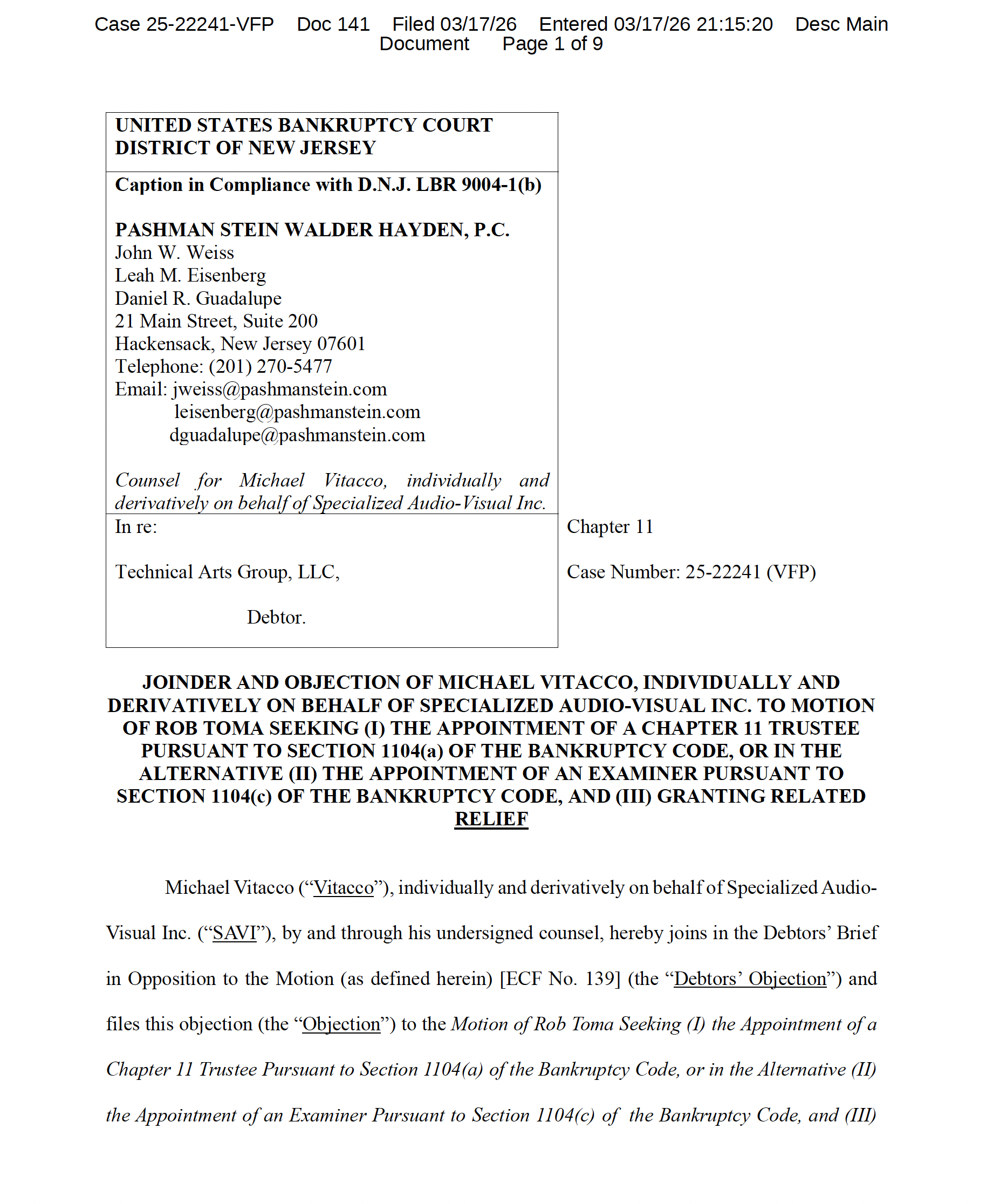
Case 25-22241-VFP Doc 141
The restructuring of Technical Arts Group (TAG), filed on November 18, 2025, was proceeding in a tame manner. Nobody was paying attention. But maybe we should have been. TAG is the production company behind the Ultra Music Festival main stage and the FIFA Club World Cup at MetLife. And here’s the kicker: Rob Toma, founder of Teksupport, is not just a main client of TAG; he is also a Partner with equity in the company, alongside his longtime friend Michael Vitacco. But this duo didn't stop there. They are also co-founders of Teksupport’s TCE Presents, an event company. To an outsider, that relationship could scream “conflict of interest” from the get-go.
What’s more interesting than the bankruptcy itself is that there’s a separate, even juicier legal battle raging in New Jersey over their joint TCE Presents company. According to the filing on February 2 2026, Toma claimed to be an “oppressed” minority member subjected to fraud. However, Vitacco’s counter-filing tells an opposite version of this story, alleging Toma was trying to sabotage the business through “self-dealing, obstruction of business operations, [and] diversion of opportunities.”
Toma filed a motion on February 27, 2026, requesting the court to appoint an independent overseer for TAG, asserting that Vitacco could not be trusted. The official court filings list two main allegations: an “inappropriate transfer of approximately $55,000 to an insider” and that “Michael Vitacco ‘exerts considerable control over the Debtor.’”
On March 3, 2026, a judge there sided decisively with Vitacco, ordering that “ROBERT TOMA, is hereby TEMPORARILY ENJOINED AND RESTRAINED” from a laundry list of activities, including “Cancelling, diverting, or interfering with any existing or prospective TCE bookings, events, shows, festivals, or business opportunities...”
Legally sidelined in one state, Toma’s problems mounted in federal court. Vitacco’s lawyers subpoenaed him to provide testimony by March 16. According to the official filing, “Toma did not file a motion to quash the Subpoena and failed to appear for a deposition or produce any documents.”
The very next day, on March 17, Vitacco’s team filed their formal response [DOC 139 & 141]. They clarified the $55k payment was simply a “reimbursement for... pre-paying for hotel rooms for one of the Debtor’s projects” at Ultra Music Festival.
The defense argues Toma’s motion is a litigation tactic, stating that Chapter 11 is intended to give a debtor a “‘second chance’ permitting current management to correct past mistakes,” not to oust them without proof of fraud. So, why would Toma do it? As an unsecured creditor, he is owed $1.2 million and might never see a dime.
However, Vitacco’s lawyers argue that, by law, a creditor “‘cannot justify the appointment of a trustee simply by alleging it would be in its interest. It must show that the appointment [is in] the interests of all those with a stake in the estate...’”
In other words, Toma can't demand a trustee just to get his $1.2 million back; he has to prove it’s the best thing for everyone involved. As it stands, Toma is trying to convince a federal judge that his partner can't be trusted to run one company, while a state judge has already legally restrained him from interfering in another.
For Brooklyn Storehouse, the curtain hasn’t dropped, and the shows will continue. Yet early conversations suggest workers remain in the dark about the Chapter 11 shakeup and executive infighting. Will the fallout eventually reach them, or will they, like the ex-employees of Brooklyn Mirage, be the last to learn the truth?
