
Nightlife and Cultural Workers: Solidarity as Workers and for Palestine
By Sumona Gupta
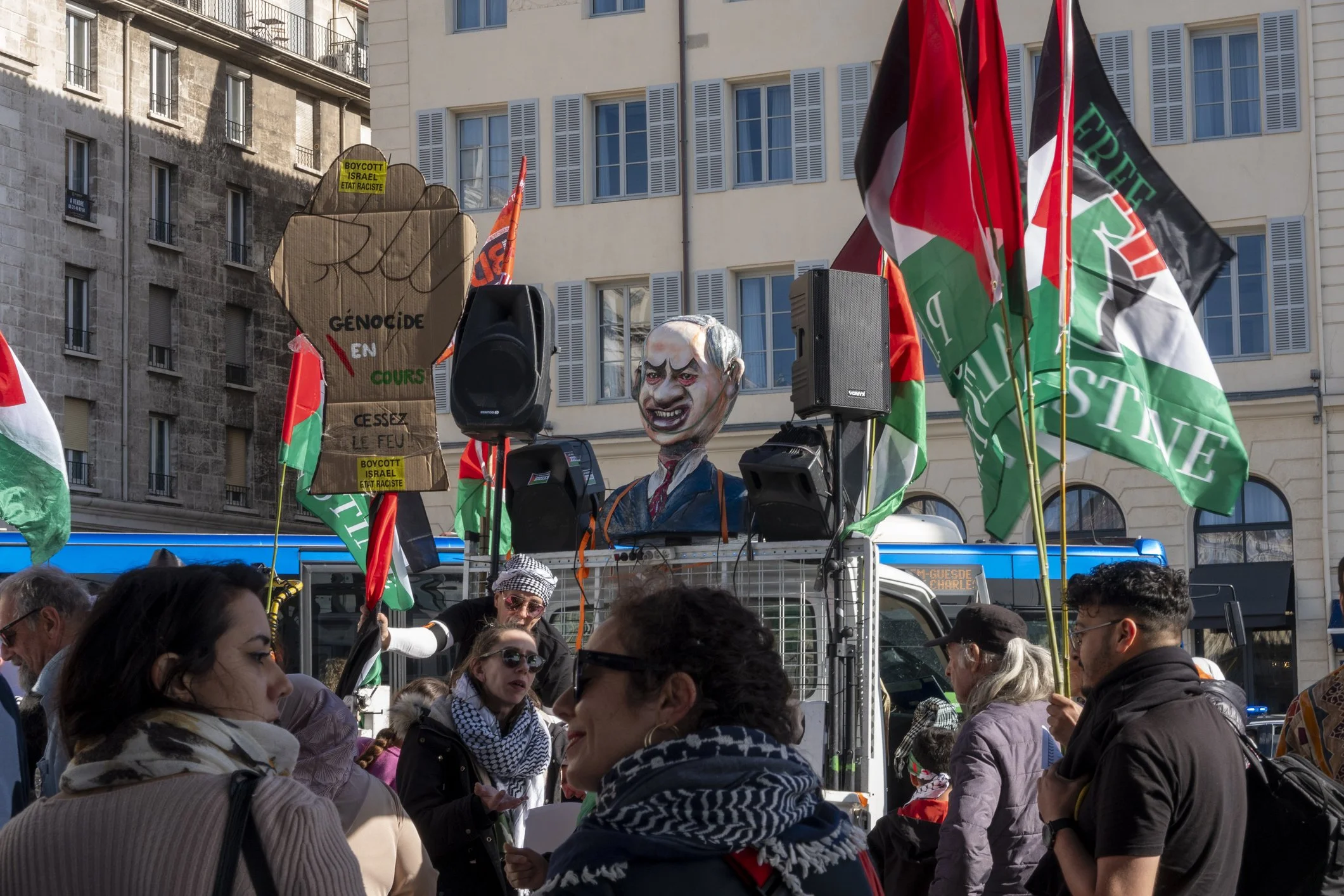
Marseille, France - March 24, 2024: Pro-Palestine protest march held in Vieux-Port, Marseille, France Photo by Juanorihuela.
Artists for Palestine
On October 27, 2023, a few weeks after the Nova music festival attack which launched Israel’s full-scale genocide against Palestinians in the Gaza Strip, a group of artists and cultural workers signed and issued a public letter. The letter started with explaining the context behind these events, that “[f]or over 75 years, the Palestinian people have been subject to a violent and racist occupation by Israel.” It called Israel’s attacks and blockades of Gaza a “genocide, plain and stark,” noted that corporate media and political leaders in the West “demoniz[e] the resistance of the oppressed while obfuscating the violence of the oppressor,” and said that signers “dedicate [themselves] to standing in solidarity with the Palestinian people and to use [their] artistic and cultural practices as tools of liberation in the struggle for sovereignty, dignity, and self-determination.” It was signed as Artists Against Apartheid.
This was a strong statement to make, particularly at that time. The days and weeks after October 7, 2023 were known to be fraught with tension for those who acknowledged the Nakba and the decades of occupation and oppression preceding the Nova festival. Many people, wholly in support of Ukraine and Ukrainians’ efforts to defend themselves and their country, were not as supportive of Palestine and Palestinians’. “It’s complicated” was the familiar refrain. Now, three years later, with a conservative estimate of 72,063 people killed by the illegal Israeli occupation and genocide in Gaza, there is more understanding that this is not nearly as complicated as it was made out to be. Israel, armed and supported by other powers, namely the United States, is an imperial outpost, and does what an imperial, colonial power does in its violent expansion. Years later, the statements made in the letter hold true.
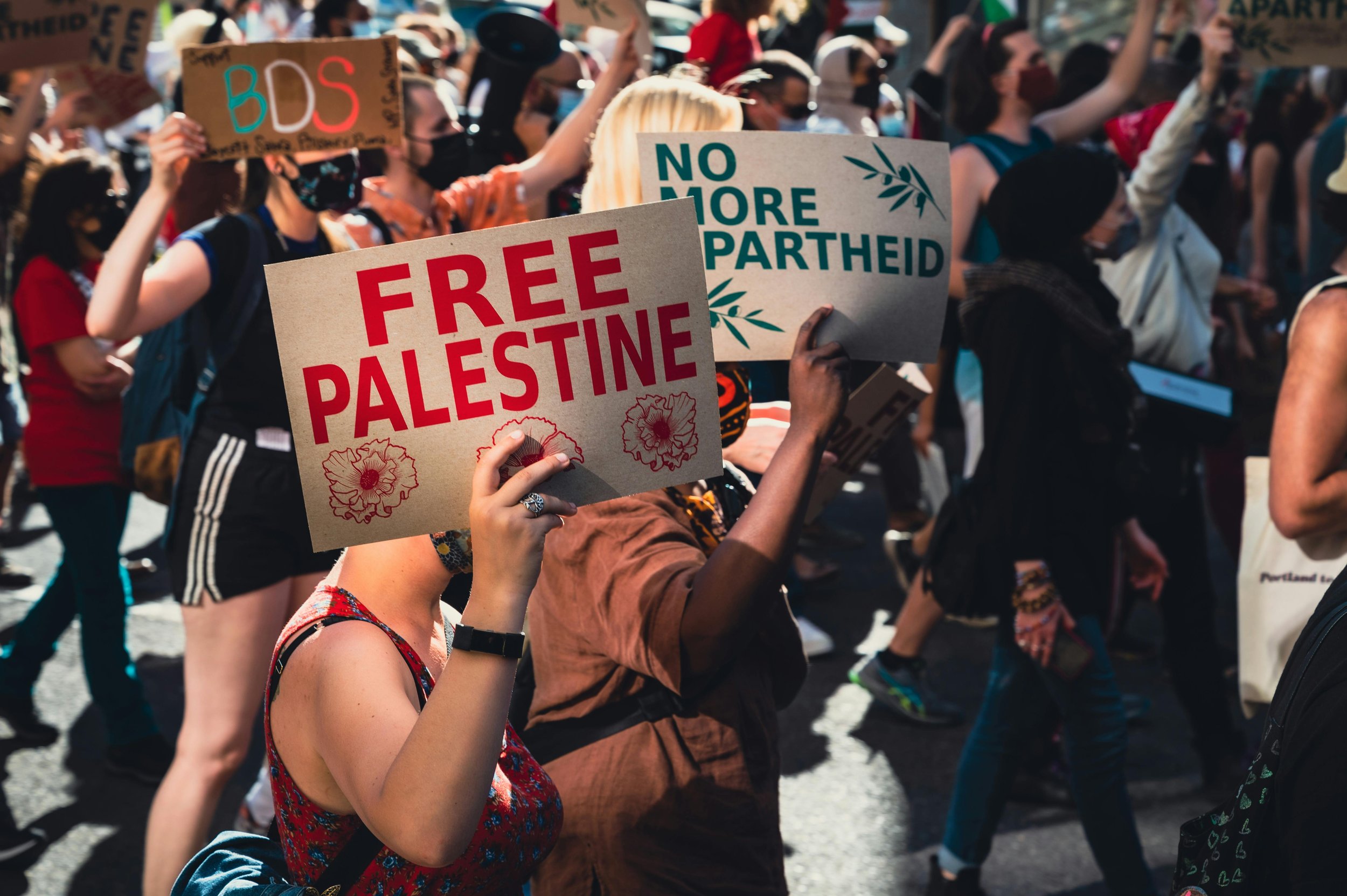
For artists and cultural workers to make this statement is also important. They made this statement in the context of the Boycott Divest and Sanctions (BDS) movement, a broader cultural and economic boycott movement. While individual boycotts, especially consumer ones, are often acknowledged by movements as being less effective than more collective power exercises, like strikes, BDS is considered important in the context of Palestine, specifically. This is because Israeli occupation relies on normalization, of cultural and social acceptance, which is tied to economic acceptance and the occupation’s proliferation.
Take Israel’s promotion of its nightlife industry – it portrays itself as a safe haven in the region for queer people, especially, to enjoy nightlife and club culture. This is part of a pinkwashing effort to obscure Israel’s conservative reactionary legal infrastructure and genocide of queer Palestinans). Many Palestinians do not get to enjoy nightlife, as they worry about their basic safety and navigating economic and political apartheid. Perpetrators of the violence against them can enjoy it, though, even while they continue to wage war in Lebanon and Iran.
There is an unspoken privilege in enjoying art and entertainment in this context. There is a violence to that ignorance connected to the economic underbelly of the occupation. The Nova festival, a music festival tinged with hedonistic marketing, was held just three miles from Gaza, long known as an “open-air prison” besieged by Israeli blockades causing mass starvation at “Emergency” or “Catastrophic” levels of food deprivation. There are plans for governments on the “Board of Peace” and corporate collaborators to ultimately turn Gaza into a resort destination. At this resort, the genocide would ostensibly be completed, and guests could dance on the rubble of Gaza in blissful and profitable ignorance. Artists and cultural workers know that it should not be a privilege to enjoy art, and in fact, it is especially meaningful to the most marginalized among us. That is why it is important for artists to marry economic BDS pressure with cultural boycotts – they are linked. Artists and cultural workers, whether they are actors, dancers, or musicians, can play a crucial role in disrupting this normalization. They can refuse to perform in Israel or they can refuse venues or gigs in which investors have financial ties to arms sent to Israel. Social pressure mounts and can lead to material outcomes as the tides of public sentiment turn, leading to more questioning of people’s governments’ support of the genocidal settler-colony. This parallels a different BDS campaign targeting apartheid South Africa, another apartheid state. While cultural and social pressure alone did not end state-mandated apartheid in South Africa, it was a crucial pillar in the overall movement, and did financially affect the apartheid state, leading to movement advancement.
The Artists Against Apartheid letter, which now has over 15,000 signatories from around the world, is one of many instances of artists and cultural workers collectively exercising their power in shaping and shifting culture. Non-celebrity artists and nightlife workers are often seen as being on the fringes of society, as being part of the “starving artist” trope. While it is true that it is becoming increasingly untenable to sustain oneself as an artist, artists, cultural workers, and nightlife workers actually can wield material power when it comes to politics, though it would require unification of their efforts to use that power effectively.
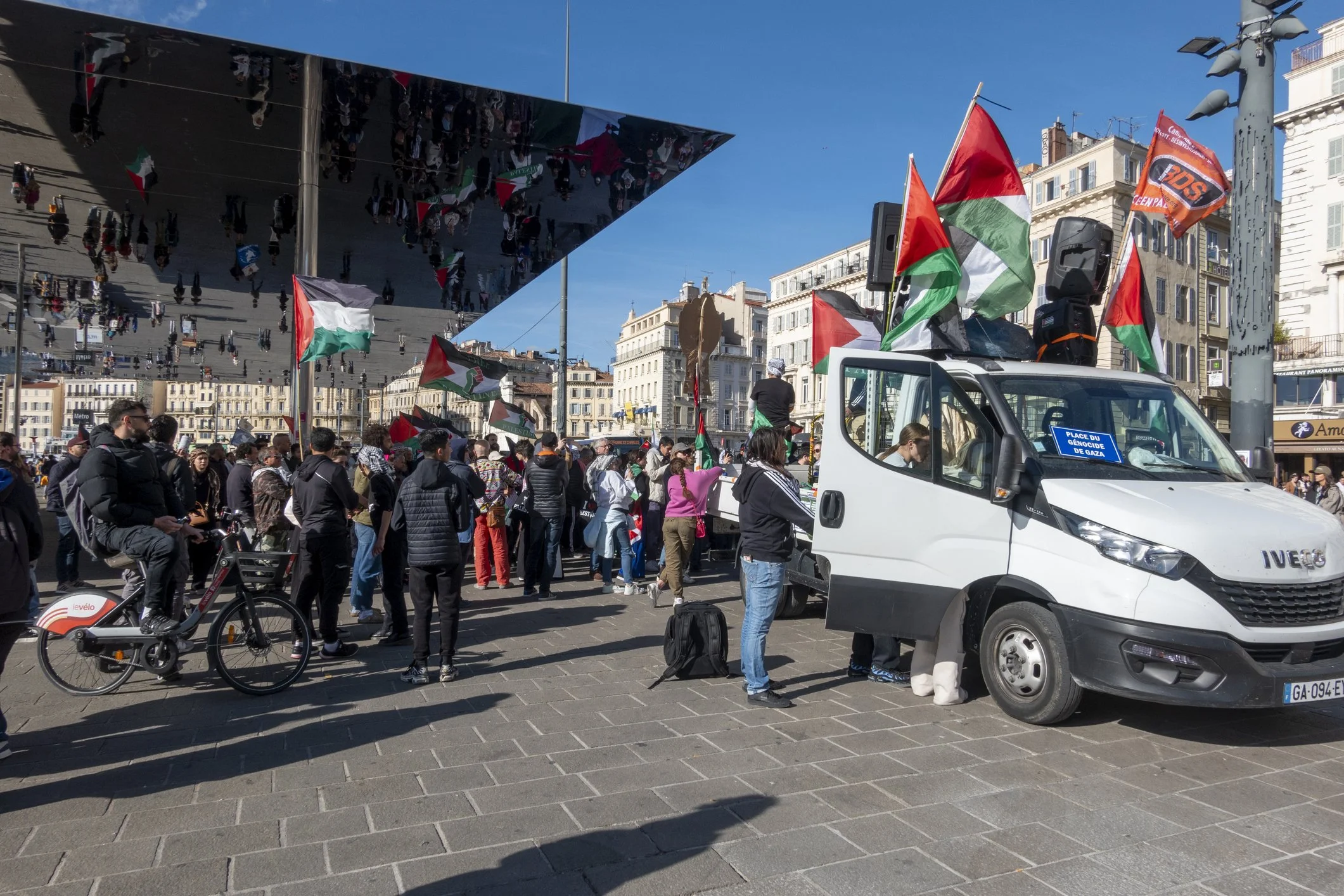
Marseille, France - March 24, 2024: Pro-Palestine protest march held in Vieux-Port, Marseille, France Photo by Juanorihuela.
A Nightlife Union?
Take, for example, DJs. DJs are often considered solo performers, as symbolized by their place, front and center, on the dancefloor, with the crowd oriented toward them. They are considered the tastemakers of the night, and can thus bring in large revenues to promoters or venues. While DJs are considered solo performers, they are actually connected to the rest of the nightlife ecosystem. Without lighting, sound, and audio-visual technicians, bartending and safety staff, and other members of the nightlife industry, they cannot put on their performance. It takes realizing this to understand the political power that both DJs hold as performers, but more crucially, what nightlife workers collectively wield. A venue being hesitant to hold a fundraiser for Palestine could be swayed if multiple DJs or nightlife workers mount pressure. Thousands of dollars have been raised by music fundraisers, large and small, for Palestinian people as well as for linked, anti-imperialist causes like in Cuba and Sudan. There is material power there.
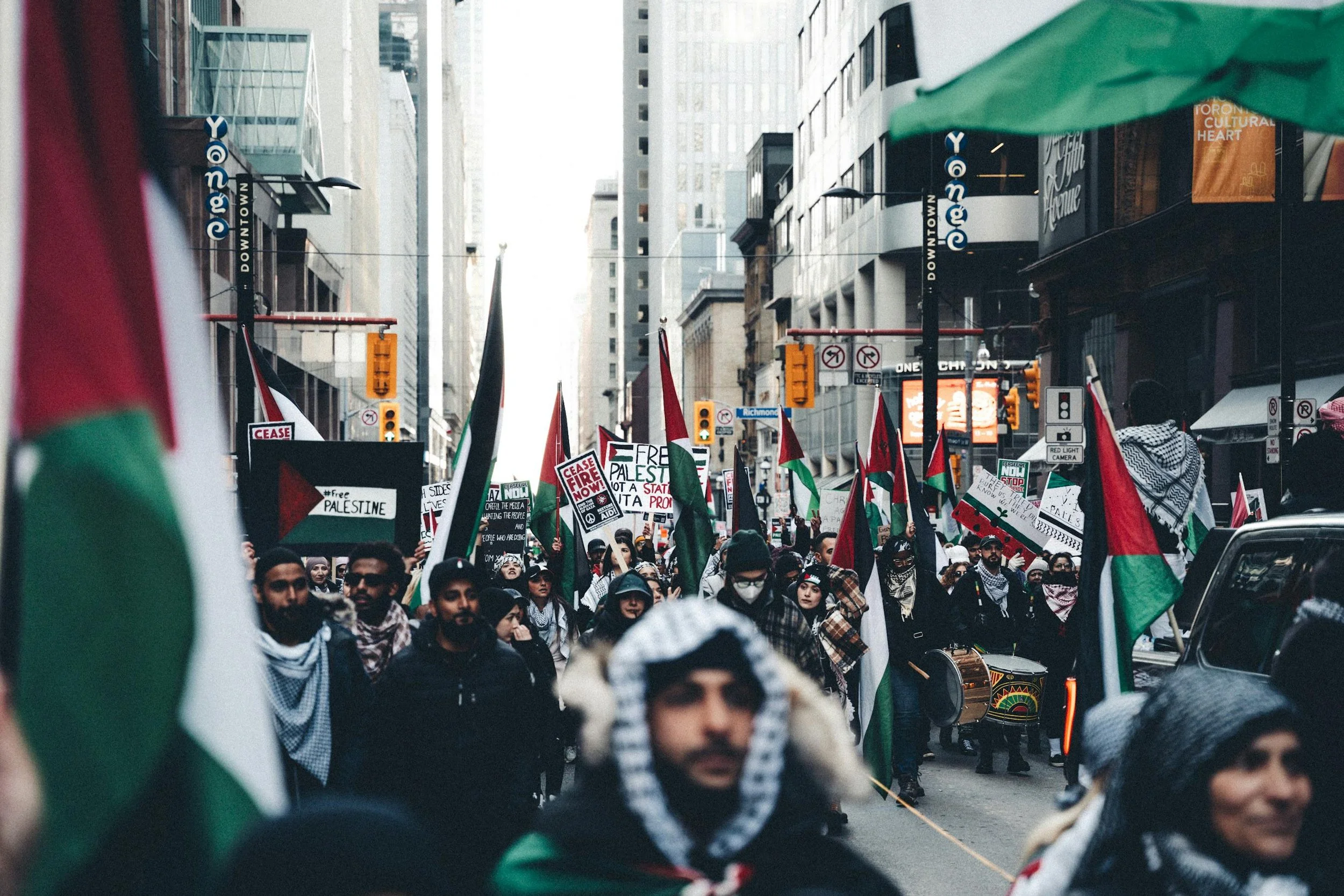
Toronto, Canada. Photo by Mohammed Abubakr.
A branch of Artists Against Apartheid, DJs Against Apartheid, includes “DJs, producers, collectives, promoters, parties, clubs, festivals, radio stations, and nightlife workers,” in its own letter. “The dance music scene has always been and must continue to be centered around imagining and creating a safer, fairer, and freer world for all people… we, as members of the nightlife community, have a unique responsibility to use our voice, our physical and digital spaces, and our artistic practices to protest apartheid and amplify the just cause of the Palestinian people and their resistance against occupation and oppression,” it explains. Joining together as “nightlife community members” can bring the material outcomes that BDS is intended to do.
An issue, however, is the lack of infrastructure for organization in the nightlife industry, and in many entertainment contexts as a whole. As music journalist Harold Heath told DJ Mag, a union would be the main way to link DJs as workers and unify their economic interests. He said this in the context of DJs performing for free, driving down other DJs’ fees. Unions are, indeed, meant to collectively protect people’s rights and interests as workers, and can be essential, especially in protecting marginalized workers who otherwise have little other infrastructural support. This includes DJs that protest for Palestine as well as women or less-abled performers or workers.
But how, exactly, would a DJ union work? There are efforts to have DJs join performers’ union Equity and for producers to join union MU in the United Kingdom. But for now, professional DJs often freelance or sign onto agencies which manage them as solo artists. Similarly, nightlife workers (such as service staff) are often difficult to unionize because of the often high turnover rates in the nightlife industry as well as chilling effects that come with failures to unionize the industry. Other nightlife workers, like security staff are often gig or contract workers that cannot form a formal union. The difficulties in union formation, both socially and legally, are an issue across the industry, although workers’ interests are all connected.
DJs, while considered performers, can also be considered workers, and it is in DJs’ interest to realize shared interests with other nightlife workers and performers. This is important particularly in the BDS cultural boycott context, not only because of the power of fundraisers and cultural pressure. It also can provide a safeguard – standing for Palestine is still a financial and social risk in many parts of the world, and workers often face financial penalties for voluntarily dropping gigs or involuntarily losing work as a result of their support for Palestine. Political powers know that BDS is important in dismantling support for Israeli occupation, and have passed “anti-BDS” legislation to suppress efforts from ordinary people and businesses to partake in economic and cultural boycotts of Israel. This is evidence of the need for unified, coordinated efforts to continue with BDS and support efforts – there is coordinated and unified opposition to pro-Palestine organizing which must be met.
An example is artists removing themselves from Boiler Room lineups – Boiler Room, once believed an underground safehaven, is now owned by private equity firm KKR, through its parent company, Superstruct Entertainment. KKR also owns music festivals Sónar, Mighty Hoopla, and Field Day. KKR is the largest private equity firm in the world, and invests in weapons manufacturers and Israeli data centers. This has led to many artists withdrawing from lineups at these festivals or refusing to play at them. While larger artists may be able to withstand the financial blow this takes, smaller artists can struggle more when attempting to boycott, especially when commercialization of the music industry has made it more difficult to avoid financial ties to Israel. It is important to note the role capital and monetary interests have taken in de-politicizing dance music. These phenomena are linked – capital has seized on the profitability that escapism, through music, brings people. With this comes profit-driven conglomerates or private equity funded ventures that are changing the nightlife industry and music festivals around the world and making often unrepresented workers overworked and underpaid. Those financial interests can also make workers and consumers unwittingly support genocide. It is therefore for multiple reasons important for cultural workers, nightlife workers, and artists to join together, hopefully through formally organized bodies like unions, which provide more structural power, but also through other informal networks, like mutual aid.
Mutual aid or pooled support funds are often a crucial piece of movements – support funds or shared resources amongst artists have long been a part of countercultural artists’ lives. As support funds networks become more vital for artists and nightlife workers, because of their political stances, the economic consequences of war, widening wealth gaps, or a combination of those things, these organizing efforts to connect artists as workers can also suggest new possibilities for collective action across cultural and labor lines.
Perhaps this can prompt a move away from the music industry as “industry” and the de-politicization of the club and dance spaces, which were a space for marginalized peoples at their inception. Further, linking nightlife workers and performers has helped share culture and art, building social connections across borders – fundraisers showcase music from diverse genres, particularly Palestinian and West Asian/MENA sources, and bring them around the world to bring material and social support. While the nightlife economy can be seen as consumeristic, as fragmented and individualistic, it can also be a space for sustained solidarity across borders and in shared anti-imperial struggles. In taking a role in BDS and cultural boycotts, DJs and other artists and cultural workers can also partake in broader, connected fights for workers’ rights in arts and entertainment.
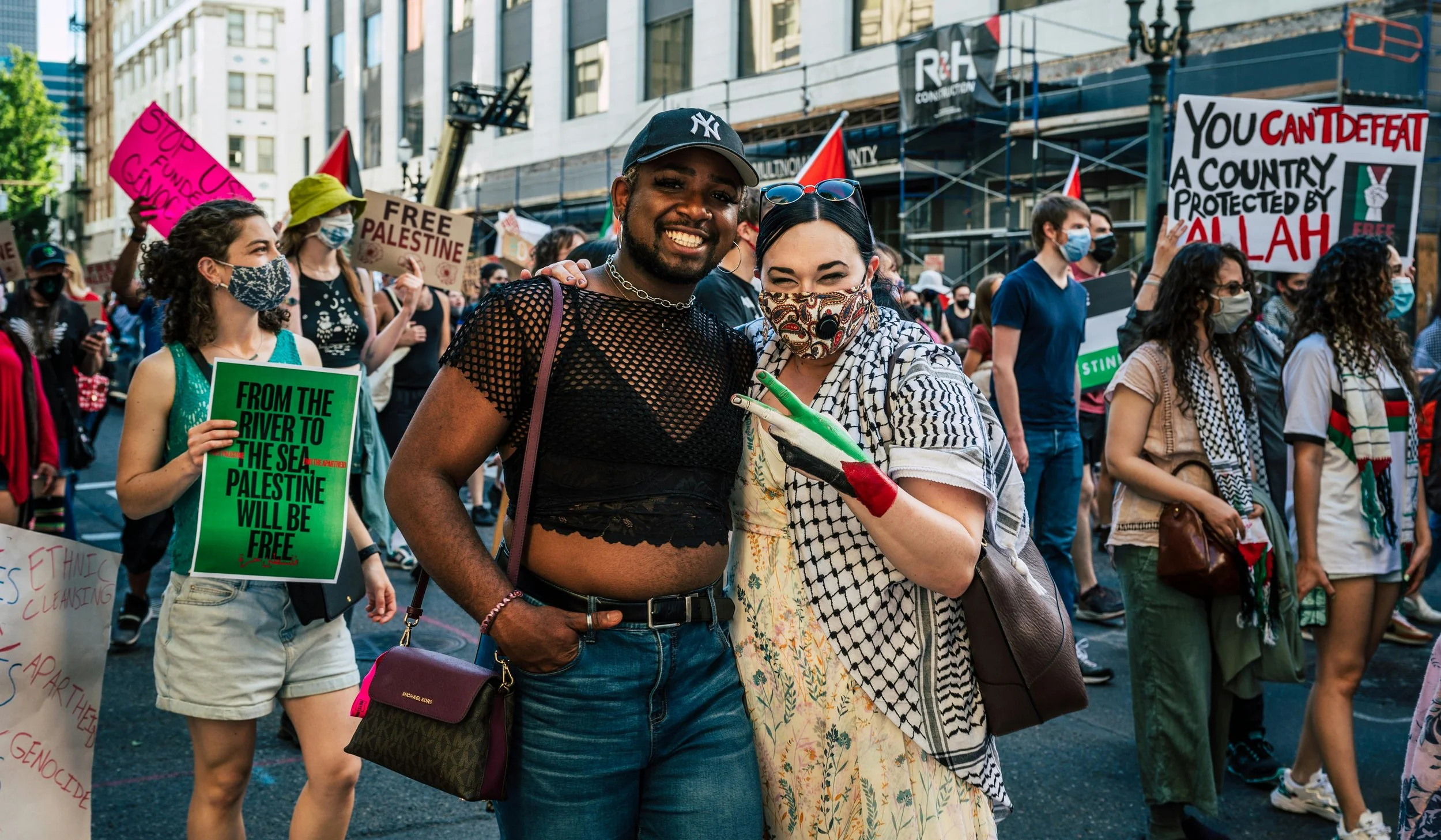
Photo by Brett Sayles.
Sumona Gupta is an artist, journalist, and writer from Alabama in the southern United States. She specializes in labor politics and human rights in the U.S. South and the Global South. She is signatory to the DJs Against Apartheid Letter. All opinions expressed here are her own.