
Invisible Doors, Familiar Shadows: Between Two Worlds by Oscar Mulero
Many have described his musical talent, DJing skills, production level, and depth of character over three decades and counting. This visceral dweller, fifty-six years young, with dark hazel-to-yellow eyes, a warm smile, and a deep emotional intelligence, Oscar Mulero, has been crowned as the King of Spain’s techno circles.
The undeniable Truth this man carries precedes him, lingering in the shadows that slip into conversation, announcing his presence in silence.
Between Two Worlds, it turns out, is the right title for the album for two seemingly opposite reasons; Everything about this piece–this man, this trip, this year–kept turning out to be two things at once: old and new, spoken and written, logic and longing, and the two of us standing at the same gate.
Following Detroit’s Movement Festival, Oscar Mulero and I boarded the same airplane. When it landed, we chatted for hours at O’Hare International Airport in Chicago.
At first, excitement threatened to spill over. But the ghost of the prior night calmed its tide. That wild notion–I might have missed the flight–kept looping, blurring the line between two worlds. Reality and reverie danced together. Our conversation flickered with an electric charge strong enough to light a city for a month. After all, I was speaking with the Maestro himself, Oscar Mulero.
“This album is not for the DJs,” Oscar told me, smiling with only the corner of his mouth. From that moment on, my focus vanished.
I was intrigued; I wanted to listen, I wanted to imagine it.
When we parted, catching separate flights to distant homes, I slipped on my headphones. Suddenly, my mind began to dissolve–my skull pressed by invisible hands, and through its seams, a shimmer of ‘Soul’ seeped out, spilling into the ether, dissolving in oblivion.

Art has the unique ability to connect people. For an artist, that means giving, and Oscar Mulero gave us so much; in doing so, he, too, had to face vulnerability. Being open is a task hard enough by itself, even for the toughest of us, but when it comes to sharing this art, knowing damn well you will likely not earn a dime off of it, is pure by default. The royalty system is broken, and it is almost true. Because the issue is: what if it was never designed to work in artists' favor in the first place? Artists were not meant to be the squeaking rats in a capitalist society running on a fuel of fame and rage with constant gaslighting. Maintaining the level of realness, especially in the current landscape, is not an easy task, neither for artists nor for labels. Still, some choose to stay true to it anyway - Between Two Worlds found a home with one of them.
Entrusted with Between Two Worlds, the label encompasses the meaning as its primary vision: Semantica. I sent Enrique Mena – Svreca, the head of Semantica – a set of questions after the trip. His answers came back a few weeks later, in his own words, unhurried in the way writing lets you be. One thing he’d said before, back in 2019, in an interview with Monument Festival Veggie, had stayed with me. When he selects music for Semantica, “I don't put any parameters on the music.” I wanted to know if that held up against an artist like Oscar Mulero. It doesn't, not quite. “With certain artists – and Oscar is one of them – you just enjoy the process of discovering what his new approach is about,” he wrote back.
What is techno, I asked, thirsty to hear a philosophical answer I could cling to. Instead, the answer was “Maybe it sounds a bit pretentious, but this is art;” much more daring to elaborate on it, to push the idea of pretentious into invigorating, because, as Enrique puts it, “(the artists) give so much in exchange for almost nothing.”
It would be absurd not to ask what “Intelligent” means in terms of music, in conversation with Svreca. He did not seem to hesitate in stating, “Intelligent Dance Music (IDM) sounds to me now as a great marketing movement pushed by WARP during the early 90s” – with strong emphasis on “now”; which is important to mention, given our perspectives can shift over time, and it is a perfectly human thing to happen. He continues, “It always felt a bit elitist when talking about music to point which music is intelligent or not, so it is absolutely unfair from my perspective right now.”
Semantica itself has been around for long enough, since 2006 – twenty years of Svreca building a catalog that just crossed its 199th release with this very record. Twenty years of a label that never once chased a trend, but spent time building something far more meaningful. The roster includes Stanislav Tolkachev, Jonas Kopp, Silent Servant, Acronym, Andy Stott, Marcel Dettmann, Rødhåd, and Svreca himself. Twenty years, one label, one person’s ear – that’s its own kind of stubborn devotion in an industry built to make you quit.
Oscar has been doing this since before some of us were born. Late eighties, playing rooms in Madrid like New World and Overdrive. In 1994, he opened The Omen Club with his own two hands. 2000, Warm Up. 2004, PoleGroup. Almost four decades now of handing his sound directly to a scene most of us only inherited. And yet here we both were, on the same tarmac in Chicago, ears tuned to the same records, hips swaying and feet bouncing in near unison, as if epitomizing the fact that good music has no age.
Although discussion of intelligence could be its own path, let us not get distracted: Oscar, without any marketing fluff, is the most hardworking person you can find in this industry. The price of reaching success like Oscar did is not small. It is a demanding everyday nudge, the itch, the howl, and the bottomless hole inside. You wish with each release you get closer to that liberating moment of sharing your work, hoping to be understood, or even if not, knowing you touched someone with it. That is the life of an artist. Of a creator. And it is needless to say how lonely it can get – how many misunderstandings you might have to face, even at times when you thought they ‘get you,’ it could be the ‘not.’
“Working with Oscar was truly special for me from the very beginning,” Svreca said when I asked how it’s been to collaborate with Oscar over the years. “He trusted me at a time when the label had no background, so I figure it was a kind of gamble for him.” He continued, “Over the years, we kept working on different projects, became good friends, and I came to understand the price of Oscar’s success and evolution: work, work, work–and to be an artist 24/7, always with that purpose in mind.” Svreca paused. “Not everyone can do that–I know very well.”
Semantica is an institutional label with a devoted, global listening audience – so how do you not only build but maintain something that carries such significant meaning to so many people around the world? And I know you might be tempted to say "stay true to yourself," but what does that stand for, especially if someone is in the early stages of searching for their sound, be that as an artist or a label? "I think this is about persistence," Svreca said. "I love to work on the label, so I continue trying my best; still learning from this complicated industry, and I’m very aware of all things that can improve, but Semantica is still a DIY label, and I have to remind myself of this from time to time."
Labels themselves, as Svreca pointed out, play a role too many have stopped taking seriously: “I think some key artists forgot how important it is to give visibility to other artists”–a true labor of dedication some festivals are only now beginning to reclaim. They understand: this work helps the audience discover not just the artists, but the pleasure woven through the sound, the philosophy, that real thing beneath it all, that only weighs about 21 grams (Soul). “For me,” he added, “a new OM release on Semantica is always a landmark–a paradoxical pleasure of its own kind, both familiar and something new.”
And what makes it easy to work with Oscar Mulero, in the everyday, unglamorous sense? “You only need to think on high levels of professionalism in every aspect,” Svreca said, “and close and honest communication.”
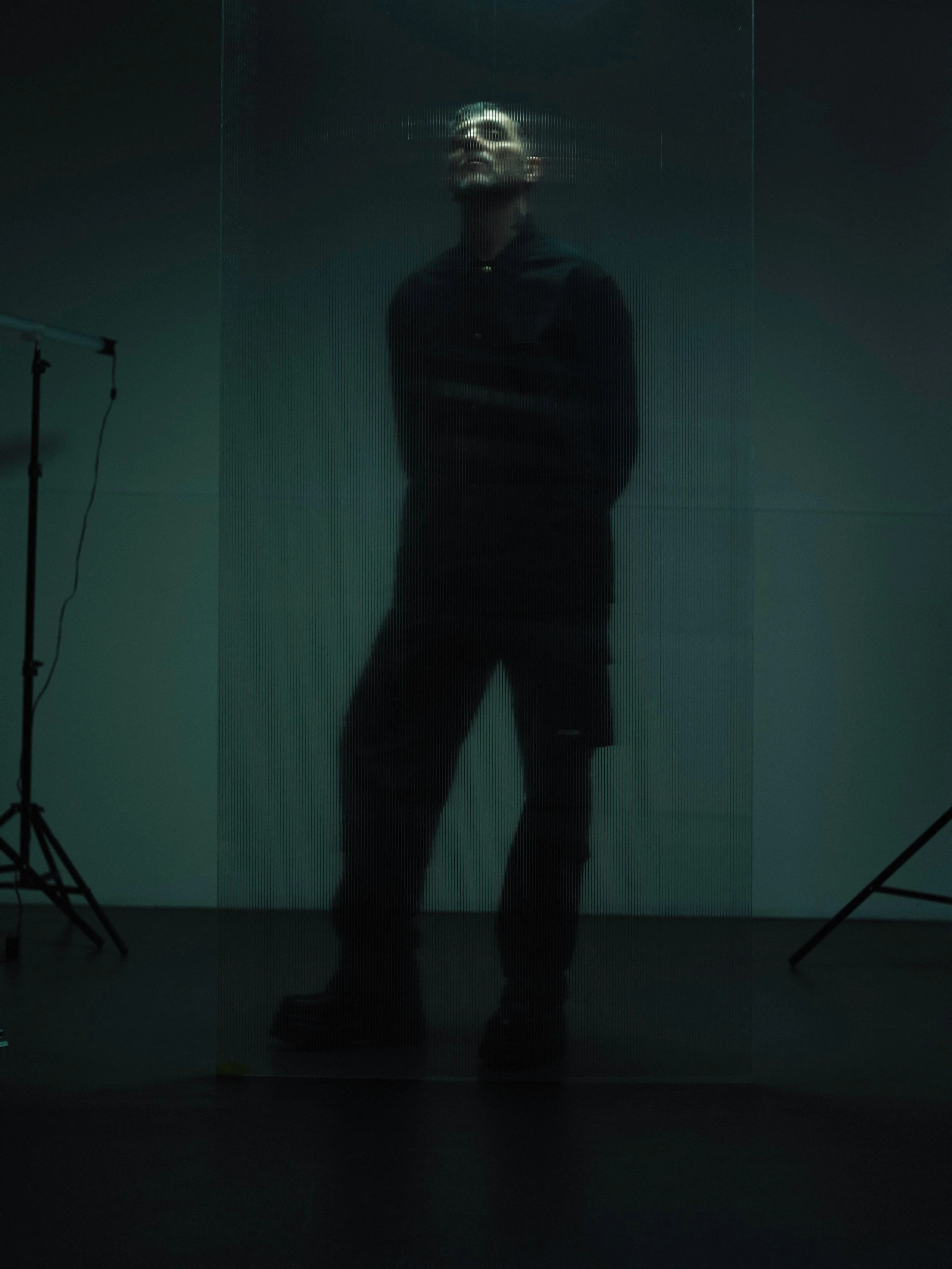
The LP opens with A1. Footprints Behind Fear–a meditation on the fear of everything familiar, and the great Unknown waiting beyond. It beckons you inward, carried on those signature low frequencies that announce: “This is Oscar Mulero.” No compromises. Just composition. Pure. Musical. Composition.
A2. Lost Verses in You might make you feel your heartbeat get lost on you for a moment, and not just briefly, but it’s as if you were to be standing in the thunderstorm atop a building in the middle of Brooklyn, wondering if life is still worth living. It is only track two, but Oscar Mulero has been unleashing his demons from minute 1:30 onward. By the time the track reaches its last minute, your goosebumps have all curled into tiny little balls with hairs standing straight up.
With a higher-than-normal-for-Mulero pitched outburst of energy, we go into A3. A Love Lost in Time, and it spits at you with the rhythmic force of an earthquake. It takes your breath away and brings it back one bloopy sound at a time. It’s messy. It’s chaotic. Yet somehow it is also deeply emotional. The ebb and flow of this track is a whole rollercoaster slamming against you like a heavy weighted blanket.
Once you lose track of time and hear B1. Broken Horizons, the tension builds; resolution feels like it’s about to follow, but then you're dragged around with the top two holes of your double-ring belt across whatever room you are in. The truth is, in this futuristic orchestral curation there are neither boundaries nor horizons. Stand still, and you will notice it. Be on the B1.
Marching drums in the back end, low ends surrendering, and with that you are now in B2. Invisible Chains. Are you locked in? Because there is no way out, right now, this path you’re on will only move forward. Floating sound from right to left, from left to right, pans once again, washing over your body like ocean waves. The chains aren't so suffocating; you find yourself enjoying them. Your nervous system peaks, and blood rushes to your limbs. The music? The sound? It’s those same ocean-like waves again, that now sound like an entire forest, on and off, and so it goes…
Starved and haunted, comes in B3. Beneath the Surface, it brings the low-end bass toms and then the drums... It has that clammy touch when you first meet your true love under the strobe light and aren't afraid to touch them. Somewhere in the middle, the track starts to fall apart, with stretching, stringy sounds washing on and off again; the drums pick up the pace and hit you with the precision of a newborn baby.
Time to shift things C1. In the Ruins of a Dream. If you listen to it as it’s meant to be listened to, as a Long Play, you realize this is the climax. Whether you are scorched on the front porch, under the desk, or even in the warmest of beds with two orange cats, the shivers it brings, they stay. It's the little salt shakers of the sound that draw you in… this is a safe space, because everything else that was before is already ruined, and on its ruins we will dance again. It’s melodic, dreamy, and still very much driving and in Mulero’s usual manner: heavy. Its heaviness comes from the inner depth and the trillions of particles arranged in the waves. It echoes what the Maestro told me when we met in Chicago: it is not for the DJs.
C2. Under a Forbidden Sky, you start to realize these sounds you heard, that synth you dreamt of, were a recurring theme of the LP. It’s monumental. It’s euphoric and utterly exciting. At a glance, high-pitched noises might feel unfamiliar, but then again, if you have been listening in, and not just hearing, you know these are the little flashbacks meant to drift away from your memories and reappear whenever you’re ready.
Diving headfirst into the unfathomable depth of Oscar Mulero’s inner world, it’s been an intricate musical work that he has shared with humanity, or even beyond?..
Intimate, meditative, but also a big ass “Go to hell. This is who I am” kind of storytelling, it's very bold in its statement, but it does not need the brightness to prove anything. It is what joy, love, loss, a mix of all of it brings, and that question you asked? If life is worth living, it’s now clearly answered in bold: Yes, if the music is this good, I’d like to stay.
There will be dancing after all. With the inner demons, the temptations, the desires, and unfinished emotions dawdling in the air when you hit play on C3. Shadows Between Us. It is uncertain, because shadows? They are not real. These are only illusions of things we chose to hang in the middle while the cymbal crashes.
And then, it is D1. The Rain That Never Was Us, which is actually a soft one. It presses down on your chest as the drum picks up the pace. The synths of tomorrow bring new hope for a better future. It takes you on a high road and back, focusing on the same thing as general relativity, dealing with complexities of gravity and accelerated motion, only to break out of it, defy the meaning, and prepare us to move into the next space.
Mono no aware (物の哀れ), or as the Japanese Rituals puts it, “The bittersweet beauty of impermanence.” Which is what D1 brings as it is heading towards the end of this wonderful journey, you start “noticing that things end makes them matter more.” – as it continues, and it is the closest I can get, verbally, because these emotions are deeply nuanced, just like the LP is itself. On the inhale, the Rain washes over my shoulders like a sudden, gentle wave before dissolving in an invisible cloud of both the unknown sadness and mysterious joy. The mind wanders to a place it has never seen, yet somehow now seems to remember it.
It’s a love poem, a poignant one. As if we are in the cinema of some parallel universe where the rain is not us, but we somehow are the rain.
The LP culminates in D2. Uncertain Whispers, which, after meeting Mulero, feels like he translated his inner thoughts directly onto the voice recording and got imprinted into these digital wave forms entangled Between Two Worlds, multiple universes, countless feelings, thoughts, ideas, and poltergeists.
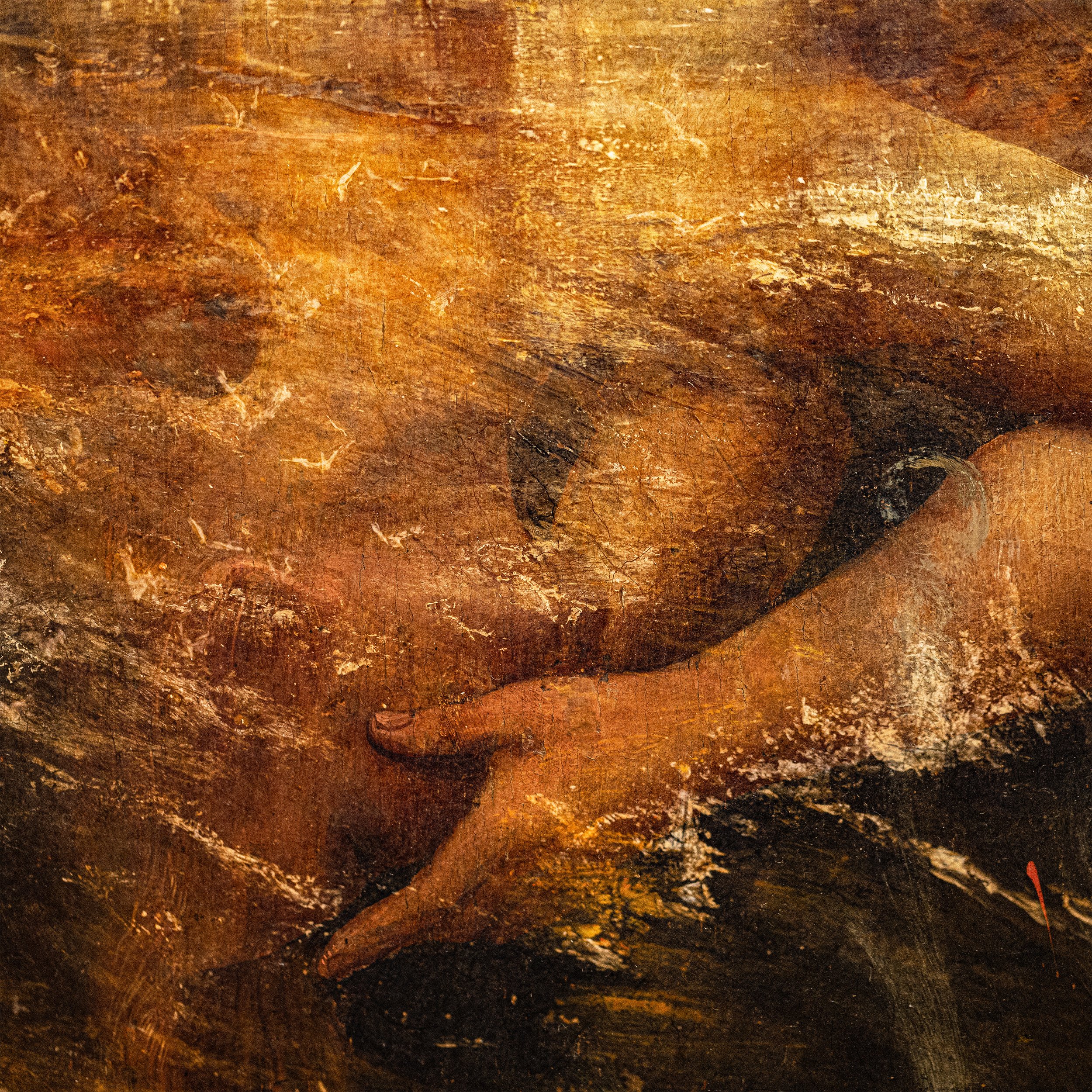
Between Two Worlds. SEMANTICA 199
The album, as a whole, is an inspiring work of art–not because of what it is, but because of where it can take you: inward, toward a quiet reflection on the shape of our lives. It doesn’t demand your attention–it invites your wandering. If you find yourself bored, that too is a kind of magic: particles of ‘Soul’ slipping out, searching for a place to land. This is an album that opens doors within, letting you listen not just to sound, but to the echoes of your own shadows showing their faces.
Between Two Worlds isn’t built for the executive network. It’s built for the wandering one–which is, perhaps, just another way of saying it’s built to feed the Soul, not fit the routing schedule masquerading as a ‘workout,’ counting steps and BPMs instead of letting go and truly dancing.
In the Big Think talk “The hidden cost of never being bored,” Arthur Brooks put it this way: “The answer to that is that you feel things and don’t know why – it’s a little bit of a mystery in your life as a matter of fact. Let’s say that you hear a beautiful song and it chokes you up; you can’t quite explain it – maybe you have a memory of something that doesn’t seem so emotional, but it makes you feel emotional…”
While I’ll agree to disagree that IDM was ever meant only to ‘sell something,’ it is also true that any music can be intellectual, and it is certainly not tied to genre boxes. Still, all that talking – mine, his, anyone’s – only gets you halfway there. The rest you have to feel in a room, at volume, with your own body as the only proof that actually counts.
On the last day of Dekmantel Festival, more specifically at its afters at Radion last month in Amsterdam, I had the pleasure of hearing a few of the tracks from the album. It had been nearly a 24-hour workday for me when Oscar Mulero took over the decks, and by the time he closed his set at 8:30 AM with this album, I was ready to cry. The moment was overwhelming to the point where I barely made it into the most primitive of sentences – just murmurs and “wow”, over and over, because nothing more articulate was coming. Whatever had slipped out through the cracks of my skull the first time I heard this album, alone, on a plane, found the rest of itself, quantum-entangled that morning.
I wish you were there.
Instead, the album was released this month, on September 25th, and while I have learned its inner workings – the shapes and curves of individual waves – for the rest of the world it’s only just about to be discovered. Join in on this treat. If you were at Dekmantel's afters at Radion, you know exactly why it's worth it.
