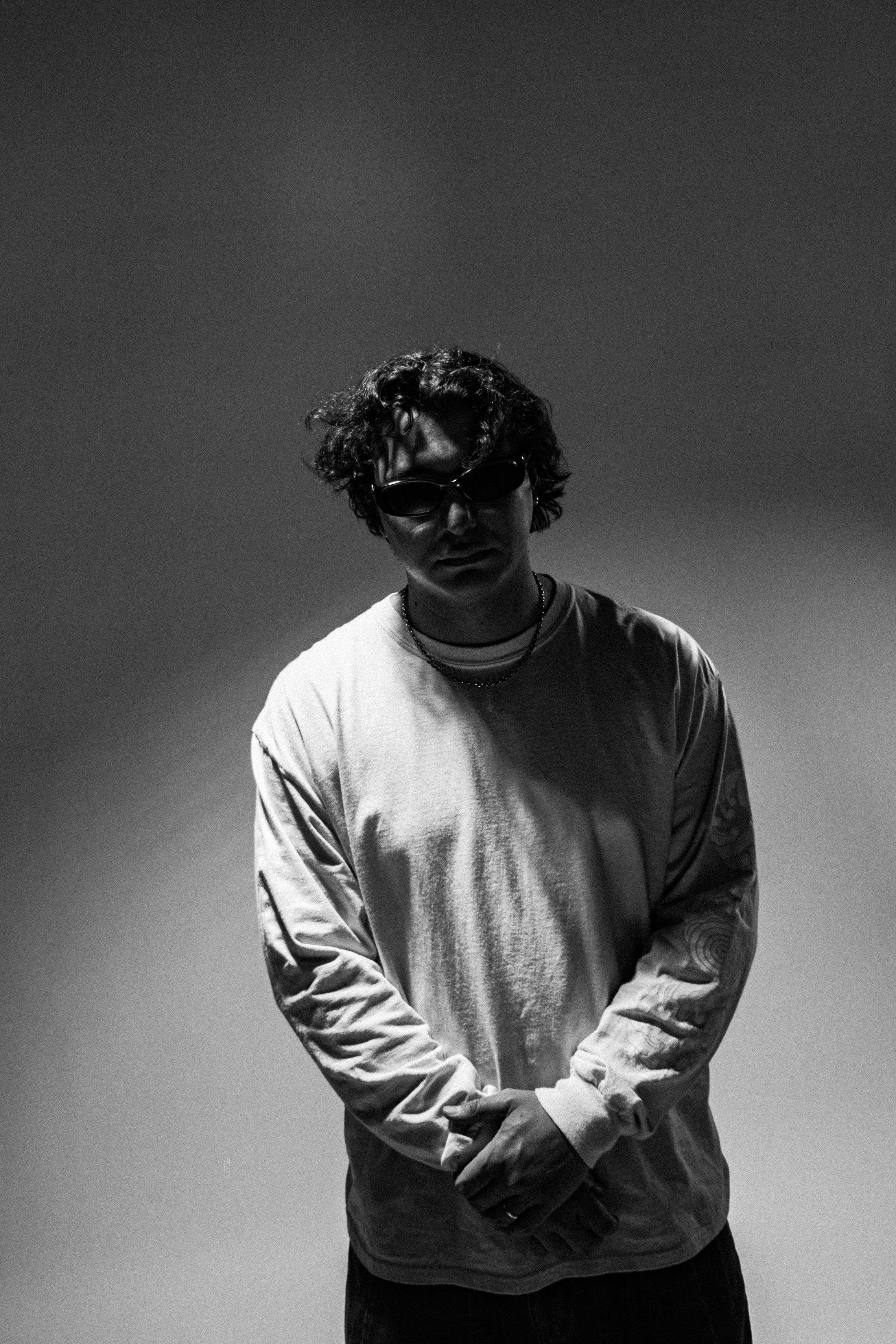
How a Fifteen-Hundred-Dollar Bet Became ÄGAPĒ
In conversation with ÄGAPĒ's founder, Andres Daza
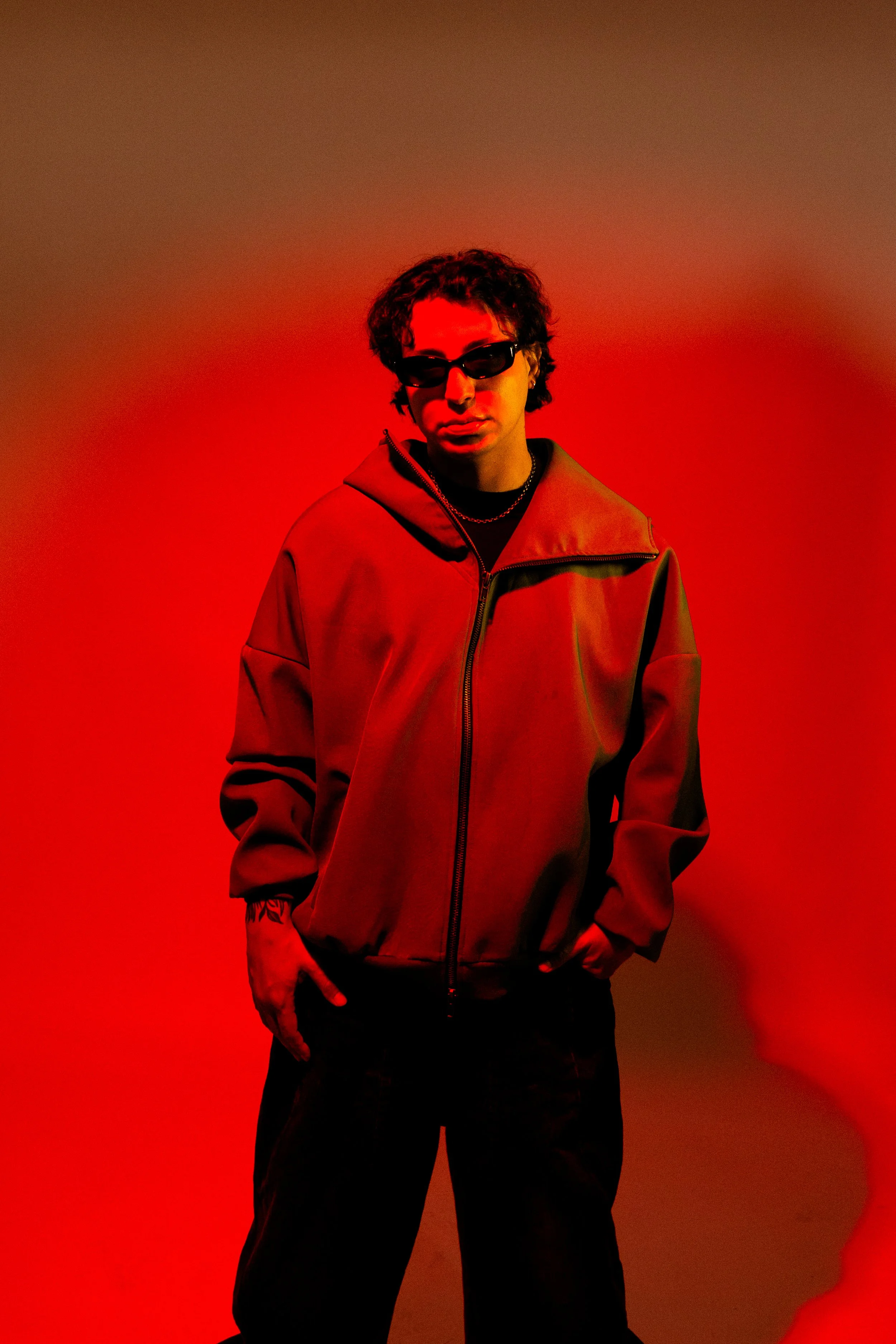
At eighteen, when his job was standing outside a mall in Bogotá from six to seven p.m. selling paper tickets for his uncle’s electronic music parties, Andres Daza was yet to know that he’d be doing a version of the same job this Labor Day weekend, except the tickets would be for his own ÄGAPĒ Festival, 10,000 people deep, spread across two stages at New York’s Industry City.
He was only fourteen when he first left Colombia for a boarding school in Michigan, trading a warm hometown for a place where the cold rolls down from Canada. Years later, he made a bigger move – arriving in New York just as the city's nightlife was waking back up from Covid.
The story, before ÄGAPĒ had a name, begins with someone else’s proposal that he risk his own money: a friend asked him if he'd be interested in putting down fifteen hundred dollars for a party in NYC. "Sure, why not," Andres said. "I'll take the risk." What followed was nearly four years without a brand, only the slow accounting of not yet having one – losses, year after year, and it was not until around the two-and-a-half years had passed before parties started turning a profit.
The decisive moment came this past March, when they drew nearly 3000 people for an event at Brooklyn Hangar. That night turned into the proof for artists, bookers and managers - Andres can deliver the real experience. “Why not create something much bigger?” became a question that he couldn’t stop turning over, so he put this idea in front of his team, and specifically to his business partner. “You're crazy!” – She told him. Then, with her suggestion and his own conviction, Andres built the festival – and that, not the fifteen hundred dollars, not the years of red, is the moment he now points to as the single most decisive moment to build the festival of this scale.
The name itself took quite some time to decide on, since Andres and his team wanted something that wasn't “Hard-something” or “Techno-something,” the reflex every third brand in the genre seems to reach for, and they found it in Greek: ÄGAPĒ, the word for the highest, most selfless form of love, which New York’s scene made fun of at first but has since learned to say correctly.
Since then Andres has moved at his own, much faster pace, building a lineup that spans six subgenres in one weekend, hard bounce, hard groove, hard techno, hypnotic techno, industrial and the OG techno, with headliners Kobosil, Clara Cuvé, Somewhen, Bad Boombox, Volvox, O.B.I., and Adrián Mills chosen for range as much as draw, and running the whole thing like a single story rather than a set of competing stages, outdoors from noon, indoors by eleven, so that nothing overlaps and there will be no hard choices to make between picking the sets to hear.
It's also, not-so-gently, a rebuttal to the idea that hard techno is a TikTok invention: genres like hard style and hard groove go back to the ‘90s, Andres points out, and what’s new is only who’s discovering them, and how fast.
Industry City, the 35-acre Sunset Park complex built in 1895 as Bush Terminal, gives that range an exquisite backdrop. The space will look like an outdoor courtyard stage during the day, moving into an indoor warehouse room from sunlight into late-night hours, running eighteen hours a day, and it’s one of the only large enough rooms left in New York built to hold something at this scale, which says as much about how hard this city makes it for an independent festival to grow as it does about ÄGAPĒ.
The music will be banging, no doubt, but the area for decompression hasn’t been forgotten either, a room built for nothing louder than recovery, a chill space for the ones who’ve danced their way through the soles of their boots but certainly are not planning to leave anytime soon, it’s only a recharge.
For all the scale, Andres still talks about ÄGAPĒ the way he talked about that first fifteen-hundred-dollar-bet, like something he’s willing to take a risk for, again and again. He sat down with Unmixed to talk about the brand they’ve built, what it's been like to be behind the scenes and why he’s not chasing the sound everyone thinks brought him to the top.
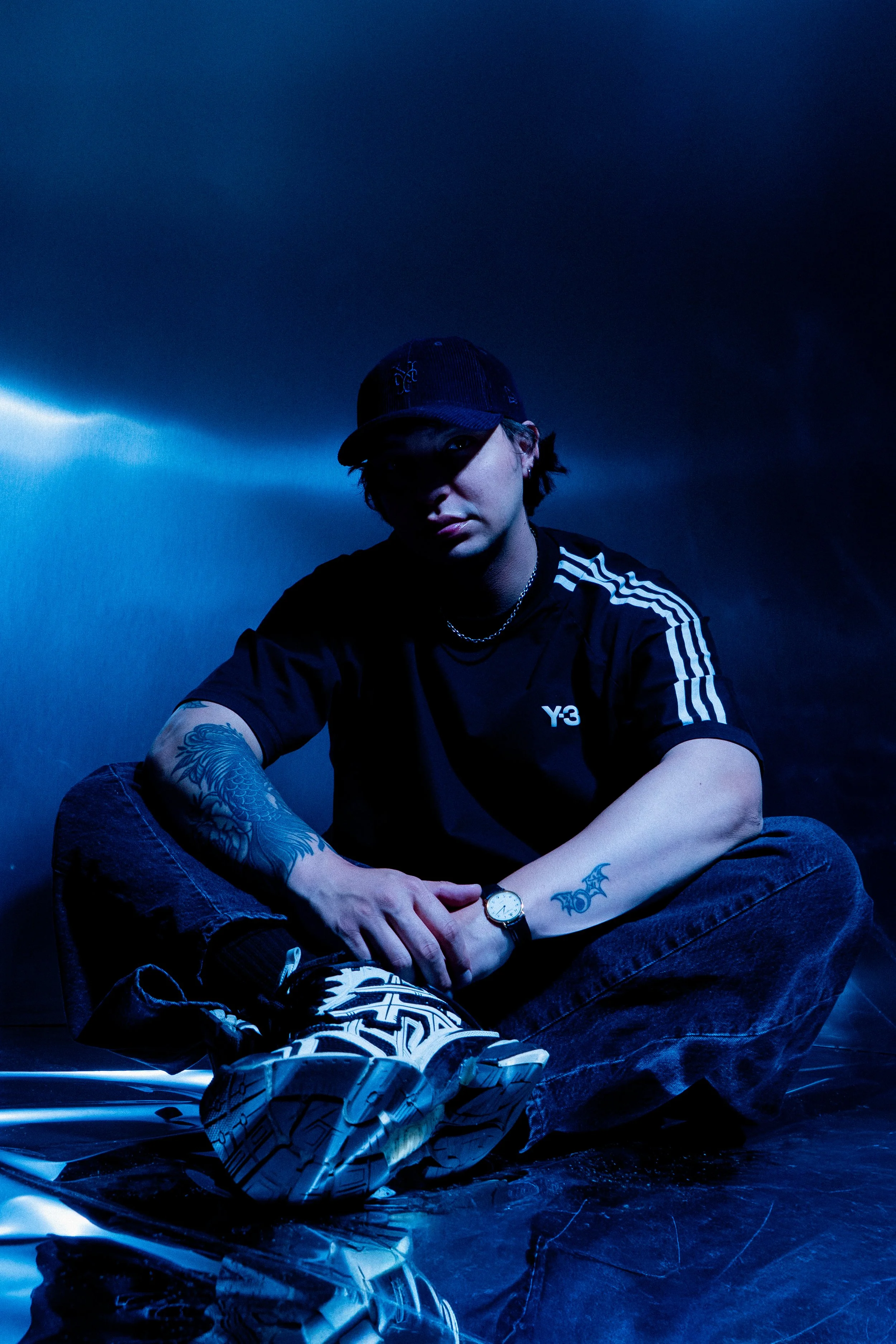
Congratulations on the debut of your festival at Industry City. I imagine that wasn’t easy to pull off, starting with just getting the permits.
It’s been a long process, but we're still here. We’re not completely done yet, but honestly, I’m really happy to see everything finally coming together.
What made you decide to go with a festival? What was the moment you thought, “We're ready. We're going big”?
It happened naturally after seeing how much our events had grown. If I had to point to one specifically, I’d probably say after our March event this year: we did 240 Kilometer at Brooklyn Hangar, and around 3,000 people showed up. The agencies and bookers I was working with saw the growth, and eventually, the conversation became, “We already have the audience, the experience, and the relationships. Why not create something much bigger?” I talked it over with my team. My business partner said, “You're crazy!,” But in the end, I decided it was time to take the risk and build the festival.
So are you on your own in this now, or still with partners?
My business partner has been a huge part of building this with me. My best friend has also been there since the early days and helped shape the project from the beginning. The team has evolved a lot over the years, but having people close to me who understand the vision has been really important. Today, we’re focused on continuing to grow the festival while staying true to what we originally set out to build.
What got you into the music industry in the first place? Not just as a dancer, but to the point where you thought, “I want to throw parties”?
It was back in Colombia when I was about 18. I graduated from high school here in the States. I went to a boarding school in Michigan, and I was applying to colleges when I told my mom, “I want to go check out Colombia. I've never really experienced it.” She said, “If you really want to go, go.” So I went. My uncle had an electronic music brand at the time (they were throwing festivals), and I started as a promoter, selling physical tickets to his events. I'd post on Facebook: “I'll be at this mall in Bogotá from six to seven, come get your tickets for Len Faki or Ben Klock.” That's how I really got into electronic music. That introduced me to the event side of the industry, and around the same time I also started DJing.
Then I moved back to the States, and it wasn't until I came to New York that I thought, “Let's make ÄGAPĒ happen.” It was never really in the back of my mind. Someone just came to me and said, “You want to throw an event? You only have to invest $1,500.” I said, “Sure, why not, I'll take the risk.” We did our first party, and from there it was building a brand from scratch: the logo, the branding, all of it. It wasn't as strong as it is now. There were losses for almost four years, and only around year two and a half, three years in, did we start actually running as a profitable company. These were definitely difficult years and a lot of lessons along the way, but eventually the events grew into a real company and now into a festival.
Taking the risk paid off! Were there specific values in dance music that made you want to stay in it and keep building?
Honestly, it was the community’s comments and support, whether on social media or just someone texting me, “That was one of the best experiences I've had, we love what you're doing.” Those messages of support, even when things weren't going well, even when we weren't in the green, we had a strong community pushing us from behind, making us feel like we were doing the right thing, even when it wasn't working out yet.
Where does the name come from? I know it's Greek for the highest, most selfless form of love. Why Greek?
We sat with different ideas for weeks.
My uncle, who's also a designer, did the logo. My founding partner, who is a little bit Christian - not fully-, came up with the word, and we landed on ÄGAPĒ. At first it sounded a bit like “a gate,” and people made fun of it, especially early on in the New York scene. But after a while it became normal. People learned how to say it, and once we explained what it meant, the crowd started embracing it. We explored words from different languages before landing on Greek. I couldn’t tell you exactly why Greek was ultimately the one that stuck, but the word and its meaning felt right.
Were there other names you considered and passed on?
We definitely stayed away from anything with “techno” or “hard” in the name.
There are a lot of event brands that immediately identify themselves with one particular sound, but I always wanted something that could stand on its own. I wanted the name to be short, real, and flexible enough to grow with us.
You said the bookers were the main push behind the festival. But how do you approach building a lineup beyond who’s available? How do you decide who plays after whom, or build the storytelling of a night?
That part was really about the curation. Availability obviously plays a role, but once we know who is possible, I think about the entire experience and how the energy should develop throughout the day and night. From the beginning I thought about all the big festivals where your favorite artist is playing one stage while another artist you want to catch is on a different stage at the same time. That's one of the biggest problems with festivals, in my opinion. Since it was our first, I figured we didn't need a bunch of stages competing with each other. We could make it more like a journey. The whole concept is that we start at noon outdoors and run until around 10 or 11 p.m., then everyone moves indoors, so everybody gets to catch all their favorite artists. Nothing overlaps.
The headliners include Kobosil, Somewhen, Clara Cuvé, Volvox, O.B.I., Bad Boombox, and Adrián Mills. What made them the right fit for the festival?
I focused more on the different sounds I wanted the festival to represent rather than any one specific artist. New York has always been a market that's either tech house, commercial music, or very classic techno, but no one really stayed in techno while still bringing in hard groove and trance. I feel like that's what this festival does: it brings six different sounds together in one place, and that opens doors, because people who've never heard hard groove before might hear it for the first time and get hooked. So my approach wasn't "this artist is perfect.” I wanted the lineup to be diverse enough that someone could come because they love one specific sound and leave having discovered something completely different.
That was more important to me than building the festival around one particular artist.
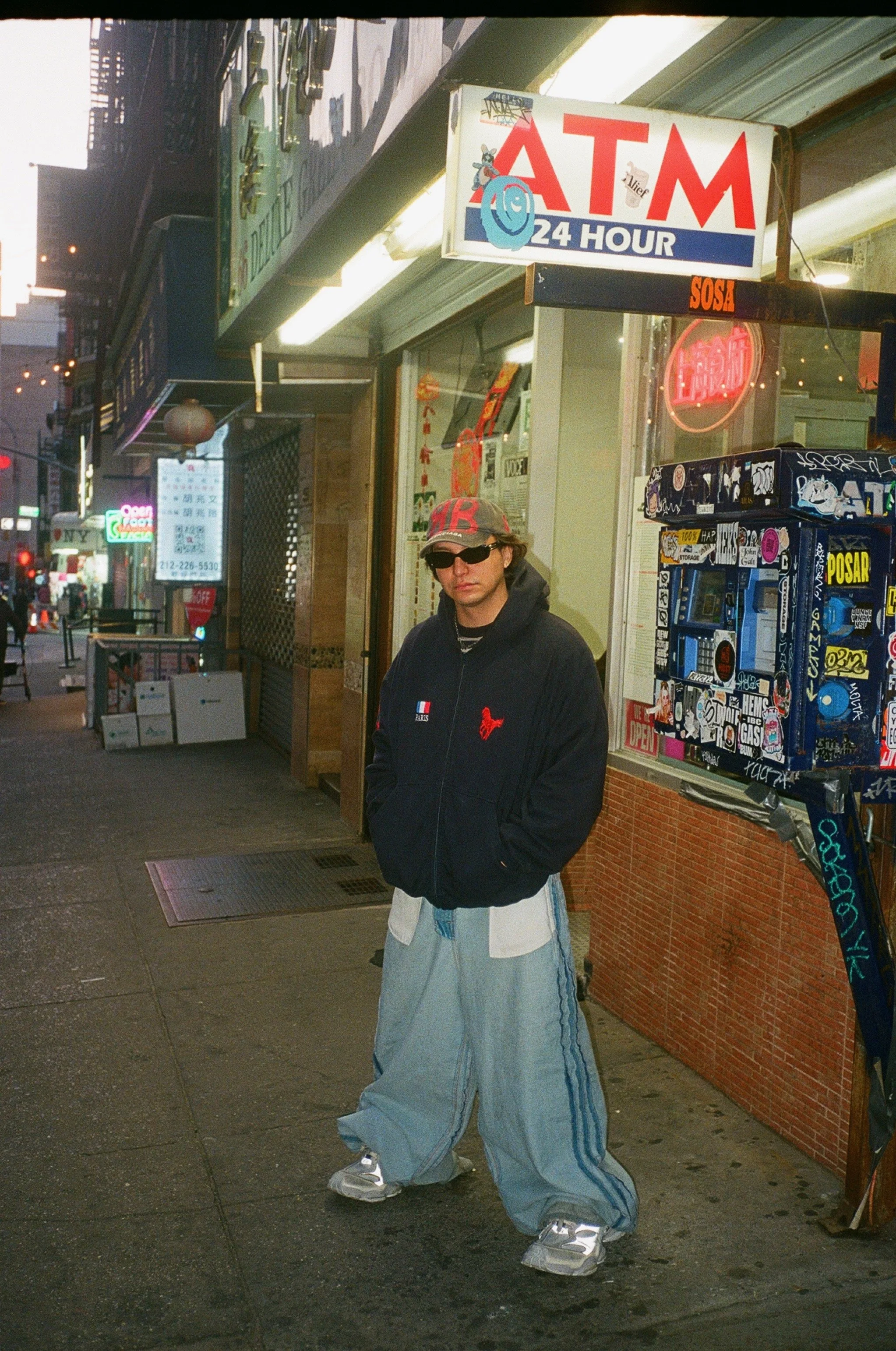
That’s interesting. People tend to lump everything under “techno,” which I think is a bit of an issue, so I like that you differentiate. Take hard techno specifically: a lot of people assume it came out of TikTok dances and blew up since COVID. What's your take? How does hard techno differ, culturally, from other strains of techno?
There are trends, and honestly, if you look into it, hard style, or hard dance, isn't new. Those genres go back to the ‘90s, even the ‘80s. Trends in music tend to come back around, just like in fashion; hard techno came back and social media happened to grow enormously at the same moment some of those harder sounds were becoming popular again, so the two became closely associated.
But to be honest, since the beginning we've tried not to limit ourselves to whatever sound was trending most at that particular moment. And more importantly, regardless of social media trends and hype around it, we'd still do a hard groove party, or a proper night with Stephanie Sykes back to back with Grace Dahl. Even if one style was selling more tickets, we would still take risks on different kinds of techno. I believe that willingness to move between sounds has been really important to our identity.
Do you think this new generation of dancers, who haven’t experienced the snobbery of older generations, are finding their own kind of refuge in it? Is it a middle finger to the rest of the industry, or is it more performative than cultural?
What I've noticed is that it does carry cultural weight, people’s taste naturally evolves.
Someone might discover electronic music through a very hard or immediately accessible sound, and a few years later they start becoming curious about deeper or completely different styles.
I've watched this happen. People rarely stay in exactly the same lane forever.
So yes, I think those sounds can be an entry point into the culture. Someone can start in one place and eventually discover decades of music they didn’t know existed.
How about Industry City itself? It’s so aligned with industrial techno. Was it your first choice? Did you consider other venues?
Honestly, as we scale, there aren’t many options in New York. There are a handful of warehouses at 3,000 capacity or more, and then a tier around 1,000: 99 Scott, Brooklyn Roots Collective, Chocolate Factory, Superior Ingredients, and that's about it. Other cities, like Chicago, have more rooms in the 2,000-to-3,000 range. When we saw Industry City, we knew it had both an indoor room and an outdoor room, and honestly, it came down to the experience we could give people outdoors. I don't think there was another venue that could provide that. I also liked that Industry City usually hosts other genres. House of Yes has done massive parties there, City of Gods, Armin van Buuren has played there, but never really a techno party like this one. The space already has a strong identity, and we felt like we could transform it in a way that worked really well for techno.
How are you putting sound together? Do you have a dedicated team-member you trust?
Yes. We have a dedicated production team handling the sound and technical side of the festival. We’ve worked with people we trust from previous large events, and having that experience together makes a huge difference. Sound has always been extremely important to us. People can forgive a lot of things at an event, but if the sound isn’t right, it completely changes the experience. We take that very seriously. That’s why We have a strong production team, and that's something people have always said about ÄGAPĒ parties: we've never booked a venue that wasn't right for the occasion.
Sounds exciting! Are there gonna be some art installations too?
Yes, we have art installations coming; it'll be set up in an area where people can decompress away from the dancefloor. With such a long festival experience, I think it's important to give people somewhere they can sit down, reset for a little while and experience something different before going back into the music. We want the festival to feel like more than just stages and DJs.
What were some of the biggest challenges along the way? Venue, sound, or something you didn't see coming?
Definitely coordinating all the different moving pieces.
Once you work at this scale, every artist and team can have different requirements. Some artists want to be recorded, while others don't. Alongside the artists and industry crews, we are coordinating: fire guards, EMTs, air conditioning in every room, and making sure food vendors who don't use propane and instead have electric equipment for safety reasons, of course. So, a lot of the important details. The biggest challenge is really bringing all of those different requirements together while still making the final experience feel seamless to the audience.
So artist relationships and city guidelines are really the two big ones. How do you navigate that, especially with artists, since I imagine it's impossible to please everyone, and maybe that shouldn't even be the goal. Where's the middle ground?
Communication is probably the most important part. My flow is that I work closely with an experienced booker who represents everyone on the lineup, someone I've come to rely on almost like a lawyer in that sense. If an artist or a group wants something we can't easily get, I go to him and say, "I need you to help me communicate and solve this," and he's there for us every time. Without that kind of relationship, all of this would be a lot more complicated. You can't always give everybody exactly what they ask for, especially on a festival with this many different artists, but you can communicate clearly and work toward a solution that works for everyone. Having experienced people around you who understand both sides of those conversations makes a huge difference.
I love how you talk about your relationships with labels and bookers. A lot of festival organizers I talk to don't even like each other, so this is refreshing. How did you build those relationships in the first place?
Everything in this industry comes down to trust. When you come in as a new promoter, nobody trusts you, nobody's handing you artists. You have to build your own résumé of who you’ve booked. And beyond booking, you have to maintain the relationship: taking care of artists, handling their pickup properly, promoting the show well, selling tickets. All of that adds up, and if you keep doing it right every time, those relationships get tighter, and bookers start vouching for you. At the end of the day it's all about building a reputation: doing things well, and paying people on time. A lot of promoters in this industry skip payments as a one-off, and I think staying reliable on that front is a big part of why we've stayed in good standing with everyone.
Speaking of meaning: what does techno itself mean to you? A genre, a lifestyle, a business model?
For me it's mostly everything, honestly. It makes me feel something nothing else does. Even on a stressful day, if I go out and just listen to techno, it's always better. It's never really been about business for me. I'm an artist myself, I make music, and I'm genuinely passionate about it. I think that's part of why this worked. I never expected to get to this level. I was just having fun and making music. When you force things, they don't work. There has to be passion behind it.
Where does that passion take you next? What's ahead for the brand?
We want ÄGAPĒ to become a flagship for New York festivals. Next year is really the first year we go international, and that's happening naturally too. The agents and bookers are already saying, “You've got a festival, you've got an established brand. Let's take you somewhere else.”
Last but certainly not least, what does success look like to you? Between ticket sales, paying artists on time, and the relationships you've built, what's the outcome that would leave you feeling fulfilled?
Just staying authentic.
That's what I'm going to keep doing.
I don't need to be anybody else, and I'm not going to do things the way other people want just to please them. Of course, we also want the festival and the brand to continue growing, but the most important thing is still creating something that feels like us. If we can keep doing that while the community continues growing with us, then I consider that success.