Striking a Balance of Playful and Soulful with Osmosis Jones
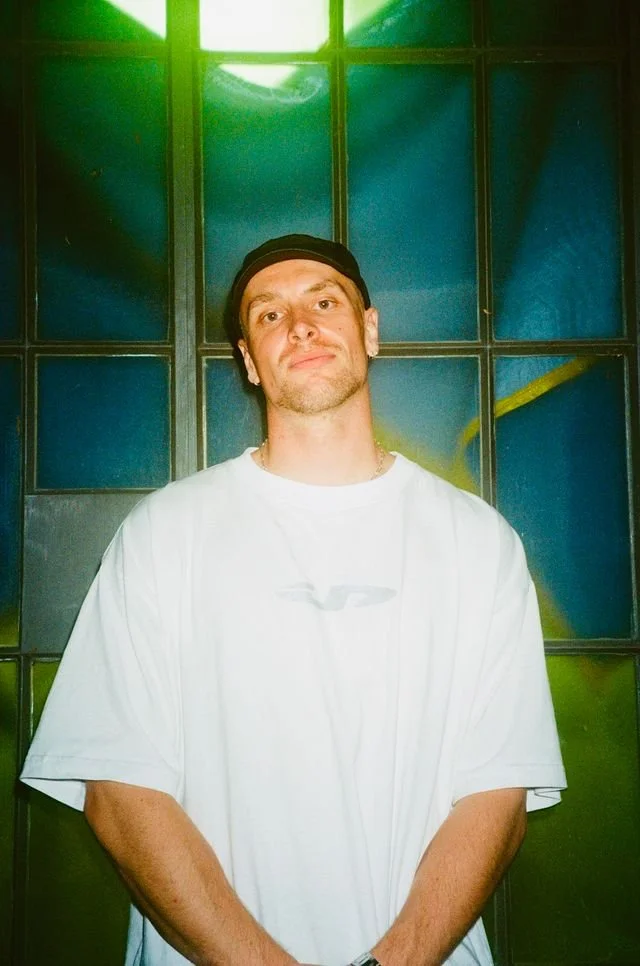
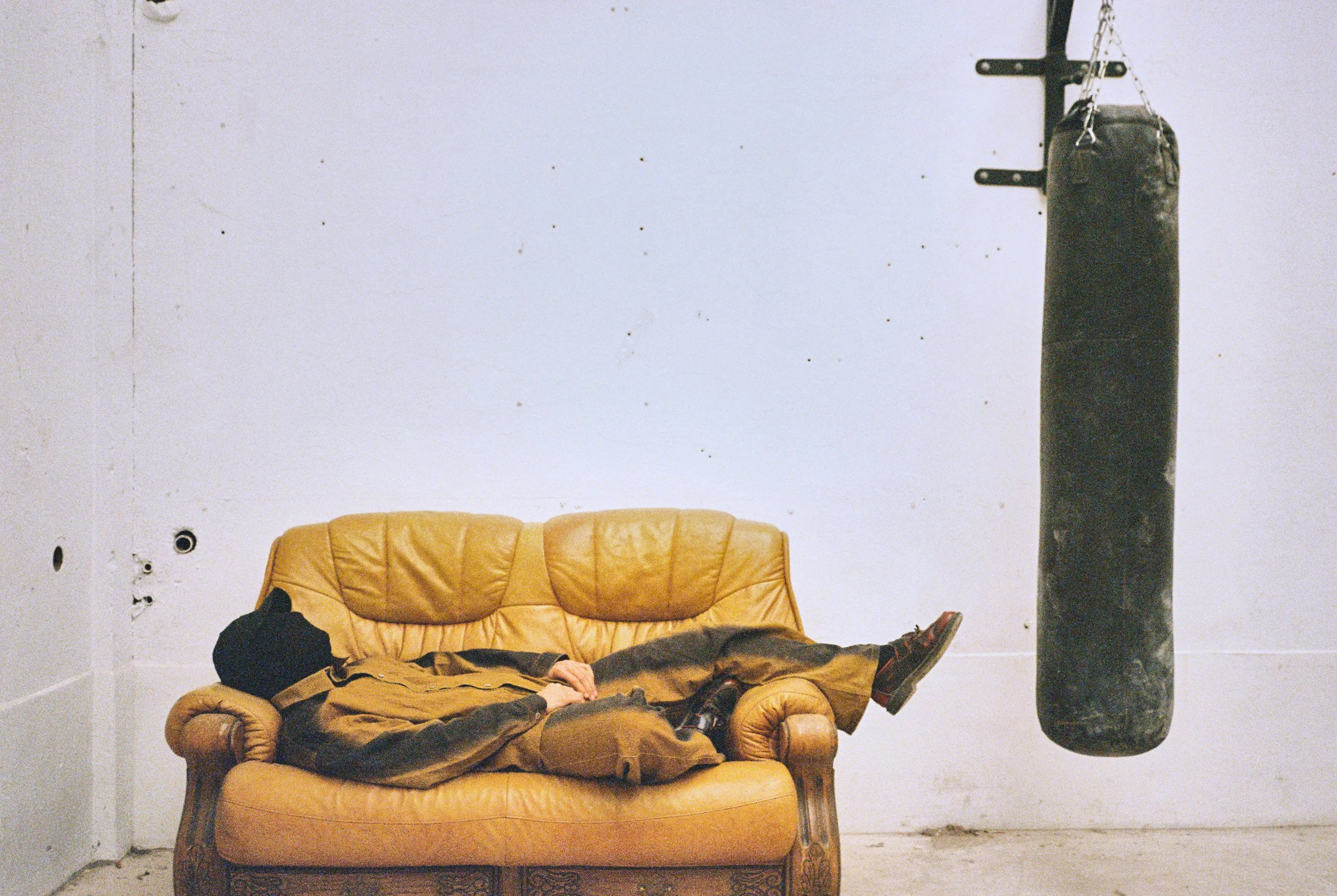
Osmosis Jones courtesy of Psylentmgmt.
Osmosis Jones knows how to bring the vibe. The 29-year-old from Melbourne, whose real name is Tim Spalding, has cemented himself as a fixture of the UK garage scene, breaking out of Oceania more and more to spin around the UK, Europe and the States. As a producer, every track he creates channels an upbeat energy and a nostalgic warmth, inspired by classics of the original garage era. And as a DJ, he bounces between vinyl and digital mixing with a carefree presence, punctuated by silly dance moves and a signature toothy grin.
The up-and-comer has years of experience as a true DIY-er: his earliest tracks on SoundCloud from over 6 years ago, including remixes of 2000s-era R&B and hip hop tracks like “Crank Dat” and “Get Your Freak On,” are accompanied by collaged cover art that doesn’t take itself too seriously. Now, in an era of polishing his output, Spalding relies, for once, on a team, but the vision is undeniably still his. Motivated by the deeply emotive experiences he’s had listening to UKG, he hopes to transmit that similar feeling to his listeners.
On the same day we spoke, he’d just dropped his track, “Tonight’s The Night,” released on his own label, INTHEHOUSE Records. With a funky bassline, soulful female vocals, ringing siren accents and a retro-inspired cover, the tune evokes a club night from a past era. Read on to hear Osmosis Jones’ thoughts on Melbourne rave culture, the state of the garage scene, and what makes a perfect party.
What does your day-to-day look like?
I'm based in Manchester for the summer, staying with my good friend from Australia over here and having a really good time. Day-to-day looks like: get up, do a few emails, stretch the body, go to the gym, and then crack on with making tracks. I don't really have a studio at the moment, so I've just been making songs in random places, from the couch to a pub, train, wherever. I'm actually finding it easier to have ideas when I'm not in a studio. So yeah, that's pretty much the day-to-day. I just lie around with my laptop and try to make stuff happen.
Tell me about the name Osmosis Jones. It’s also an animated film from the early 2000s. Is it related, and how did you decide on that?
It's not a very deep story, to be honest. I was trying to think of an artist name 'cause I started producing during COVID. I'd been making some tracks on Ableton and wanted to make a SoundCloud profile, but I didn't really know what to call myself. All the other names I thought of were a bit stupid and probably wouldn't have had longevity.
I was just sitting down to watch Netflix and obviously 'cause it was COVID, the first film that they had advertised on the front page was Osmosis Jones. It's a cartoon that takes place inside a human body, and the main character is a white blood cell cop who’s fighting the bad guy, a virus. I saw Osmosis Jones and I was like, it's kind of a tough name. Pinched that and hoped for the best, and nothing’s happened yet.
No getting sued so far.
Hopefully not. Fingers crossed, ‘cause I don't wanna be changing my name right now. I feel like, to be honest, I'm a more relevant Osmosis Jones now than the movie.
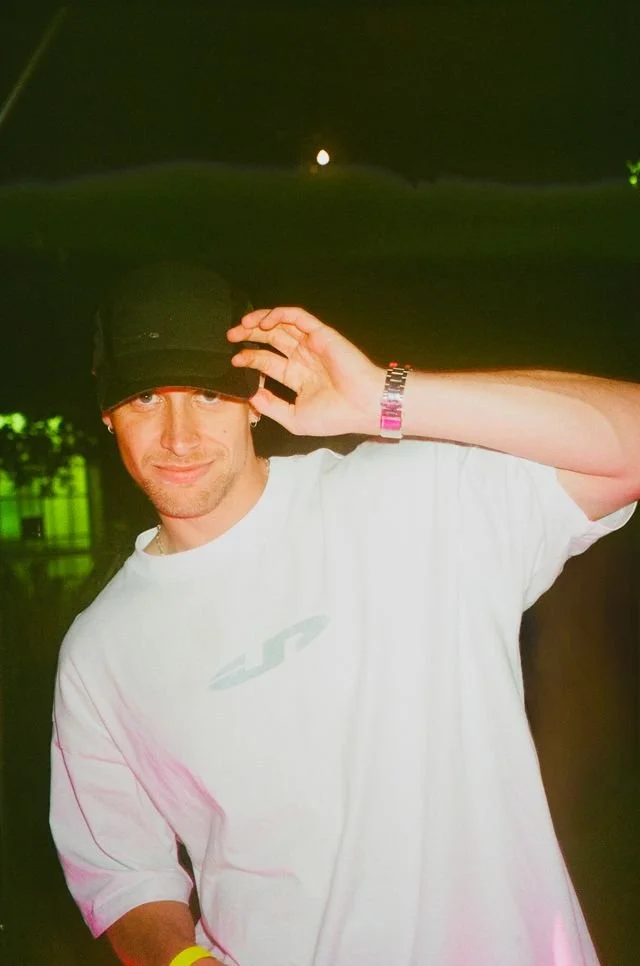
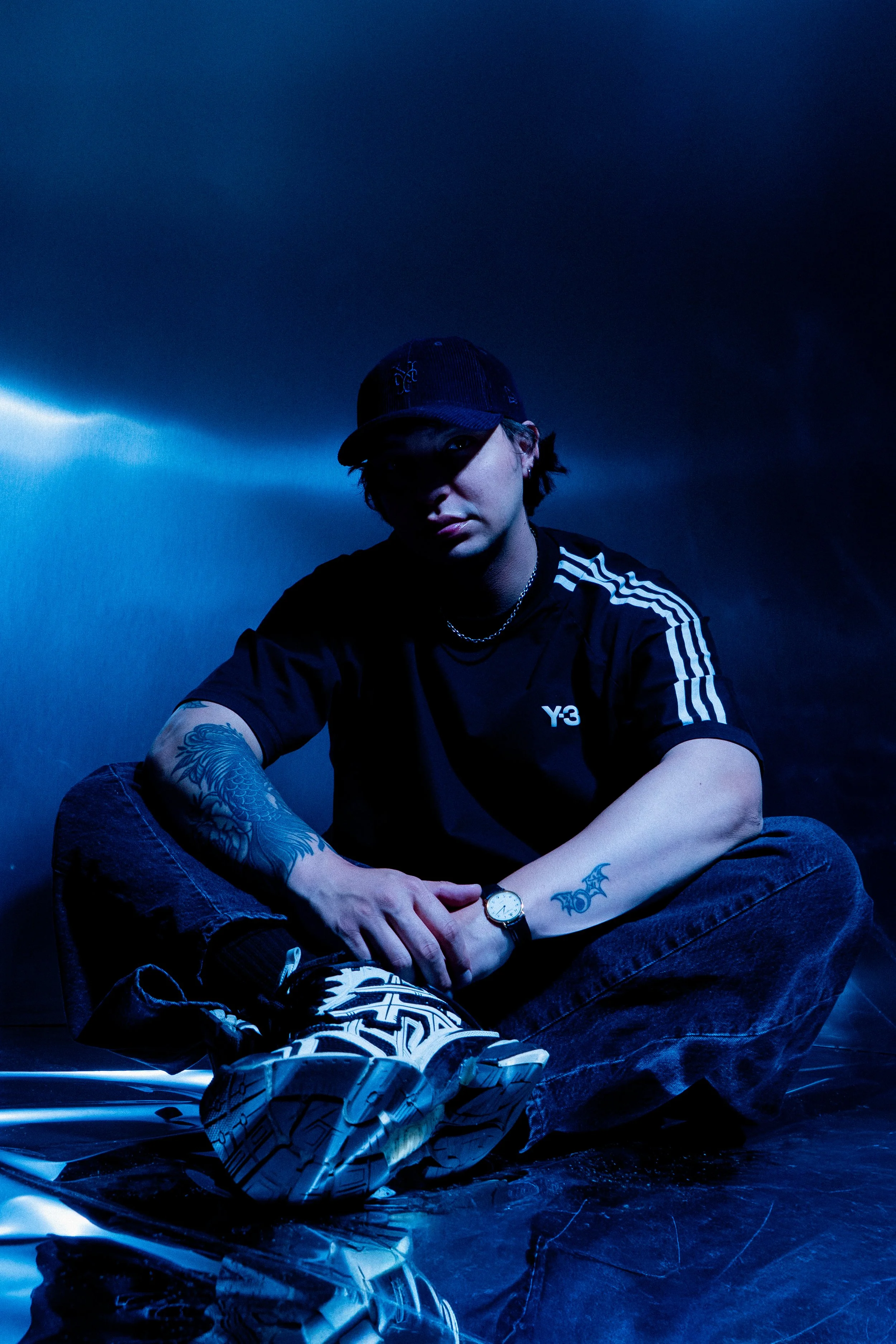
Courtesy of Psylentmgmt.
How did you become interested in electronic music, and what more specifically drew you to garage music?
I feel like getting into electronic music was a process that occurred through my whole life. My dad was very into music, and we grew up listening to all sorts of different stuff, all the way from metal to reggae, even drum and bass. My dad's from the UK, so there was a lot of UK music influence in my house. One distinct memory I've got is when he played me “Superstylin’” by Groove Armada, very UK house tune. I loved that song so much as a kid that I would press replay on the CD player and listen to it over and over and over again. That was maybe the first dance tune that I really liked. And then growing up, I was always listening to hip hop, and I really liked beats with sampling in them.
As I was finishing high school, that was when the whole lo-fi house era was happening, and I got into that because of the hip hop sampling. Then I started going to my first music festivals, heard my first garage tune at one when I was eighteen, and that song stuck with me forever after that. I liked going out and going to parties, and then when COVID hit, I got really inspired and thought, "I wanna try and make some tracks," 'cause I'd been practicing making hip hop beats and stuff.
Then somewhere along the way, through friends actually, we started listening to some old garage classics like “Gabriel” by Roy Davis Jr., and they just really resonated with me. From there I went down the rabbit hole. Found a few other artists like Mike Millrain, I really liked his style of soulful, R&B driven two-step garage. I dug deep into the classics, and at the same time the new school garage scene was coming up.
It's always the oldies that get you good.
Yeah. There's something about that era of music that because everything was so new, they experimented more. I'm thinking about how music is now, and it feels like people wanna make the same thing as someone else, but back then, I guess there was less proliferation of music 'cause there was no internet.
Right. Not so much to replicate.
Exactly. They must have been throwing shit at the wall with whatever equipment they could get their hands on, and it was kind of magical, to be honest.
Can you describe the rave culture in Melbourne?
So when I was talking about my music history, I forgot to mention Melbourne because it’s gotta be top five dance music cities in terms of fan bases. The people there go absolutely crazy for dance music. It's like a rite of passage to start going to electronic festivals once you leave school. When I started going out around the mid-2010s, it was the tail end of Melbourne Bounce, which was kinda like our own take on deep house. It was really dirty and filthy and a bit, uh, how do I phrase this? It wasn't very tasteful, but it was a cultural phenomenon nonetheless.
Historically it's been a big techno, trance, hard style city. It's always been faster genres being the most popular ones, which is never something I personally was interested in, so it's funny that I've gone the different way. Pre-COVID, there were a lot more small-scale community events, and we had local DJs coming up like Mall Grab, Roza Terenzi and Skin On Skin before he went fully international. That was a really cool time, and you could see these guys for like $5-10 at a club called Lounge or Revolver or whatnot. Post-COVID, I think the hunger for dance music is still there, but I guess it's the same as the rest of the world where the scene is more corporatized. Smaller events are struggling, especially with less people buying tickets.
And what about its garage scene?
There's been a garage scene in Melbourne for so long. The first DJ who I spoke to was Lady Erica, she's originally from the UK but moved to Melbourne in the nineties, and she brought all her garage records over with her 'cause you couldn't get any in Australia. Years later, maybe in the mid-2010s, a couple of guys who I'm actually good friends with now, Bernie and Tyson, started a collective called Bubble UKG. They were throwing parties and flying out guys from the UK before people were even thinking about garage in the modern day.
I wanna credit Melbourne for having garage nights so early on, during this dark age where it had kind of disappeared. I think that laid the foundations for there to be more of a scene there because, in my mind, it's almost like the home of UK garage outside of the UK. When I started making garage, there were only a handful of other people doing it in the city, and we crewed up, just had fun making tracks.
Then obviously Interplanetary Criminal, Main Phase and Sammy Virji paved the way for it to go global, and I guess that brought the attention back onto us in the local scene. Every week there's a garage headliner from overseas or local DJs playing garage. It's become extremely saturated, which is cool to see 'cause I knew the recipe was there for it to be really sick.
Well, once the tides turn again, the underground is always gonna be there to keep it running.
That's right.
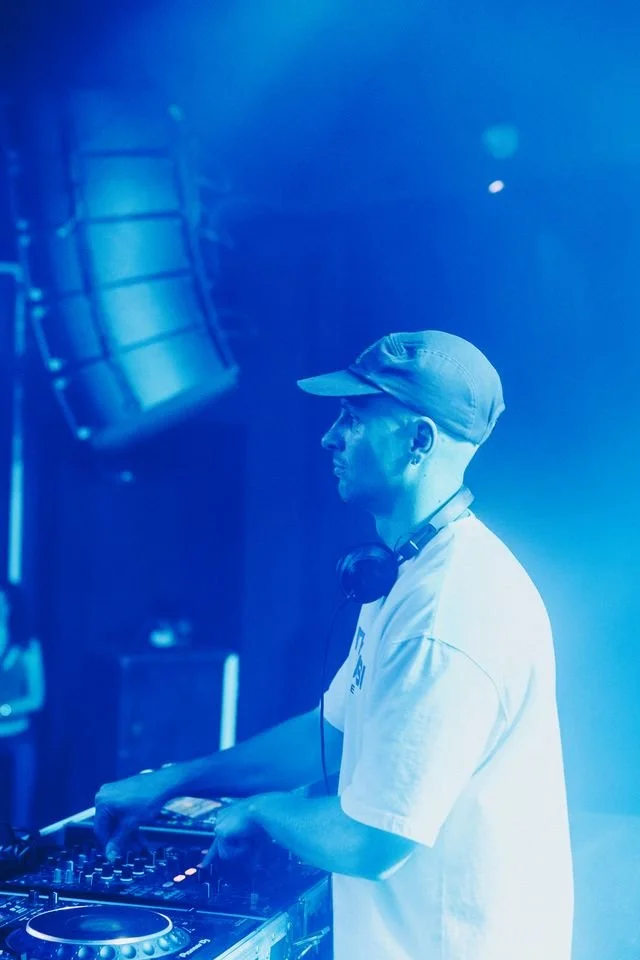
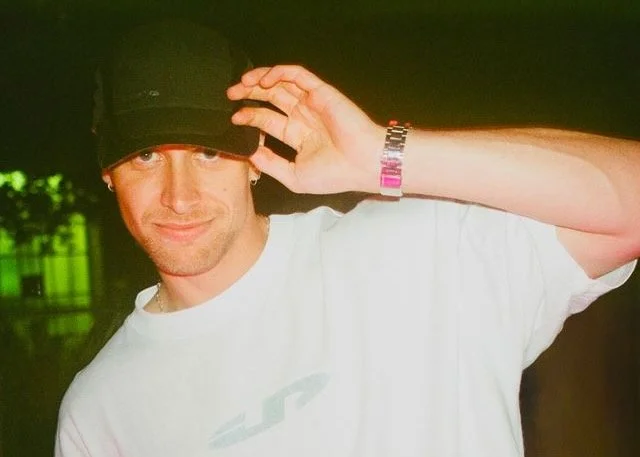
Courtesy of Psylentmgmt.
You got your start producing during the pandemic. How did that transition into DJing and live performance?
I started doing both concurrently. I was living with four of my best friends at the time, and one of them had decks, but they were CDJ 300s or 450s or something. They were too hard to use for a brand-new beginner. So I bought turntables, which obviously is way harder. I don't know what I was thinking. [laughs] I actually started DJing vinyl first 'cause I thought, "Hey, vinyls are so cool. Imagine how cool it'd be to be able to DJ vinyl." That took ages.
So a little bit after that we got a tiny set of Traktor mixers, and in the house together we'd mess around playing on that. I just figured, if I'm gonna produce and make dance music tracks, I may as well learn how to DJ. And since way before I was DJing and producing, I’ve always loved digging deep into weird places for obscure music that no one else knows. I think that also lends itself to DJing in a way; I want to show people music that I've found, deep cuts and things that I think are cool.
But yeah, it all happened at the same time, you know, stuck at home, not much else to do. Had no job, no university. All my friends were grinding. I was just hanging out at home doing tunes.
Your music has always had an uplifting, effervescent sound, with those early tracks also showcasing DIY cover art and early 2000s rap remixes. Would you say playfulness is a core part of your identity, not only as a producer but as a person?
Yeah, that's just always been me. I don't really have a negative bone in my body, to be honest. I just love being really silly. I think that shows in some of those early covers. And I like how you mentioned that my music was uplifting and effervescent, 'cause that's all the music I listen to. It's just feelgood music, and I want to channel that in my own productions.
There's also a soulful essence to your music that's rooted in the core of garage, stemming from R&B and reggae. Do you try to strike a balance between playful and soulful?
Yeah, 100 percent. The reason I like garage, especially the specific songs I love so much, is because when I heard them for the first time, they hit me in the soul and I just get this feeling of joy and happiness. It's like an energetic smoothness, and that's what drew me to the genre. Essentially, I'm just trying to recreate that as best I can, because it's very special to experience that for the first time hearing this kind of music.
Looking at your more recent works, there’s still that fun vibe, just a bit more polished. How do you feel like you've evolved?
Up until recently, I've always been very DIY, making album covers with no skill whatsoever, starting labels with no idea what to do, and putting out songs myself. I guess the evolution now is letting go of doing everything myself and upgrading everything. With the new cover arts, they're still my vision, of course, but we've actually got someone with skills to do it now. Which is new.
And I do put a lot, a lot, a lot of effort into trying to make my tracks sound as good as they can mix-wise, which I have taught myself from the ground up. So I'm proud of the way my songs are sounding. They're punchier now. Ever since I started, I've been slowly trying to climb up and keep learning, upskilling, and I guess where we're at now is just a result of persistence.
You’ve done several streams for Pirate Radio with Area 3000, and each one begins with an acknowledgement of Aboriginal land ownership. Can you speak to how this history informs your views as an Australian and as a performer?
In Australia, at the beginning of larger gatherings and ceremonies, it's always good practice to acknowledge the traditional custodians of the land on which the event is taking place. The indigenous people in Australia hold a lot of value in the land, they have a spiritual connection to it, so for us to be there, it is respectful to pay homage to that ownership.
This plays into my identity, because I guess I've never really felt Australian, not even in the culture part. I'm a first generation Australian, like many other people in the country are, 'cause most people's parents are migrants. I kind of feel like I was placed there without any connection to the place. So I recognize that's obviously a privilege 'cause it's a great country, but I'm in a place that technically isn't really mine and historical forces of colonization have pushed these people aside. As I've learned growing up, it's important to be aware and respectful of that.
It's something that I felt like with the show would be good practice, especially it being called Area 3000. You know, 3000 is the area code for Melbourne, also known as Naarm, which is the Aboriginal name for the area. Just felt like it was the right thing to do.
Your sets are fun and groovy, with a laid-back tempo and a lighthearted feel. How does a DJ curate the vibe, and what's your thoughts on the energetic exchange between the performer and crowd?
I've been thinking about this, and I'm trying to make a tier list of what makes a good event where it feels like the whole thing's in flow state. I think the most important thing is maybe the sound system. [laughs] I should be saying the DJ, but if they have a good sound system and a good venue layout, that’s the foundation for a really good energetic exchange. And the crowd is really important as well. You need to have the right people, a good mix of people with a good attitude, respectfulness, but also a willingness to party.
Then the DJ is just using what they're given in that space to curate the vibe. It's almost one of the least important things. Obviously you don't wanna be hearing trash tunes, but if everything else is set up, like sound and crowd, then you’ve got this free platform. You don’t wanna feel like, is the sound all tinny? Or, these guys at the front are staring at me with their phones out. All that stuff needs to be out of there and then we can have a perfect event.
Going off that, what’s the perfect party?
The perfect party is Strawberry Fields Festival in Australia. The beach stage next to the Murray River, where you've got this hill that's like a sand dune, and then everyone's spread out. Some people are in the water chilling out. You've got the DJs playing fresh house tunes and everyone's got their sunnies on, they’re dressed up, they've got their glow sticks. You could look up from the hill at it happening, and it's like a cartoon of animals in their crazy costumes just grooving out.
I think what makes it a perfect party is obviously 1) the location is beautiful. You wanna have a cool location. 2) You wanna have a carefree crowd of people who are down to be silly and funny. They're relaxing, they're having fun. It's laughs. 3) Then you've got DJs playing songs that suit the environment. That's my dream set.
In the past few years, garage has experienced a mainstream resurgence that’s attributed to different factors: a 20-year cycle, social media appeal, post-pandemic partying, and a new wave of artists. Can you speak to its latest rise?
So maybe if I rephrase the question: what made garage pop off so much? When I was getting into garage, I always thought, "Why isn't this more popular?" Back in the day, the first time UK garage was popular, it died off because it got too commercial, and all the producers were like, we don't wanna do this anymore. It's become corny, oversaturated, we don't like the direction it's going in. After 2001, it just fell off a cliff, and people stopped doing garage. Became a bit of a dirty word. The fact that it's doing the exact same thing this time around obviously shows the 20-year cycle of music that you're talking about. But also that the recipe garage has is so commercially successful, it would naturally do the same if there were a third resurgence.
It's the combination of vocal driven and energetic, but also that the subsets of garage are broad enough where it can satisfy any mood. You've got more loungey and laid-back, more house-y stuff. You've got darker breakbeat, and then full on speed garage and bassline. They each share common characteristics, but it has a hit-you-in-the-soul feeling. I think tunes like “Baddest Of Them All” are a testament to that. I don't meet many people who say that they don't like garage, because it's just easy listening.
Speaking of “B.O.T.A,” produced by Interplanetary Criminal, he shouted you out as one of his favorite producers. As you continue to evolve within the global garage scene, how do you feel about the community that’s grown around you?
Oh, I wouldn't be where I am if it wasn't for the people that I've connected with and shared the love of music with. Interplanetary Criminal was the biggest factor in me being able to make music as my full-time job. But I've been there since the start, and I've pretty much met everyone doing garage now. I'm lucky enough to know them not only as my contemporaries but as my friends, which is pretty crazy to say 'cause I started off being fans of all these guys.
The scene is so good because everyone in it is so nice, they're just great people, good friends of mine. Especially a lot of the guys in Australia, because we are so isolated from the rest of the world, we kinda came together. I do a group project with a few guys in Australia called Inside Kru, as well. Then the crowds in general, I can speak for my shows, the fan base is all very positive vibes. I've made some awesome friendships through doing it, which I think is the biggest blessing of it all.
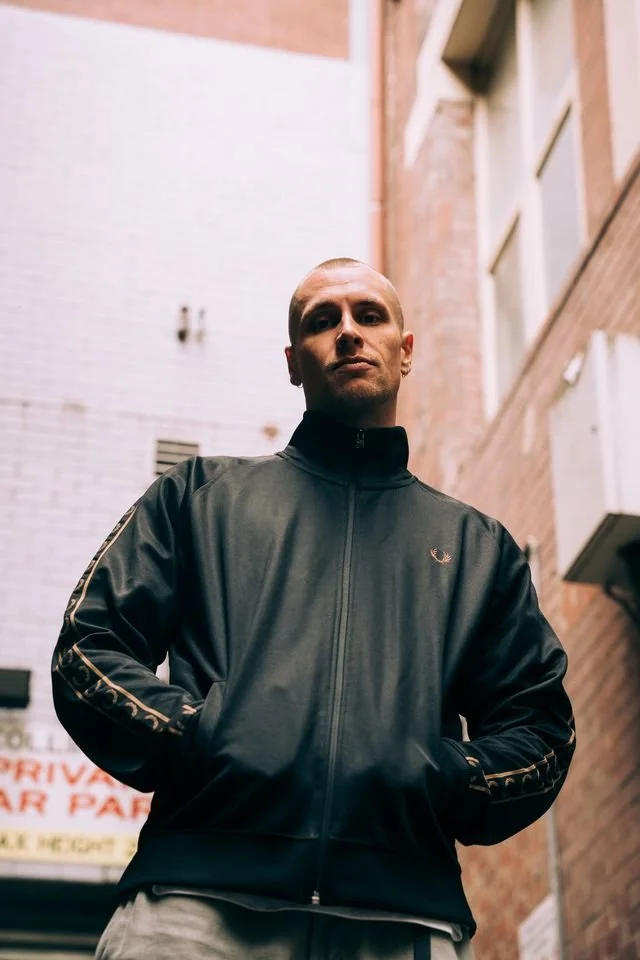
Courtesy of Psylentmgmt.
You’ve been expanding outside of Australia the last couple of years, performing more shows in New Zealand, the UK and Europe, even playing in New York at The Lot Radio. How does it feel to emerge professionally into a global artist role and see your music reach new audiences?
It's such a crazy thing to think that I started off making songs in my bedroom, and now I'm going to all these crazy places to share the music I really like. That doesn't feel real. But it's also my favorite thing ever. Before music, I was obsessed with traveling, I wanted to go to all these places and experience new things, and I'm able to live my dream of doing that.
Now that it is going global... I just don't know where I'm gonna live. I've got no stability. All my friends at home are slowly settling down, and I'm going here, there, and everywhere. I've got flights to all these places, which I'm not complaining about, but there's an element of uncertainty to it. Like, when does this stop? I'm just gonna enjoy it for now. I love touring, traveling and playing everywhere, and wanna keep doing it as long as I can.
Between production work, touring, and the expansion of your label, it seems like years of work are finally culminating into rapid progression. How do you see yourself continuing to evolve, and what excites you about the future?
I really like the sound that I've got at the moment. It's somewhere between garage and house, and I wanna just keep working on it so that I can give other people that feeling I got when I heard garage for the first time. Career-wise, I wanna expand from being a DJ with some cool tunes to more of an artist. There's a look to it, there's a feel to it. There's a curation to it, and I wanna keep trying new things, but also hone in on what I've got that is unique.
What I'm excited for coming up: we've got some cool festivals and fun travel plans throughout Europe in summer, and then things in Australia at the end of the year are shaping up nicely. Some sets that I can't even believe are real, so got those to look forward to.
Any in particular you want to mention?
A3 Festival. It's a fairly new one, but they've been getting extremely good feedback from everyone who's been going, and I've got a main stage slot there. I feel like this will be a “proving myself” kind of set. Hometown crowd too, so it'll be fun.
![Samantha Togni – The Meaningless Beautiful [Album]](https://images.squarespace-cdn.com/content/v1/67a7bc216f4ddc7f9a1c4082/d6270895-2d50-4f84-a72a-6d2dd26db519/Samantha+Togni+-+The+Meaningless+Beautiful+-+Album+Cover+by+Patricio+Santagada.jpg)
![Planetary Assault Systems – Planetary People [album]](https://images.squarespace-cdn.com/content/v1/67a7bc216f4ddc7f9a1c4082/1781053354683-EIWAE9OJ06FYZRUNU9HI/OSTGUTLP39_PlanetaryAssaultSystems_Artwork.jpg)