Tehotu on Pattern: Techno Radio’s New Chapter in Paris
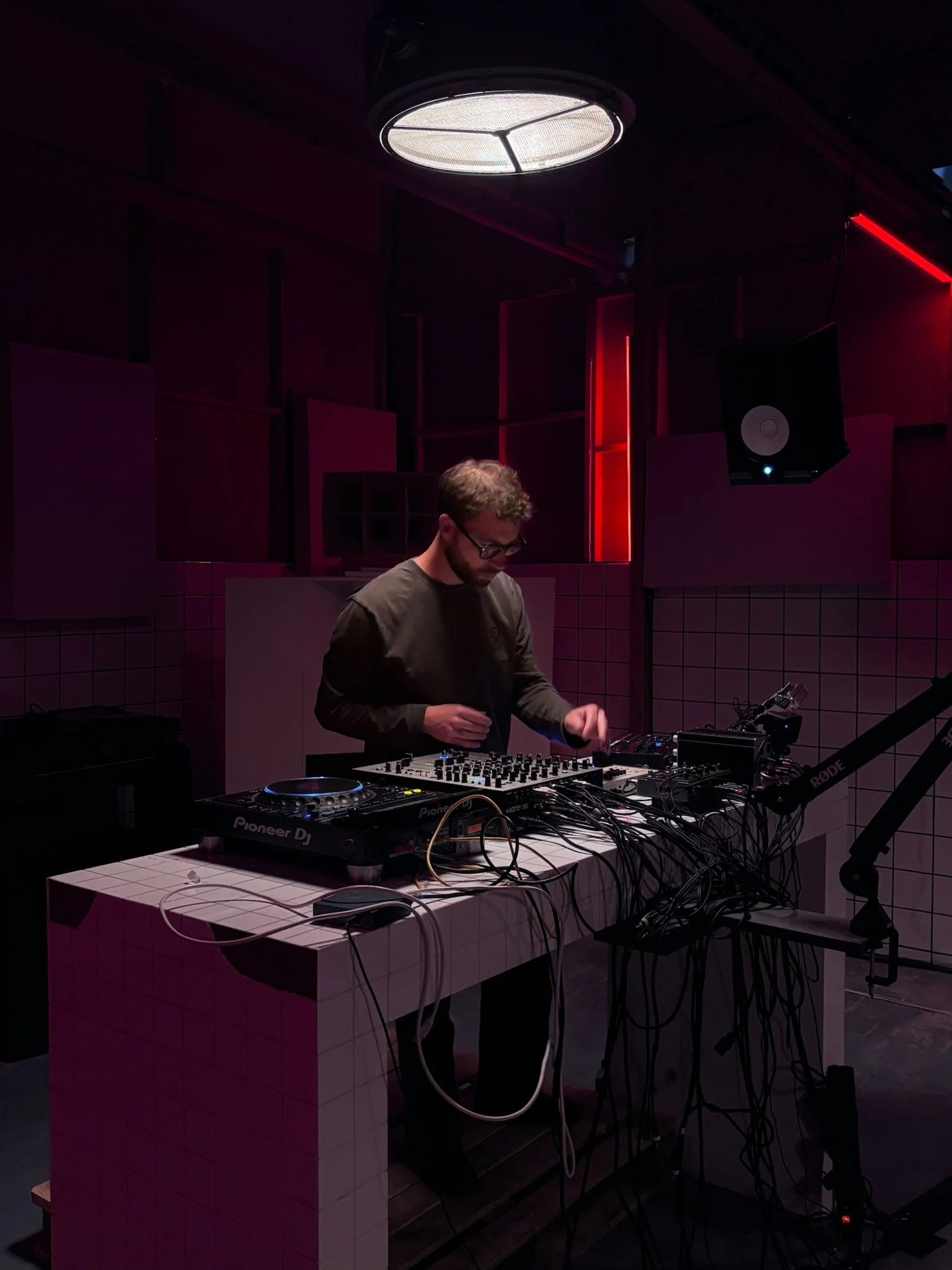
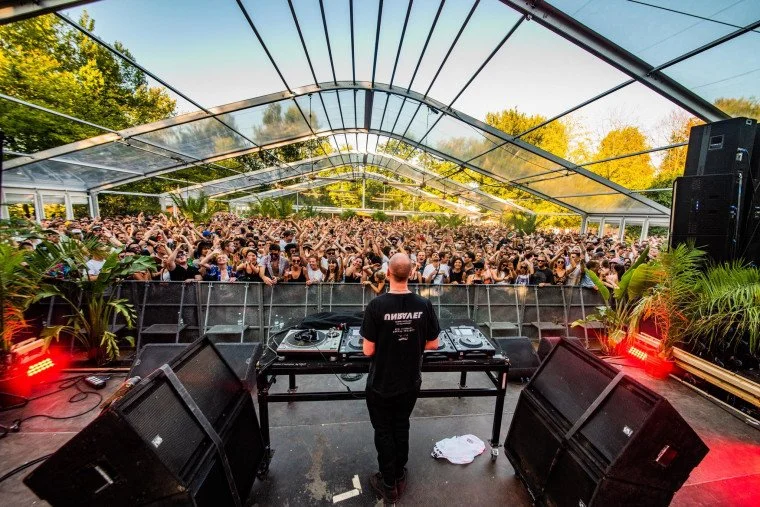
Located in one of the more discreet corners of Paris, an old industrial site has become the new home of Pattern. There are no crowds of 5,000 people, no oversized production, and no need for a big-name headliner to justify what happens inside. At its core, you'll find a DJ, a sound system, a camera, and a project built around a genuine commitment to electronic music.
Pattern is a streaming radio platform founded by Tehotu and Franck, aka Heka, who started the project in Berlin four years ago. Over the years, the platform has developed around a demanding approach to techno and electronic music, inviting some of the scene's most distinctive and forward-thinking artists while building an attentive and discerning audience.
Pattern was never intended to simply reproduce an existing format. From the beginning, the project was built around a precise vision of what a radio could represent: a space where artists can express themselves, experiment and explore different sides of their practice, while creating a meaningful continuity between artists, encounters and programming.
This approach has allowed Pattern to work with some of the most forward–thinking artists in techno, while building an audience that comes primarily for the music and for the vision behind the project.
Their arrival in Paris also comes at a complicated moment for the local scene. Some of the city's most alternative and pioneering spaces – from La Station – Gare des Mines to La Cité Fertile – have closed or are facing the consequences of a cultural landscape increasingly shaped by real–estate pressure and the demands of profitability. The spaces that once allowed experimentation and alternative forms of culture to develop are becoming increasingly difficult to maintain.
In this context, Pattern arrives with a somewhat different proposition. The ambition is not simply to reproduce the livestream format in another city, nor to compete through bigger production, more elaborate scenography or increasingly spectacular visuals. Instead, the project aims to push the idea of what a radio can be: creating an ecosystem around music that can lead to events, collaborations, encounters and long-term artistic relationships.
For Pattern, identity is therefore not based solely on the venue, the sound system or the image. It comes first and foremost from a way of working, programming, representing artists and defending a vision. The venue, technology, sound, image and programming then become the different tools through which that vision is made tangible.
I sat down with Tehotu to talk about what it takes to create a space dedicated to artistic expression, the evolution of livestream culture, the importance of transmission, and how a vision can gradually become the identity of a project.
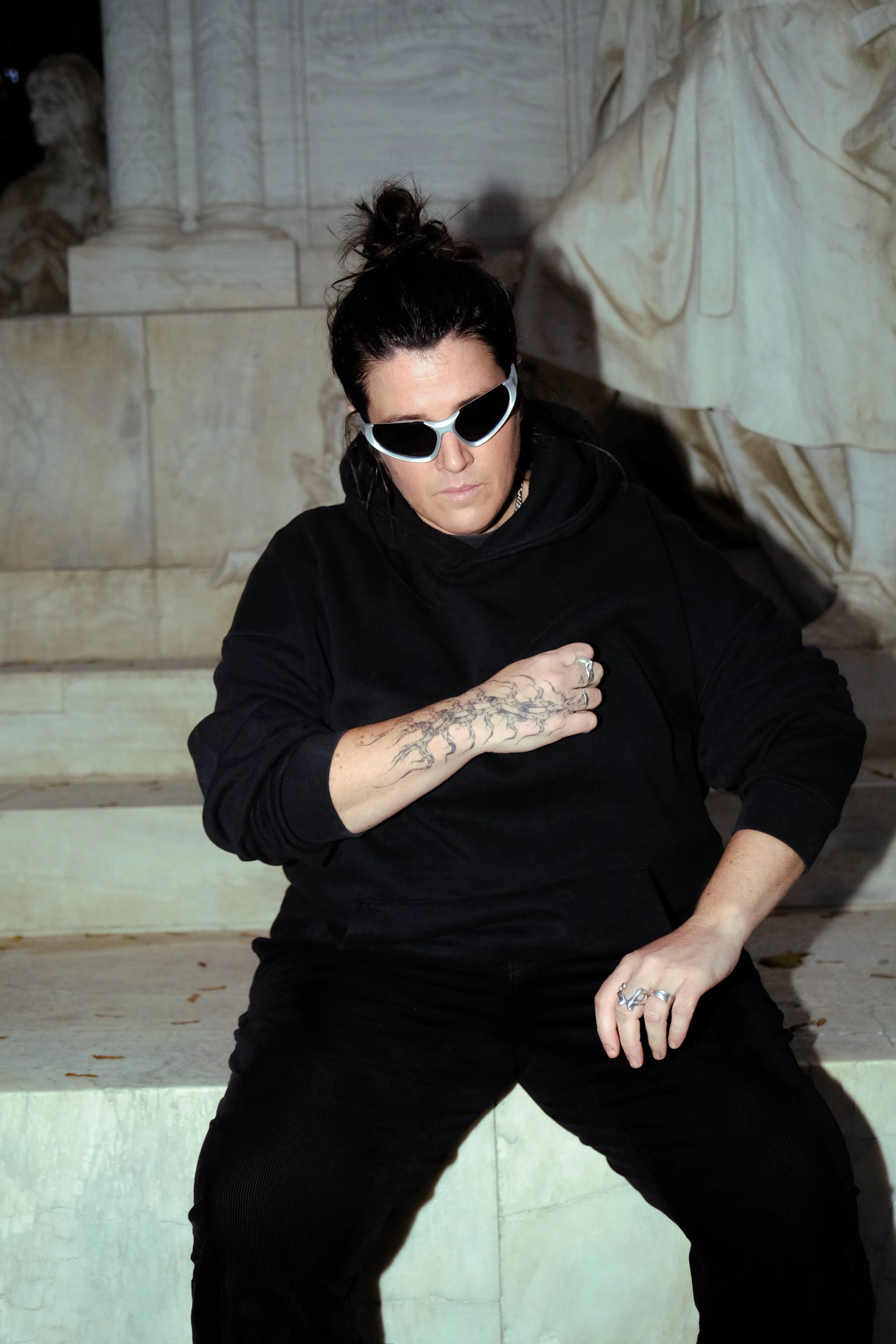
Tehotu. Pattern
Can you tell more about your journey before you started Pattern?
It all started in 2015, when I began going to my first raves. Very quickly, I felt the need to get more involved rather than simply attending parties. I started organising quite a few illegal raves myself, which actually led me to court at one point, and eventually we went as far as creating our own club.
For me, that was already the beginning of learning what it really meant to create a space for nightlife in France. I was only 18 at the time, so there was a huge amount to learn – from the necessary training and regulations to all the practical aspects of running a place that welcomes the public.
Unfortunately, the club didn't last. Like many independent venues in France, we struggled with a lack of experience, resources and, perhaps most importantly, contacts. Building a space that welcomes the public, especially a nightlife venue in France, requires a very strong network, and I quickly understood how important that was.
Before moving to Berlin, I had also started a streaming radio project called Drumface Radio. In many ways, it was one of the first seeds of what would eventually become Pattern, even though it was several years earlier.
The concept was quite simple but important to me: we would invite artists to play without promoting their identity beforehand, and we would ask them to wear masks during their performances. The idea was to remove the artist's identity and reputation from the equation, so that listeners could form an opinion based purely on the music and the work itself. Only afterwards would we reveal and promote the artist.
That project was really about creating a space where the work came before the name.
Then, in 2015, I decided to move to Berlin, where I continued developing my career as a DJ until 2024 before going back to Paris.
What was the starting point of Pattern?
Pattern was born during the post-Covid period, at a time when we simply had no real opportunity to do anything. I think that period was a kind of golden age for streaming radios. We couldn't go to clubs anymore, and we didn't even know if clubs were ever going to reopen. So the projects that remained accessible to us were mostly those kinds of platforms. In that context, restarting a radio felt quite natural.
On paper, we didn't need much: a space, a studio, and the possibility of inviting artists to come and play. But we quickly realised that it required much more work than we initially imagined, especially considering the pace at which we were working at the time.
The idea of a radio has always been important to me because it gives people a space for expression, a way to communicate our vision through programming, through the artists we invite, and eventually through the creation of our own space.
I think having a space, whatever form that space takes, is essential for anyone who needs to develop their vision, experiment with it, and turn their ideas into something tangible.
Beyond Covid what motivated you to do this?
I think that when you're an artist creating something, you eventually need a space where you can go beyond your personal practice – a space where you can develop your ideas, your vision and your values.
And what better than a platform where encounters can happen – meaningful and intentional encounters shaped by the vision and values you believe in? Through those encounters, you also learn and allow your own vision to evolve. For me, a project like Pattern is complete because of the level of commitment it requires – the high standards, the discipline, the relationships and the network you have to build.
Take me through the beginnings: what was it like to start everything from scratch? How did Pattern scale up from that initial setup? What was the next turning point for the project after those early days?
We actually started in Pattern's first space, which was probably the most legendary place we've ever had. It was the beginning, and the place itself was incredibly unusual. We found an old basement garage – if you can call it that – which initially only had access through the roof. Basically, you had to climb down through a hatch to get into the studio. A little later, we discovered that there was another entrance through this kind of post–apocalyptic armoured door, which led into a tunnel. That's actually how the artists would eventually arrive.
It was quite a memorable experience because we ended up lighting the whole corridor as well. You have to understand that many of the artists we invited were coming from abroad, so they weren't necessarily familiar with Berlin. They would arrive in the city, make their way through this tunnel, hearing this muffled music coming from somewhere in the distance, and eventually reach this tiny, dirty, completely atypical space at the end of it.
Those were really our beginnings, and probably the time when we experienced the most intense emotions. That's where we learned how to do things, where we built our reputation, and where we became known.
Even today, we still talk about that place with many of the artists who come to the radio in Paris. They still bring it up and remember it. It was far from being the biggest or most beautiful place we've ever had, but it may have been the most memorable because of how raw and brutal it was.
Then, little by little, things started to change. The more established the project became, the more we realised that we needed a bigger space because we were receiving more and more people. That's when we moved into another equally memorable place. It was a very long, narrow space, almost like a tunnel itself, in another completely atypical location. Berlin is full of these incredible, unexpected spaces.
Then, as the project grew, more opportunities started coming our way. Eventually, we ended up in a huge abandoned electric car factory called BIU. That place was magical. It was a six-storey marble building with a tower, and we even had the opportunity to have incredible exhibitions happening there. If I remember correctly, there was a Dark Matters exhibition inside while we were running the radio across all six floors. The artists we invited could actually visit the exhibition before coming to play.
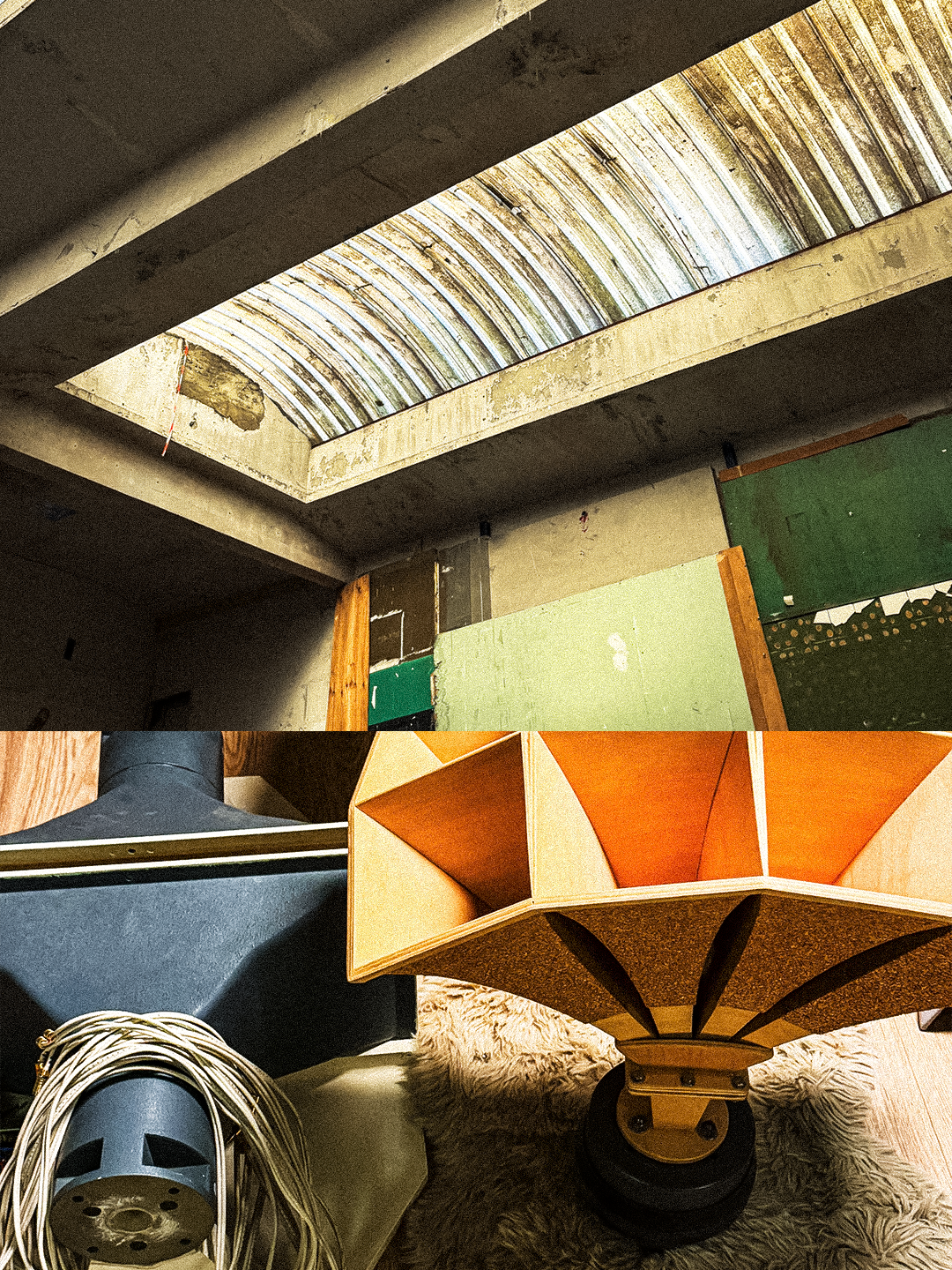
And eventually, we ended up in Paris, in Ivry, where we are based today, in another incredible space – an abandoned metal foundry.
That's when you realize that every space has its own identity, its own soul. And for us, every place is connected to specific memories and specific encounters with artists. We might even experience an artist differently depending on the space in which we meet them. I think that's become an integral part of Pattern's identity: the places are not just locations. They become part of the story, part of the memory, and part of the experience.
Was there a specific moment where you realized the project was taking on a life of its own?
Yes and no. Obviously, one of the signs was seeing the artists we wanted to work with actually coming to play at Pattern. But I think the biggest sign that a project is starting to take on a life of its own is maybe not realising it at all. You're so deep into the project, so involved and completely driven by it, that you don't actually notice that it's growing, that it's becoming something bigger. So there wasn't really one specific moment. I think it's more about gaining some perspective afterwards. At some point, you step back, look up for a moment and realise: "Oh, right. The project is already five years old. We've already lived through so many great experiences." Actually, I think the precise moment is the one where you don't realise the project is working – because you're simply too busy making it work.
Did that energy open any doors you never saw coming?
Unexpectedly, it led to a movie. Two people who were at that reopening party, Nikias Chryssos and Viktor Jakovleski, were planning a film about Berlin. They loved the party so much that they asked us to work together. That's how the movie Rave On (produced by Arte), got shot during a Pattern party at RSO, with again an incredible line up, Steve Bicknell, Kaiser, Mathys Lenne. It showed us just how far a radio project could take us.
At a moment when Pattern seemed to be at its peak, what led you to put the project on pause?
I think it came from the fact that I had been living with an undiagnosed illness for years. By the time we decided to put the project on hold, my body had started sending me signals. I was constantly exhausted. I started noticing that I was becoming less rigorous and less motivated, while at the same time we were under so much pressure and living at a hundred miles an hour.
That's when we decided to take a break. Soon after, I found out about my illness, which forced me to come back to France to receive treatment.
Despite everything you're going through, what made you decide to pick the project back up in Paris?
Actually, at some point, you have to play the hand life deals you. Before restarting the project, I went through a really dark period, to the point where even my friends barely recognized me anymore. I had never experienced a time when I was doing nothing and didn't feel like doing anything at all. I didn't even think that was possible before. That little spark of excitement that we all carry inside us had disappeared, and after finding out about my illness, I guess that was something that could almost feel normal. But after a while, I found the strength again, and picking the project back up just became obvious to me. That's how I see life and its hardships: they're there to see how you deal with the cards you've been given.
You are now settled at La Fonderie, in Ivry-sur-Seine. What's something you think makes this place special, and how does it resonate with your project?
I had another offer first, but when I saw this place, I knew it was exactly what we were looking for. We're inside a former smeltery. In terms of location, neighbors, and event frequency, it ticked all the boxes. Plus, there's a real connection to other artistic worlds here. They work with fashion brands, rappers, filmmakers, and music videos. That sense of belonging made all the difference.
How did you approach the project this time? What has been the most rewarding so far?
I was motivated by the idea of building a new team, and finally being able to delegate and share my experience. Everyone who joined the project now has a place at the heart of the scene and gets to discover different aspects of the job. You get to know the artists, the labels, the agencies and the collectives, you work with different countries, we've hosted people from Berlin, New York, Argentina, Mexico, and so on. Beyond the technical side, you learn a lot on a human level. When you truly dedicate yourself to what you do, there's always something that comes out of it.
You mentioned transmission and passing on your experience. How does that actually happen on a daily basis?
I've realised that through this project, I'm actually passing on a lot. I spend a lot of time talking with the artists who come here, sharing my perspective on the scene and exchanging ideas with them. Running a platform like this, where people are streaming every week, gives you a much broader perspective. In fact, I think people running a radio like ours are in a unique position to understand the scene, because we see exactly how it's evolving from week to week. Even clubs that actively dig and research don't necessarily have that same global overview.
How is the Parisian iteration of Pattern different, and what fresh experience did you want to bring here?
I may have mentioned this, we wanted to bring something new to this new space – an architectural signature as much as a sonic one.
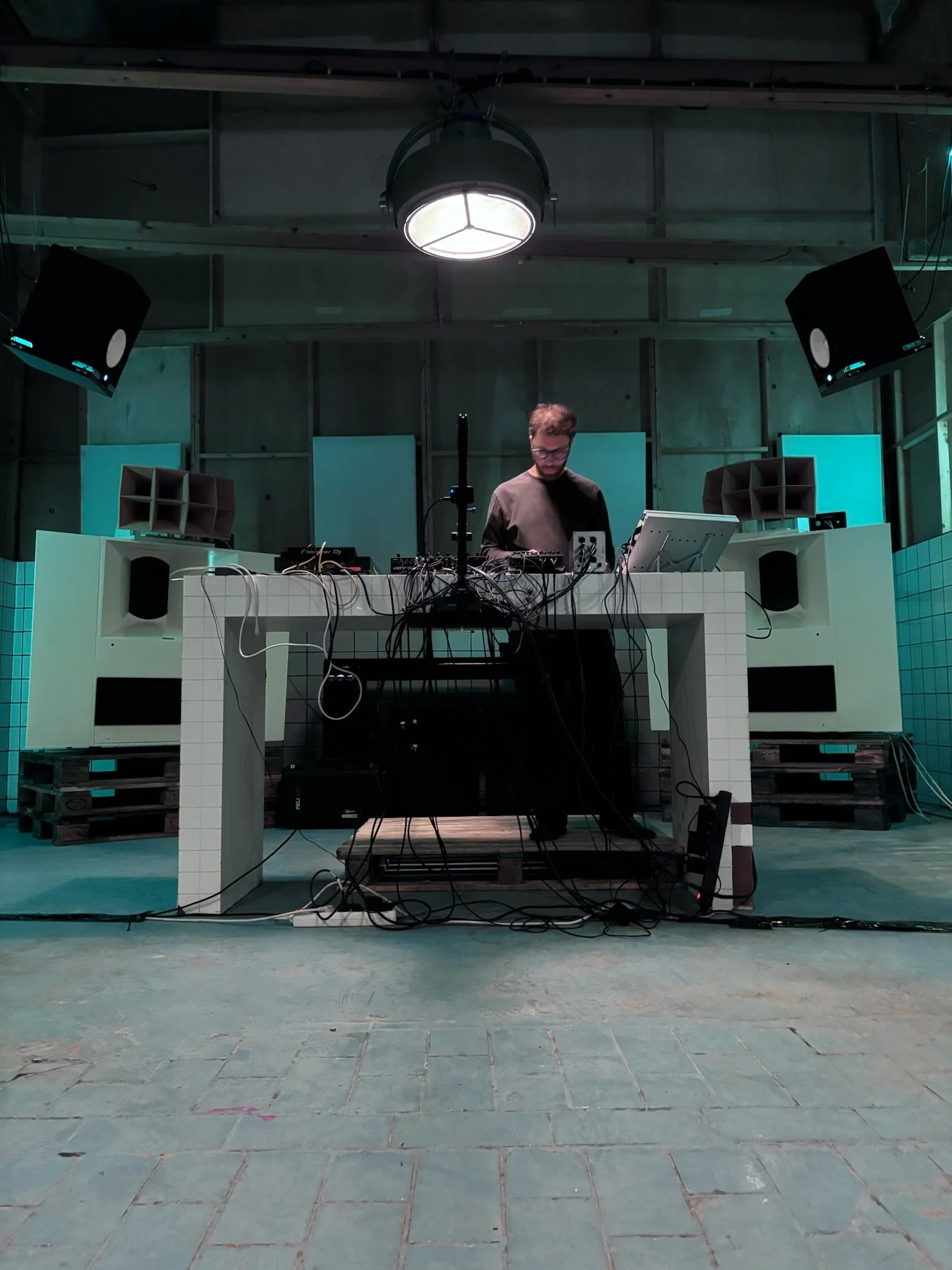
We have a new horn-loaded sound system. As a DJ, it was extremely important for me to create an environment where the artists we invite can forget that they're playing alone in front of a camera. I wanted to give them a unique experience, something immersive enough to allow them to really lose themselves in their work and forget about the fact that they're performing alone. Because, when you think about it, playing alone in front of a camera is almost the opposite of what DJing is fundamentally about. DJing is about energy, interaction, exchange and being connected to a room and to people. That's the experience we want to offer our guests, and I think it's something truly unique in Paris.
Programming a radio is very different from booking a club night. How do you approach that distinction?
The goal here is to create a space where artists who share our vision can truly express themselves. Programming a radio is completely different from programming a club. Bookers can sometimes be tempted to approach it like a club night, but it has nothing to do with it. You don't necessarily need to maintain the exact same energy or vibe from the first artist playing in the afternoon all the way through to the closing set. A radio gives artists much more room to experiment and explore different sides of their practice. There's also a much broader narrative to build throughout the year. The programming isn't only about what happens on a single day. It's about creating a bigger story through the artists you invite, the encounters you create and the direction you give to the platform.
How do you balance showcasing new talent, promoting diversity, and keeping a cohesive artistic vision for Pattern? What has been the most challenging aspect for you when it comes to parity and representation?
With so many shows happening today, I think the real challenge is staying true to the identity of the radio while also opening the doors to different communities and finding the right balance between the two. It's difficult to give a single answer because building the perfect lineup is quite complex. It also evolves with your own taste and perspective. What I program today is very different from what I used to program, simply because my own perspective has evolved over time. And of course, we don't have the same financial pressure or profitability expectations as a commercial venue. That gives us a certain freedom to make choices that others simply can't. I wouldn't necessarily describe it as a challenge, because parity and representation are actually some of the most fundamental aspects of a project like this. The word "challenge" can sometimes have a negative connotation, as if it were something we have to overcome, whereas for us, it's really part of the foundation of what we're trying to build.
Our goal is to reflect the diversity of the scene while always staying true to our artistic vision and maintaining the level of quality we aim for. We're constantly trying to get closer to that, but more importantly, we're constantly learning. And I think that's the positive part of it. A lot of it also comes down to personal perception, which is shaped by everyone's background and experience. We all have our own framework, and anyone can make a mistake. What's important is being able to take a step back, acknowledge when you've got something wrong, and understand why. That's often where the learning happens – and where you can start figuring out how to do better next time
Livestreams exploded during Covid, and new platforms keep popping up every year. Why do you think the format remains so popular, and how do you stand out?
The format remains very popular, certainly because it gives a lot of emerging artists an opportunity to be discovered, while also giving more established artists content that exists outside of the club environment. For me, there is still something about playing in front of a camera that goes against the very essence of DJing. DJing is fundamentally about a connection between the artist, the people and the space. When you remove the audience and replace it with a camera, something changes.
That's really why I think we have a responsibility to push the concept of a streaming radio further – beyond simply having a few turntables, studio monitors and a camera. A format that simple made a lot of sense during the post–COVID period, when opportunities were limited and artists were looking for new ways to connect with audiences. But today, I think we have to go further. The medium has evolved, and I believe the way we approach it should evolve too.
Do you consider Pattern an alternative project, and what does being "alternative" actually mean to you? How would you sum up Pattern's values and ultimate vision?
That's an interesting question, because I think the word "alternative" is quite important. To me, an alternative culture is a culture that goes against the current, that challenges what already exists. So it really depends on what we define as alternatives. Is a project still alternative in relation to the commercial movement? Or is it still alternative within the scene it operates in?
The project that Pattern represents is now also represented by many other organisations and platforms, whether it's HÖR, Section HQ, Loone, and many others. So in that sense, I would say that the project itself is no longer really an alternative. It's no longer necessarily going against the current, because this kind of format and culture has become much more democratised over the past few years. What I believe remains alternative about Pattern – and what I will always defend – is the way we take a position, the way we communicate our vision, and the way we operate. From my experience, that is something quite unique to this project. And through that, I believe Pattern will always remain alternative in its own way, because we have our own way of working and our own way of representing and defending the values we believe in.
If Pattern were to stop tomorrow, what would you want people to remember? What mark would you want to leave behind?
If Pattern were to stop tomorrow, I think what I would want people to remember is how important it is to truly love what you do. Because I believe that it's through the way we love and care about something that we are able to transmit something to others in a way that is genuinely our own. And that's what makes a project unique – the fact that it carries the image, the perspective and the personality of the people behind it. If everyone felt able to create something that truly reflects who they are, to the point where they can transmit something to others through it, I think we would live in a much more inspiring world – and, most importantly, in a world where far fewer people feel like they have nothing to contribute. Everyone has something inspiring that nobody else has. Everyone has their own perspective, their own way of seeing things, and their own potential to create something meaningful. I think Pattern is an example of that. And if the project can inspire even a few people to develop something of their own, in their own image, whatever the field may be, then I would consider that a real success. For me, that would be the most meaningful legacy Pattern could leave behind.