
Longing, Raga, and Divine Chamatkar: Interview with NAYAAB
In “Before Acid House Had a Name, There Was a Raag,” UNMIXED traced how Charanjit Singh’s machines did not invent repetition so much as inherit it. Long before acid basslines were coded into club culture, raga had already developed a language where emotion unfolds through cycles rather than climaxes.
Raga is not structured like Western song form. It spirals. It returns. It conks out feeling across entire lifelines until emotion becomes the center of the being itself.
Naayaab - a self-taught, Mumbai-based vocalist, producer, and DJ, originally from Udaipur, Rajasthan, India, working at the intersection of electronic underground music and rooted musical traditions - this allows her work to sit naturally inside this lineage. Listening to her speak about RAGA, the vocabulary is in a marked degree familiar: longing over resolution, devotion, trancefusion and the sound itself, of course.
Where the previously published essay approached the idea historically, Naayaab approaches it internally, through her own lived experiences. The machines are still present, and this time they are plugged into Saqib’s circuits, recreating RAGA, guided by what appears to be fingered bass, beyond shadow of a doubt, is RAAG.
Approach this song with devotion, and who knows, maybe even you will find the true meaning of Shakti; and then even Chamatkar might become your reality.
in frame: NAAYAAB. India, 2026
you describe Charanjeet Singh’s instrumental work as an emotional journal. What did you hear in the sound that asked for language not explanation but poetry?
When I first heard Charanjit Singh, I didn’t hear electronic experimentation. I heard a raga thinking through machines. Ragas are emotional maps: they don’t explain grief, they inhabit it; they don’t define longing, they stretch it across time. His repetition felt meditative, almost like a snake slowly unfolding. The progression wasn’t linear, but spiral, returning to the same memory, slightly altered.
It felt obsessive in the way recognition does when the body understands before the mind can articulate. That’s why I call it an emotional journal. Each sequence is an entry, each modulation, a shift in state. It wasn’t trying to impress, it was revealing. Unknowingly ahead of its time, that innocence makes it even more powerful. Some music doesn’t ask to be explained. It asks to be felt.
The song opens in insomnia and unrest. Why did longing, rather than fulfilments, feel like the right emotional entry point?
Longing wasn’t a concept I chose — it was the emotion I was living in. I don’t write from theory; I write spontaneously, from lived experience. The insomnia, the unrest, the waiting, it was all real. I wasn’t avoiding fulfilment or leaning into darkness. I was documenting a pattern and turning it into poetry.
After heartbreak, people offer easy resolution, you’ll find someone better, this wasn’t meant to be. But life isn’t that linear. When you’ve loved fully and it ends, what lingers isn’t logic. It’s the version of yourself you were with that person. You miss that self, the intensity, even the foolishness you allowed because it was love.
Love has no perfect shape. It cuts deep, and when it doesn’t last, it leaves you suspended in longing. That unsettled space felt truthful to me, and truth for me is always the right place to begin.
love in these lyrics wounds, pierces, unsettles. Why was Not to make devotion comforting?
Because devotion isn’t something that arrives fully formed or gentle. It’s built. And building anything real requires friction. You don’t wake up devoted, you go through the wounding, the unsettling, the confrontation with what love and life actually demands of you.
It’s easy to romanticize devotion as soft and comforting, but before it becomes that, it disrupts you. It pulls you out of where you were, exposes your illusions, and transforms you from the inside out. That transformation isn’t pretty, it takes time to settle. I didn’t want to skip that part. For me, moving through the discomfort wasn’t just devotion to someone else, it was devotion to my own growth. The comfort, if it comes, comes later. But the becoming - that’s the real act of devotion.
your name, Radhika, tie you directly to Radha. How cautious were you of that inheritance while writing?
It was a very conscious choice. My name, Radhika, is another name for Radha , so that inheritance has always lived quietly with me. Growing up, my grandmother and mother would tell me the stories of Radha and Krishna, especially of Shringar Rasa in Vrindavan, that their divine union was so powerful that if a human witnessed it in its pure form, they would go blind. As a child, that idea fascinated me. Love as something so intense, so luminous, it becomes unbearable. That stayed with me.
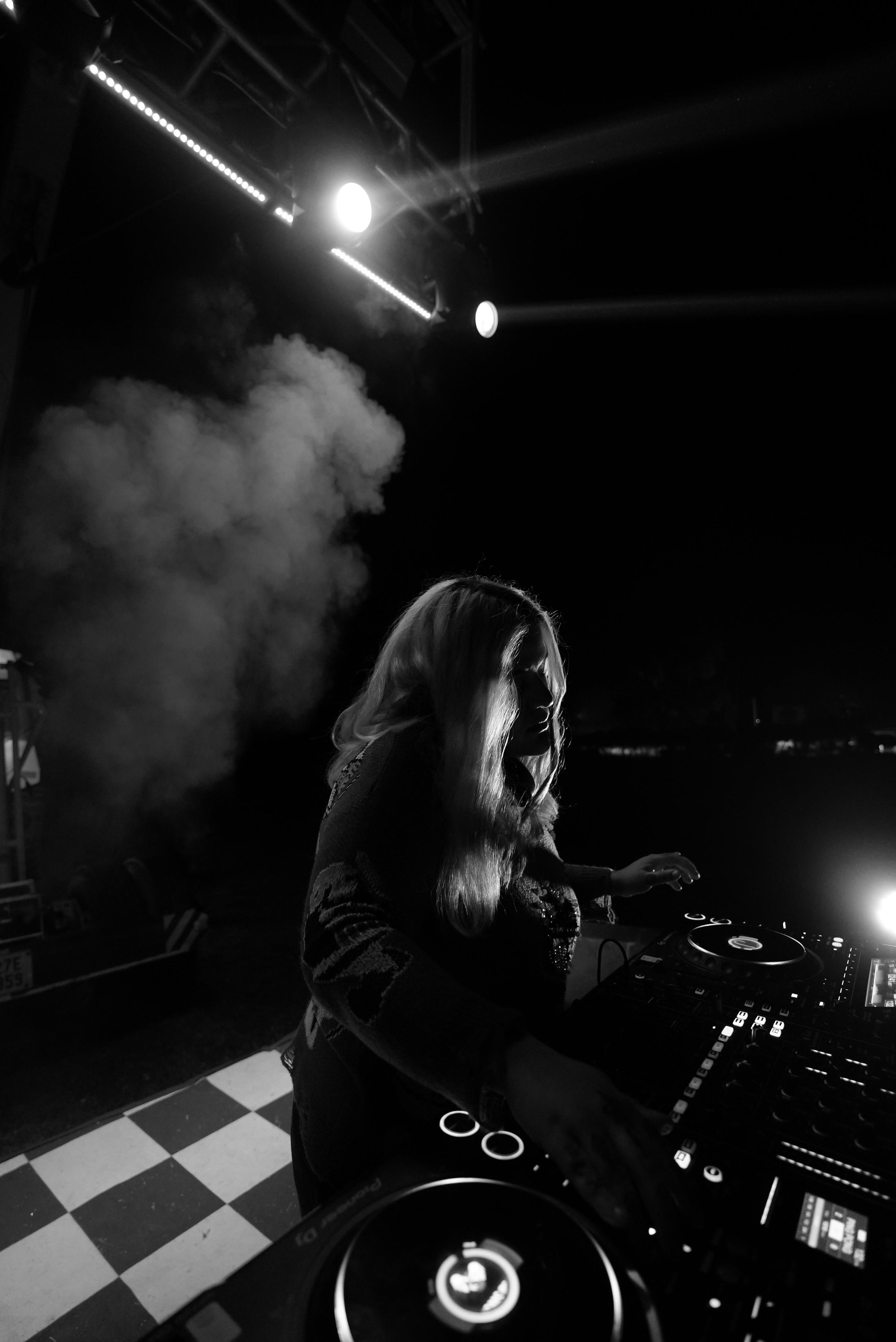
When I wrote this song, it felt natural to enter that space not just as mythology, but as emotion. Radha represents a love that transcends structure, morality, even worldly definitions of union. Exploring Shringar through her felt instinctive to me almost like returning to something that was always mine to write.
Radha and Krishna‘s bond is worshipped, despite never resolving into conventional ending. What does that paradox unlock for you emotionally?
Radha and Krishna are worshipped not because their story resolves neatly, but because it doesn’t. Their bond isn’t validated by marriage or a conventional ending, it’s validated by intensity, by presence, by the depth of feeling. That shifts the idea of what makes love “worthy.”
Emotionally, that paradox is powerful. It tells me that love doesn’t have to culminate in permanence to be sacred. Some connections are transformative simply because they existed. They shape you, awaken you, and then move beyond form.
For me, that’s liberating. It allows love to be meaningful without possession, eternal without being domesticated.
you returned to Shringar rasa as longing, devotion, and union. Why this Rasa - and not joy, peace, or transcendence?
Joy, peace, transcendence they feel like destinations. Shringar is movement of becoming one. It carries longing, act of making love, separation and union, the full pulse of love. It is sensual yet spiritual, restless yet surrendered. It doesn’t arrive; it unfolds. I’m drawn to it because it’s alive. Peace is stillness, transcendence is escape but Shringar stays in the body. It allows you to feel desire and divinity in the same breath. For me, that rasa feels the most human yet godlike and therefore the most honest to return to.
The panghat isn’t water- it’s the threshold beside it. Why did the edge feel more truthful than arrival?
Because the in-between is where emotion is most awake. Arrival settles things. The edge doesn’t. At the threshold, longing is still breathing, desire is still forming, vulnerability is still present. Nothing is secured yet and that uncertainty feels deeply human. For me, that suspended space carries more truth than completion.
you describe water as reflection and energy exchange, not possession. How does that shape your understanding of desire?
If water is reflection and energy exchange, then desire isn’t about owning, it’s about encountering. You see yourself in the other, and they see themselves in you. It’s mutual, fluid, responsive. Desire, then, becomes resonance not possession. It’s about what moves between two energies, not what one person claims.
the act of Calling by water recurs in mythology. What does it mean to call without guarantee of return?
To call without guarantee of return is to love without assurance. It means you speak your longing knowing it may meet silence. There is no promise of echo, no certainty of response, only the courage to express what you feel. For me, the act of calling itself becomes devotion. Not because it will be answered, but because the emotion is too alive to remain unspoken.
Your voice doesn't dominate the track — it negotiates with it. What did you refuse when shaping your vocal presence?
I refused to over-sing or make the track about my voice. The music already had strong moments, and I didn’t want to take attention away from that. It was important for me to understand what I bring to the table and what the song needed, not what would make me stand out. It was, after all, a tribute to Charanjit Singh. I knew it didn’t need extra layers or drama. I wanted my voice to sit inside the track, move with the beat, almost like a chant with the right notations not dominate it.
You were careful not to let the voice become symbolic — of femininity, tradition, or mysticism. Why was that refusal necessary?
Because in a collaboration, you have to know where your role fits. I didn’t want my voice to carry a symbolic weight or represent something larger than the song itself. That shifts the focus. For me, it’s about leaving ego aside and doing what serves the sound. It’s not reducing your talent: it’s respecting the work, the collaborators, and knowing when to stop.
What responsibility did you feel adding words to a lineage that historically existed without them?
I felt a lot of responsibility. When something has historically existed without words, adding lyrics can easily overpower its essence. I didn’t want to disturb that lineage , I wanted to enter it gently in my own way. The intention wasn’t to define or explain what was already complete. It was to respond to it. To add a layer without erasing the core that made it powerful in the first place.
You describe the track's effect as trance-like — almost dissociative. Why was it important for reality to blur?
When something feels trance-like or almost dissociative, it mirrors how longing actually works. You’re present, but not fully. You drift between memory and reality. That blurring felt honest to the experience I was writing from. It wasn’t about escaping reality it was about entering it so deeply that the edges soften. Sometimes that’s where the most truthful emotions surface.
The body moves while the poetry works subconsciously. How intentional was that split?
It was intentional. I wanted the body to respond first, through rhythm and repetition, almost like a chanting. When something is repeated, it enters the subconscious before it’s analyzed.
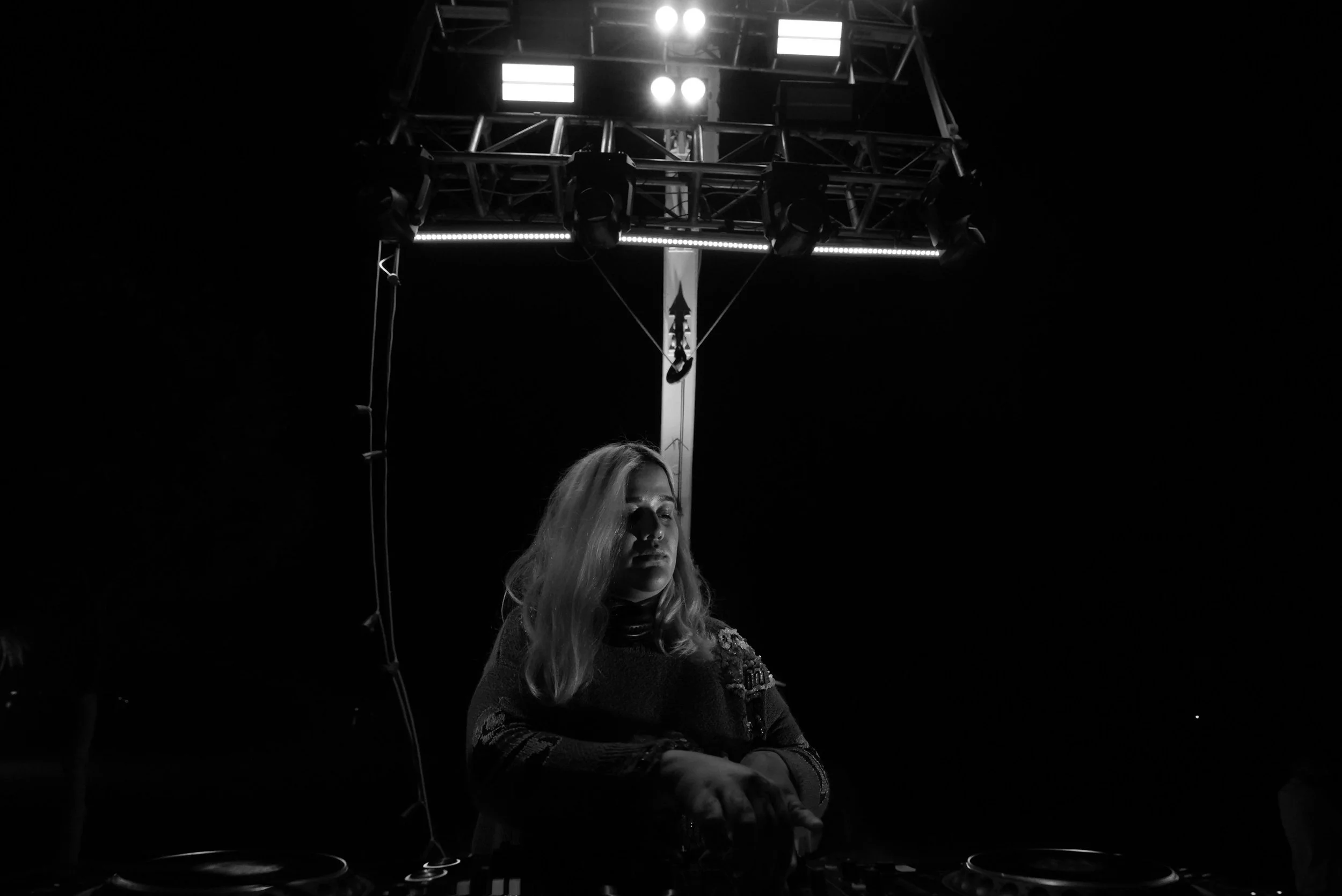
But the deeper intention was unity. The movement and the poetry weren’t meant to feel like two separate layers. They had to merge into one energy. The body moves, the subconscious absorbs and eventually, they arrive at the same place.
Many club tracks chase immediacy. What kind of listening does RAGA ask for instead?
First of all, it’s a seven-minute-long track, which doesn’t even come in the league of club tracks that chase immediacy. Most club songs stick to three or four minutes, but Raga stands in its own territory. The kind of listening it asks for creates its own niche, and its audience has already found it.
Those who have heard ten Ragas to a disco beat know the effect isn’t about reproducing the past, but about resonating with the sound, the poetry, and the lyrics. Listening lingers with each note, feels the shifts, the tension, the subtle movements. You enter a space where time stretches, emotion deepens, and your body can’t stay still. It’s not about instant gratification, it’s about presence, letting the music reveal itself gradually.
The song ends where it began: returning to the Panghat.Why return instead of resolve?
Returning to the panghat feels natural because it mirrors real emotion. Longing and devotion don’t resolve neatly, they linger, they cycle, they stay with you. Ending there keeps the tension, the memory, and the feeling alive, instead of wrapping everything up too neatly.
When listeners finish the track and feel it ended "too soon," what do you hope lingers?
I think my listeners will finish the track and feel it ended too soon even after more than 7 minutes of back and forth, I hope they let themselves feel the moment, because it has that almost trance-like, placebo effect that Raga gives. It leaves them wanting to listen again and honestly, that’s a great strategy for us… not consciously, but somehow it worked, ha ha, more streams!
More importantly, I wanted to leave room for the after-feeling: the how, what, and why of the track. Everyone goes through different things in daily life, and the track gives a small escape from that routine. Of course, I hope what stays with listeners is the moment itself: the way it flows, the rhythm that pulls you along, the parts that make your body respond. It’s a sound that’s still relevant from your parents’ youth in the ’80s to 2026, yet listeners can make it their own, as if not me or Saqib, but written and created by them. And you definitely can’t stand still, that’s for sure. Even after it ends, I want that sensation, that space, to keep unfolding in their mind and body. Not to dwell too much but something worth adding to their playlist.
You say you stand at the Panghat yourself - calling, waiting, surrendering. What are you offering up, and what are you willing to lose?
For me, the panghat is very metaphorical in real life, like standing between two roads: one that keeps asking for more, and one that is unknown. With writing this track, I’ve let go of things and a person, moving forward, leaving it on a beautiful note that made me a different person. I care more about myself now and am more aware of my own feelings. The panghat I was at, I don’t wish upon anyone.
At the same time, some things have to happen for us to realize we’re more than our body, our voice, our music, or anything that exists in this world. Life is short, and you don’t have to bow when your heart doesn’t speak to you. Making someone happy isn’t your responsibility being happy together is a better aim.
So, to wrap up, what I’m offering is my presence, my voice, my story, my energy fully and without expectation. I’m willing to lose control, certainty, and closure. Standing at the panghat means embracing the threshold, letting the track, the sound, the memory, and the moment carry me. It’s about surrendering to the flow and trusting what emerges, even if it’s unseen or unanswered.
