
Madd Rod: In Constant Evolution
words by Nina Katashvili
In an era where music is increasingly engineered for speed, compliance, and algorithmic approval, ‘In Constant Evolution’ drops like a sentimental reminder of what has been lost between the lines of chasing virality.
Not a trend response.
A line in the sand.
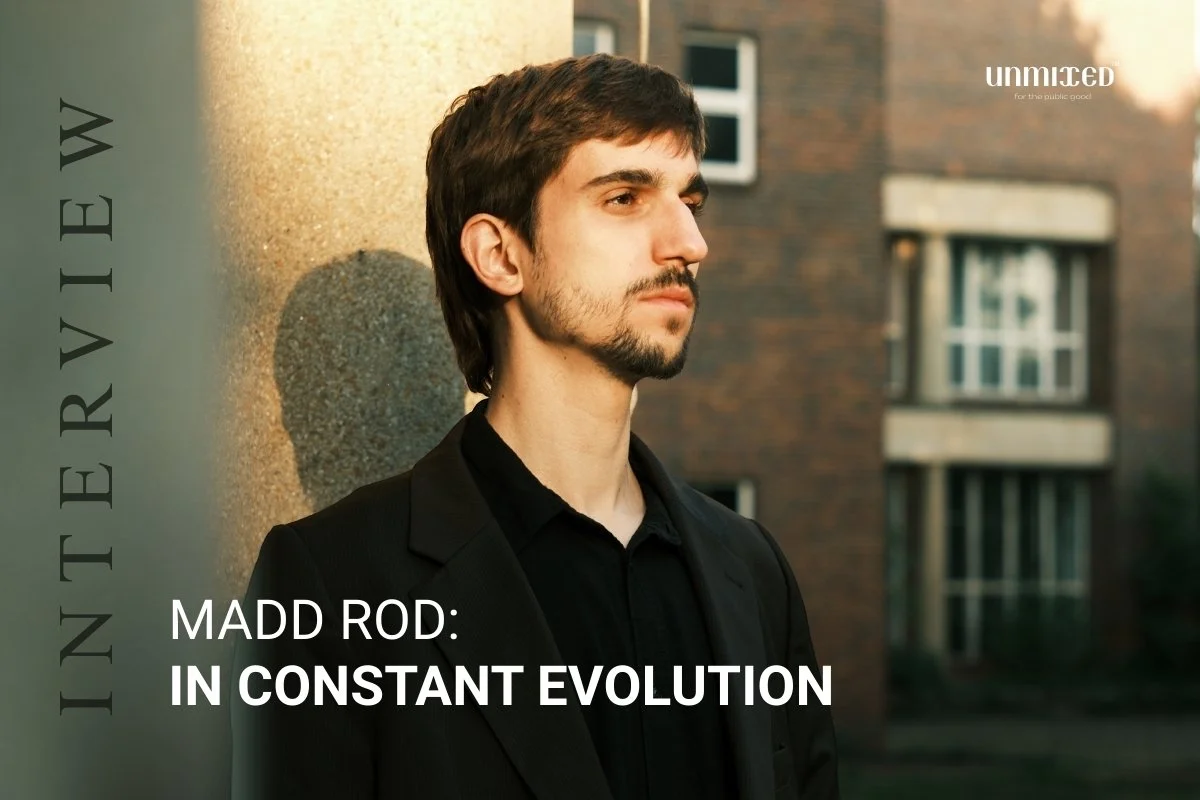
In Frame: Madd Rod. PhotoBy: Larissa Larsen
Madd Rod’s latest album rejects the idea that electronic music must be optimized to survive. It resists the flattening of sound into singles, the reduction of artists into genre bins, and the growing expectation that creativity should behave like data.
Instead, ‘In Constant Evolution’ insists on something increasingly rare: time. Time to listen. Time to feel disoriented. Time to sit with contradictions, imperfections, and unresolved endings.
This is not nostalgia for the album format. It’s a reclamation of narrative, authorship, and human presence at a moment when music risks becoming frictionless… and therefore forgettable.
What follows is not a promo interview.
It’s a conversation about why albums still matter, why genre purity is a dead end, and why the future of electronic music may depend on its willingness to stay human.
What’s fueling your conviction that albums are “coming back”?
I feel in a world where music (and overall arts) consumption is facing the challenge of jellyfish-like attention spans, albums can stand as a form of resistance. There’s a constant pressure from the industry to keep releasing and doing singles every x weeks, but albums still work for artists like me that believe storytelling isn’t dead.
I rarely listen to individual tracks. There’s a lot to be appreciated in an album’s journey. Albums give the artist more creative freedom and remove a new sort of pressure that comes with short attention spans - people want to take quick conclusions. I’ve had it in the past: releasing a single that out of context sounded slightly different from my previous work led some people to assume I had changed into a completely new genre.
With instant feedback available on every track, how do you resist the urge to “optimize for the algorithm”?
I never really had that urge. Early on, I was insecure and would immediately follow feedback from anyone I perceived as more experienced. Over time, I learned to trust my gut.
I still love sharing tracks with peers during production, especially when they’re coming out on a different label than mine. But I’ve accepted that things will never be perfect. Sometimes that snare was already good and didn’t need the three extra hours to make it “fit” the mix.
When the Cover Art Comes First
What brought you to the moment you decided to make this album?
It started with a lot of music that was beginning to make sense together. I initially thought of making a compilation called Esoteric Club Trax. Then one day, my partner and I went to Funkhaus in Berlin for a photoshoot. She’s an incredible photographer and my biggest inspiration. There was one photo I just loved. As ridiculous as this sounds: I felt it was too cool to be used for a compilation, so I decided to look at actually making it into an album. Put together the 6 tracks I had, added a few other unfinished projects, and ended up with a folder of 18 demos. From these, I tried multiple orders until finding “the one” and ended up with 10 tracks that already felt like an album. This gave me the motivation to produce 3 other tracks specifically to glue the narrative of the album story: “Storms on a Hidden Moon” (initially intended to be a 20-min long Krautrock trip), “Where Did You Go, Winter Sun?” (a Breaks track that ended up becoming one of my favourites) and the beatless closing track “The Tension of the Last Goodbye”.
So we can definitely say the cover art arrived before / inspired the music.
Thinking back to the very beginning, what or who was your biggest inspiration for In Constant Evolution?
There isn’t a single main inspiration. The album is a genre salad: hints of 90s EBM, 2000s electroclash, and 80s synth pop. I see it as a love letter to Berlin, its nightlife and the freedom to express yourself here.
Friends mentioned Depeche Mode, Cabaret Voltaire, The Hacker, Chicks on Speed. All valid, but not intentional. I never listen to music before going to the studio, but everything I absorb throughout the day undeniably comes through the album.
On Genre, Binarism, and Outside of the Box Approach
How would you describe your relationship with genres? Are they creatively limiting, or do they offer a useful framework?
Sadly, the Portuguese scene peaking in the 90s left a legacy of genre binarism: House DJs and Techno DJs.(really recommend the documentary “Paraíso” about it, it’s lovely)..But I don’t fit into that. My music includes elements of both; and many genres before and after them.
There’s no track in this album that is purely just one genre. I have had fantastic one-genre only nights, be it Italo, House or Techno but to me, as an artist it doesn’t work because I rarely end up doing what I thought I’d do when I arrive in the studio. Many times I think I’ll do an Hi-NRG Divine style track, and write unintentionally a certain melody that suddenly fits more with darker genres, and then I end up with classic Linn drums and 707 cowbells layered with an industrial bassline and a coldwave dreamy pad. I do think these classic genre-defining tracks some great producers came with over the years are fantastic at giving a niche its anthems.
Albums as Narrative Architecture
With an album as a longer project, do you feel more creative flexibility or more pressure?
For me it gives me the creative flexibility to narrate a story. I find in albums the opportunity to do what I can’t in real life communication: build bridges between topics. IRL I constantly jump between subjects and get lost in parallel stories slightly related with a detail of the previous story. But in the studio, and during the endless hours of making an album, I have the opportunity to add a bit more purpose, hence I rarely finish a track before I see where it fits.
There’s hundreds of written tracklist ideas until I find the one, and then I work on the unfinished tracks, constantly jumping between the previous and the next ones to make sure it will make sense, and connect the two. Only in very specific tracks (in this album I’d say only ‘She Moves in The Shadows’) come as a disconnecting point when I’m building an album. Something that disrupts the narrative a bit, intentionally, but not completely.
The same way that I’d play a really random track mid set to keep people’s attention. Or that I’d bring a dark track in the middle of a brighter set. Those confused looks, the energy break, sometimes is all you need to reignite the room.
Did you send this album to other labels? If you could release it anywhere, where would it be?
I didn’t send the album, but I sent a few tracks in it to friends and artists I admired before deciding to make it into an album. They all got a good response and a few were offered release opportunities, but in the end I pulled them out of those plans because they just felt right in the album storyline.
Releasing “at home”, while my label is approaching its 100th release, made more sense. I really like being an independent artist, so there’s no other label I’d have picked for it.
What’s the most important value of running your own label and controlling the entire process?
This independence comes as a relief.
My previous album (Sad Behaviour) was released by Discotexas, a label I admire run by two music giants (Moullinex and Xinobi) that were super supportive during the entire process, giving me full control and creative autonomy, incentivizing me to take over artwork design (from a photo taken also by my partner), and giving invaluable feedback in the mixing and a few tracks structure. They were really involved listeners from day 1 and I learned a lot from them, but releasing at a bigger imprint also comes with a bit of pressure to match the label’s quality seal.
“In Constant Evolution” feels even more personal than “Sad Behaviour”, as I’ve embraced more the process and the small imperfections. Inner Shah is growing, and I’ve released music by artists I love, so it felt right to have my own stamp on it - embrace the independence. I wouldn’t take as many risks if it was released on someone else’s label. But this is also the message I want to put out to the artists that want to release on Inner Shah: I rarely like the perfectly produced tracks, I like music with identity. There will never be an easy to define “Inner Shah” sound, as there will also never be an easy to define “Madd Rod” sound.
Leaving the Door Half-Closed
If there’s one thing you want listeners to feel after finishing the album, what would it be?
I hope there’s at least one track they love or hate, something that creates a strong feeling about it. I want them to think they know me better now. And hopefully to stop trying to label me as “house” or “techno.”
This album is an invitation into my world. As I sing in Rainy Days in the Summer: “I left the door half-closed.”
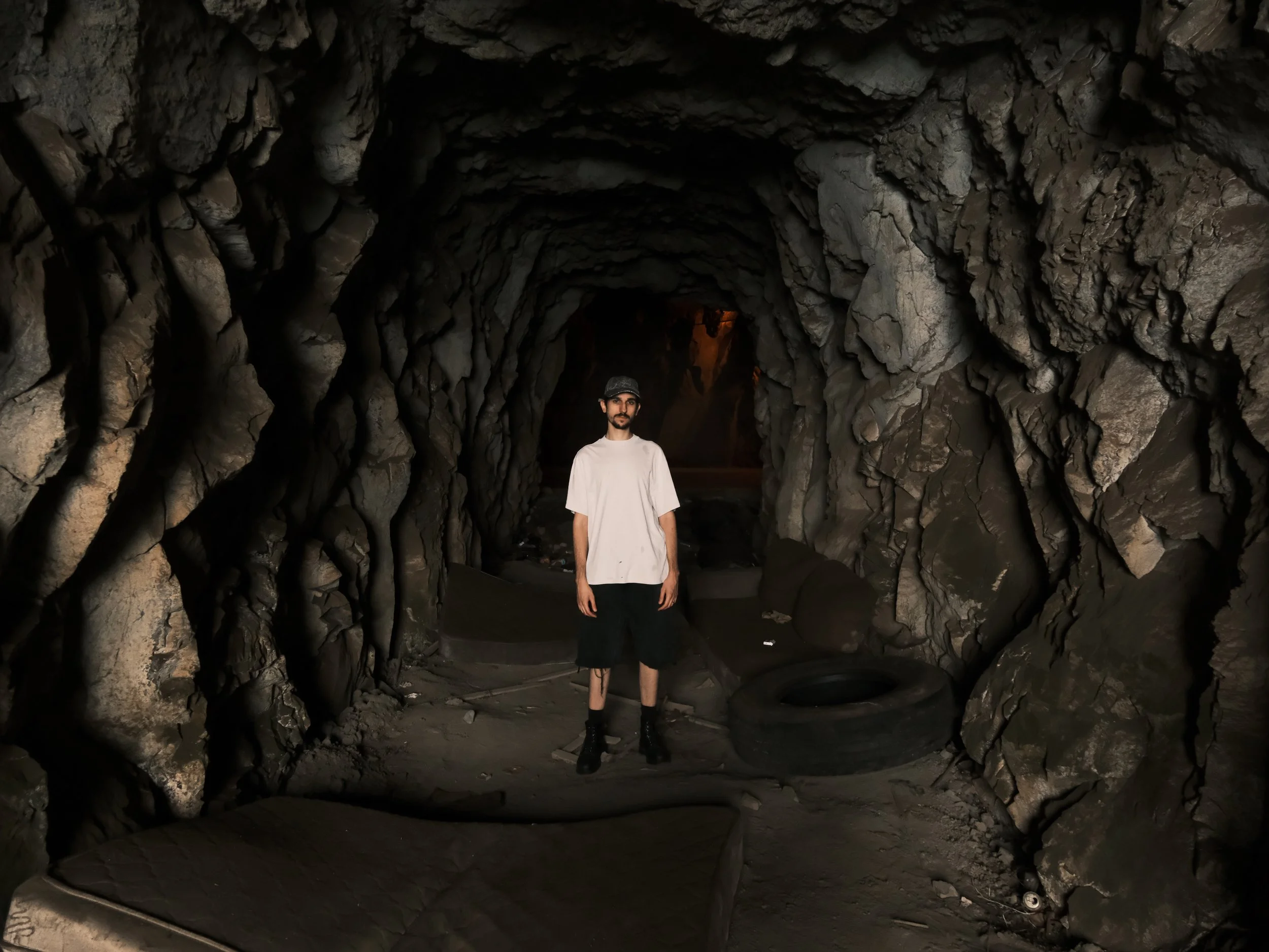
Madd Rod by Larissa Larsen
Closing the Album, Not the Story
How did track 13, The Tension of the Last Goodbye, come to life?
“The Tension of the Last Goodbye” was produced with the goal of being a cooldown track, to reduce the energy and let the mind wander a bit. I love ambient/electronica and thought it’d be the right direction to close the album. In this case I thought of it as something that would sound good after a strong Berghain night, the track you don’t dance to but hopefully makes you come back to your senses. It’s very mysterious, and it was really fun to produce. I think it leaves the album “unresolved”.
Let’s Talk About: Indie Dance
What does “indie dance” mean to you today?
To me Indie Dance stands for “independent club music”, a cross-over between Alternative and electronic music, but I also feel it got lost in translation recently. A lot of recent music is being labeled as Indie Dance, but I consider it an offense to the genre. I see a lot of mainstream artists use this umbrella simply to try and get easier chart positions (or some scene credibility as more underground), but in the end they are just flooding DSPs with mainstream EDM-like music that has nothing to do with the genre. I’d say this made a lot of artists (myself included) find refuge elsewhere.
Although it isn’t the main genre on my album, it definitely falls into the concept of what Indie Dance used to be. My hope isn’t lost, as I’m really happy to see efforts in returning it to its shape. Shout out to the new Indie Dance curator at Beatport for really taking the effort of curating the Best New Indie dance and Staff Picks with quality music.
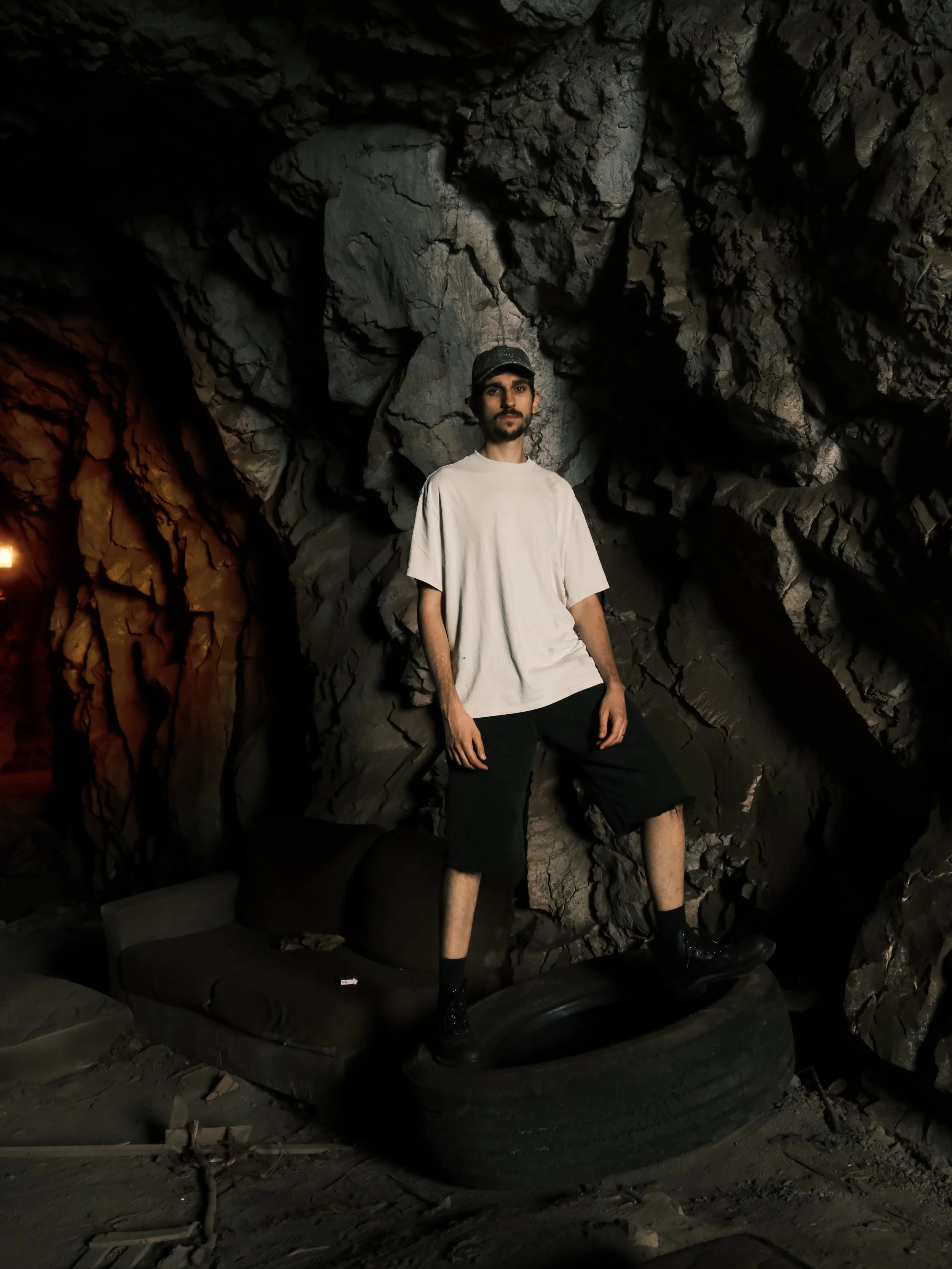
Madd Rod by Larissa Larsen
Time, Labor, and Obsession
What was the production timeframe? Which track took the longest?
Around 250 studio hours total. I mix the tracks while I write new melodies and add new elements. A lot of times I record synths and drum sequences that end up not making it to the track simply because they didn’t fit the arrangement or mix. When I checked, the fastest tracks were “The Tension of the Last Goodbye” (produced in under 3 hours) and “Storms On A Hidden Moon” (produced under 5 hours), but that didn’t surprise me as they were made from scratch thinking in which moments they’d come in in the album. In contrast “Fighting the Oppression with Love” took me 44 hours, mostly because it has vocals and I tried re-recording over 50 times (the final clips that made it were the 2nd and 3rd attempts layered with the 56th), and tried at least 20 different processings on them. If I hadn’t given myself a deadline to finish the album, I’d probably still be working on those vocals.
Humanity vs. the Machine
What does it mean to be a producer competing with AI-generated music and algorithmic playlists?
It feels like a massive “prove you are human” captcha. While a lot of it is just awful, AI-made music will always lack the human factor, it is too “clean” and getting too “good” not in creativity (I don’t think it’ll get there), but technically. Long live the errors and the stupidly bold decisions we make every day!
I’ve never followed these perfect “recipes” to make music of a specific genre. I dare say I don’t think there’s a track in this album (nor my catalog since I began making music at the age of 13) that fits perfectly into a “genre box”, everything is a mix. When I make music there’s no sample packs, no loops, no structures that I’m following or “reference” tracks. Even the Electro tracks in this album have a touch of Synthpop and Post-Punk. Definitely this makes my music much harder to market, and won’t appeal to the algorithms chasing perfect matches to what they already have. It’s definitely getting harder to compete with the “comfort zone”. But it’s a matter of time for AI to take over that comfort zone and to me that’s a blessing. It’s time we re-humanize music. It’s time we praise the DJ who clangs a beat or too.
UNMIXED EDITORIAL NOTE
In Constant Evolution is not asking to be categorized. It’s asking to be experienced.
At a time when electronic music is being compressed into playlists, optimized into sameness, and increasingly generated without human risk, this album reminds us that imperfection is not a flaw, it’s evidence.
Evidence of labor.
Of doubt.
Of intention.
This is why Unmixed exists: to document artists who still treat music as culture, not content. Who choose authorship over approval. And who understand that evolution doesn’t mean adapting to the system; it means refusing to be shaped by it.
MADD ROD
SoundCloud
Instagram
Facebook
Website
