
Uncanny Times for Techno and Safe Spaces for All: Kluster on Paris Nightlife & Politics
interview by Zoé Falgorone.
Since 2020, Kluster has set a new rhythm in Paris—one where partying is understood as a political act. On the eve of a crucial election cycle, we speak with founder Quentin (aka Keut) about safer spaces, underground resistance, and what’s at stake for nightlife in France.
Five years ago, our freedoms were taken away. Paris froze. Clubs shut down. The city’s nights—usually loud, dense, and vibrating—fell silent.
It was in that pause, fueled by a rage to live and an urgent need to reconnect, that Kluster was born: not as an act of rebellion alone, but as a breath of fresh air sweeping across Île-de-France at a moment when nightlife seemed to have vanished.
Before Covid, Parisian nightlife lived inside a paradox: on one hand, the raw freedom of warehouse culture; on the other, a male-dominated ecosystem with little protection for marginalized communities. After 2020, everything shifted. A more independent, radical, socially and queer-aware underground emerged—with Kluster among its pioneers.
Today, their work sits at the intersection of celebration and resistance. And as the 2026 municipal and 2027 presidential elections loom, the future of alternative nightlife in France has never felt more politically fragile.
Interview with Quentin (Keut), co-founder of Kluster
On the Birth of Kluster
How was Kluster born? What triggered the desire to create this collective in the first place?
The idea of Kluster was born during the pandemic, when going out and partying felt essential to our balance, and being deprived of that freedom was really hard for us. The second reason is that we wanted to offer a different kind of party, a safer one than the parties we’ve been to in Paris.
We launched our first warehouse event during the second lockdown, and there was very quickly a real excitement around it. There was almost nothing happening, and our safer space approach quickly set us apart.
Can you tell me more about this? What did you feel was missing, broadly speaking, from the Parisian electronic scene?
At the time, the Paris scene was still very male-dominated, both on the organizers’ side and in the line-ups. That was something we wanted to change. There was also a real issue around the safety of nights out, especially for gender minorities. There were very few prevention messages, very little awareness, and very few safety measures in place.
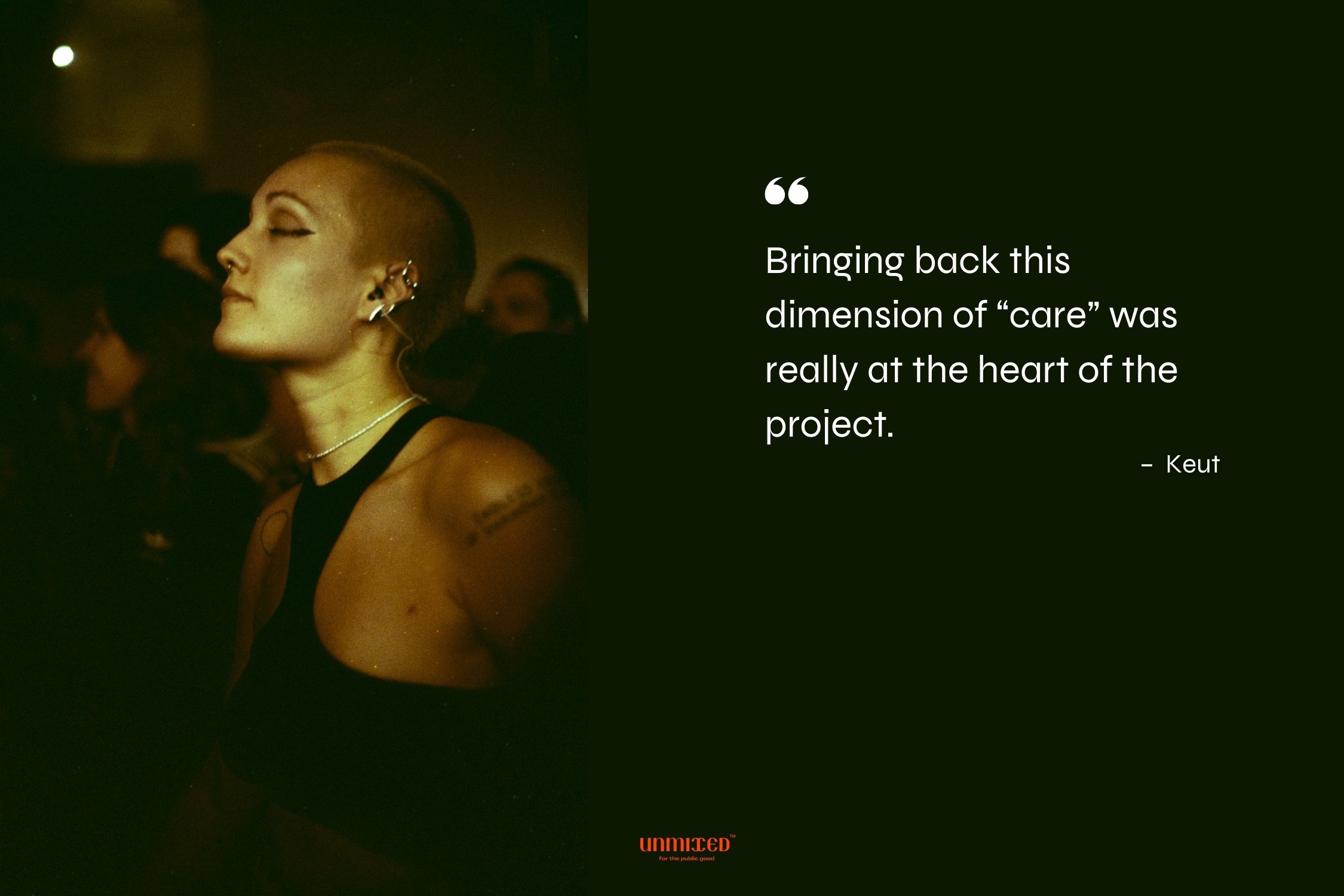
Bringing back this dimension of “care” was really at the heart of the project. This reflection, led in particular by Léopoldine, our co-founder, came up a lot in our discussions. We wanted to go further than simple messages, by putting concrete actions in place during the event, but also in the overall way the event was designed.
We also wanted to bring a more artistic dimension to our events. Parties often felt reduced to just the music. We wanted to offer a more multidisciplinary experience, with scenography, performances, and spaces designed for well-being and letting go.
Care as a Radical Practice
So, you had from the beginning a desire to be socially or politically engaged? How do these values translate into the way you operate?
From the beginning, there has always been a political dimension to Kluster, but it wasn’t something we formally defined at first. It manifested naturally through our choices: our bookings, our commitment to gender parity, collaborations with other politically engaged collectives, and the venues we work with.
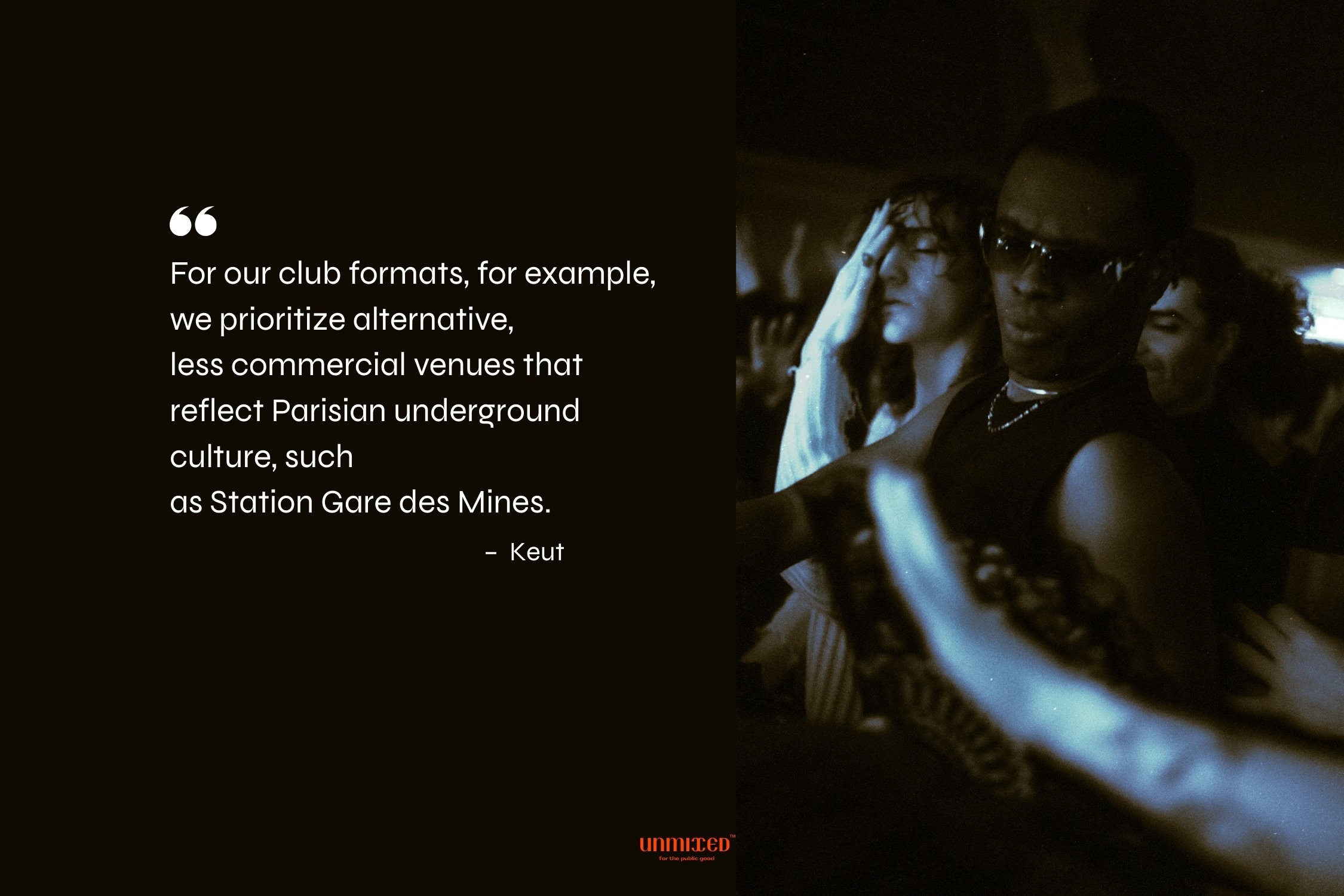
For our club formats, for example, we prioritize alternative, less commercial venues that reflect Parisian underground culture, such as Station Gare des Mines.
We try to turn this vision into concrete actions: implementing care systems, diverse line-ups, and collaborative projects aligned with our values. Beyond the party itself, our goal is to create spaces where people can meet, breathe, and connect — in short, to foster a community.
This vision also extends beyond the dance floor through side projects. We launched Hors Kadres, an independent magazine exploring and questioning dance culture, its margins, and its political implications. We also created our first live show, Errances Nocturnes, a hybrid performance blending music, dance, and digital installations.
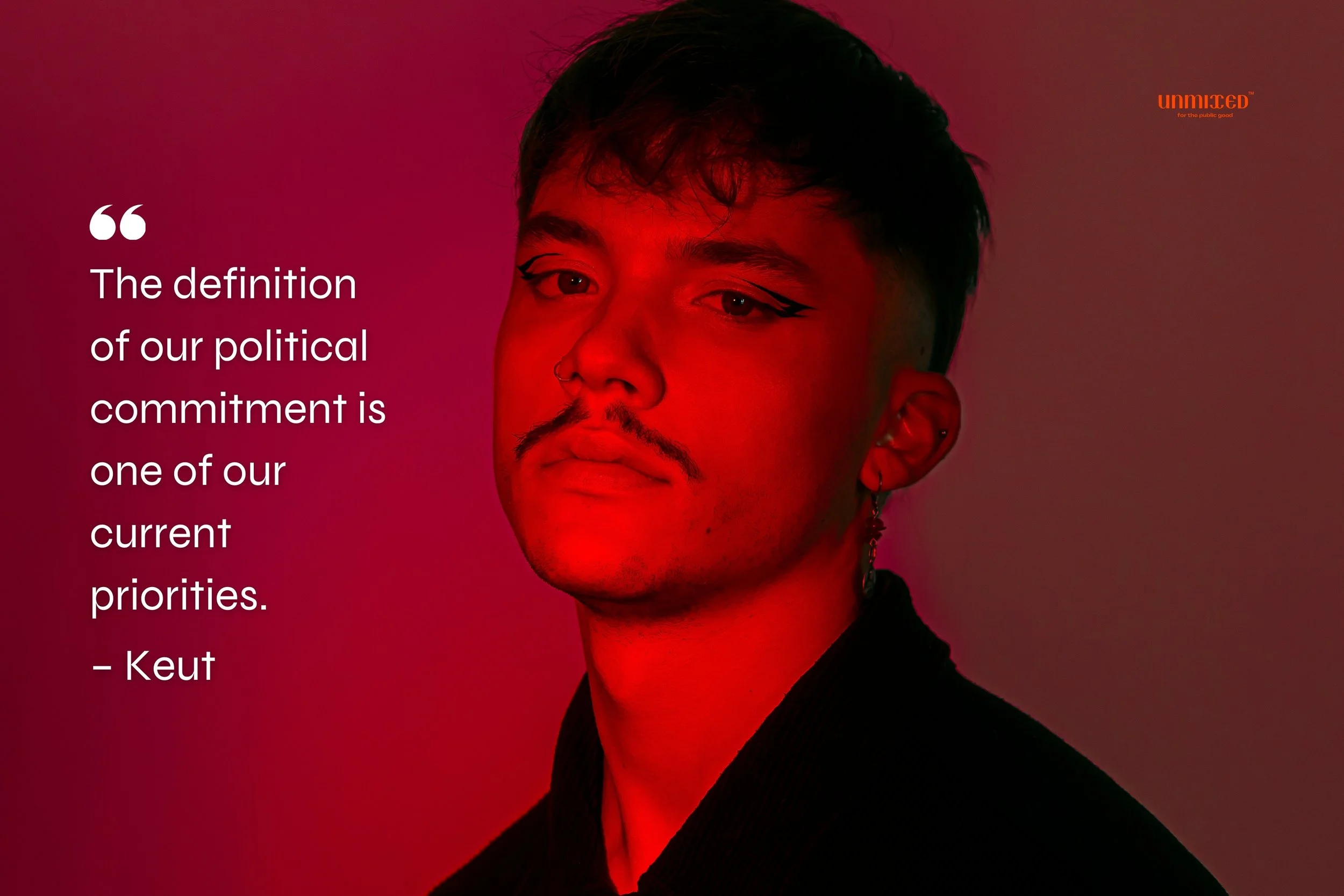
The definition of our political commitment is one of our current priorities. We are working on questions like: what is the spectrum of our political stance? Which issues do we want to engage with, and where do we draw the line?
How the Collective Functions
How do you organize yourselves internally to keep this collectiveƒ and committed project alive?
We try to establish a horizontal form of governance structured around fairly traditional departments, such as production, communication, etc. Because there are cross-disciplinary projects with the Hors Kadre magazine and our artistic events, each department is given a lot of autonomy, especially when it comes to recruitment.
We are also very keen to bring in people from different backgrounds and to achieve greater inclusivity. These are ongoing reflections, and our way of working is constantly evolving. The project has existed for five years now, and we have managed to build a strong core team that remains fairly stable.
For cross-disciplinary topics, we work in small working groups with volunteers, we take decisions collectively, and we try to take everyone’s opinion into account, regardless of their role in the association.
Finally, each event results from collective work, with every department involved. This lengthens the decision-making process but allows us to approach events as a whole.
How would you define Kluster’s artistic signature today, in your line-ups, your scenography, your relationship to sound and to spaces?
We are first and foremost a hybrid collective. We don’t limit ourselves to one musical or artistic direction. We evolve depending on the type of event, and we constantly question ourselves.
There is still a common thread, but we don’t lock ourselves into a single style. Musically, we explore introspective sets ranging from hypnotic techno to deep techno, trance techno, breaks, and even house, depending on the type of event.
Our performances are often sensual and body-focused, while the scenography creates a more dreamlike, gentle atmosphere. Then it’s up to the audience to piece all these elements together and create their own vision.
Is booking niche or emerging artists primarily an artistic choice, or also a form of resistance?
It’s both. It’s always more interesting to dig up artists who don’t play very often and introduce our audience to what moves us. We also aim to build long-term relationships and strong human connections that go beyond the music, with artists who share the same values as us.
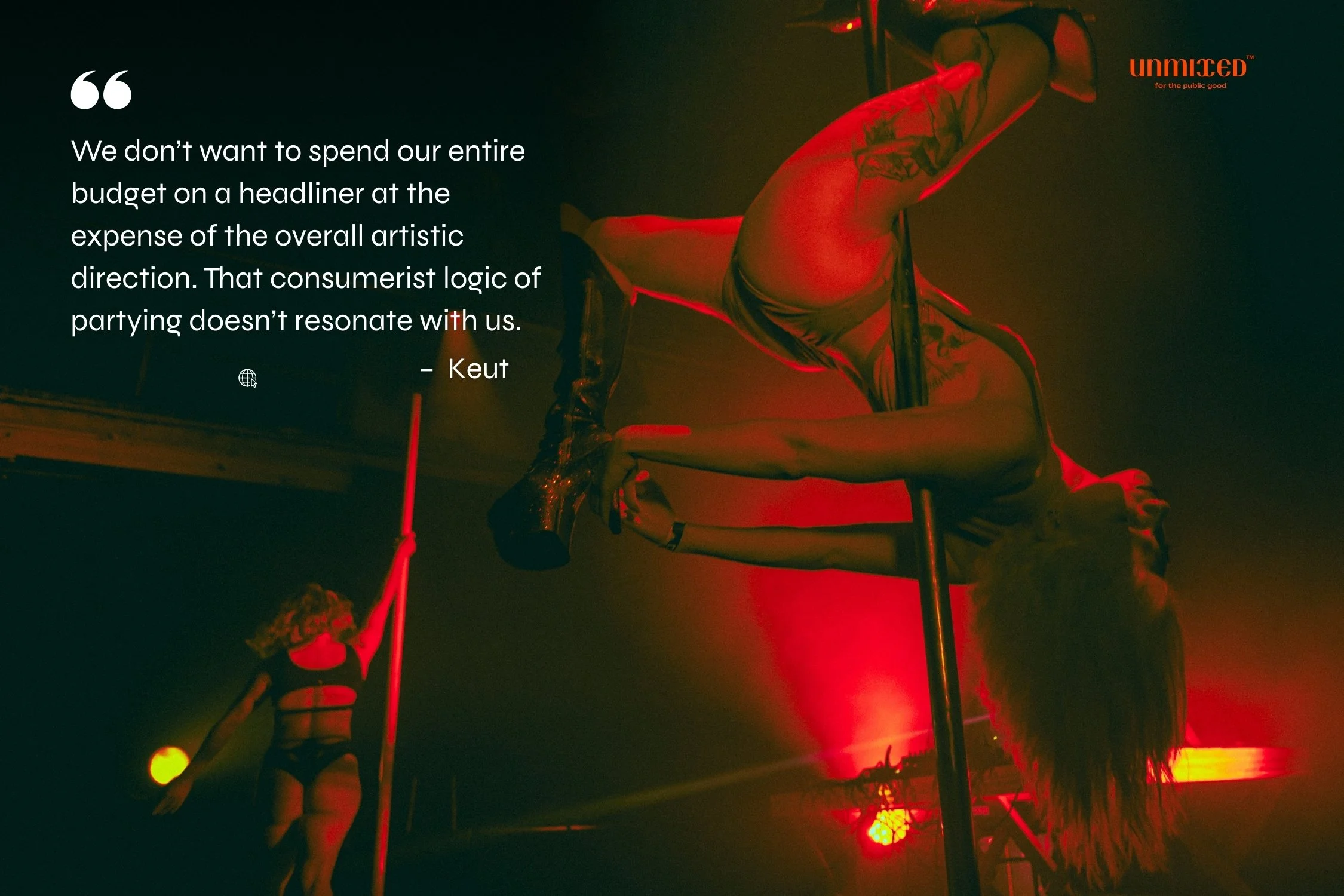
There is also a financial reason. We don’t want to spend our entire budget on a headliner at the expense of the overall artistic direction. That consumerist logic of partying doesn’t resonate with us. We prioritize the global experience.
In an increasingly saturated and commercial post-Covid scene, how have you managed to grow while preserving Kluster’s independent identity?
It’s precisely because we’re different that it still works. After Covid, the scene developed enormously, but we managed to bring together a real community that has stayed loyal to us because we remained true to ourselves and didn’t change our direction. Sticking to that line is what allowed us to get through, even after more difficult moments.
France celebrates club culture while repressing raves and free parties. How does this contradiction affect Kluster?
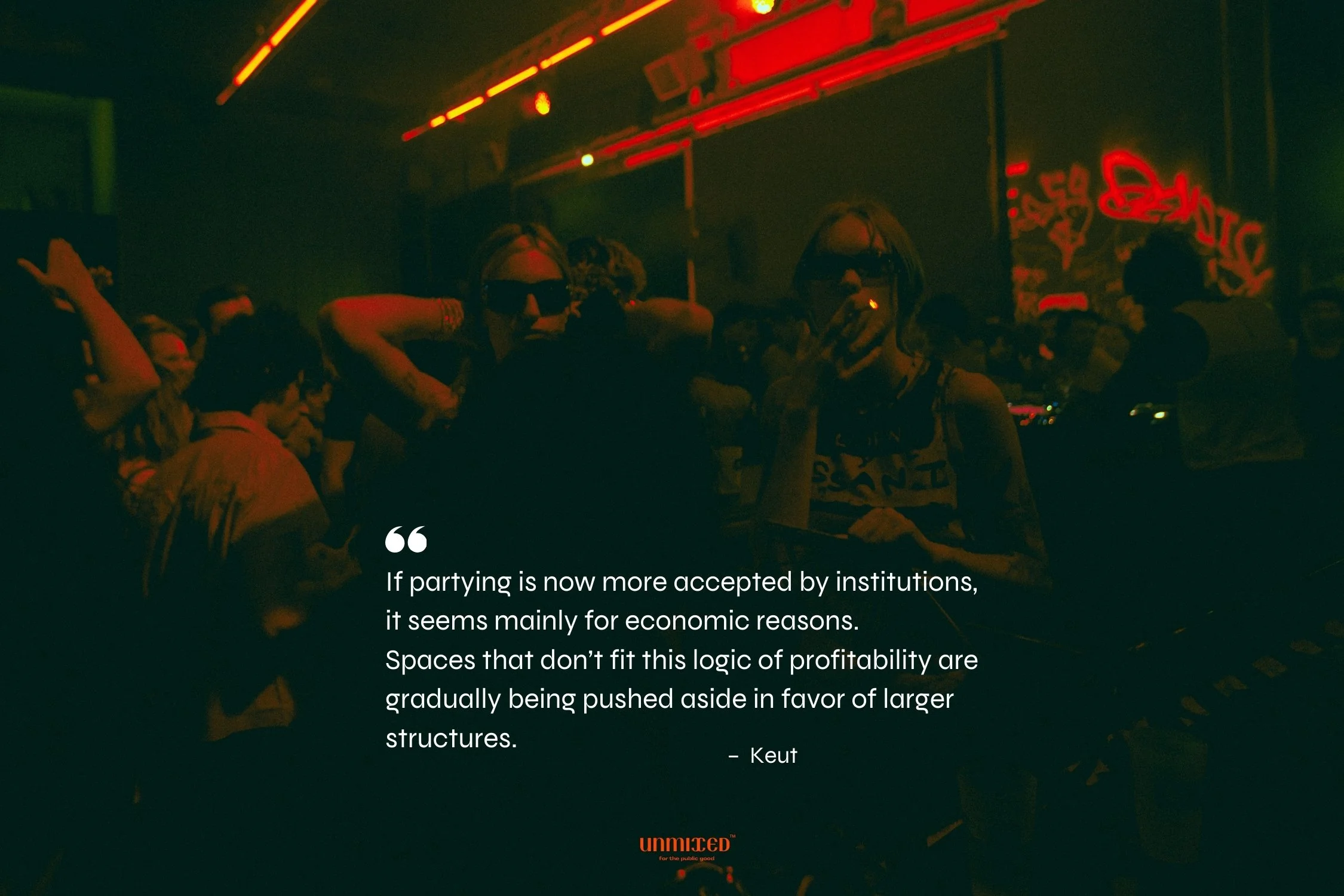
As a collective, we haven’t been directly affected. However, some of the venues we’ve worked with have faced restrictions, creating a real domino effect. If partying is now more accepted by institutions, it seems mainly for economic reasons.
Spaces that don’t fit this logic of profitability are gradually being pushed aside in favor of larger structures. Unlike some neighboring countries, underground culture in France remains heavily restricted.
Looking Toward 2026
As the scene continues to evolve, what new directions would you like to explore in the coming years?
We’d like to continue exploring projects outside of the dancefloor and think about how to bring our community together through other types of events. As an election period approaches, with municipal elections first, then the presidential election in two years, we want to create moments and spaces to inform, raise awareness, exchange, and even take action.
Partying is political, but it is also a space of escape. Even though it allows messages to be conveyed, we need to create other spaces to truly build the world of tomorrow.