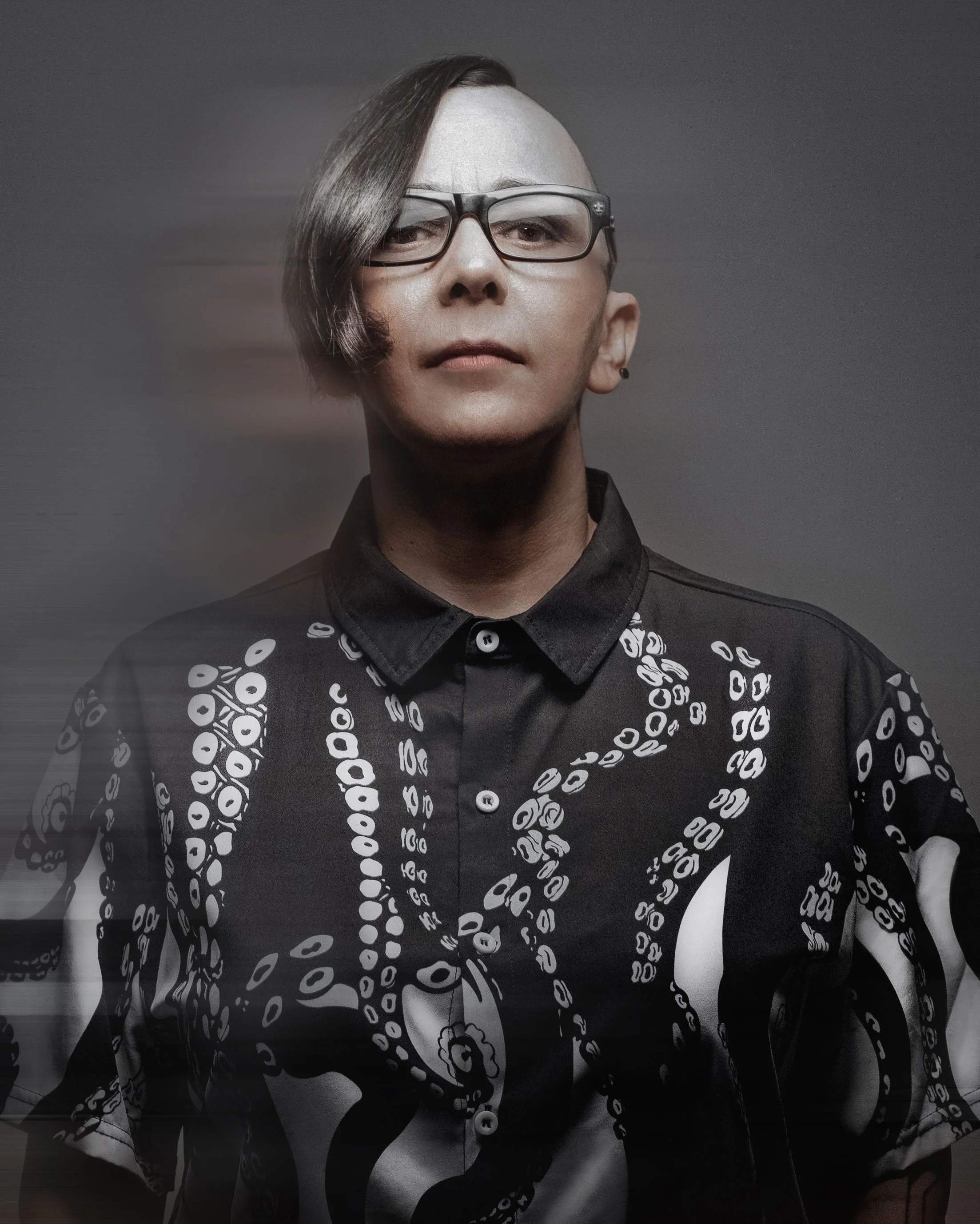
words by Fofi Tsesmeli
Some DJs don’t just play music, they hold an important space. Pepiita is genuinely one of those, moving through nightlife with a sensitivity that reads the dancefloor as something fragile, shared, and deeply human. In her world, sound becomes a way of listening as much as speaking.
Raised in Bordeaux and shaped by an early background in film, Pepiita learned to pay attention to atmosphere: to what dithers between frames, between frequencies, between people. When she moved to Paris, the underground electronic scene offered her a tangible language that felt immediate and embodied: one made of release and collective breath. Her sets unfold craftily, drifting through dark disco, hard house, and hard groove, always responsive to the room. There is a lot of playfulness there, but also care; a sense that music is something to be offered, not imposed.
Over time, she has become a constant presence within some of Paris’ most meaningful queer and alternative spaces. Through her residencies at SpectrumWaves, Barbi(e)turix and Rosa Bonheur, Pepiita is part of communities built on trust, resilience, and mutual recognition. These are spaces where music has always been tied to survival and self-expression, where dancing together is not taken for granted, and where the booth carries an unspoken, deep responsibility.
That same sensitivity extends beyond the city and to a global scale. As a co-founder of Queer Ranch Festival in Lesbos, Greece, Pepiita helped imagine a muster rooted in tranquility, care, and collective happiness. A place where queer bodies can exist without performance, and where celebration is inseparable from memory and presence. At a time when queer culture is often extracted, packaged, and sold back to itself, this festival insists on something quieter and more deliberate: being there, together, on their own terms.
Pepiita does not position herself as a figurehead, nor does she chase meaningless visibility. Her work is rooted in consistency, in showing up, protecting the conditions that allow people to feel free, even temporarily. In an industry that often rewards spectacle over substance, her path showcases another way of moving: one that values connection and the small, powerful, impactful moments that are manifested when a room truly comes alive.
In this conversation, Pepiita reflects on her journey through electronic music, the realities of queer nightlife today, and the fragile balance between pleasure, care, and resistance - from the intimacy of the DJ booth to the wider worlds it can powerfully sustain.
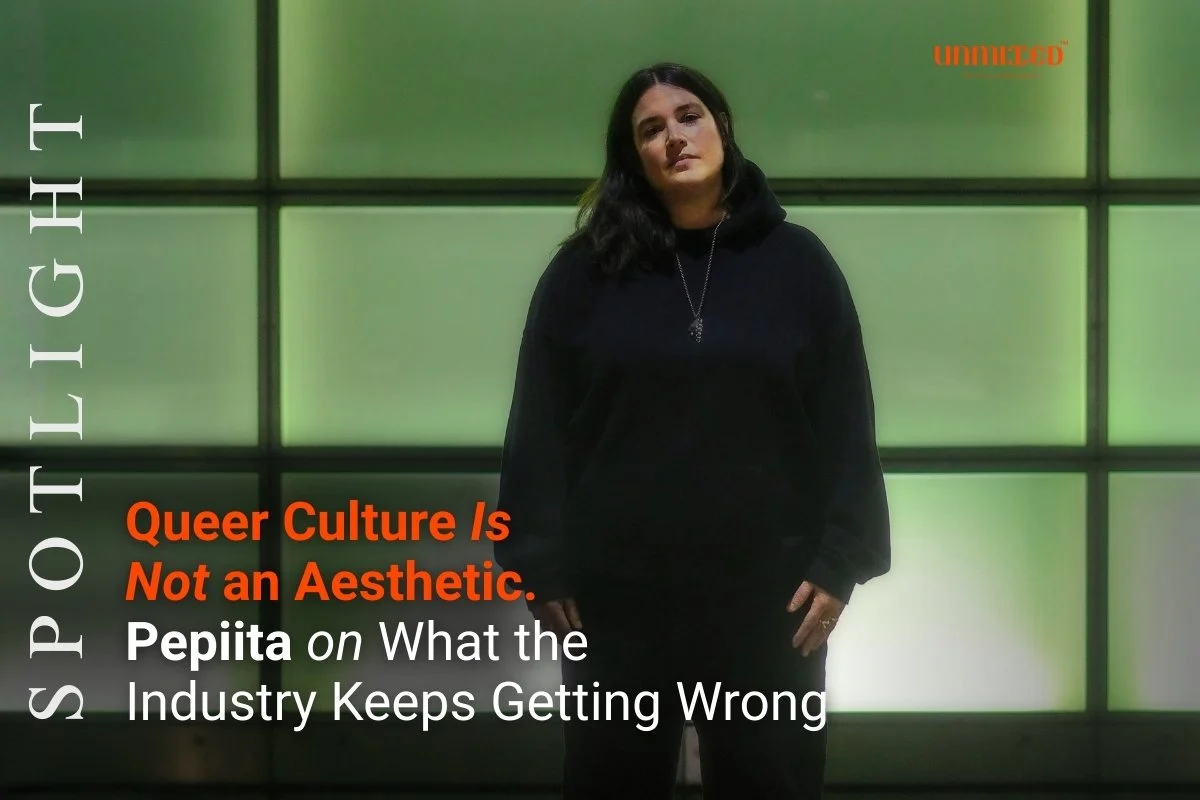
photo by Lisa-Sophie Kempke . in Frame: PEPIITA
Your journey began in Bordeaux, studying film. Can you share how that creative background influenced your decision to pursue electronic music and eventually become a DJ? Where do these two worlds collide?
I studied film with the goal of making music for movies. At one point, I was really passionate about Italian films from the ’60s and ’70s and the French New Wave. Music for film has always fascinated me, but electronic music came into my life very early - through concerts and when I started working behind bars. I was lucky enough to work at Cabaret Sauvage, a legendary venue in Paris. Very quickly, I made connections and got drawn into clubs. Transitioning from musician to DJ happened very naturally. It’s a bit like putting people’s lives into music for a precise moment, with perfect timing. In a way, it’s not so far from filmmaking, haha!
What stands out to you about your early days in the Paris underground scene, and how did those formative experiences shape your sound and artistic identity?
What struck me the most as a clubber in the beginning was the incredible freedom you feel on a dancefloor. That, I think, was a trigger for my desire to be part of this movement: what does it really mean to be free together, whether between four walls or out in the open, in the woods? What does that freedom bring? Of course, it’s a political act in itself, but there was something more in that energy. I believe my artistic identity was born from this experience of dancing. From those unique sensations - the chills, sometimes tears welling up during a DJ set… That feeling, that collective energy, allows me to craft my sets freely, in connection with the people present. At least, that’s my intention.
You’re known for sets that blend dark disco with hard house and hard groove. How did you develop your signature sound? What are the sounds or experiences that continue to influence your musical direction?
It has to groove, it has to carry emotion, and it flows through all kinds of music… Everything is constantly transforming and evolving. Honestly, I struggle to even define what I play. My “recipe” is about making people want to stay with me and feel emotions together, personal, collective, messy, beautiful. And yes, the ’90s will always be a lifelong influence…
You’re a resident DJ at SpectrumWaves, Barbi(e)turix, and Rosa Bonheur. How do each of these spaces reflect different facets of your musical identity and community engagement?
Overall, the two collectives and Rosa Bonheur share the same ethical and political values, they’re spaces made by and for queers. At Rosa Bonheur, a guinguette that closes at midnight, I can mix gay anthems and sing along with drag queens, at La Barbit(e)urix, one of Paris’ oldest lesbian parties, I celebrate women with a wide range of sounds, from dark house to more daring styles, and at Spectrum, it’s more niche and refined, with a savvy, globe-trotting crowd coming for curated techno and house in a very particular queer vibe. I don’t play the same thing anywhere, but I feel fully at home in all three projects!
Barbi(e)turix has a rich and important history as a feminist and queer collective in Paris. What does it mean to you personally to be part of that lineage?
Being part of Barbi(e)turix feels like joining a living history of feminist and queer energy in Paris. It’s an honor to step into a space that has long celebrated women, queers, and diversity, and to contribute my own voice and music to that lineage. For me, it’s about creating moments where people can connect, dance, and feel seen, continuing the spirit of community, resistance, and joy that the collective has always stood for.
Queer Ranch Festival in Lesbos is a distinctive project. What inspired you to co-create it, and what were your hopes for its impact when it started?
Yes, the Queer Ranch Festival in Lesbos is truly one-of-a-kind! The idea came from a desire to create a free, safe, and festive space where queer people can gather, dance, express themselves, and simply be themselves, in a beautiful and secluded setting. From the start, we wanted it to be more than just a festival: a real community refuge where music, art, and queer culture meet, a place to connect, celebrate our identities, and feel a true sense of belonging. And above all, to bring new life to Sappho’s birthplace, which was unfortunately starting to be bought up by hetero interests, and to reclaim its place in queer history.
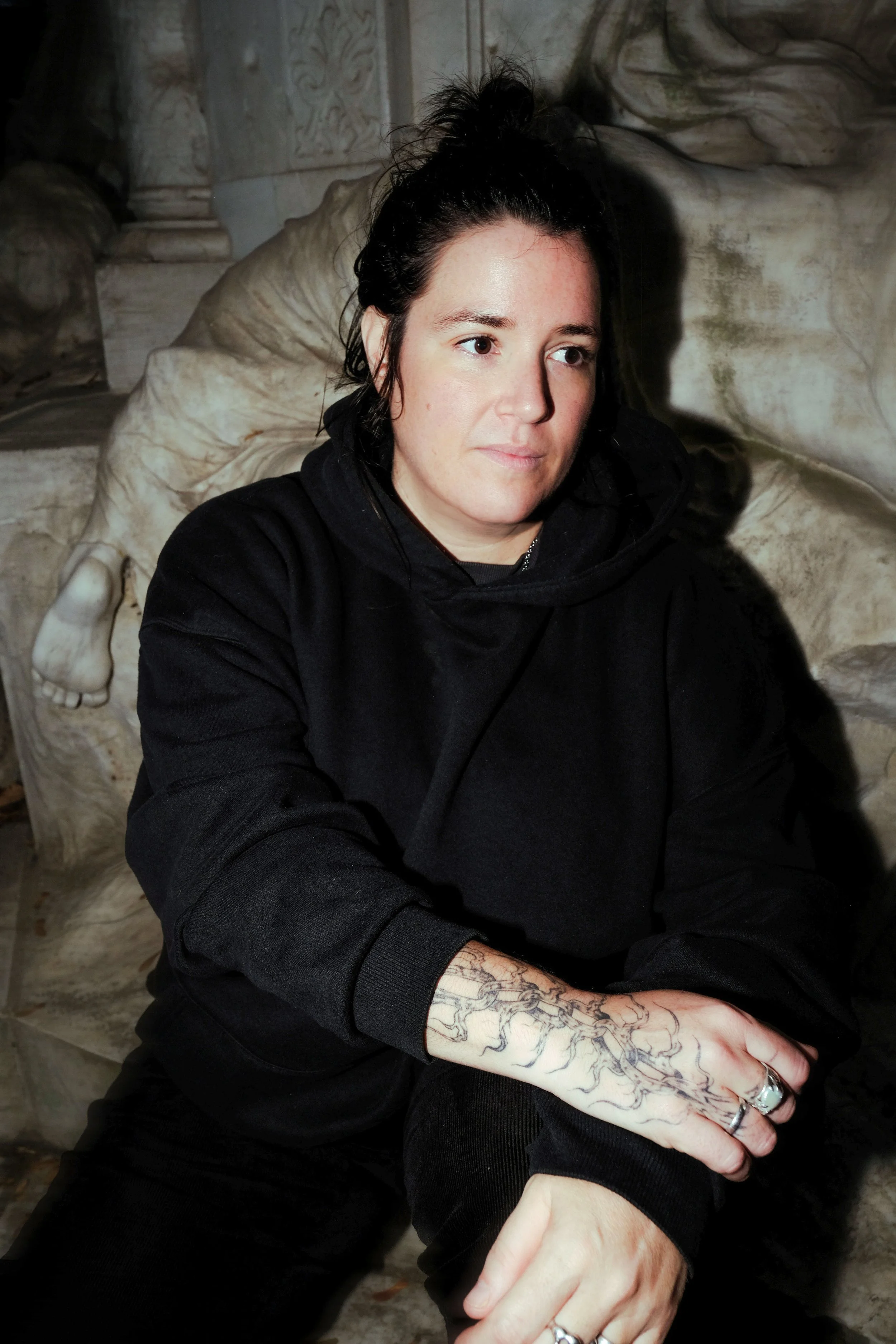
photo by Lisa-Sophie Kempke . in Frame: PEPIITA
Indeed, the festival exists in a place with a deep symbolic queer history (Skala Eressos, birthplace of Sappho). How does that context influence the spirit and programming of the event?
The first thing that comes to mind in response to this question is: ‘We are we, we are queer, we won’t disappear’! The incredibly strong symbolism of Sappho’s birthplace is, of course, always in mind. Also tied to the fact that we’re lucky enough to hold the festival there at the very start of the season. It’s really just the festival-goers, and the vibe is a bit like the village in Asterix and Obelix: a queer village standing up to the rest of the world: Sappho and the queerinvincibles!
Queer Ranch seems to merge party culture with community support (e.g., fundraising and solidarity efforts). How do you balance activism with celebration?
It’s important to know that the festival is self-produced; we don’t receive any grants or funding, and there are only four of us organizing it: Michel, Samra, Anaïs, and myself, completely on a volunteer basis. None of us has earned a single euro since the beginning. It seemed obvious to us, because yes, we have this festival in the village where Sappho was born, but it’s also an island with many migrant camps, and it was absolutely out of the question to ignore that. Activism, for us, has no limits; it’s all part of the same project. It’s not something separate from the festival.
How do you think queer club culture feeds back into mainstream electronic music, and vice versa?
Queer club culture has always been a driving force of innovation in electronic music. It experiments, blends genres, plays with codes, and creates spaces where freedom and creativity are total. These experiments often influence mainstream music, whether through sounds, rhythms, or the energy of tracks. Conversely, mainstream electronic music can open doors and bring new audiences into queer spaces, creating a constant exchange. It’s a two-way street: queer clubs feed the mainstream, and the mainstream can amplify and spread these ideas on a larger scale, while keeping the radical, inclusive spirit of their origins.
Queer culture has long been the engine of electronic music, yet queer artists are still often sidelined once scenes become profitable. Do you feel the industry truly supports queer talent or mostly capitalises on queer aesthetics?
Unfortunately, the industry often tends to capitalize on queer aesthetics rather than genuinely supporting queer talent. Queer scenes have always been spaces of innovation and experimentation, but as soon as they become profitable, many artists and communities get sidelined. It’s also a tricky issue because once queer culture is put front and center, mixed into mainstream music or larger festivals, its political message often gets watered down, criticized, or stigmatized. Today, it’s hard to find a real place in building a festival that wants to be inclusive with queer artists: too often, only what “works” gets used, not the messages and political commitments that come with it. To me, supporting queer culture isn’t just about using its visuals or vibe for profit - it’s about giving space, visibility, and real opportunities to queer artists, while honoring the history, energy, and political message of these spaces.
Safe spaces are often marketed heavily in nightlife right now. From your perspective, how many of these spaces are genuinely safe and how many are just branding exercises?
Once party organizers realized that the word “queer” could sell tickets, they started co-opting it - throwing a person of color, a gay person, a lesbian, a queer person, into their line-ups and calling it “queer,” without ever understanding the history or what a real queer party is. That’s exactly why queers had to create real safe spaces for their own events.
Let’s be clear: being queer, or even just being among queer people, doesn't automatically mean it’s safe. Our community has its own issues around safety, and we know it. A “safe space,” even just among queers, in a club with alcohol, drugs, kink, sex-positive energy, charts, whatever you want, it’s complicated. Zero risk doesn’t exist. At best, it’s slightly reduced compared to other spaces.
Once “safe space” became a buzzword, it was quickly hijacked by organizers who often had no clue, resulting in “safe spaces” that are, in reality, not safe at all. So, true safe spaces don’t exist.
But here’s the radical truth: the fight to create these spaces matters. Queer-trained staff, gender-neutral bathrooms, and all the other intentional measures - these are what real care looks like. The term “safe space” is a lie, but the actions, the intention, the politics behind it are what count in and for our community. And that, for me, is positive.
Paris has a strong queer party legacy, but it’s also increasingly commercialised. Do you think something vital has been lost, or are we simply in a different phase?
The biggest issue is that we don’t have spaces. It’s become really, really difficult to have a club inside Paris. Most clubs are run by white men playing the same music they’ve been playing for 30 years, and we have zero desire to go there. Apart from Virage and Essaim, there’s basically no club worth mentioning.
When we want to organize something, it’s usually outside of Paris, which brings logistical challenges, a more complicated audience experience, higher costs for organizers, and much more risk. The Parisian nightlife isn’t dead - it’s still there. And I dare to hope that the queer revolution in Paris will rise again… but we’re still far from it.
Have you ever played, or refused to play, somewhere, or refused to be part of a lineup because their values didn’t align with yours? What made that decision non-negotiable?
Yes, I’ve refused radio shows and gigs at so-called queer parties several times, whether in Paris or elsewhere in Europe. I’m not able to separate my work from my political convictions or from who I am as a human being; it’s just not possible for me. There are people within the queer scene for whom I have very little respect, for example. I won’t work with them, even if it’s fine that they exist for certain audiences. I wish sometimes, people were more aware of where their money goes and who they’re supporting. I don’t know if it would change everything, but for me, my work is political. I won’t name names, but there are parties where you will never see my name, and that’s for sure.
Do you believe queer nightlife still has the power to be radical, or has it been largely neutralised by capitalism and cultural assimilation?
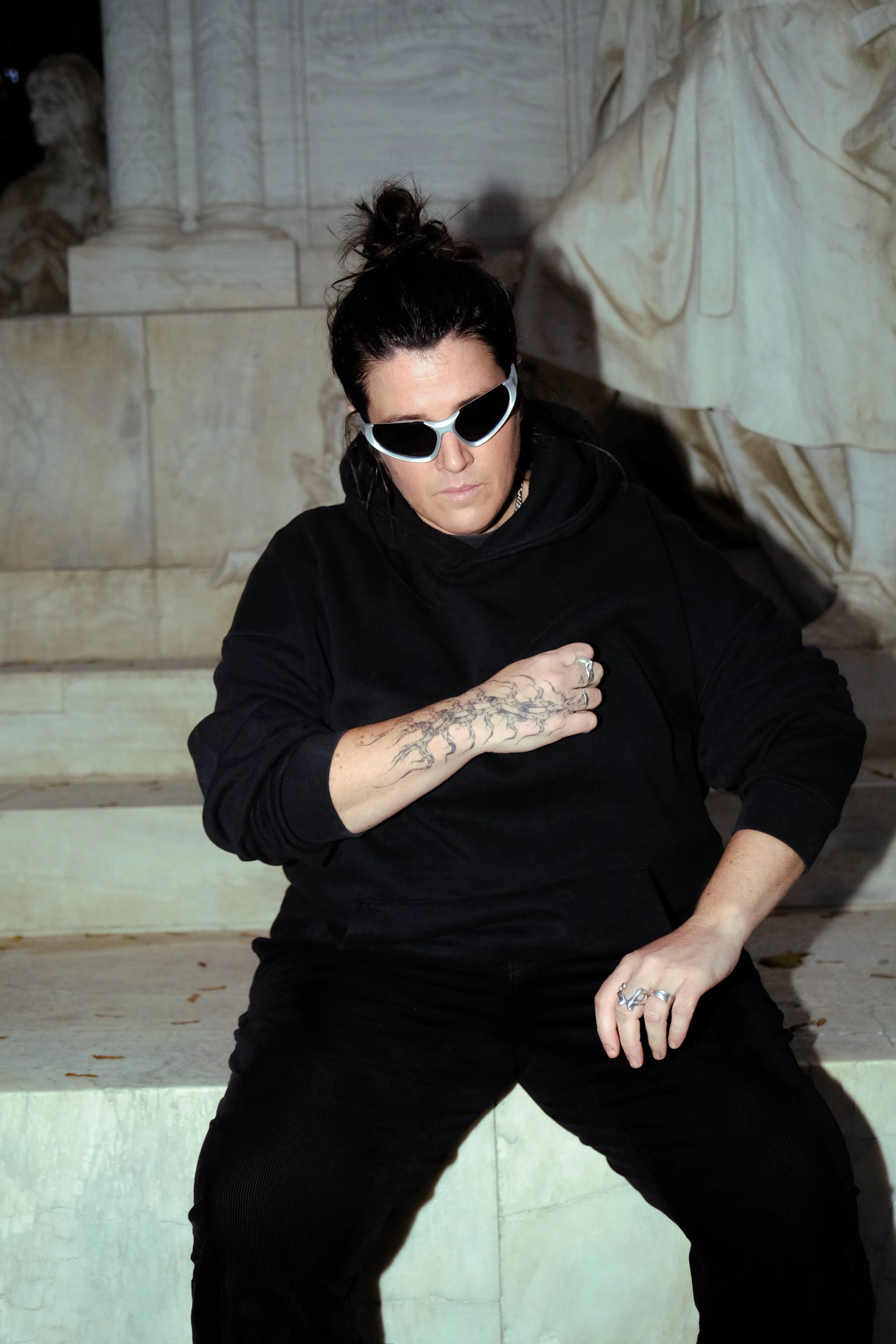
photo by Lisa-Sophie Kempke . in Frame: PEPIITA
I do believe queer nightlife still has the power to be radical, but only when it’s intentional. Capitalism and cultural assimilation have definitely tried to neutralize it by turning queerness into an aesthetic, a marketing tool, something “cool” and sellable. But queerness has always been about resistance, about creating our own spaces because we were excluded elsewhere. When queer nightlife is rooted in community, politics, care, and solidarity, when it supports local artists, takes clear positions, and creates real structures of safety, it remains deeply radical. The problem isn’t that queer nightlife has lost its power; it’s that not all queer-branded spaces are willing to do the work. The radical potential is still there, but it has to be actively protected and reclaimed.
What advice would you give queer artists who are just beginning to pursue their voice in electronic music?
Don’t dilute yourself to be more “acceptable.” Your queerness, your anger, your softness, your contradictions, that is your power. Electronic music was built by queer bodies, by outsiders, by people who had to invent their own spaces to survive. Know that history, feel it in your bones, and don’t let anyone erase it for you. Find your people before you chase visibility. Community will save you long before the industry ever does. Protect your joy, your boundaries, and your politics. Learn to say no, even when it costs you opportunities, especially when it costs you opportunities.
Being a queer artist is already a political act. Your music doesn’t have to explain itself, justify itself, or soften itself to be understood. Stay weird, stay loud, stay tender. And be brave!
Can you share some of your future plans?
Right now, I’m in the process of closing certain chapters of my life, including a café. I don’t really know where the future is taking me, but I feel more and more certain that my path is about building projects and creating spaces for my community, spaces where queer people can exist, gather, and breathe. Whether that’s behind the decks or working as an artistic director for a festival or something else, it all feels connected.
No gossip to share, haha! But I can feel a shift coming, a quiet but real turning point. We’ll see where it takes me.