Inside the Industrial Mind of Rebekah
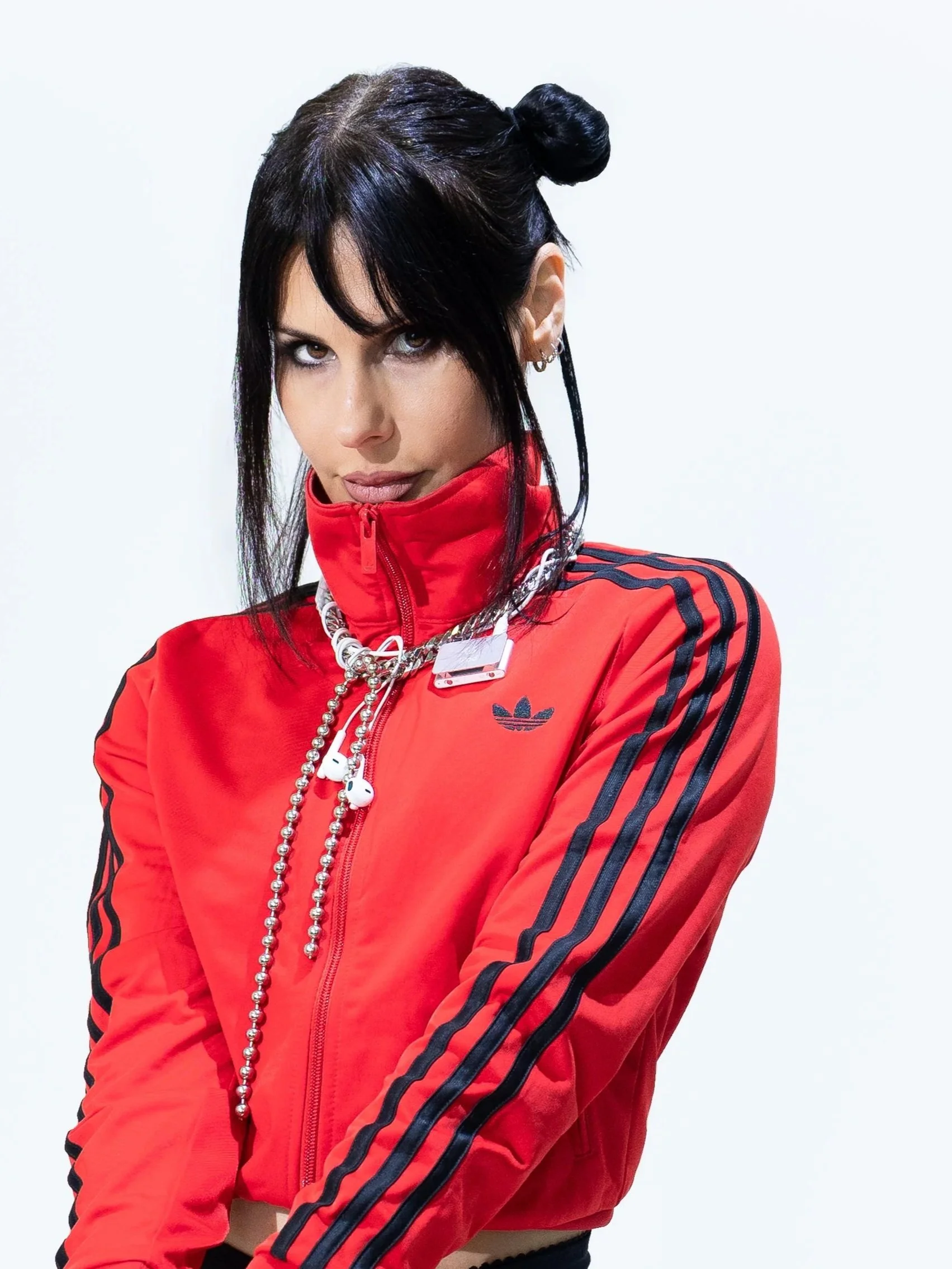
Rebekah By KEYI studio
Born and bred in Birmingham's infamous '90s club scene, it was there that Rebekah first encountered the ferocious, hard-hitting strain of techno that would shape her career long before it reached the festival main stage. It was there that she first connected with the relentless energy of the U.K. club sound. Countless nights on the dance floor ignited her ambition to one day claim a place within it. Several years later, she enrolled in college to study music production, beginning the journey that would establish her as one of the defining figures of the hard techno scene.
Today, her multifaceted approach to music – as a highly successful DJ, record label owner, producer, and event organizer – proves in practice that she has a passionate, holistic understanding not only of the music itself but of the culture associated with it. That, however, is the bright side of the story.
The other side is clouded by stories of harassment, sexual assault, abuse, exploitation, and sexism. Rebekah did not stay silent. This highly admirable and empathetic survivor went public instead. She turned her experience into advocacy, challenging the status quo of the industry that would prefer for all these stories to stay hidden behind closed doors, protected by shut mouths. Her trauma turned into advocacy; she utilized her platform to talk about safer environments in the nightlife industry. In 2020, she launched the Me Too–For The Music campaign with an open letter and a pledge to hold high-profile artists accountable, but also demand that clubs and promoters implement zero-tolerance policies towards predators inside and outside the booth.
Rebekah, true to her Birmingham roots, stands for an uncompromising high-velocity style of industrial techno, hardcore, and hard techno. And yes, she was doing it long before it reached the main stage. Widely regarded as a pioneering and leading figurehead in the revival of industrial techno’s strength, she released her debut album, Fear Paralysis, on Soma in 2017. This year, she returned with her second full-length, Industrial Mind on Reckless records, once again pushing the boundaries of the genre.
Today, Rebekah is the role model she was likely searching for when dreaming of a career in music: unstoppable, fierce, outspoken, talented, and inspiring. The release of her new album provided the perfect opportunity to catch up with her and talk frankly about everything - from the “Industrial Mind” and her career to the hard sound craze and the abuse stories that continue to plague the industry.
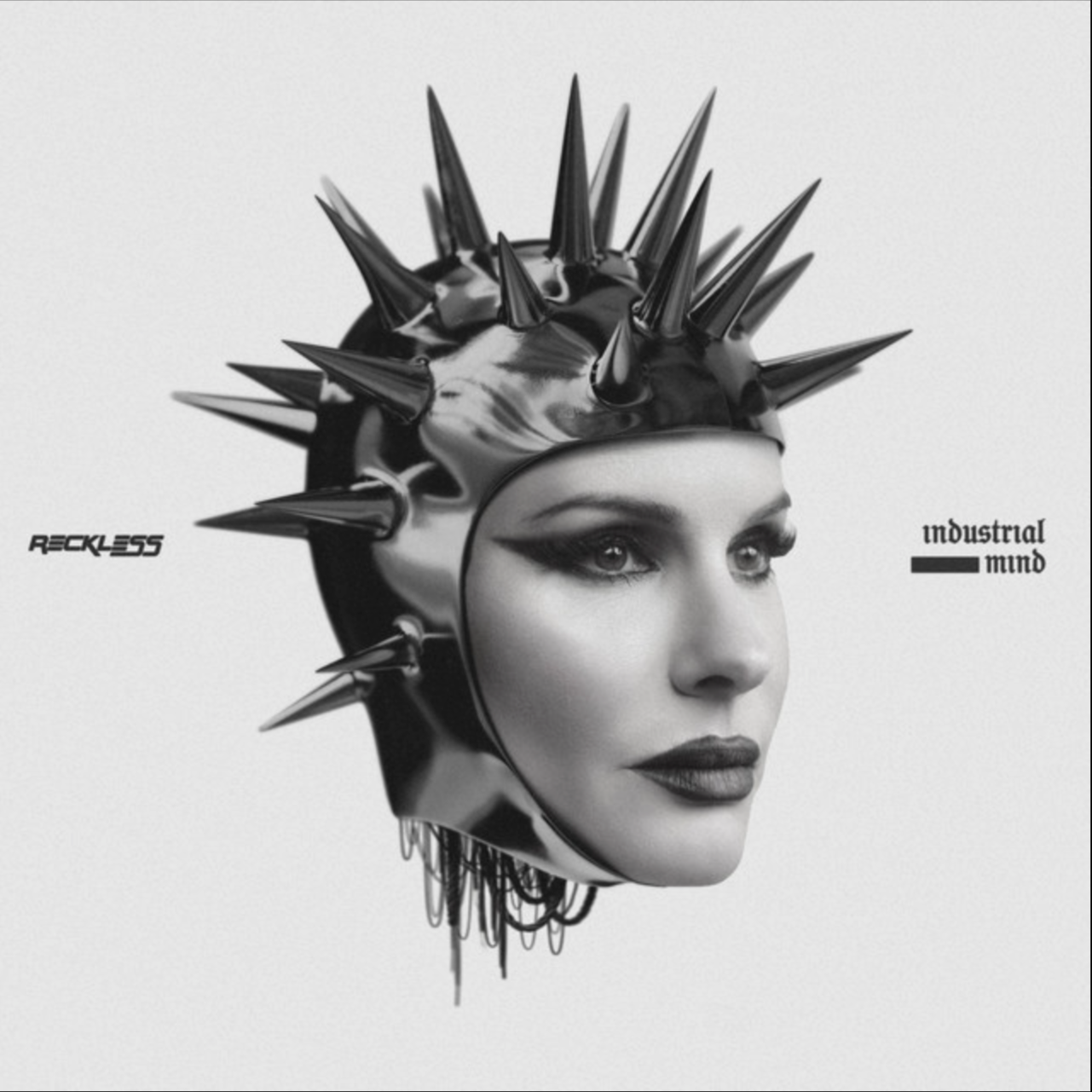
Your second album is finally out. How do you feel about that, and why did you choose the album format as a medium to express yourself at this point?
I am excited! It's something that I've wanted to do for a long time, so I finally feel good that it happened. It also comes with a little bit of anxiety about how it is going to be received, the usual things, really. But in the end, it's out of my hands now, so we just have to keep going.
I chose the album format because in recent years, I have moved to a different area that is slightly more commercial, and the format of releasing music has changed-it is more towards the practice of releasing one track at a time. But usually "one track at a time" works for hyped, marketed artists, and there's a whole structure behind it, and, for the most part, I'd say that if you're not a hyped, marketed artist, your music is just going to get lost.
There's so much money involved in this kind of new hard techno scene. So, I kind of wanted to go back to doing something long-form. I wanted to create a body of work that has a meaning or a concept and really return to the essence of being an artist. Plus, I had more time to spend in the studio, since I had some months when I did fewer gigs than usual. This gave me the pace and the headspace to actually go for it.
Listening to it, I felt you wanted to tell not just a personal story but also the story of the genre you have been committed to for all these years.
I feel like it was the accumulation of what I have discovered through listening to different genres. I'm not an engineer who can replicate the sound that's hot right now; it's impossible for me. Everything I do will always have this sort of “Rebekah flavour”, I suppose; it will always turn out with my energy mixed in. I would make seven or eight tracks and then check what was missing. This worked really well. Then, I would proceed with doing something a little bit darker or add more pads.
There was definitely a bit more thought process behind some of the tracks, especially the softer ones or the ones that could bridge a gap between where I was and where I am. I think “Echoes” was something where, in my head, I wanted to make this new bouncy techno sound. In the end, it came out more techno than I anticipated, and I'm really happy with that, because I think that the harder genres have given me even more freedom to experiment with different sounds. I absolutely love techno, the purity of it, but I feel like it was so constricted into its sound palette that I would say, “This is techno.” We used modulation and rode the percussion against that. In the harder genres, melodies, big surprises, bass lines, and different elements are used. I wanted to express that, but it still came out as techno in its own way.
You play a lot out there, and you have a very good connection with the crowd all these years. Were you thinking of the dancefloor, or did you try to get out of it in terms of the sound that you wanted to produce?
I feel like I wanted to make everything for the dancefloor; it wasn't an experimental album. This is not me pushing the boundaries of sound design, definitely. It is purely for the dancefloor with a little piece of myself in there, too, not something forward-facing. They are just songs that people could play, and maybe people who don't like more hardcore stuff would still find something in this album. At the end of the day, I'm always a DJ through and through. It is my first passion, my first love, and everything is filtered through that lens. Maybe one day I'll be an experimental artist, but for now, I just want to make bangers.
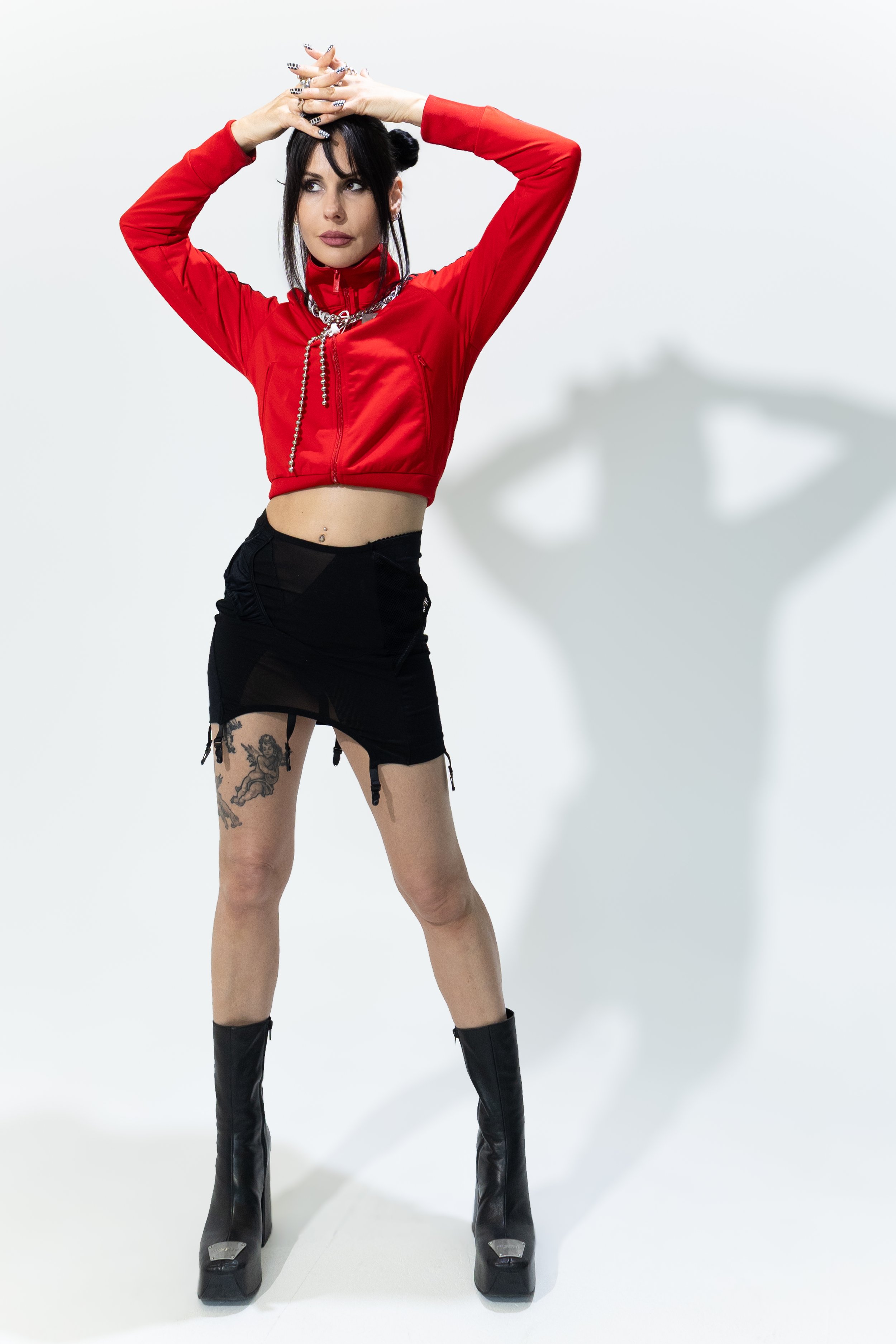
By KEYI studio
How do you imagine your listener? Do you believe the person who listens to the album is different from the one who comes to your gigs, and where do they merge?
I would probably say that the people who are going to listen are the ones who come to my gigs. They'll be the diehard fans that I have had for many, many years, the ones that are open enough to see me through different evolutions. I am grateful to have this pure fan base, and I really love them and appreciate their support. I feel like this album is going to be predominantly for them and, maybe, for a few new people to discover my music. Hopefully, it’ll also help people realize that I make music, not just DJ. And, of course, there'll be some tracks for DJs to play. I'm already getting a lot of questions about whether the album will be released on vinyl and when that might be. In my heart, I felt that my diehard fans really want something they can collect. Right now, I'm really thinking about how I can do something special for those people, not just a digital release.
How was the creative process, and how did you explore the collaborations on the album?
When I decided that the sound was going to lean towards industrial and its many forms, while also showcasing my evolution, it became much clearer which artists to collaborate with. Mimi Barks, for instance, is a metal singer, and then there was Malke, who is really good at working with metal vocalists. Hellish is a talented Italian producer who always creates something beautiful.
Is there a specific pressure that the release of an album brings to the artist when you put something out there, and how different is it compared with a single or EP release?
I will be honest with you, and this is probably going to make you laugh. The biggest commitment that comes with making an album is the press; you have to do a lot of press. Once the album is finished, mixed, mastered, you move to the concept and to the artwork, and all the other creative elements. Then comes this huge press campaign. I knew what I was signing up for, and I wanted to do it, but it can be pretty intense.
When you spend that much time in the studio, it creates a bit of tunnel vision, and then you have to come out of it. Of course, it's great to be able to talk about the album and have wonderful people be interested in it. But that's the main pressure after the album is finished.
Once it's released, other pressures arise. For example, the album is out on a label that has never released any of my music. Is it going to do well for that label as well? Because I think when it's techno, it's such an underground, niche thing. You know that it's not going to sell thousands and thousands of downloads. When moving into this territory, it's different - they want the streams, they want the downloads. They want the replays. They want the TikTok videos. It is a whole big machine. I feel like I was in my bubble before.
This is the reality of the scene today. But is there a line that you draw on the things you do and the things you don’t want to do? Can you, actually?
I am pretty open. I will do silly things, like there is a whole bunch of videos for TikTok. When an album is out, you have to communicate it, or communicate it in your way, or not at all–you don't have to do it if you don't want to. But do you want to communicate it to a new audience and a new generation?
When it comes to me and the music that I am really drawn to and play, it seems like the younger generation is really into it. Of course, I still want to make new fans and gain new followers, and have new people come and see me play. Because without that, I'll end up playing to my fan base, which is great and incredibly supportive, but I still have more to communicate as an artist.
Social media is just a different way of communicating. A lot of people moan about Instagram, or “Let’s not use Instagram so much, but TikTok”. I'm like, yeah, but before TikTok, it was Instagram. Before Instagram, it was Facebook, and before Facebook, there was MySpace. Everybody was using these platforms, and I am not a DJ who came through and built a real fan base without them - there has always been social media related to my work. If you want to communicate with people all over the world, that's how you do it now. At least have some fun with it, I suppose.
At this moment, we are experiencing huge popularity and huge commercialization. There are always pros and cons in that. What amazes me is the trend of huge headliners popping up overnight.
You just get used to it, and you think you had your moment in time, as well. Maybe it wasn't to an extreme, compared with the crazy popularity of today. My experience has shown me that there are still only a handful of hyped DJs that really go to the next level. The reason could be that the viral videos you are seeing and your viral online moments are not enough for longevity. You do need to create music, something that people can connect to. You, DJing alone and having a viral video, is just not enough. The ones who have reached this scale and also push on the music seem to last a lot longer, and once they're through, they're there for a long time.
Do you feel protective of the genre that you're representing and have worked so hard for, given today’s reality?
I don't know. I always wanted to see the hardcore scene grow, and, at the same time, I was told I couldn’t play that stuff. Now, I'm not getting booked because the other DJs get to play that stuff at the end of the night. It was kind of tough for me to have to take. Clearly, I've been on it, and I feel that I've been pushing the sound all these years. Unfortunately, I didn't have the music at that time. I took a lot of time out from the studio to really absorb everything more than create, and now I just have to accept it, but it's tough.
You come to a point of wondering where you find yourself; where you position yourself. If I'm playing the second or third slot at a festival, I can't be banging out hardcore at that time. So then what do I have to do? What is the choice for me now? Do I play the game, or do I just go fuck it? This is me, and this is what I do. I think I've always run my ethos and decisions through the latter. Sometimes it works, sometimes it doesn't. I'm still here, and I'm still doing my shit, and I don't plan on being anywhere else. As an artist, you have to realize that - sometimes it's up, sometimes it's down.
But do I want to be protective of this scene? I don't really want to be massively protective of it because it is amazing to see the reach. I saw a Nico Moreno video in L.A., playing a track that was pure hardcore. I thought that it would be impossible to play that two years ago, and now you can listen to it at the main stage–it's pretty incredible.
What I find somewhat intimidating is how we can process this huge success as a scene and actually make something out of it. At the same time, this new reality has spawned huge gatekeeping and elitism in techno.
I feel that gatekeeping was more in the past and always more in techno, like the real techno scene. Now, the kids are playing hard style and hard techno; they don't give a fuck, it's almost ironic. They just do their thing with an attitude, “we don't care if you don't know us. We don't care if we don't know who Jeff Mills is. We know who Angerfist and TNT are, and we're good with that”. I think that's the difference, and it should be. I believe it's more the classification of the genres or the sub-genres, naming them, which people have a problem with.
Before COVID, it was such a slow process for artists to come through. You had to make sure you were on the right labels, got the right support. There was definitely this kind of step-by-step hierarchy of being taken seriously, and I think the post-COVID scene literally dismantled all of that. I don't know how it is on the techno scene right now, but I am sure the format is still there, and it still has a big following. That's why I quite like this new scene, because to be honest, I was also going into that kind of bubble. When COVID hit, I would hear all these pop edits coming out, and I was thinking, "Oh, this is not techno, it needs to be more pure. I don't want to go out and listen to Britney Spears with a techno kick under it; that's everything we want to try to move against".
Then I remembered that when I was younger, I liked techno, but I was also going to clubs where they would play a Whitney Houston house remix, and I would be off my tits dancing and loving it, because it was something that I could connect to. It is challenging to listen to techno if you don't know it-you really have to be open to it. Why should you judge the younger generation as an older person in the scene? Why would you want to take that experience away from them? It could be the reason they get into this music in the first place, and the scene has to keep growing. I made a few public statements where I sounded a bit like an old person shout. In the end, I softened, and I realized that it was not about me anymore. There's room for everything, and my opinions are not final-you know, I'm not an authoritarian on this stuff. The beauty lies in people's influences and what they bring. At the end of the day, the question is, would I want to keep hard techno and hardcore to myself? Of course not, let's see where it goes and what influences are being brought in. That's growth, evolution.
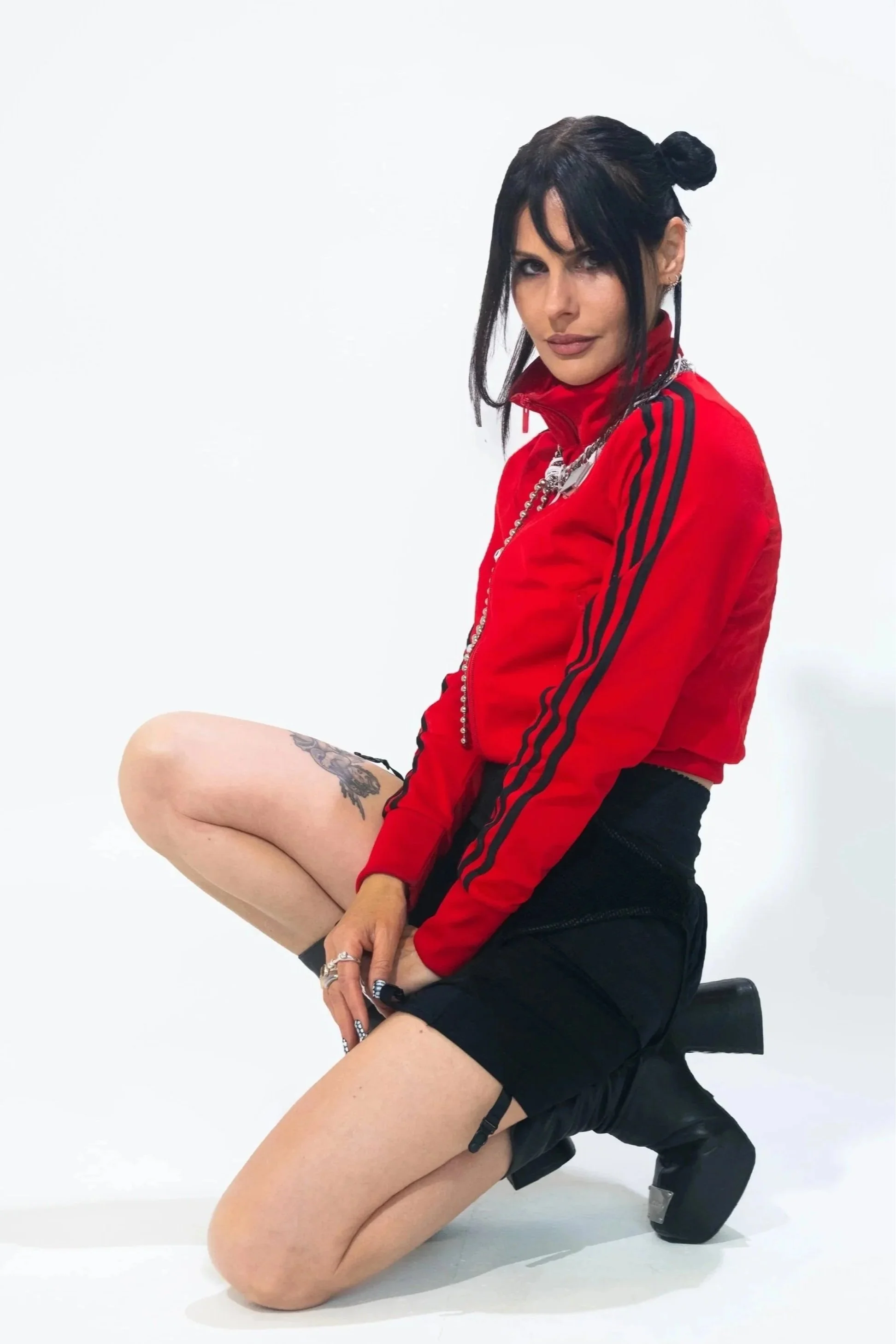
By KEYI studio
Talking about the hard techno scene, we cannot ignore the appalling allegations of sexual harassment and abuse that came out recently. I would like to touch base with you regarding the Me Too–For the Music project against harassment and abuse in the electronic music industry, which you created.
We had a lot of movement back then, as you know, and we were trying to build something where people in different areas could put all these things into place, report, and find support. What we found out was that even though we tried to do things behind the scenes, we tried to make a change, and we weren't necessarily hit with resistance so much; people just didn't want to know. The mentality was, and is, “well, if nothing has gone public, and there's no police involved”, and no this and that then; it's okay, we can still have these people playing alongside us, we can still represent these artists or DJs that have rumors on them until it goes public.
Me Too became popular because this mentality exists in all industries, but you have to go public. So in the end, the only thing that's going to work is the victims and survivors having to stand up and say on record that this person did this to me, and then me too, me too. We tried to see if there was any integrity in the scene, and there is a bit. But what we discovered is that money is still king. If an artist is really popular and sells, you don't fuck with them, you don't mess with the money, it's that cutthroat.
I got disappointed because it just highlighted the reasons why I wanted to do the movement in the first place and make a change for the reasons that are still immensely apparent: femininities in the industry are still second-rate, like commodities, and less believed when they talk about these things. So, fast forward to the recent allegations, which really shook everything up - it's still about the money.
Some people are making changes, but it's still money-based and money-led. It's like, okay, we will have this now in our contract, because that secures any further bookings if rumors come out about certain artists. If you can add a rider or change the contracts to protect the companies, then they're not liable if they cancel bookings when an artist faces these allegations, and you don't want them to play, or people in your team don't want them to be there. There are a lot of protective clauses around that, but it's more about financial protection-that's what's really happening. The good part is, you can't enforce those contract clauses without implementing all the other safeguards as well.
So, then, if you have a contract in place that says you have a zero-tolerance policy, well, how does that look at your events in practice? You have to put some work into making this structure work and creating a reporting system. In other words, we're still back to where we started, but at least it seems we've made progress with some bigger event companies. And through the contractual changes these companies are making, we can actually have more safety inside the venues. That's a win for us.
It surprised me positively that some A-listers, like Amelie Lens, came forward and spoke about their experience. Even in local scenes, some things started stirring a bit in the right direction.
I think Amelie wasn't ready to speak in 2020, but now she's put out some stories about what was going on. But what I've experienced is that if you have managers and you're moneyed up to the eyeballs, you've got loads of people, a whole team around you-it's not just you on your own out there. So if you get alienated, the management and the team also get alienated just for speaking out. I feel that now the curve has shifted a little bit, or the tipping point has changed, because the younger generation doesn't accept this. Sometimes I think if I had kids, they'd be the same age, and we would have brought them up to believe this stuff, and hopefully taught them that these attitudes are not acceptable.
I believe back in 2020, it just wasn't the right time for a lot of artists to speak out, and it got measured by how much negativity those kinds of posts received. Look at what happened with Eric Morillo's victim: she wasn't even named, she didn't go public, but it got leaked. The amount of abuse she had to endure just for speaking out about a guy who attempted to rape her is absolutely hideous. So if I were a woman back then, I would be looking at all this and thinking, "Do I want to go this way? It's not the right time." Harvey Weinstein's case is a really good example, and I get really upset about it. Harvey Weinstein's first allegations came out in 1987, and he wasn't prosecuted until 2018. We are making progress, but it still takes time. This stuff can't be forced; we can't force people to speak out. The priority always has to be what the victims want.
In my case, I felt it was the right time because I was so angry, as you know. I thought, "Fuck it, I don't think my career is going to grow any more than this." I still felt confident that the people who would want me to play would still want to book me because it's the truth, basically. So for me, it was the right time to speak out. Back then, I actually didn't speak out that much because I felt like I'd already said what I had to say.
We created this short film and put it out there, and for me, it was what I wanted to say. I presumed more women could speak out. If anything, what I would like to say to them is that I don't think your career is going to be harmed at all. Being on the right side of history is always the right thing to do. A lot of these abusive artists, especially when they're bigger, are already massively protected. It's not about you anymore; it's about the ones that are coming through. And I'm seeing so much online at the moment.
I feel this discussion should open up for men; it should leave women at some point. We have talked about it extensively, and in all available platforms given to us, we have shouted about it - there is even data. The pressure should be on men, not us - they hold the money and the positions.
Yeah, as you very well know, it's not a female issue. It's a male issue, a male epidemic of abuse. You're right; it should be discussed between men, like, "Hey, you know, we've got these guys. What are we going to do about it? Maybe we shouldn't reward them as much. Maybe we should stop saying yes all the time, because they clearly don't understand no when it comes to them."
How can we dismantle all this and reduce the power and money, these huge amounts of money they get? I don't have the answer. Because if you're a DJ and you're alone, you do an all-night-long set, and you're massively hyped-you're going to sell out 5,000 people by yourself, on your own. You're bringing all those people. But is that DJ worth paying a massive fee? There are all these questions we need to ask. We've moved from the underground DJ scene to the entertainment industry. DJs are now seen as a massive asset to entertainment companies.
It's capitalism, basically; we are part of a capitalist model.
Yes, and things need to shift, even though I am happy that the scene has developed a little bit more this time. But, again, look what happened with the recent allegations. It took a man to call out men for them to be believed, and we need to look at that, too. So, it is a man's issue, and at the same time, when a man is calling out another man, then people take notice. If it's women or the victims, they usually go under the microscope–how true is it, all of the victim-shaming and blaming.
The whole planet is moving towards darker times. The music we love and play was political from birth. Do you think that it could come back to playing a political role in this course?
I still feel that the underground or the undercurrent theme is still doing something aggressive, and what we are doing still feels very left-wing–there will always be many people fighting against wars. Music will always have that quality, but as you said, there is also the capitalist side, the big money, and a scene to be taken advantage of. In this case, you don't blame the player; you must blame the game. We need big structural shifts, in all aspects of the industry.
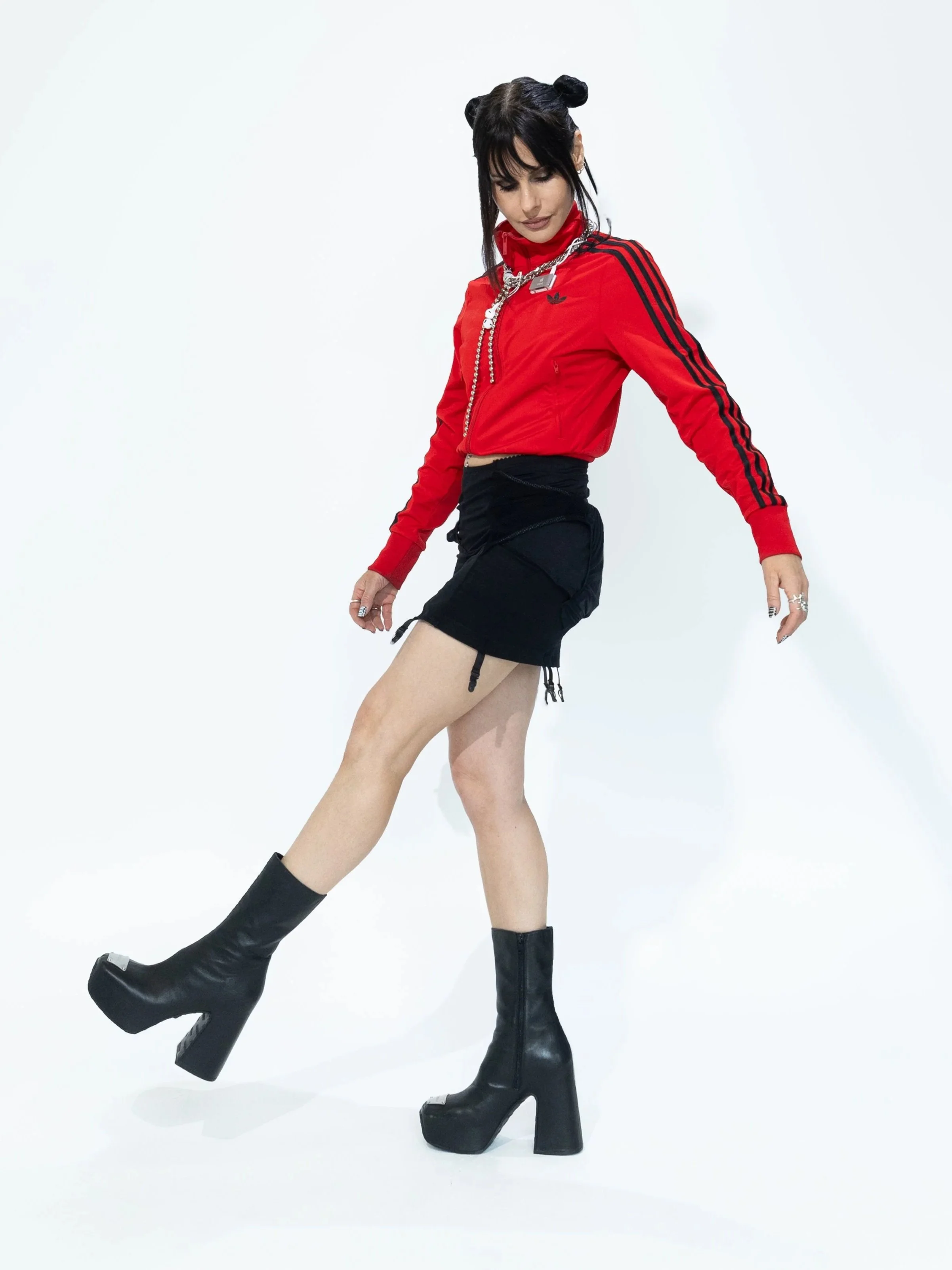
By KEYI studio