
On Tuesday, November 10, Carl Cox walked into Windsor Castle in a bespoke morning suit and walked out an Officer of the Order of the British Empire. Prince William presented the medal to him in person. Cox had been named in the King’s Birthday Honours in June “for services to music.” He is the British DJ who keeps getting called a number of things he most certainly is not: “the world’s best DJ,” “the best musician,” and anything along those lines, honestly. Now he can add OBE to the list. Sadly, this one is real.
The most baffling part of this nonsense is not that he was nominated. It is not even that the British Crown would want to give him a medal. Of course it would. Kings have handed out ribbons to buy loyalty for centuries; that is what a ribbon is for. The baffling part is that he accepted it with pride and called it an honor. Then he brought his “mum and dad” into it, writing, “I know just how proud they would have been.” It is sickening to read, not because of what his parents may or may not have felt, but because of who is saying it. Cox’s persona has been at the heart of poisoning the underground scene, turning a culture of free parties into a luxury brand with his name on it, and he carries the “underground DJ” title with the same pride with which he carried that medal out of the castle.
“Music has been my whole life,” he wrote on Instagram from Windsor. Has it? Look at what he actually built: his own name on festival stages, with Carl Cox & Friends at Ultra and Tomorrowland, and his own theme camp at Burning Man, Playground, complete with fundraising raves in San Francisco to pay for “an amazing production.” In 2022, he left Burning Man early to fly off and headline a show in San Diego. Burning Man was supposed to be the place where people leave money and status at the gate. He brought both and then left early for more. In Ibiza this summer, a first-release general admission ticket to his [UNVRS] residency cost €90. Add it all up, and the picture is clear. Music has not been his whole life; being famous has. That is what he is actually proud of, and he paid for it by selling out his people – our people, the artists, the real ones.
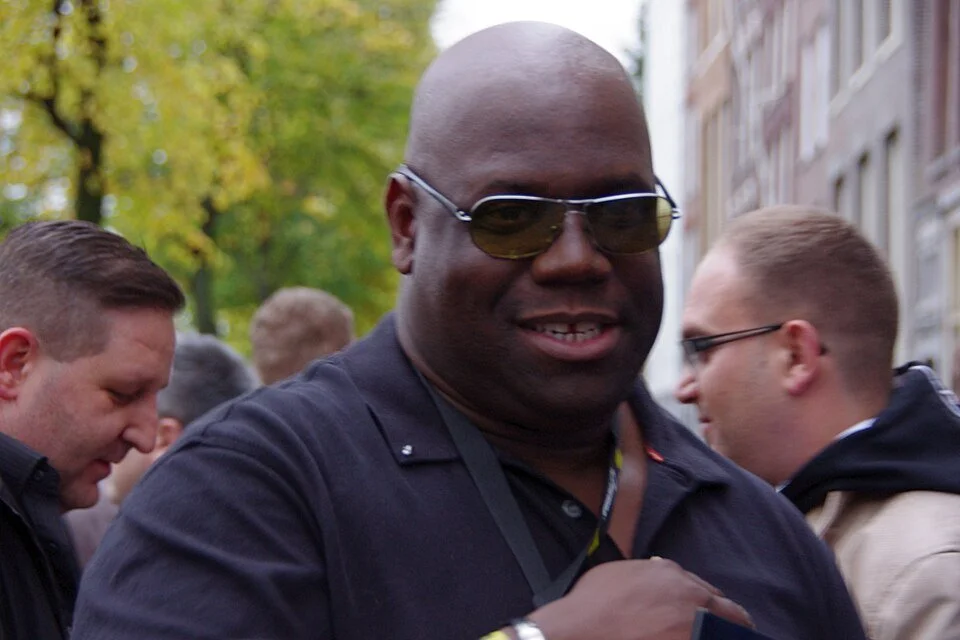
Carl Cox at ADE 2012.
Now look at what the medal is actually called: the Order of the British Empire. It was created in 1917, when that empire still ruled roughly a quarter of the world’s land, and its motto is still “For God and the Empire.” This is not some fantasy-novel empire. It is the real one, the one that shipped millions of Africans across the Atlantic in chains, worked them to death on Caribbean sugar plantations, and killed those who fought back. I am not being dramatic. In 2004, a House of Commons committee called the word Empire “anachronistic and insensitive” and recommended scrapping the order altogether. Nothing changed. In 2021, nearly 100 people who already held these honors launched a campaign called Excellence Not Empire to have the word removed. Nothing changed. The word is still on the medal Cox posed with at Windsor.
Others were offered the same medal and said no. In 2003, the poet Benjamin Zephaniah turned down an OBE and wrote, “I get angry when I hear that word ‘empire’; it reminds me of slavery.” To him, the word carried millennia of brutality. He also said something every DJ in Britain should tape above the decks: The honors system is used to make the establishment look modern and inclusive. That is exactly what happened at Windsor. The Crown did not bow to dance music. Dance music bowed to the Crown, and the Crown got a Black techno legend for its photo album. It was not even his first visit this year: In May, Cox was at Buckingham Palace celebrating the King’s Trust. He writes that this honor matters “because of where our music has come from.” Then he should know where it came from. It came from young Black and queer people in the clubs of Chicago, New York, Detroit, and from the empty buildings of post-Wall Berlin, from people the establishment ignored, policed, and shut down. It did not come from a palace in Berkshire. Zephaniah made a choice. So did Cox. And back in 2003, Zephaniah already had a message for everyone who signs off with those three letters after their name: “You’ve been had.”
And the rest of the scene? They lined up in his comments like guests at a royal garden party. One of the most-liked comments, from the verified account of an online coach joked that it was “nice of William to come and see the King.” Cute. The scene loves calling Cox the King. But only one of the two men in that photo has a real crown, and it is not Carl. Charlotte de Witte told him nobody “deserves this more than you.” Dom Dolla told him his parents were surely “looking down on you just beaming with smiles.” Sven Väth sent a champagne emoji. Joseph Capriati, who was booked to play back-to-back with Cox at his Ibiza residency this summer, went furthest: “Only you deserve this.” Deserve what, exactly? A medal named after an empire that enslaved millions of Black people? Some of the biggest names in techno and house, thousands of likes, red hearts, a sunshine emoji, and not one of them asked that question. Mau P did not even bother with congratulations. He turned the whole thing into a meme, asking whether that was “the archbishop of generational walkups,” and collected 1,036 likes for it. Funny choice of title: An actual archbishop put the crown on the head of the King who presides over that order.
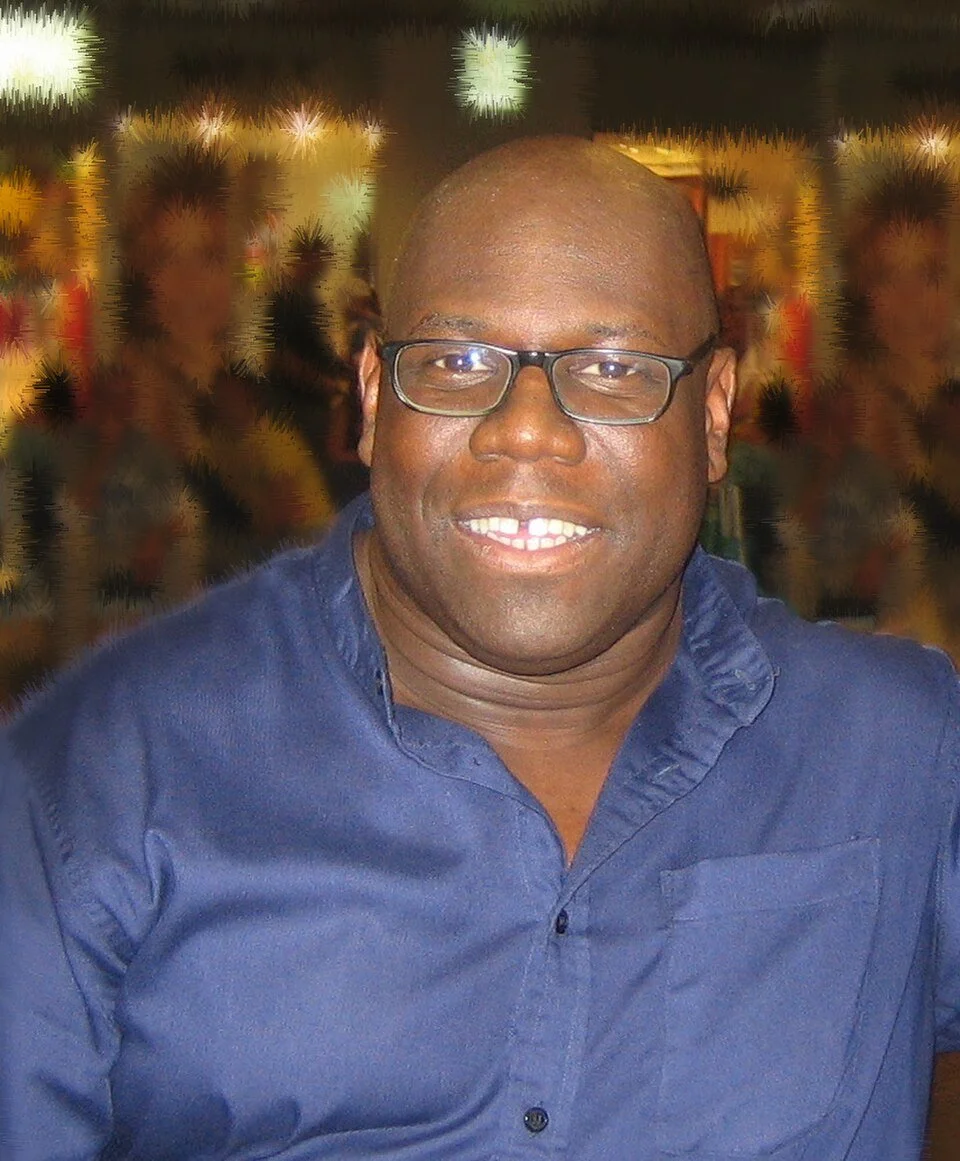
Carl Cox, archival photo. 2005
Scroll further and try counting the crowns. You’ll find out that Nic Fanciulli posted a crown emoji. @hntrnet wrote, “Already the king now it’s official.” Tiësto, who won DJ Mag’s Top 100 poll three times, wrote, “When Kings meet,” with another crown. SG Lewis went straight for the next rung on the ladder: “Get that man a knighthood.” Chris Lake and Kaskade added their applause. This is a culture that was born in illegal warehouse parties, raided by police, and targeted by the Criminal Justice and Public Order Act of 1994, a British law written partly to shut down raves. Now its biggest names spend their evenings dropping crown emojis under a photo with a prince. Nobody in that comment section is resisting anything. They are auditioning. Every one of those comments is a free ad: their name, under a post with more than 500,000 likes on Instagram alone. An honor like this is worth only a marketing post these days, and a marketing post is all they are after. They do not want to tear the palace down. They want to be next in line for the invitation.
This is free marketing, and yes, I am taking the bait: I am writing about it. But as a journalist, I think we have lost more than the integrity of the music. These awards, these orders, and these crap charts are what is truly ruining the arts. Here is how it works, in plain terms. A chart or a medal tells everyone who the gatekeepers like. That gets an artist bigger bookings. Bigger bookings bring bigger fees and more followers. More followers bring more votes on the next chart. Round and round it goes, and none of it has anything to do with whether the music is any good. The artists who refuse to play that game do not get medals. They get forgotten.
And the music press? It held the pen for him. Decoded Magazine took Cox’s prepared statement, rearranged it into an article, added a dictionary definition of an OBE, and concluded that a medal at Windsor Castle is “a measure of how far that culture has travelled.” Traveled where? From the warehouse to the palace, and they call that progress. There is not one question and not one sentence on what the word Empire means, or on what it means for a scene built on refusing authority to line up for its approval. DJ Mag’s June write-up did the same: It quoted the government’s press-release line about recipients going “above and beyond” and then plugged his Ibiza residency dates in the same breath. Of course it did. DJ Mag runs the Top 100 DJs poll, an annual popularity contest that ranked Cox number 25 last year. A magazine that sells rankings was never going to question a ranking handed out by the King. Knights of the Turntable went further, telling readers that Cox has “championed underground artists” throughout his career without naming a single one, and then signing off with his catchphrase. That is not journalism. It is a fan club with a logo on top. The people whose job is to ask questions are too busy writing captions.
There was once a Detroit collective called Underground Resistance. Jeff Mills and Mike Banks started it around 1990. Once upon a time, as the legend has it, they hid their faces behind masks, refused to play the star game, and fought the major labels on purpose. Even they have been selling the name for a long time now. UR was underground resistance as a brand name. The real thing happened wherever a no-name DJ threw a free party. Today, it barely exists as anything more than a phrase on a T-shirt. Ironically, I own one myself, black with “UR” across the front. Every time I look at it, it gets me. I am a fool too, because I know damn well that what is left is stunts, bluffs, and a whole bunch of crap.
Take the medal, Carl. Just give back the word underground.
NOTE: This is an opinion piece. Nina Katashvili is the founder and editor-in-chief of Unmixed.