PART II, The Black Box: The Music, Copyright and Royalties

In the music industry, "black box" doesn't mean a flight recorder. It means money – royalties collected from a stream, a radio play, a night at a club, that never got matched to those who actually worked on the song. The money doesn't just vanish. It sits in an account waiting for an owner nobody can confidently identify, until a collecting society decides how to hand it out, and to whom.
I remember hearing this term for the first time. It was confusing, it did not sound reasonable to think everyone involved in this business would be okay with the fact that somebody who simply knows more about collecting royalties can easily skim artists without them ever realizing it. In 2022, at an annual Amsterdam Dance Event’s PRO conference, , when I heard about "black box" royalties, I was managing a record label, Beats on Time, that my partner and I had recently founded. That's when it hit me: I have to get to the bottom of it. And so my deep dive began back in the tiniest, and possibly the hottest room at Amsterdam's Felix Meritis, with little to no air to breathe but plenty of thoughts to chase after.
In 2024, David Rowntree – Blur's drummer, and a practicing attorney in his own right – put a number on that account. He filed a class action against PRS for Music in the UK, claiming the organization was sitting on roughly £200 million (about $270 million) in unmatched royalties and handing it out in a way that structurally favored publishers over the songwriters who actually wrote the music. PRS said its formulas were the most reasonable option available given the data it actually had, and both times the case was heard, a court agreed. The Competition Appeal Tribunal sided with PRS in August 2025. The UK Court of Appeal rejected Rowntree's appeal on June 29, 2026, ruling that PRS takes "reasonable and proportionate steps" and that he never proposed a workable alternative.
I'm not bringing this case up to say PRS did something wrong – a court found the opposite, twice. I'm bringing it up because of what the number itself proves. A quarter-billion pounds isn't a rounding error, and it's not a fringe complaint. It's large enough that a working musician with a law degree spent two years in court arguing about how to divide it up. The black box isn't a glitch. It's a permanent, load-bearing part of how the system runs, and once you know it's there, you start seeing the same shape everywhere money moves through music.
And it's not just PRS, and it's not just the UK. Every musical work has two distinct copyrights, and black box money can pile up on either side, through different mechanisms – no matter how many times I've explained this, I'll explain it again every time I bring up royalties, because almost nobody outside the industry actually knows it.
The composition (the song itself – melody, lyrics) is owned by the songwriter(s) and publisher(s). It earns mechanical royalties (for reproducing the composition – this is what a stream technically triggers) and performance royalties (for the composition being performed publicly – radio, streaming, live venues, bars). In the US, performance royalties on compositions are collected by PROs – ASCAP, BMI, SESAC, GMR. Mechanical royalties from streaming specifically are collected by the Mechanical Licensing Collective (MLC), a body Congress created for exactly this purpose. In the UK, PRS for Music collects both mechanical and performance income for compositions – which is what Rowntree's case is about.
The recording (the specific master – this particular performance of the song, owned by the artist/label) is a separate copyright. For interactive streams (Spotify, Apple Music), the platform pays the label/rights-holder directly under private licensing deals – there's no PRO-style collective body in the middle. Recording-side royalties only run through a collective body like SoundExchange for non-interactive uses (satellite radio, internet radio) in the US, or through neighboring-rights societies abroad.
So does streaming generate black-box money on both sides? Structurally, yes – but the composition side is where it's actually large, public, and quantified, because matching millions of micro-royalties to the correct songwriter/publisher split is the real bottleneck, and there are visible collecting bodies whose unmatched pools get disclosed. The MLC disclosed $424,384,787 in historical unmatched mechanical royalties transferred to it by streaming services when it launched in 2021 – Apple Music over $163 million, Spotify over $152 million, Amazon Music over $42 million, Google/YouTube over $32 million. Money streams generated that nobody could match to a songwriter. This is a US, streaming-specific, composition-side black box, created by the same 2018 Music Modernization Act that also protects platforms from liability once they hand the money over. Recording-side black box money exists too, but it's murkier and less centrally disclosed, since it mostly sits inside individual labels and distributors rather than one public collecting body.
Part I asked why an industry that can identify a three-second sample can't produce an itemized royalty statement. This piece goes underneath that question – into the machinery that decides who gets credited before a single dollar gets calculated. That's two things, really: the licensing structures built to manage music at a scale nobody could track by hand, and the metadata systems that were supposed to modernize that tracking and instead became one of the biggest sources of black-box money there is.
First, the scale of what we're actually talking about. Global recorded music revenue hit $31.7 billion in 2025, the [industry's eleventh straight year of growth, per IFPI. Streaming alone brought in more than $22 billion of that – 69.6% of the total – with paid subscriptions making up 52.4% of industry revenue across roughly 837 million paid accounts worldwide. Public-performance rights, the money earned when music plays in bars, restaurants, hotels, festivals, and clubs rather than through someone's headphones, brought in an estimated $2.9 billion on their own. Zoom out even further and it gets almost absurd: the global night-time economy – the bars, clubs, and festivals that public-performance revenue is actually coming from – is worth an estimated $3 to $4 trillion a year, about 3% of global GDP, and supports something like one in every ten jobs on the planet.
None of this was built by anyone who could possibly know this was ever coming, which is fair, because for most of the twentieth century there wasn't a realistic way to log every song played in every bar and dance hall in the country. That's why performing rights organizations exist – ASCAP, BMI, SESAC, and more recently Global Music Rights. Their fix was the blanket license: a venue pays one fee to play from an entire catalog, and what happens underneath that license gets estimated through surveys, cue sheets, setlists, and sampling instead of tracked song by song. At the time, that was a genuinely reasonable compromise. Exhaustive tracking wasn't just expensive. It was physically impossible.
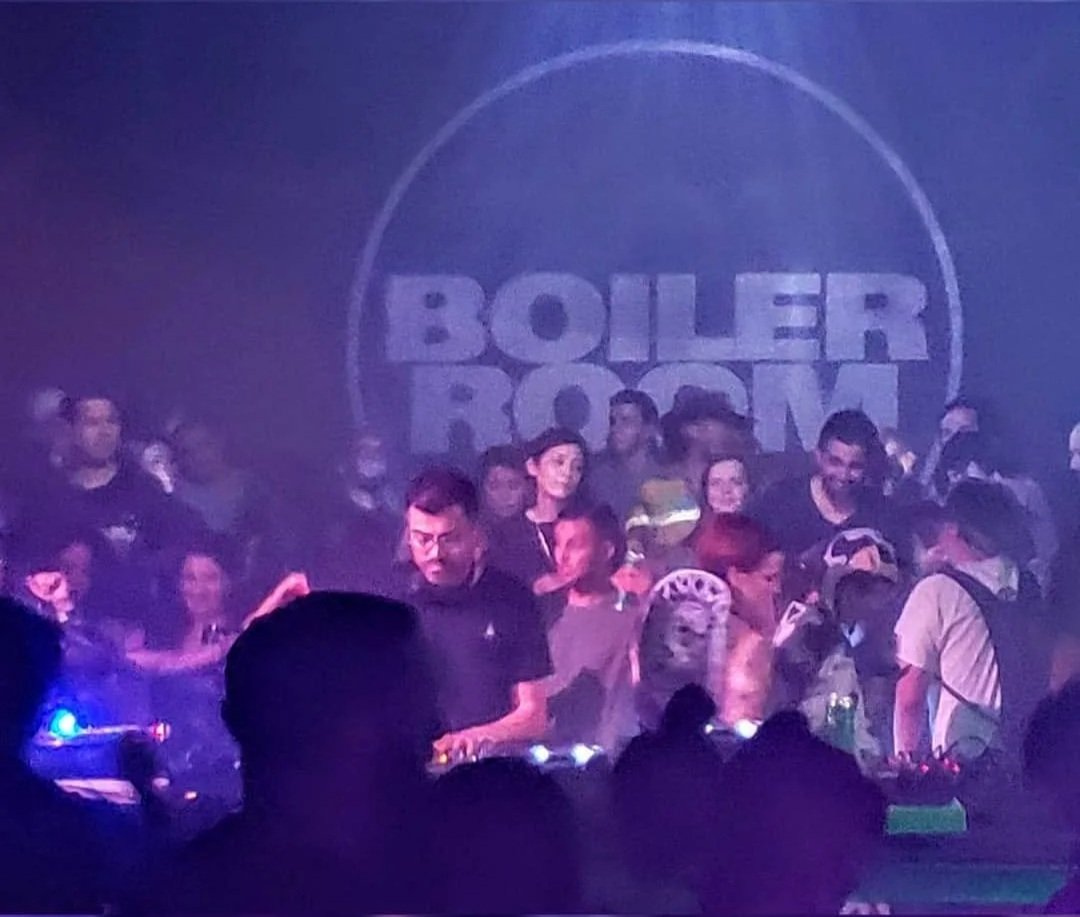
It isn't impossible anymore, and the industry's own enforcement actions are proof it knows that. In June 2026, Swizz Beatz, along with several music publishers and Universal Music Corp, sued a North Carolina nightclub– BoatYard Lake Norman – for playing DMX's "Party Up (Up in Here)" and three other songs without ever getting an ASCAP license, after what ASCAP says were years of licensing offers by phone, email, and mail. The suit is asking for up to $30,000 in statutory damages per song. In one sense, this is the system doing exactly what it's supposed to – a PRO catches unlicensed use and enforces payment. But look at what the enforcement actually looks like in 2026: letters, phone calls, and eventually a federal lawsuit. That same venue was almost certainly running point-of-sale software and a DJ setup that could log every track played that night automatically. The tools to make licensing compliance verify itself already exist inside the building. Nobody ever connected them to the part of the system that decides who gets paid.
That gap - between what gets tracked and what gets paid - is how we end up with this magical "black-box money," and "metadata" actually covers two different failures that get lumped together. The first is a linking problem: a recording's ISRC and a composition's ISWC both exist somewhere in the system, but nothing connects them, so a payment has ownership information to work with and still can't find its way home. The second is simpler, and more common than people assume: the work was never registered in the first place. If a songwriter never signs up with a PRO, and never registers the composition with the MLC, there's no account on the other end for the money to land in - it doesn't matter how clean the recording's tagging is, because the system was never told who to pay. Every recording and composition is supposed to carry an International Standard Recording Code (an ISRC) and an International Standard Musical Work Code (an ISWC), plus songwriter splits, publishing ownership, and territorial rights data - but that plumbing only works if someone actually hooked it up on the songwriter's end to begin with.
A catalog audit by Muso.AI, published in October 2025 across its own database of 8.5 million songwriters and 179 million songs, put a number on both problems at once: 83% of the songwriters had an issue in the MLC's system, split between unmatched recordings (ISRC and ISWC that exist but were never linked) and works that were never registered with the MLC at all. Over 70% of the 224 million recordings it checked came back unmatched, and it estimated roughly 2.7 trillion streams' worth of royalties sitting unclaimed as a result - some attached to songs with over a billion streams each. A widely cited Verge investigation found the same pattern years earlier: incomplete and inconsistent metadata has cost the industry billions in delayed or unmatched royalties, and legal analysis has gone further, arguing that bad metadata doesn't just slow payment down - it can undermine a rights holder's ability to even prove infringement or enforce a copyright. Rowntree's £200 million didn't come from nowhere. It came from exactly this - songs whose ownership couldn't be confidently pieced back together, or was never entered into the system to begin with.
And metadata isn't even where the shrinking starts. Before a stream is worth anything to an artist, the platform takes its cut first. Spotify itself says it pays out "two-thirds of all music revenue... almost 70%" of what it collects – more than $11 billion to the music industry in 2025 alone – which, by its own framing, means it keeps something like 30% before a single dollar gets split between composition and recording, and before any of it runs into the metadata problem above. That's the honest starting point for every royalty conversation: artists aren't losing money only to a system that can't track them properly. Before that system even gets a chance to fail them, close to a third is already gone.
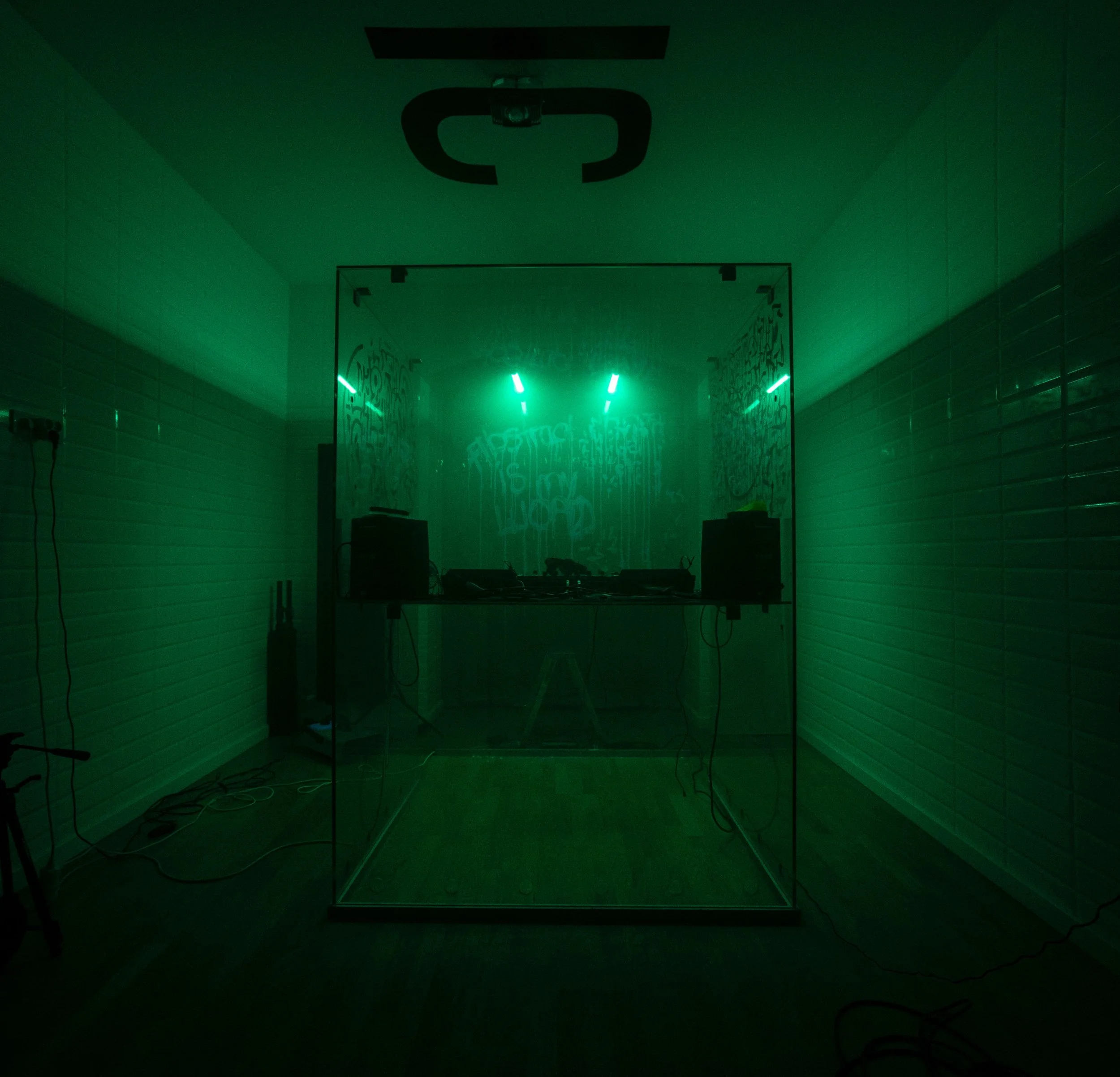
Nowhere is the gap between what's trackable and what's tracked sharper than in electronic music and nightlife, which is, on paper, the most digitally native corner of the whole industry. A touring DJ plays sets built almost entirely on software now – Rekordbox, Serato, Engine DJ, Traktor – that logs every track, timestamp, cue point, and BPM automatically. A set can cross three countries in a week, fold in unreleased "ID" tracks that don't formally exist in any database, and get Shazammed by someone on the dance floor before the DJ has even said the track's name out loud. This should be the easiest corner of the industry to solve attribution in.
One of the working DJs and prolific producers I know, Nhii – label head of Sounds of Khemit, a producer with a degree in sound engineering who does mastering for countless other musicians – mentioned in a recent conversation that selling his catalog is his retirement plan. Now imagine his metadata is missing, or his royalties were never collected properly to begin with. That wouldn't just cost him the money he was owed. It would cost him a buyer. Nobody wants to pay for a catalog that needs to be re-accounted and re-tracked before it's worth anything, and in a lot of cases, once enough time has passed, that money can never be recovered at all.
Instead, royalty allocation in that world still mostly runs on trust, using estimation tools built for an era when nobody could know what actually got played. The software on the DJ booth already has the answer. That answer almost never makes it into the pipeline that decides who gets paid. Electronic music might be the most measurable subculture in the industry's history, and its compensation system remains one of the least verified.
None of this is an argument for tearing out collective licensing. It still does something genuinely useful – it lets a bar in North Carolina or a club in Berlin legally play thousands of songs without negotiating rights one at a time, and it lets songwriters get paid without personally auditing every venue that plays their work. The institution isn't illegitimate. It was built for a world where nobody could know what was played, and it hasn't caught up to a world where, increasingly, somebody already does – the data is just sitting in software that was never asked to talk to the royalty system.
That's the shape underneath every black box in this piece. A PRO can find an unlicensed venue and sue it. A court can rule on how to divide a quarter-billion pounds nobody could attribute. A DJ's laptop can log a set down to the millisecond. None of these systems talk to each other in a way that lets an artist actually check their own statement. The next piece in this series follows the money further upstream, to where it enters in the first place – streaming platforms, distributors, festivals, broadcasters, gaming platforms, fitness apps – to map how many hands a single stream passes through before whatever's left reaches the person who made it, and where exactly along that chain the accounting stops being verifiable.
NEWS


EDITORIALS