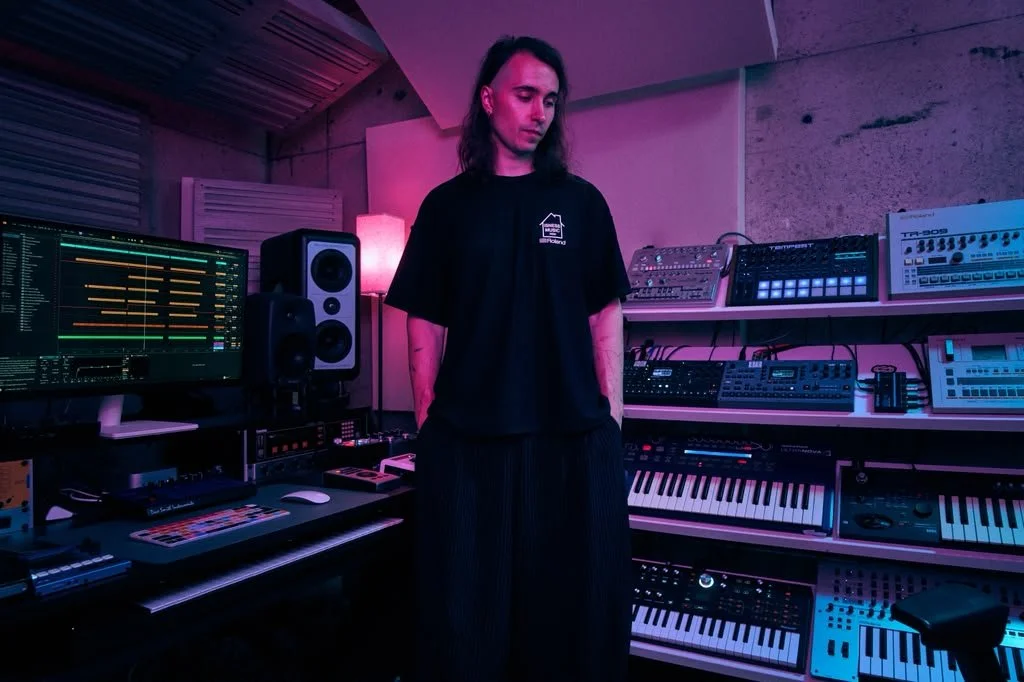
Kurilo at Signal Music Academy, 2026 NYC
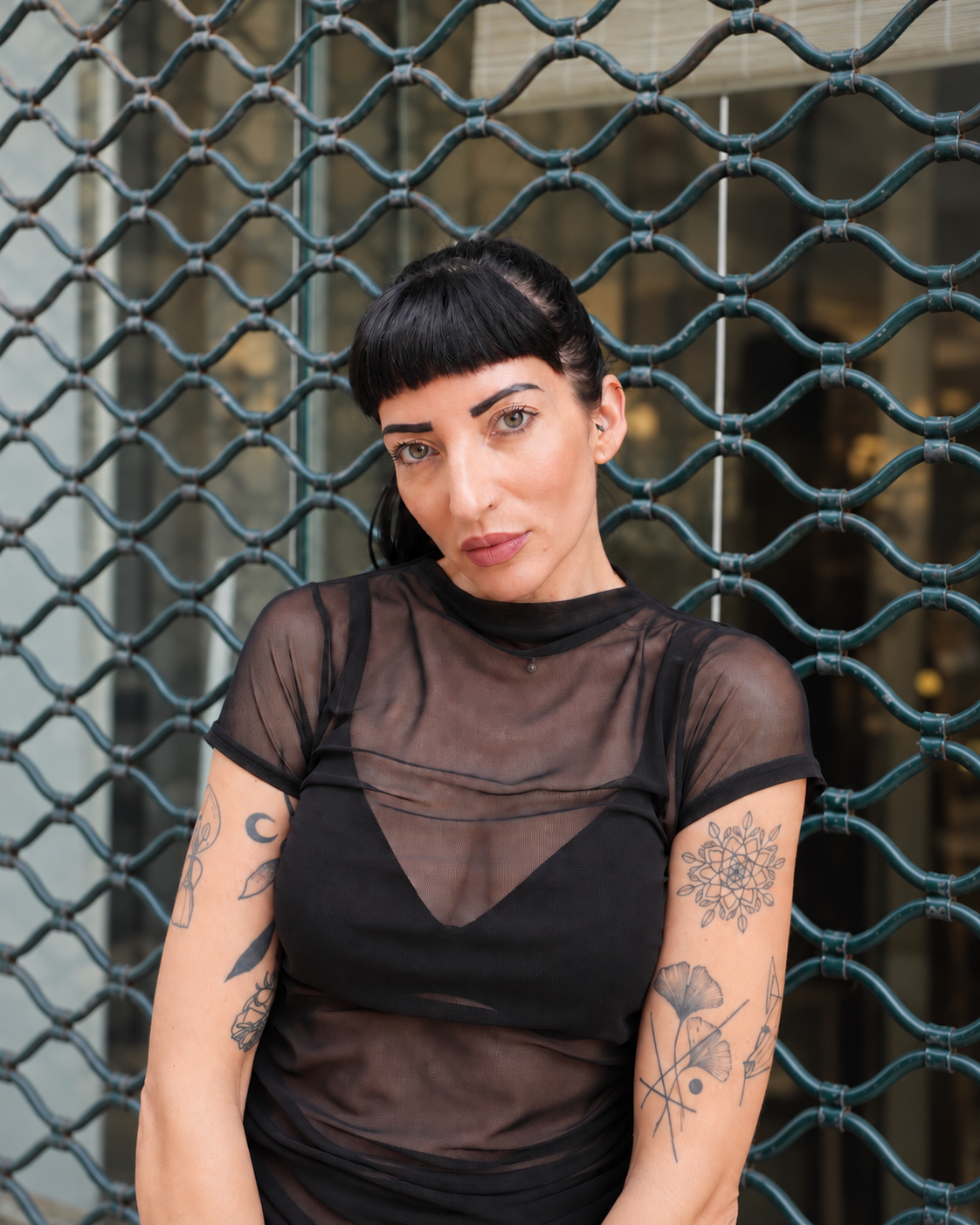
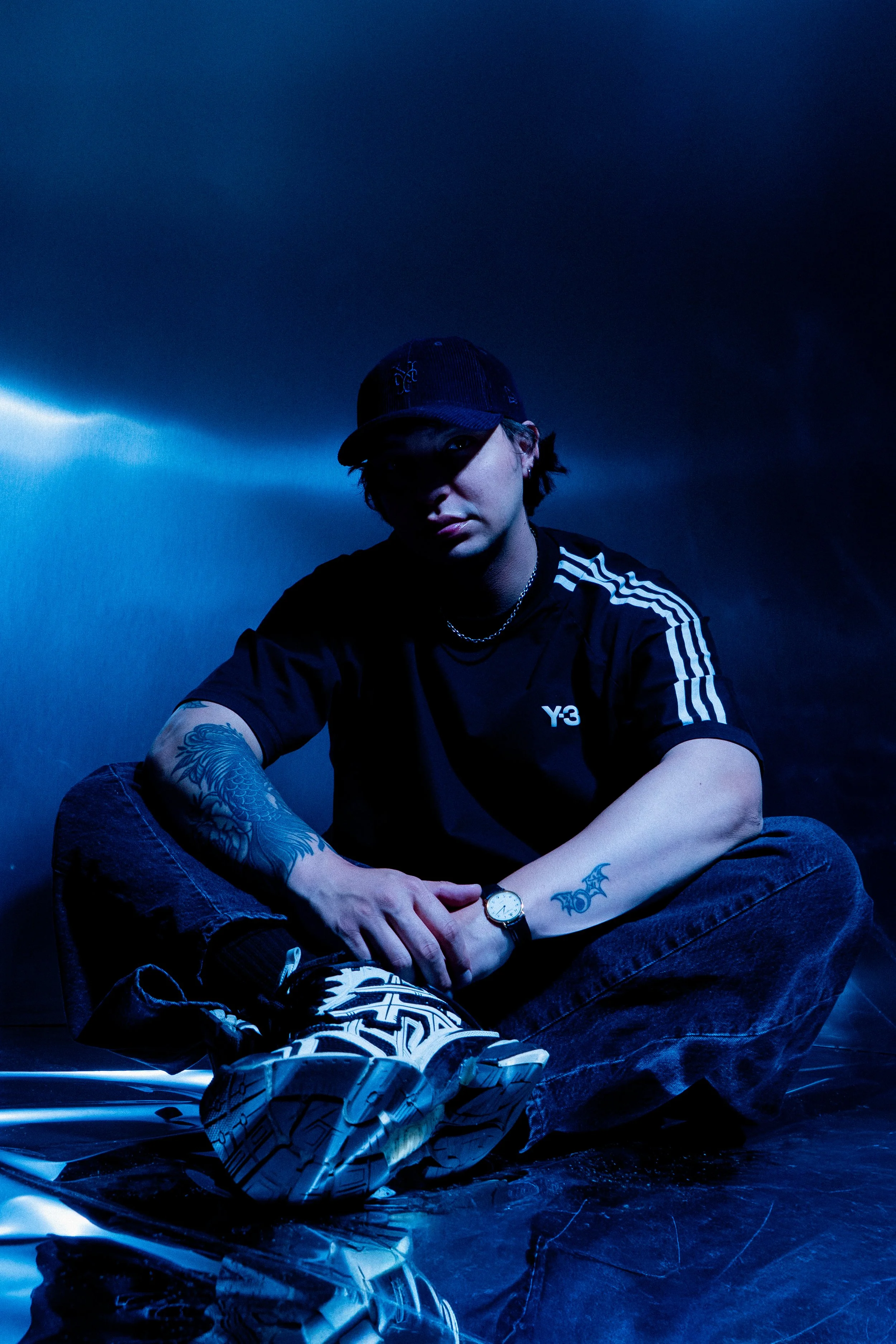
On a warm summer evening, I had the pleasure of chatting with a wonderful human being and a master of his craft: Kurilo.
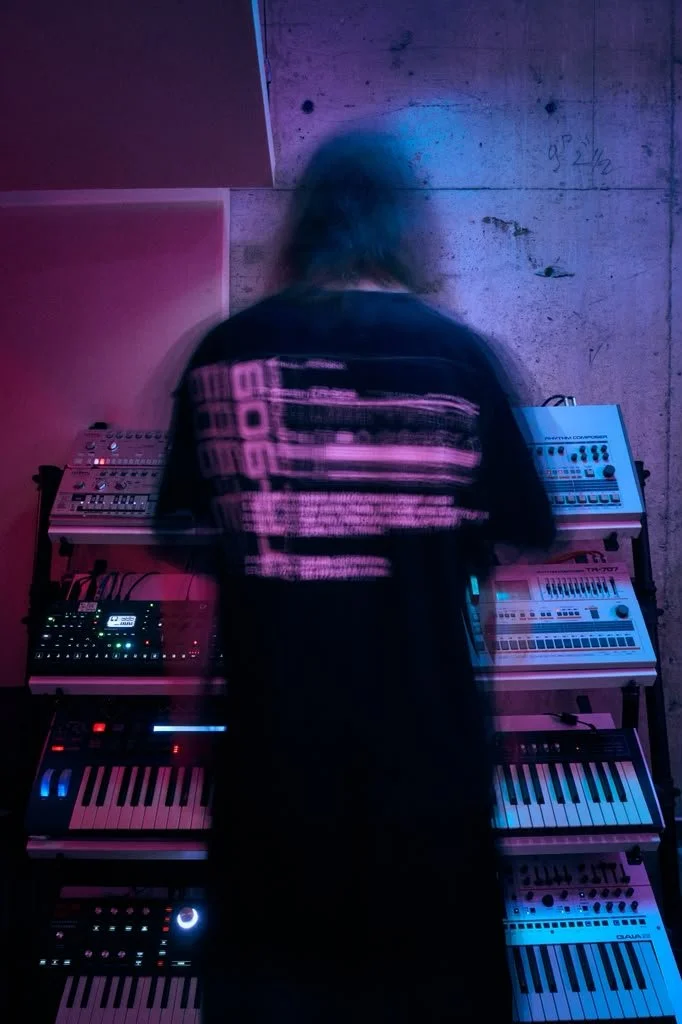
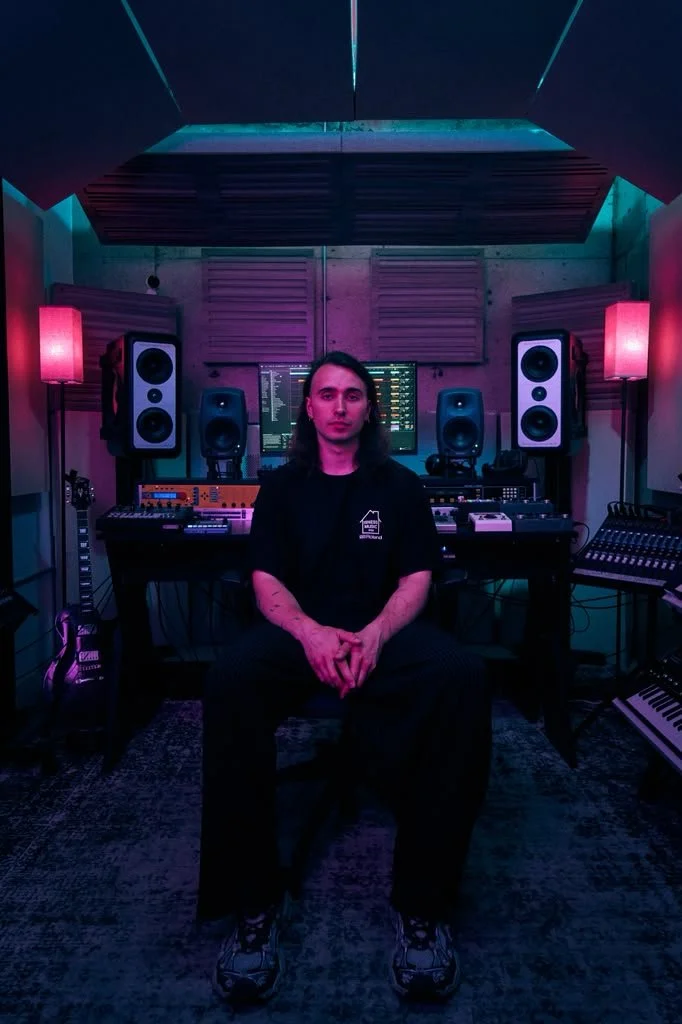
Signal's Music Academy opened its doors only a few months ago, but it would not have been possible without Kurilo's drive to give back to the community that fostered him. What was once his personal collection of synths and drum machines is now available to anyone who wants to learn the craft of making today's most sought-after sounds.
Born and raised in Kharkiv, Ukraine, Kurilo first moved to Berlin in pursuit of his musical dreams, only to discover that Berlin - widely regarded as an electronic music producer's dream city - wasn't quite the place his eight-year-old self had always imagined. His dreams and aspirations, as large as his heart, eventually brought him to the city where dreams are made: New York.
New York, as diverse as it is, has always attracted the most talented young artists from around the globe. When Kurilo first arrived in 2022, the city was still recovering from COVID lockdowns and was in need of someone whose ambition could help light the way toward what is now Signal Music Academy. That, of course, would not have been possible without Josh Buhler, co-founder of Signal, who saw in Kurilo exactly what New York needed: a teacher, a mentor, a calm presence in a storming sea of saturated beats and BPMs pushed to infinity. Together, the duo has already made history through their musical collaborations, and now they're ready to share that experience with local artists eager to layer dirty beats into the cleanest of arrangements.
What makes Kurilo a true treasure of New York's local scene is how his background brings people together in ways few would expect. His warm smile, his honest laugh, his genuine openness - these are reminders of what nightlife culture can foster, and why it matters to have more DJ schools willing to answer questions not just about music, but about life itself.
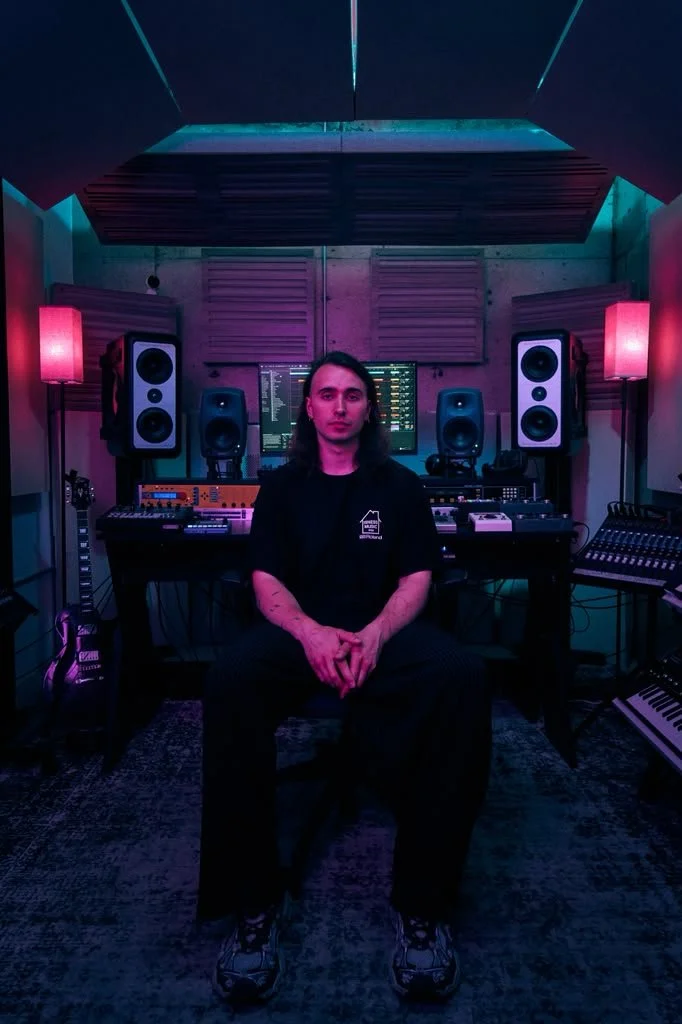
Kurilo at Signal Music Academy, 2026 NYC
Tell me a little bit about your studio. How did this project come to life?
I've had this idea for a while - I guess since day one, when I moved to New York. Of course, I didn't have almost any equipment when I first got here. I had one Electron, an Octatrack MK2, the grey one - that was the only piece of gear I had in my bag when I moved to New York. After about three years - I moved in May 2022, so it's been almost three years now - I started investing all my money into gear, because it's my life, you know, making music. I'm a DJ as well, of course, but the main thing is my production. I had this idea because in Ukraine, my friends used to own a club, and we had a cool studio where we used to teach people. It was really fun, and I really love to teach. I had this idea since day one when I moved to New York, but when I first got here, there was almost no scene - nothing like now. After Signal opened, about four or five months ago, I felt ready to make it happen. I offered to Josh, one of the owners of Signal - let's make a Signal Academy. That's how it started.
So most of the equipment is actually yours?
Yeah, all of the equipment is mine - and the Barefoot speakers are from Josh. He's a sound geek, and he loves crazy speakers. He's had them for a while and has more pairs at his house. I asked if I could use them for the studio, and he said of course. The rest is mine, these smaller Genelec speakers, but the big ones are from Josh.
Do you have a favorite piece of gear - besides the grey one, of course - that you've been using in your recent productions?
Yeah, I just got an original Roland TR-909 - a drum machine from around 1985. I got a really good deal on it, and I'd dreamed about owning this drum machine my whole life, because it's literally why techno and house music started. Jeff Mills is probably the biggest influence with this drum machine - he always used it in his live and DJ sets. I got mine about two months ago, and I use it constantly, because it has the best kicks, the best toms, the best hi-hats.
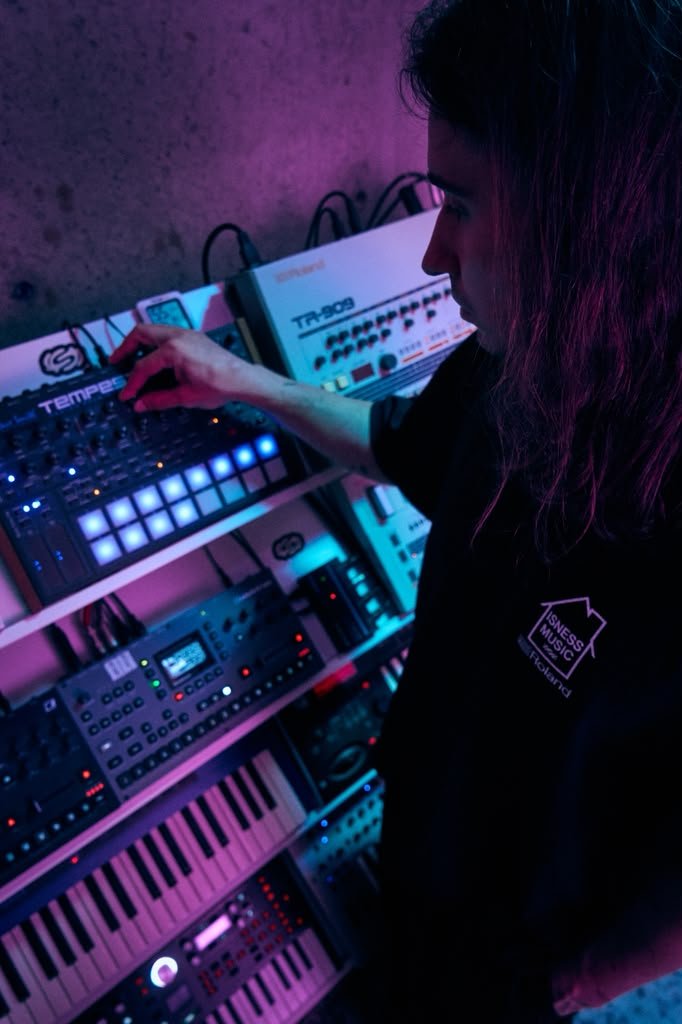
Kurilo at Signal Music Academy, 2026 NYC
What if you didn't have any equipment - the opposite scenario? Would you still make music?
Yeah, of course. This is my point. When I escaped the war in Ukraine, I didn't have anything with me - I left my whole studio behind. I was just trying to figure out what to do, and I kept making music, but just with my laptop, because that was the one thing I had - my headphones and my laptop. Actually, I didn't even have headphones at first; a friend gifted them to me. I kept making music just with my laptop, but for me it's not as fun, because the sound is going to be different, more digital. I can still make it sound more dirty and raw, which is what I like, but in general it's not going to sound the same. It's going to be harder. But I'll still keep making music without gear.
You talk about wanting things dirty, but we're in an era now where AI is making music, and it's dirty in a different way - it's artifacting. I'm sure you can hear it.
It's a different thing. I like my sound, I know what I want. Artifacts are a dirt we don't want. But my sound, I like it raw, not too pleasant. When you use a synthesizer without a lot of EQ or compression or filters, you work with the raw sound you get from your gear, something more generative. That's what I want in my music. When you use digital VSTs from your computer, they tend to sound really digitized, you can hear it, it's clean. But when you record from real gear, sometimes you get random overdrive from certain frequencies, and that can make a track better, more energy, more soul. That's what I like.
Beyond the technical side, what is it you're really teaching? You're trying to help people find and shape a sound that feels "dirty" but isn't literally messy. How do you teach something like that?
Usually people come here with different levels of experience. Most come without much experience, and I teach them from the beginning, if they're interested in this sound. For me, the most important thing is that there's a real connection between my sound and the sound they want to get. If someone comes here wanting to make, say, hard techno at 155 BPM, I'm not really into that, I'd tell them, sorry guys, I can show you Ableton in general, how music can start to come together, but I can't necessarily bring you to that specific sound. If we're on the same page about the sound, that's why I'm here, I have my gear, my VST plugins, my experience, and that's it.
What is it about your sound - beyond BPM - that defines it?
I'm kind of stuck in my genre, house, progressive house, especially the older sound from the nineties, ninety-five to two thousand. That genre was usually made around 126 to 130 BPM, and that's where I'm stuck. Maybe that's my problem, maybe it's not. I'm not saying 155 BPM is bad, it's just not my thing, because I don't know how to work with that dynamic. That's why I mentioned BPM earlier, for me, it makes a big difference whether I start a track at 150 or 128.
What's the first thing you reach for when you sit down to make a track?
I start making drums. That's the heartbeat of the track, and I can't start anything else without drums, because for me, making music is like a jam, I sit down in my studio with my gear and Ableton and just start jamming with myself. The first step is always drums, because that gives you the opportunity to continue your idea. Dance music usually starts with drums and basslines, and after that you build textures on top, arps, melodies. That's just my approach, someone else might do it differently.
You’ve mentioned before that you used to play percussion - were you in a band?
Not really a band, more solo practice, from when I was about thirteen to fifteen. I'd play by myself in a room with some drums and guitars, bring my laptop, and jam along to tracks. Later I got my first drum sampler and started playing with a friend who was a hip-hop DJ, we did a few gigs where I drummed on top of his tracks. It was fun, and it's how I ended up DJing and making music, because being a drummer without a band is pretty hard. I didn't have many friends into music, and I didn't know much about it, but I was really into experimenting, playing guitar, playing drums. I didn't have anyone to help me, so I started making music and DJing, because it's kind of a solo game. You can make music with someone else, or play back-to-back sets, but in the end it's still just you.
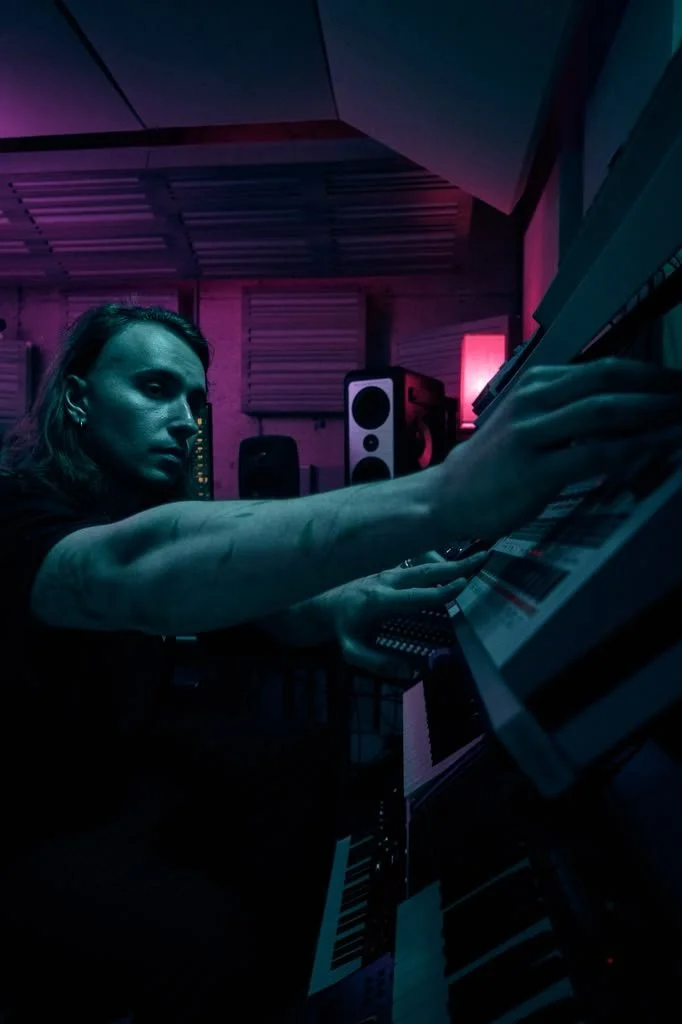
Kurilo at Signal Music Academy, 2026 NYC
Your background from Ukraine is full of memories, and you carried all of that with you here. Where do you see it connecting to New York - what inspires you, what makes you feel like you're growing here?
That's a good question. When I first moved to New York, I couldn't find myself anywhere, I felt lost. The city is huge, but not much was happening in my style of music, a few clubs, some random parties, and I didn't know anyone. It was a huge step to move here, especially from Berlin, where everything was about my kind of music. I struggled for a few years to find myself, working as hard as I could as a bartender, which is very different from being a musician. But when I met Josh, one of the owners of Signal, before Signal even opened, and he told me about his idea to open a club, that gave me so much feeling to keep going, because I'd almost quit music. About two years ago, I almost quit.
That's a big statement.
Yeah, it was a really bad period. There was a lot going on, and a lot of pressure to just focus on making money instead. It was a crazy time, and thank God I didn't quit. This place is what's saved my life since day one, when I started, and I'm sure it will keep saving it, I'm here for a long time. I'm not doing this just for fun.
Would you say that's part of how you approach teaching too - being there for people the way a school gives you community, versus DJing, which is often a solo pursuit? Maybe that's why we need more DJ schools, to bring a more community-based approach to an industry that's very fragmented.
Exactly. This is literally why I built this place, I want to help people grow, understand what they need to do, and find a place where they can get answers to their questions, because I have a lot of experience with what I do. I really want to see more people around who play records, make music, and enjoy themselves. Before I opened this school, I was searching for a place like this, a more underground, forward-thinking production school, and I couldn't find one. I found big schools in Manhattan and around Brooklyn, but nothing underground where you could go and get real answers. That's why I'm here.
What is underground to you? How would you define it?
Underground is when you have your intimate thoughts about what you're doing, and you can share them, you don't have to, but you can, in a place without judgment. At the same time, underground has a lot of judgment too, that's how I know it. It's an intimate thing, what people want to share, something special for themselves, how they found themselves. Something like that, maybe.
The underground is usually defined as anti-commercial, about not selling out - but honestly, I think music sold out a long time ago, back in the nineties with punk and everything after. I like how you define it differently.
Yeah, because for me, when someone's here with me, I'm sharing my intimate things. It's a school, but at the same time, it's my personal gear, what I worked hard to buy for myself, to make my own music. I'm sharing it with people. Of course, we're getting paid for it, but in general, this kind of intimate, shared environment, that's underground to me.
How many students do you have right now?
Around twenty-five. A few have already finished the program, it's about five lessons, and they've improved a lot. I'm really happy with that. It was a really cool feeling when the first person finished. Now it's up to twenty-five, and I feel like I need someone else to help me.
How do you see this growing five years from now? More teachers, more locations?
I'll definitely add more teachers. But I don't want more locations, this spot is perfect, one minute from Signal, literally around the corner, and it's really comfortable. The main goal is to keep it one-on-one, I don't want groups, because it gets harder to teach and I want to focus on the person in front of me instead of a lot of people at once. Once you start doing groups, it stops feeling underground and intimate. I'd love to do some events for the community at Signal, before parties on Thursdays, get together and talk gear, Ableton, things to share. That's what I'd love to do for the community. And more teachers, more people who can show different things, not always one-on-one. I guess it'll get busier, more promotion, more social media, though I don't really know how that works.
Do you see students who graduate from the school eventually playing at Signal - new faces, maybe a new night?
I have an idea I'm working on, but I don't have enough students who've finished the program yet. I want to do a short party before the main party, like a rotation, the way we used to do it in Ukraine, with four or five people in the lineup who've learned and prepared, and free entry for people who just want to come check it out. I'd love to do parties like that. Not yet, though.
DJing in the studio is different from actually standing in the booth, no teacher there to help you fix things, no panicking, you just have to mix the track. Do you see that affecting students, and do you guide them through it?
Yeah, it's the whole thing, you just have to learn it. You'll be stressed, a hundred percent, you can't just tell someone not to be stressed. That's why I'll be there, in the booth, helping if I see they need it. But in terms of really helping them, they have to understand how to prepare, take it seriously, and put in as much effort as they can, because otherwise there's nowhere to go. You have to pay attention to what you're doing, and that's the whole point of doing this.
Why New York specifically, and not another city in the U.S.? What does New York mean to you?
It was a huge dream in my life, just to be here. I don't know why, since I was about eight or ten years old, I've remembered wanting this. I wasn't even watching a lot of movies about New York. I just felt it, and I still don't know how it works, but I was dreaming about living here. I never really had a natural opportunity to move here, I didn't come from money, or have connections.
You're clearly talented, and you've built so much, but do you think talent alone isn't enough? That no matter how talented or well-off you are, you have to put in the work, practice, prepare, and maybe that's the bigger part of being a good DJ?
A hundred percent the right thing, because you can have talent, but honestly, I don't even know what talent is. For me, if you want to do something, you have to do it. And in general, you have to love what you're doing, it doesn't matter which way you do it, you just have to do it the way you want. Practice, learn something new, and never think you're good enough, because you're never good enough, not for anyone, not for yourself.
In this industry, especially in nightlife, we have plenty of glorified DJs who need to be treated like royalty, if you don't bring the right water bottle or champagne, they get upset. How do you think we got here, with these glorified DJs?
As human beings, I think it's our trouble with ourselves, getting lost in the ego. If you think you're good enough, or the best, or perfect, your brain starts working that way so fast that you don't even realize it's become a problem. But the people around you understand, because you start acting like an arrogant asshole, sorry to say it that way.
If there's one thing you want every new student to walk away with, one lesson about music or production, what would it be?
Simplicity is genius. That's what I'd say. Don't get overwhelmed with everything you're using in your music, because sometimes the answer is just simple. It's true in every kind of music.