Big Calm: Luigi Tozzi on Stillness, Sound and XAMAN Ahead of Dekmantel
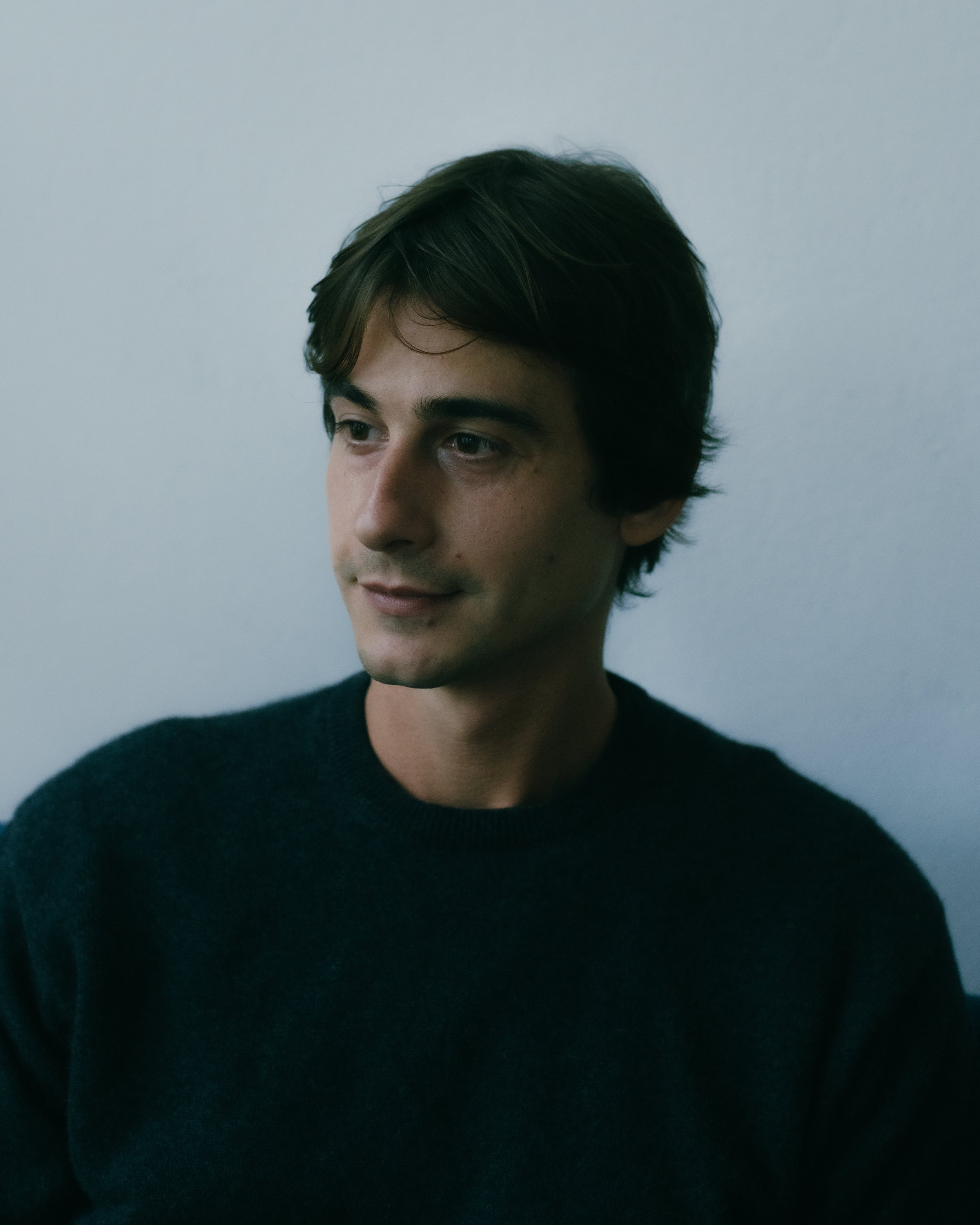
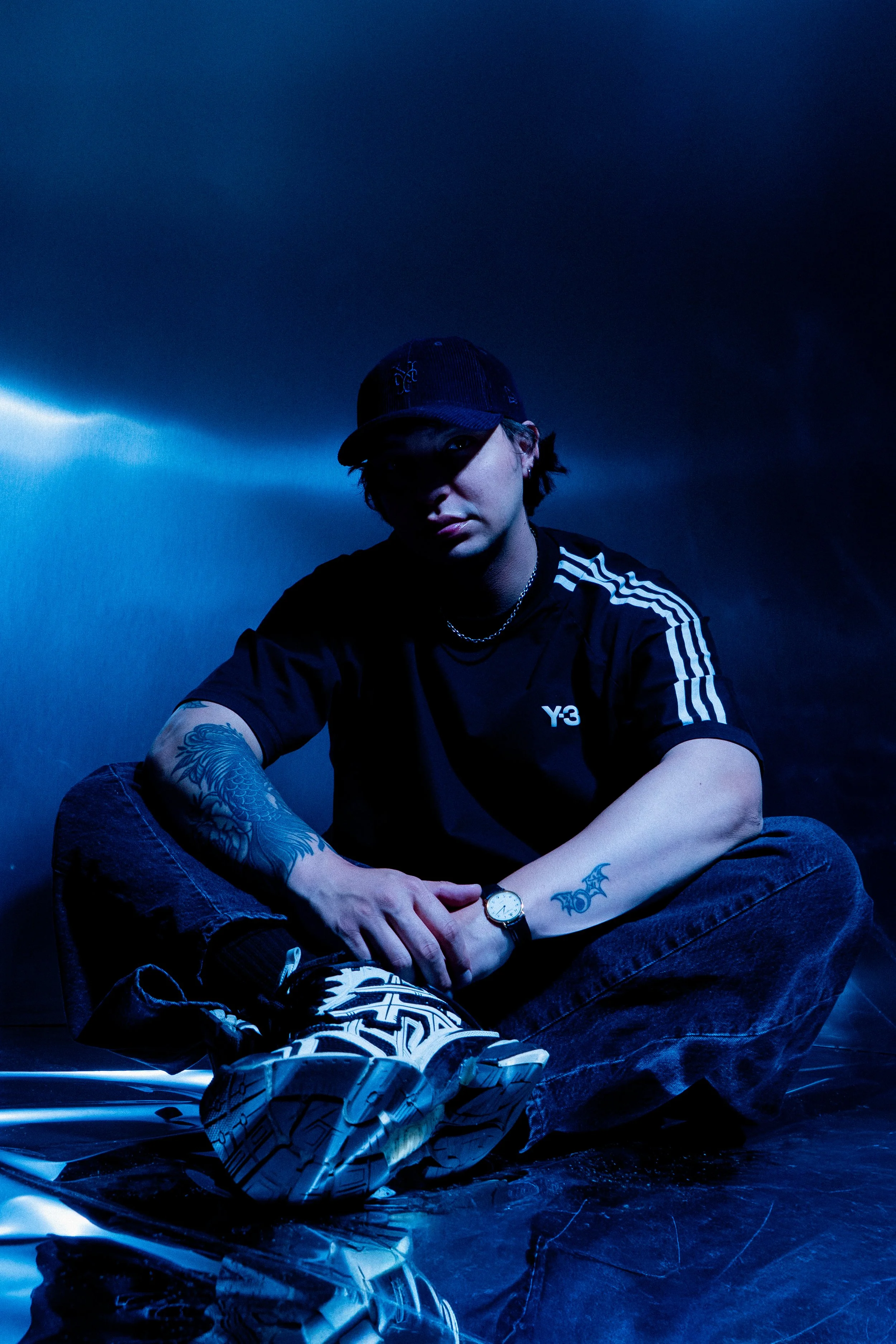
Ahead of Luigi Tozzi’s live set with Dino Sabatini at this year’s Dekmantel Festivalin Amsterdam, Netherlands we had a chance to speak with ½ of the duo - Luigi Tozzi.
It was one of the hottest days of the summer, the kind that empties Rome's streets with a force that pins the city indoors. Tozzi - the Italian musician who is known for the art of slowing down and taking the listeners with him, inwards, on introspective expeditions into one’s self - was doing the same.
Tozzi’s latest album from the Deep Blue series, was released on the last day of Spring earlier this year on Hypnus Records, in its Volume 4. It is this big calm sound, embracing oceanic hypnotics of what's hiding underneath the waves. It also might be the last one of its kind.
In the week of the festival, Amsterdam was going through a heat wave of its own. Back in Rome, the sun bore down with even more intensity, gathering gently on Tozzi's forehead. Still, he answered everything with the same unhurried calm that reflects his music.
At the time of our conversation, we were about a week out from the festival. Now, in just a few hours, on the Friday’s programming at Dekmantel, Tozzi and Sabatini will premiere 'XAMAN,' their album, the two have spent nearly two years in creating it. It will be released on Outis Opera Series, a special kind of a sub-label under it’s main one, ‘Outis’, which is an imprint created by Dino Sabatini. The label explains the meaning behind "opera" as "the idea of a complete work: a project conceived as a whole, with its own atmosphere, internal logic and form of listening."
This 12" double-sided vinyl is pressed in a limited run of 500 copies. The label's name comes from the pseudonym Odysseus gives Polyphemus the Cyclops - "Nobody" - so that when the blinded monster cries out, no other Cyclops comes to help him. Sabatini has said the name carries a deeper personal meaning for him, and the label is his way of honoring it.
Hypnotic soundscapes, experiences of stillness and beauty all of these elements seem to come naturally to Tozzi. From there our conversation drifted, as good ones do, from festival prep into wider territory: the vanishing role of the musician on stage, AI's limits, why he does not want to ever be livestreamed, and what shifted when the dance floor started watching music instead of listening.
How are you feeling about Dekmantel? Are you getting excited to play there?
A mix of being nervous and excited, I guess, because we're doing the live set with Dino Sabatini for the first time, in the Netherlands. But yeah, it's gonna be good, we've been doing some testing, and we're pretty happy about it. We’ll be presenting an album that we made together over the last few years, and it'll be the first time we've ever performed it. We’ve known each other for maybe more than ten years, and we've been working together too, but we've never actually played live together on stage. Dekmantel is booking a lot of new and exciting projects, so it felt like the right place to do it.
What's the gear setup for this live set?
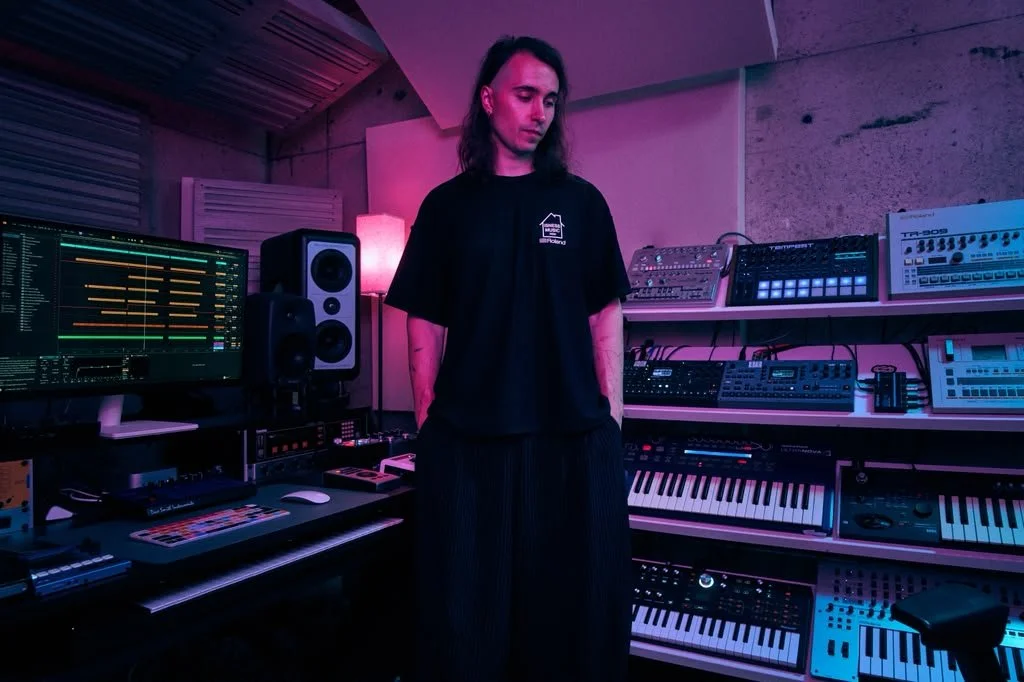
With Dino, we're more or less hybrid. He just bought a new modular, and we're going to test it out for the first time in the live set next week. He also uses the Native Instruments modular blocks inside his computer. So the structure is basically me arranging, and him jamming on synth lines, playing with field recordings and maybe some atmospheres. I’ll be building the structure and following him jamming on his synths.
Sounds intriguing, will you also be using field recordings, and if so, where do you collect them?
I've been collecting some field recordings, alone and with friends, throughout the year, so I have a big collection. But for this project with Dino, we ended up using a lot of his own field recordings, which he recorded in Colombia, both the classic trees, birds, forest kind of recordings, but also percussion. Across the whole album, we've been thinking not to use drum machines at all – every percussion should be organic, natural, to give the whole thing a more natural feeling rather than a classic techno kind of crunch.
That's interesting, because the ‘classic techno’ right now feels like it's reaching the opposite direction – the BPM just keeps climbing. You're doing the opposite.
With Dino, we're really doing the opposite, because this project is at 110 BPM, so it's super slow, super hypnotic. You're not gonna hear any 909 drum machines, no classic distorted kicks, no fast tempos, no epic breaks. But it wasn't like we sat down and talked about wanting to be different – it's just that the whole process took a lot of time, and we slowly sank into trying to do something very organic and elegant, and it ended up sounding like that. When we started working together, I don't think we had a clear idea – I think we had two different ideas on where we wanted to go, and it took a while to really think it through. But it was worth it. I've never done a collaboration for that long – we've been meeting a couple of times a week for almost two years. It really developed, both our relationship and, in general, our synergy in the studio. I never took that amount of time to do anything like that.
Has working with Dino changed you as a person – not just as an artist, but on a more personal level?
Surely – it has changed me, since ten years, in a way, because he's older than me, and when he had a lot of faith in what I was doing, since I was maybe 22 or 23, that already meant a lot to me, because I'd been a fanboy of him, first of all. I think this was the right moment, relationship-wise, to work on something big together, because in the beginning I didn't feel I could really collaborate with one of my heroes, that I had the skills or the confidence to do it. Slowly, I got there, more progressively, being in the studio with him, because he's such a cool guy, and he's also been teaching me a lot. I'm not even talking about music – we've been exchanging a lot. I think he would say the same as well.
Where do you find inspiration these days, outside of music?
Books and movies, mainly. But lately I wasn't reading much and wasn't going to the movies enough, because I've been a bit busy. So when I had a weekend off recently, I took the week very easily – I went to see Nolan's latest movie, started to read a couple of books, and it already feels very refreshing. You get emotional watching something or reading something, and then you want to translate that in the studio – that's one thing for sure. And then there's the whole passion I have for diving and the seaside, which obviously translates a lot into the Deep Blue series.
Congratulations on the fourth volume of Deep Blue – is there more to come in the series?
It might be the last one for some time, maybe for some years, because – it sounds like, while I was doing it, I wasn't thinking about that at all, whether it would be the last or not. But now, thinking about it, and how it sounds, where it started and where it got to, it sounds like a last one, at least for some time. Maybe… But then, maybe, when I go back to the island where I spend my summers, I start diving, and I get inspired again. So you never know.
Embracing the unknown sounds wonderful. What’s your favorite place to dive?
I've been going diving in many different places in the Mediterranean, but for the last ten or fifteen years, I have this house in Sicily where all the family goes, and I end up always going there. So that's the place for me. It's called Salina, in the Aeolian Islands, and it's beautiful.
You were living in Paris for a while before, what was the main reason you decided to move back to Italy? Were you missing home?
There were reasons that got me to Paris that were more like family reasons, and I think I needed a short break from Rome. I really went there with the idea of spending a couple of years max and then coming back, so it wasn't really meant to be a long period. I'm going back now, in September actually, with a different mindset from last time, so I might stay a bit more. But I still love Rome – it's a very slow city, and it's a good balance for the job I do.
Italy gave us the Futurist “Art of Noises,” and your own relationship with noise – the field recordings, the sounds not always considered musical – feels connected to that tradition.
Yeah, I instantly think of one of my main inspirations, Basic Channel – the whole Chain Reaction catalogue in general is full of very musical noise. So I of course don't agree with going back to that idea of noise not being music. I got what you meant, though – but my influences, the stuff that I love and still listen to on repeat, is full of beautifully treated noise, so I really enjoy it.
You've described your relationship with music in the past as escapism – a way to step outside of reality. Do you still see it that way, or has that changed? To me, your recent productions feel more meditative.
I think I'm always looking for the same thing, whether I'm working on an ambient long player or on techno loops. In general, what I look for is something that isn't harsh, that can put you in a very comfortable space – maybe to dance, or maybe to get emotional and introspective, on an ambient track, or a melody, or a synth line. In general, it's about finding something that puts myself in that place too, while I'm producing it, in a very warm bubble where I feel comfortable, and that's what I try to translate when I play too. I do play techno sets as well, proper ones, but still, I hope, with a light touch.
How do you see the dance floor these days – has your relationship with the crowd changed over the years you've performed?
There isn't one dance floor – it really depends on the place, the country, the setup. My taste is very related to where I come from, as a clubber myself, so I've always been enjoying the small-capacity, dark clubs. That's where I feel at home, and I know for sure why, because I've been one of them, dancing in there, and I know the value it can have. The bigger the places, the harder it is to find like-minded people, but diversity is good as well. Honestly, the main relationship I've built has been with the people buying my records and following my label, Hypnus. I still have a lot of that – people who really come to see me and have known what I do for a long time. I always recognize faces everywhere I go, and that feels like home, it feels comfortable.
That’s well said, but also, part of it is that the scene has grown so much, and there's so much more money involved now – the commercial side has become a much bigger part of the conversation. When it comes to your own gigs, does that affect you at all?
The industry affects me a lot. It feels completely different from where I started. Yesterday, for instance, I met a twenty-year-old Italian producer who reached out to me – he's in Rome, and we went for a drink and talked about music. He was telling me he wants to start doing this, and I found myself talking for four hours about how it was when I started, and how it is now. Honestly, it didn't feel great – at some point I realized I was basically telling him we're not doing great at the moment. But still, honestly, you can still find a bunch of like-minded people. One thing I want to say – before, the people involved in this were mainly nerds. And now, a lot of people look like models, and that's something we should think about. It goes back to watching instead of listening.
Funnily enough, I'm actually working on some investigative research into copyright and royalties right now – producers not getting paid, DJs are assuming tracks should come to them for free. Partly it's a media problem, but is there anything DJs could do?
I don't want to sound too radical about what I think they should do. But going back to what I said – how many musicians do we actually have on stage? In any other kind of musical industry, musicians are the ones on stage. That's what I want to see, and honestly, that's why I stopped DJing. The percentage of musicians actually on stage is extremely low. Beautiful, talented people, locked in the studio all day, making art, and basically seeing it used for free by other people.
Part of the problem is that some producers don't necessarily want to be on stage, either – they don't want to tour. Touring isn't easy.
I agree. But we're going into a very long topic here, because I actually have thoughts on this. Imagine this beautiful, utopian world – you're a musician, you only play live, and maybe you want fewer gigs. What happens? More space for more people, and you still can live off of it. And putting the music and the musicians at the center might also have an impact on music sales – because if your hero is Mathew Jonson, you're going to buy his record. If your hero is someone playing one Mathew Jonson track, and one track from someone else you don't even know, maybe your focus is going to the wrong direction. That's my take on it. But of course I have no huge solutions, because I understand what you said about royalties – that's a very important issue, but it's a modern-day problem in every art form. Having the artists stay home and gift their art to other people, who make the money off it – that's very unique to this industry.
With all the new technology, the sync button being the obvious one, it feels like the barrier to entry has gotten so low that it devalues the art of DJing itself.
DJing goes way beyond the sync button. One of the most inspiring DJs, for me, has always been Richie Hawtin, and he's fully on the sync button. But the sync button allows him to do a lot, to get creative with the music, and to go almost back to a state of live performance. Of course, it's not his music – he's on the music – but at least he gets extremely creative. What doesn't bother me,, is seeing people using the same tools, and nobody's being creative with their own setup nowadays. As a producer myself, I'm not always happy with the way another producer has arranged a track – maybe I find a sixteen-bar loop that's amazing, but then I want to loop it and work with something else. I have my own identity, and I still find the original track amazing, but maybe I don't want to just be played by the track – I want to play the music myself, you know what I mean. I don't see that much curiosity around it, honestly. The technology itself is amazing, it opens up freedom to focus on other things. If I don't have to beatmatch, I can focus on something else and make it way better, and push it forward. Just look at people like Richie Hawtin, or Speedy J, doing amazingly, and being super creative with what they do. What I'm saying is that technology isn't the problem, in my opinion – it's the way you decide handle it.
Technology has gotten very sophisticated, AI is now in the room, and with tools like Suno, you can create music without any musical knowledge, you prompt it and go off ‘vibes’. Music is very easy to make and replicate. Do you see this affect the industry?
It will, for sure. But I have a lot of faith in the human touch being absolutely necessary. I've never even used Suno, but I'm sure that if I sat down and tried to make something that sounds like me, it wouldn't happen - it might get pretty close, but not quite. It probably works better for things that are more pop, more commercial. What we're talking about here is a niche that's barely going to be affected by that, specifically. The progression of AI is insane, and we don't know how far it can go. But I still have a lot of faith in the fact that we are mortal, and that we're urged to make something that matters, to express ourselves - and I don't know how you teach that to a machine.
When it comes to producing music, you’re a person of routine. You make music in the mornings, that's where you're most productive – and sometimes art is hard to push out when you're not feeling so creative, but you still show up in the studio.
It's like training, you know. Sometimes you're motivated, and sometimes not so much, but you just go and do it, and it's healthy for yourself. Honestly, if I don't do that in the morning, I feel like a very useless person. And it's also very calming for me in general – even if I'm not succeeding, I'm never nervous, I'm just spending time playing with sounds anyway. It could be worse!
How do you define success in that sense – how do you know you're satisfied with your output, and it's been a successful day?
There are many different layers. There's the day where you literally hate everything you're doing, you're not making it, but still you're maybe trying new methods, and maybe it's stuff that will come back months later in another production. Yesterday was a day like that, for example. And there are days where you're doing beautiful technical work – I collect every sound I make, not the audio itself, but the whole synth patch and effect chain, so everything I do is never thrown away. So there are days where I'm basically collecting sound design, and then there are days where I have an idea, and it goes fast – and there I know it's a “successful day”, because I'm inspired enough to go very straightforward on an idea. Sometimes it takes weeks, sometimes it takes three hours.
There was a time, not so long ago, where the whole world had to slow down, rethink success and in a way, completely rebalance during the Covid lockdown. Something changed, did we lose something with this change?
People during COVID have been watching music, not experiencing it - judging it with your eyes instead of your ears. With streaming, we lose the crowd and the sound system. That's also having a fixed camera in front of the “performer”. Then he starts performing, you know, in different ways, and then you lose the music part. If we went back to listening more and watching less, it would be a monumental change.
Do you think cameras affect you, if it's a recorded set?
I don't do that. I never accepted any streaming request. I don't want my set to be streamed, because I'm not doing it for the people at home – I'm doing it for the people there, and I don't want to lose my focus, which should be on them. I'm a control freak, so if I know there will be a stream, I start thinking I shouldn't make a mistake, that it should be perfect – but that's what I want to think when I'm recording something at home. If I'm playing something in front of people, I want to take risks, and maybe mess it up, but I'm confident enough to think that people will understand it, because they're there with me.
It's an ephemeral art in a way, then – a “you had to be there” kind of moment. Do you find your own balance within yourself, something that grounds you, within that?
I'm not a fan of being recorded, honestly. So hopefully, when it happens, it's at night, so I don't see it much, and I can just escape from the idea of being recorded. I like clubs, honestly, in the first place, because it's a dark place where nobody's judging you. That's how I felt when I first came in – I felt, okay, here, nobody's looking at me, and I can do whatever I want. And that's still what I prefer. I honestly suffer through daytime sets a lot more than nighttime ones.
That’s very interesting. Nonetheless, you are bringing this very special live set to a Dekmantel, which is a daytime festival, how does it translate in your approach to music and the festival itself?
The music we made with Dino is good for daytime, and especially in a festival context. It's not something we're gonna perform in clubs at all, honestly, it's not the intention. Even if I'm playing live solo, the setup changes the music a lot – there's warehouse tracks, there's small-club tracks, there's forest tracks. In my mind, it's not about being right, but sometimes I feel like, yes, this surely works outdoors, and this surely works in a small club, and it's always back to the memories you have from the dance floor, I guess – not about the tracks, but about the feeling the track gave you, in a certain context.
Outside, the heat hadn’t broken. Tozzi would be on a plane within days, trading Rome’s stillness and high heat for a festival ground in the Amsterdamse Bos on a Friday at midday, the type of set he says he suffers through more than any other. But that discomfort and the tension, in some way is the whole point: an artist built from the dark, the slow, the underwater, choosing to bring something he and Dino Sabatini spent two years making, out into the daylight on the UFO II stage.